These are some things I wish I knew about China before we travelled here.
I did read/scan lots of Trip Advisor comments, read some books on travelling in China and undertook a four week online course in its culture before coming, and yet there were still loads of things we were not prepared for. These comments are in no particular order of importance.
1. Access to the Internet is Restricted

The Chinese Government does not allow any access to FaceBook or YouTube, gmail or anything linked to Google, and at some hotels where wifi is not so good, I was unable to access Safari or apps that needed the Internet. While we were in China there was an interview on CNN about the censorship of the Internet and the way it can change daily in regards what is and is not allowed. There are ways around it for cluey tech-savvy travellers, but you must do something BEFORE you get here. The Chinese get around it via a website http://www.qq.com but this did not help me as it was all written in Mandarin.
2. Toilet etiquette is very different
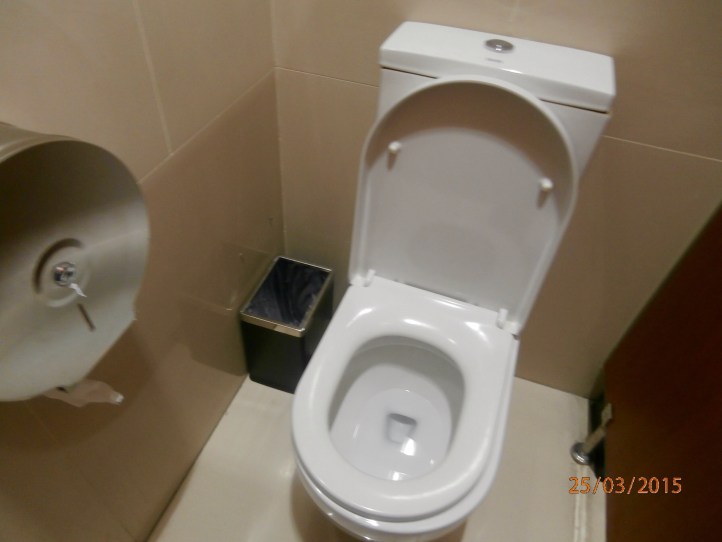
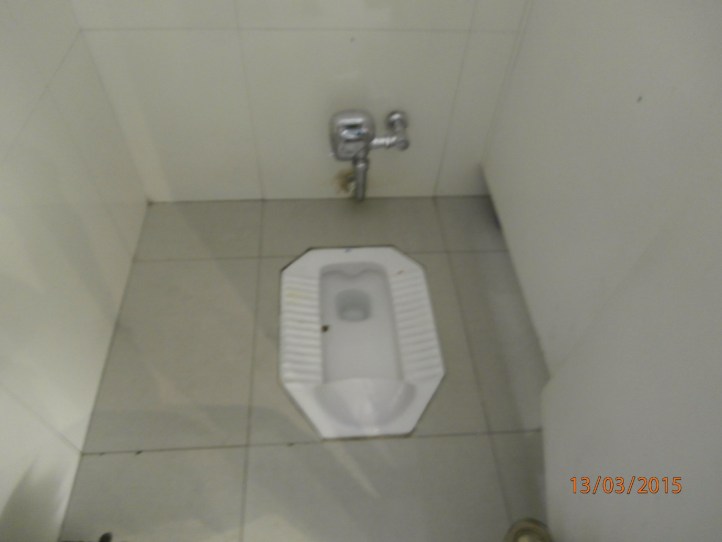
Now I was prepared for that and did pack (and practiced how to use before we left) a she-wee. (You can look that up, but basically it is a device that helps women to pee while standing). Most of the toilets I used were western style, so I did not need to use this device very often, but the translated signs in the toilet explained that once you had finished with the toilet paper, it was to be placed in the bin beside the toilet and not flushed down the toilet. I found that the handicap toilet was a good option! Another good tip, is if there is a row of toilets, always check the furthest one as these were usually the western toilets.
3. Local public transport is very cheap if you’re brave enough
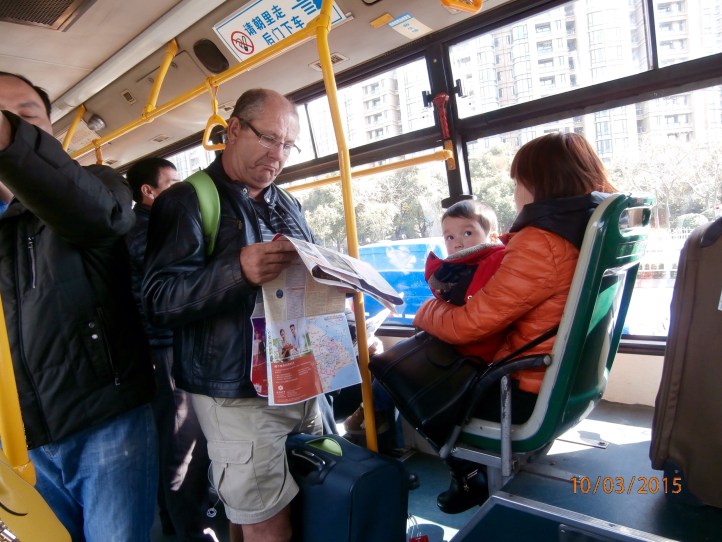
We caught a bus in Shanghai that took us past more than 20 stops and it cost us only 2RMB each (<$0.50AUD). It looked like any length of trip cost 2RMB but I cannot be certain about that. We also caught a metro to the railway station we needed to be at for a long distance train, again in Shanghai, and that cost us 5RMB each (~$1.00AUD). The trip took about 50 minutes.
4. Driving on the roads is an amazing achievement
There does not seem to be any such thing as “giving way” – the technique for getting anywhere is to simply get the nose of your car in the smallest of small gaps and that gives you the right to keep going. A beep of the horn alerts other cars or bikes to stay where they are as this car is coming through. Bikes and pedestrians have no right of way ANYWHERE. Cross check this comment with those described in Number 6 and 7. No such thing as queuing here either – just push in or you get absolutely nowhere. We spotted very few incidents or road rage: two small crashes; plus one poor elderly man was knocked off his bike where the car driver continued to beep his horn for him to get out of his way.
5. Signs seem to point in all different directions pointing to the same destination
We followed many signs but failed to arrive at the designated spot on many occasions.
6. Bikes are a common form of transport
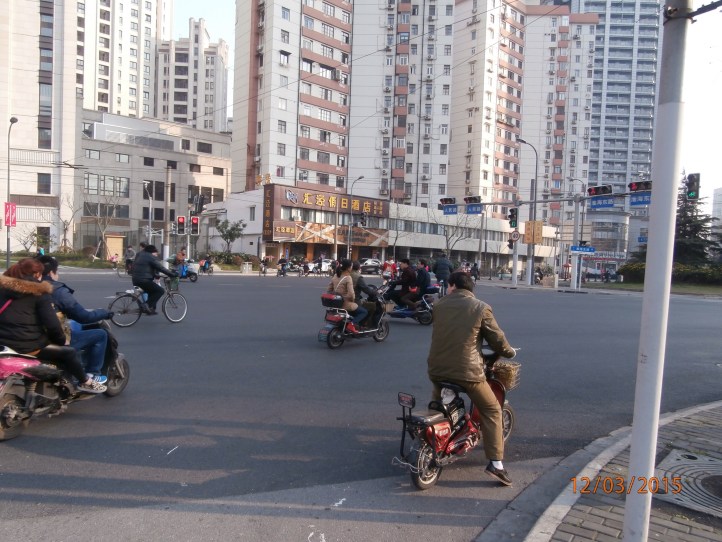
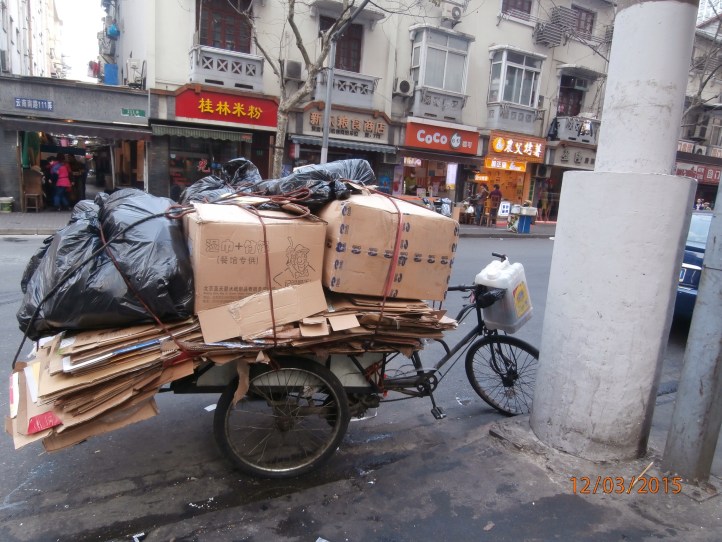

In Shanghai the majority of bikes had been modified to electric engines. This made them totally silent and therefore a bit of a hazard to us as pedestrians. We noticed that the bikes do not take notice of the traffic lights. The first few times we crossed the road we were nearly knocked over because we never thought for one minute that we needed to keep our eye out for a noiseless “clutch” (my made-up term for more than one bike) of motor/electric bikes carrying multiple numbers of people and/or loaded with huge cargos. Mick started to hold his arms out whenever he crossed the road, confident he could stop a bike before it knocked one of us over. Thankfully his theory was not tested.
7. Queuing is not a practiced phenomenon in China
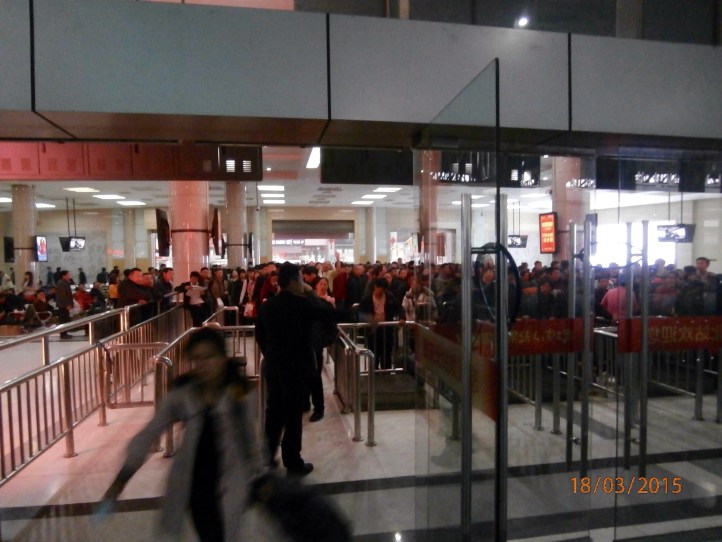
Chinese people, particularly women, push in, push ahead, bump into…..in order to get where or what they want (cross check this with Comment Number 4). Practical examples of this were in toilets – it is better to stand in front of a cubicle rather than line up at the entrance to the toilets. This is similar to ATM facilities. We were standing waiting our turn and when one of the ATMs rooms became vacant we were pipped to the door by a women who seemed to appear from nowhere. Lining up at a buffet meal is a time for a free-for-all for the Chinese people. No matter how many arrows there are showing the direction and the instructions, there is always at least one goes went wherever she wants to, usually in front of Mick. He became a bit jaded by this.
8. Smoking is very popular in China
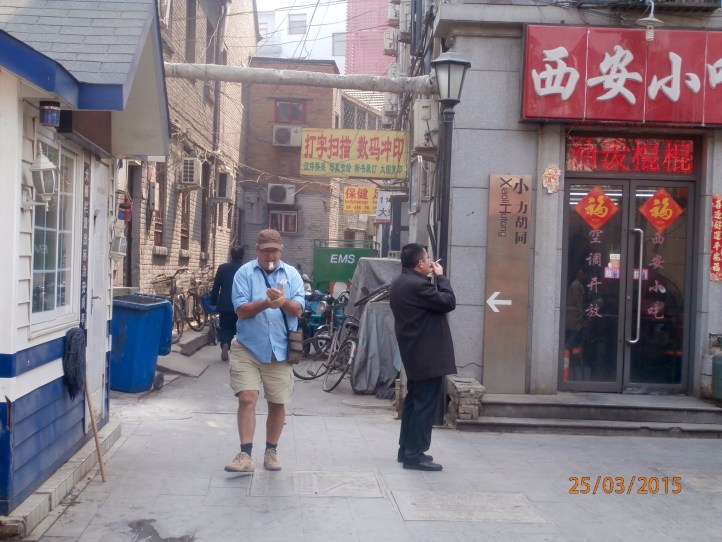
It is allowed in bars and restaurants and also on local trains. Taxi drivers smoke, some shop assistants smoke. We did not try to buy any, but were told that a packet costs 20RMB (<$4.50AUS) and that you could even buy cheap packets for 5RMB. This was one thing I really disliked about my stay in China. Mix the cigarette smoke with the smog and it makes for an uncomfortable time. We stayed always in non-smoking rooms but could often smell smoke in almost every place we stayed. On our cruise along the Yangtze Rover we were told that it was a totally non-smoking boat and smokers were told they must use their balconies for smoking. We were confused too! This photo shows Mick using his hand sanitiser after he’d been to a public toilet and a man enjoying his smoke.
9. Chinese people DO NOT all look the same
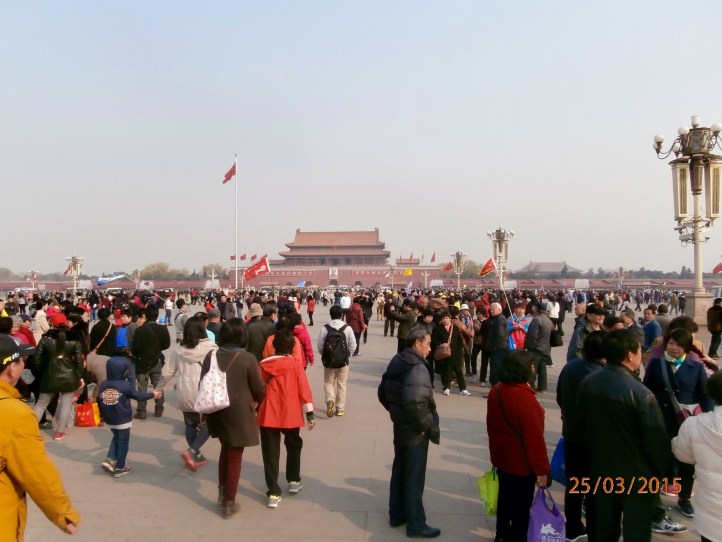
People we met or needed to deal with while in China were very friendly and very polite and we really enjoyed are time here.
 Jane and Mick's Holiday Adventures
I have enjoyed your China adventures ! Thanks. Kath
Kath Cavanagh 23 St Paul’s Close Crowley 154 Cherry Street Ballina NSW 2478 02 6681 6310 / 0409 995 528
>