We both learnt so much today! This site was so impressive and for €8 each, made it one of the best value tours so far. We purchased one audio guide to share between us, which worked out really well. As one of us listened to the information, the other one was able to look more closely at the features. The audio guide was a must!
I found it hard to select the correct name for this place; it is now the Cathedral of Córdoba, but its long history prior to the 13th Century with the Islamic faith makes it hard to ignore that influence. I prefer the often used term of “Mosque-Cathedral”.
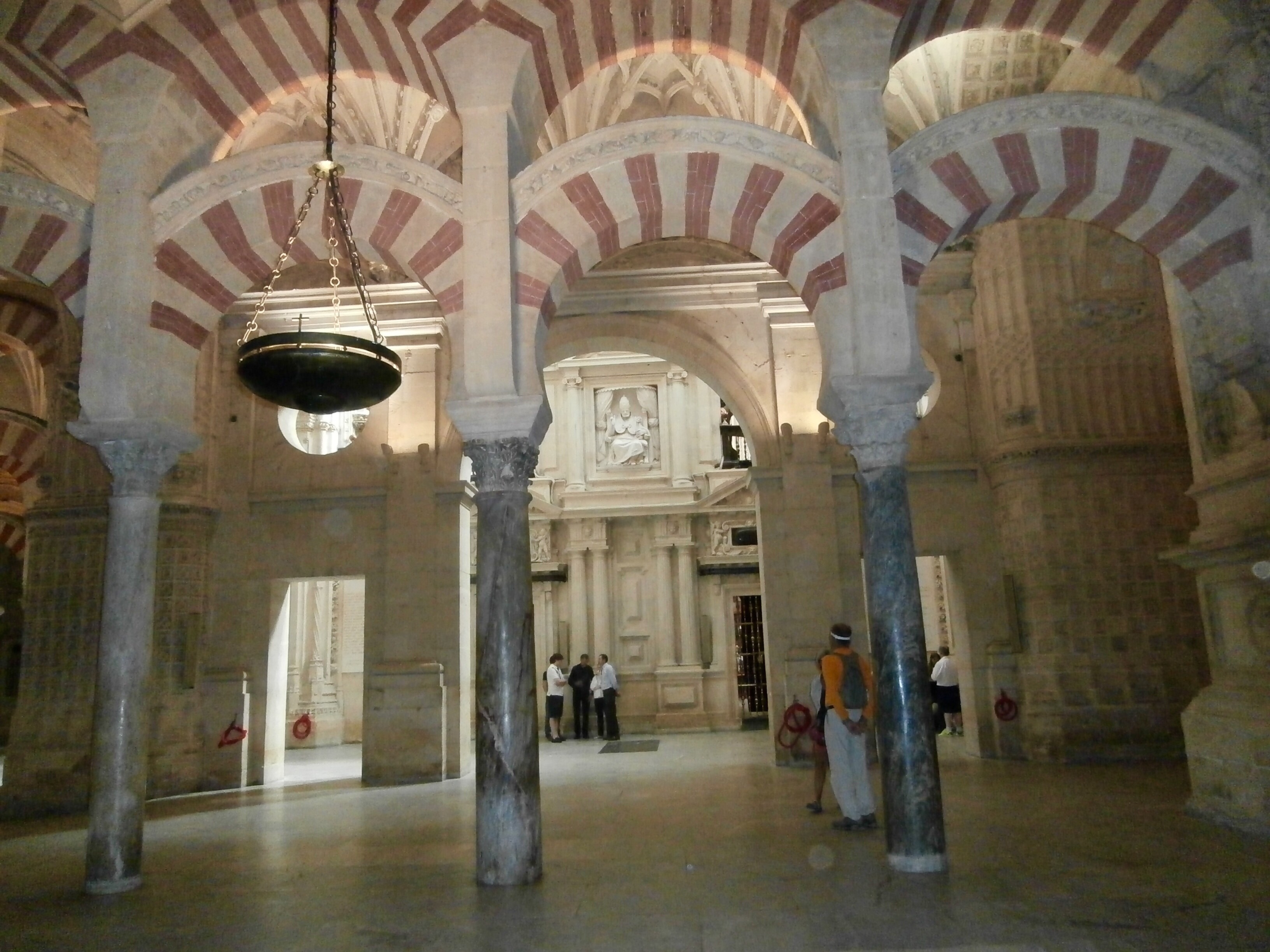
This building is recognised as one of the great creations of Islamic architecture. It has rows upon rows of red and white striped columns that seem to go on forever and wonderful mosaics in shimmering gold and bold blues. We had read earlier that the geometric patterns used by the Muslims in their mosaics were meant to not represent any shape found in nature.
Originally founded as a Mezquita in 785, after about 14 years of being shared between Christains and Muslims, when the Christians sold their half to the Muslims. Over the next 200 years, different Muslim leaders added to the Mosque in order to house the growing number of Muslims. There are over 800 columns still standing and it is considered the largest temple in the World. I think we heard it can hold 40,000 people!
From one of the main doors of the mosque-cathedral we could see straight ahead to the Mihrab, the prayer niche in the mosque’s qibla – the wall indicating the direction of Mecca. (I did mention we learnt a lot today!)
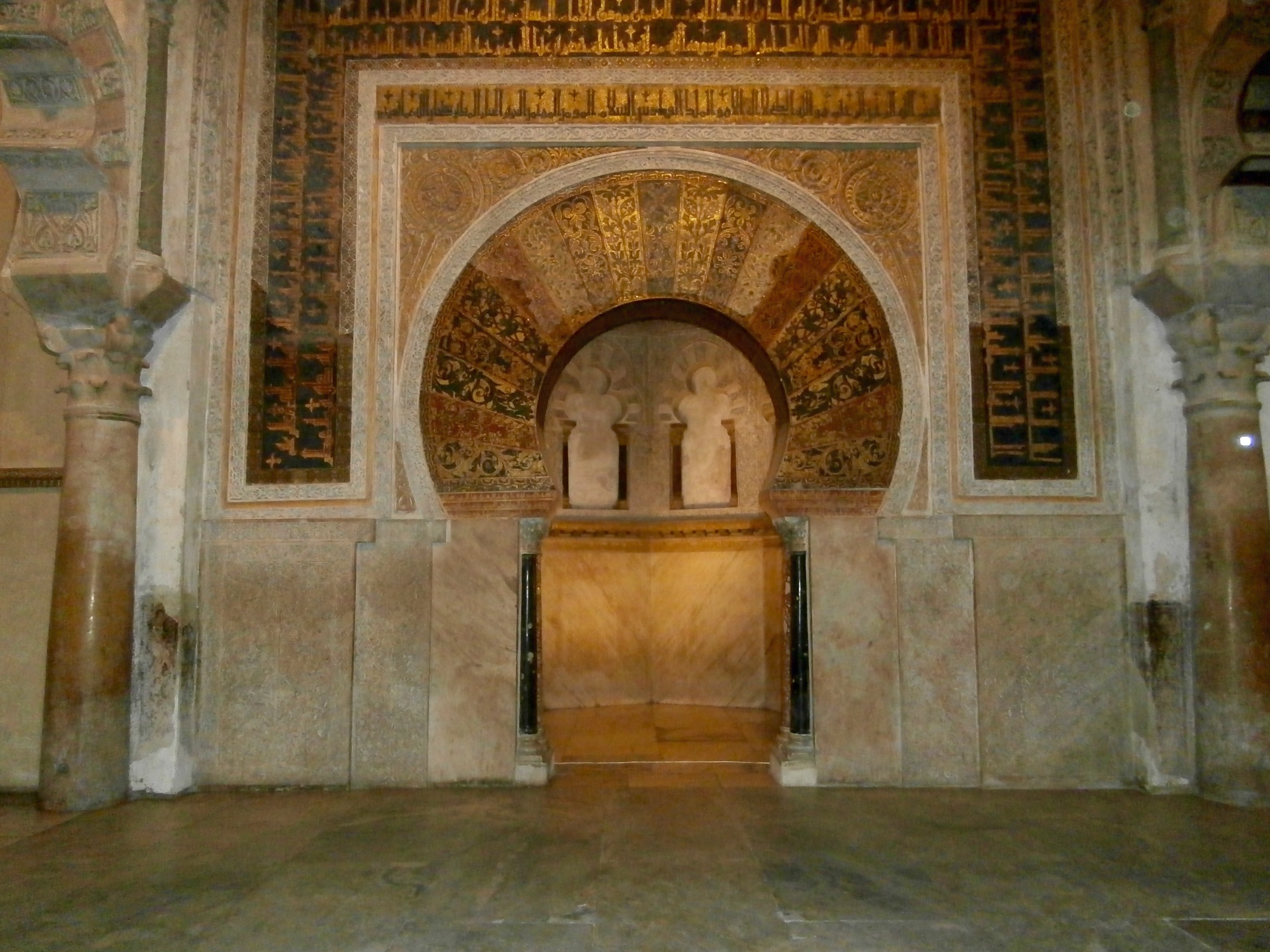
Our audio guide stated that this wall in fact was not facing the correct direction for Mecca, apparently off by quite a few degrees. I don’t think this photo does it justice, but this wall and the domes and arches were lavishly decorated with gold mosaic cubes. Apparently 1600kg of gold – Mick worked that out to be worth more than $75 Million AUD. We both learnt today that the representation of animals or humans is forbidden in Islamic religious art. It is believed that the creation of living forms is unique to God.

This next photo shows part of the courtyard and minaret, the last things to be added to the mosque in the 200-year makeover. The minaret was built to call the Muslims to prayer, but is now used as a belltower to call Catholics to Mass. We decided not to climb to the top as it was still very hot today.
In 1236, King Ferdinand III conquered Córdoba and returned the building to the Catholics. It underwent a purification ritual to ensure each stone edifice was turned into a scared site consecrated to Christ. And so began the work to transform the ‘church’ into a Catholic place of worship. The church is overwhelmingly Islamic, but the literature and tour were so obviously Catholic. The tourist brochures refer to “The Islamic Intervention”, yet it was a mosque for more than five centuries.
What we noticed today was a Catholic Cathedral built in the middle of a mosque, and we read that 19 of the mosque doors are now closed. These doors would have at one time filled the mosque with light. In the 16th Century the centre of the building was torn out to allow construction of the cathedral – with rich marble and jasper features and the Coro(choir) with fine 18th Century carved mahogany stalls.
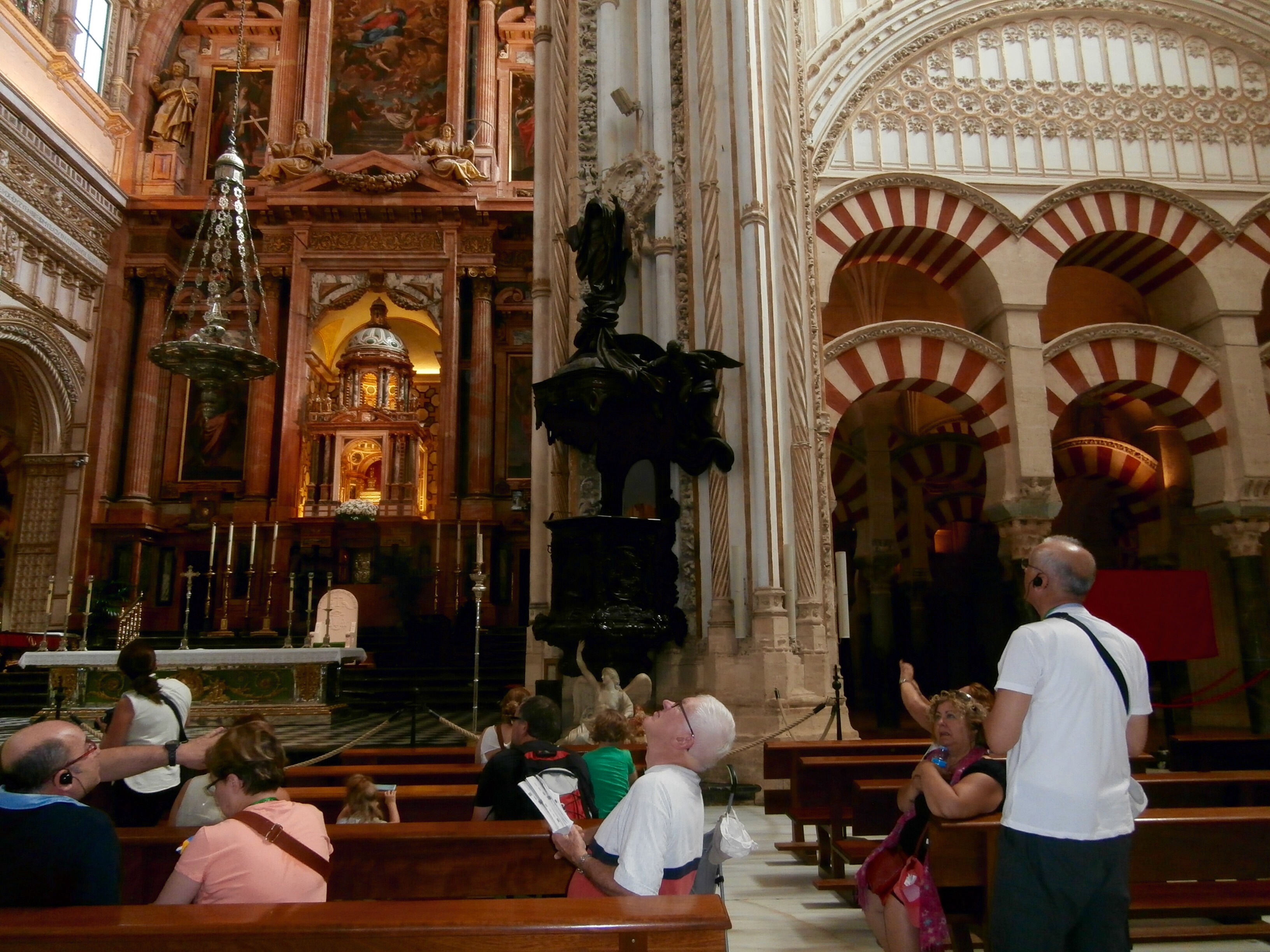
This photo of the main alter shows a man with his head bent backwards so he could get a glimpse of the beauty on high. I have come away from today’s tour with a very sore neck indeed as this was a necessary manoeuvre in order to see the beauty and contrast in the Islamic and Christian designs. My recommendation for a visitor would be to bring a small compact mirror so you can view the ceilings without the neck-bending. I had first noted this trick when we visited the Sistine Chapel a few years ago.
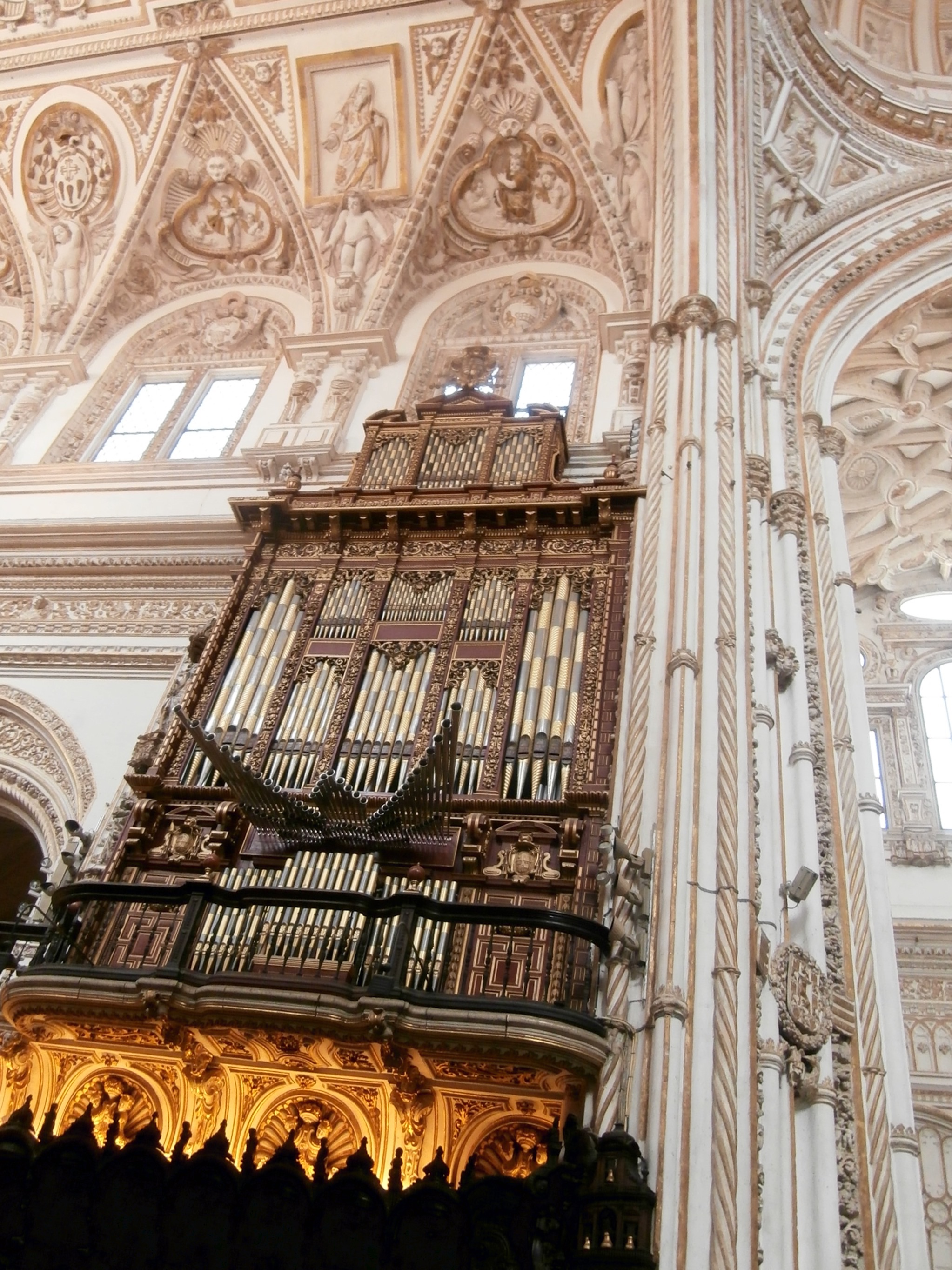
When we arrived for our tour we could hear beautiful organ music playing. It lasted for about half an hour and added a magical touch to our visit. There were two organs, one on either side of the Coro.
A series of chapels has been constructed along the sides of the original mosque. These offer a huge contrast in design between Islamic and Catholic symbols; the latter being more opulent and colourful. In contrast to the Islamic art, there are lots of statues and loads of paintings and murals. This chapel is dedicated to the Immaculate Conception, and was installed in 1854 when the Pope made Mary’s Immaculate Conception dogma of the Church.
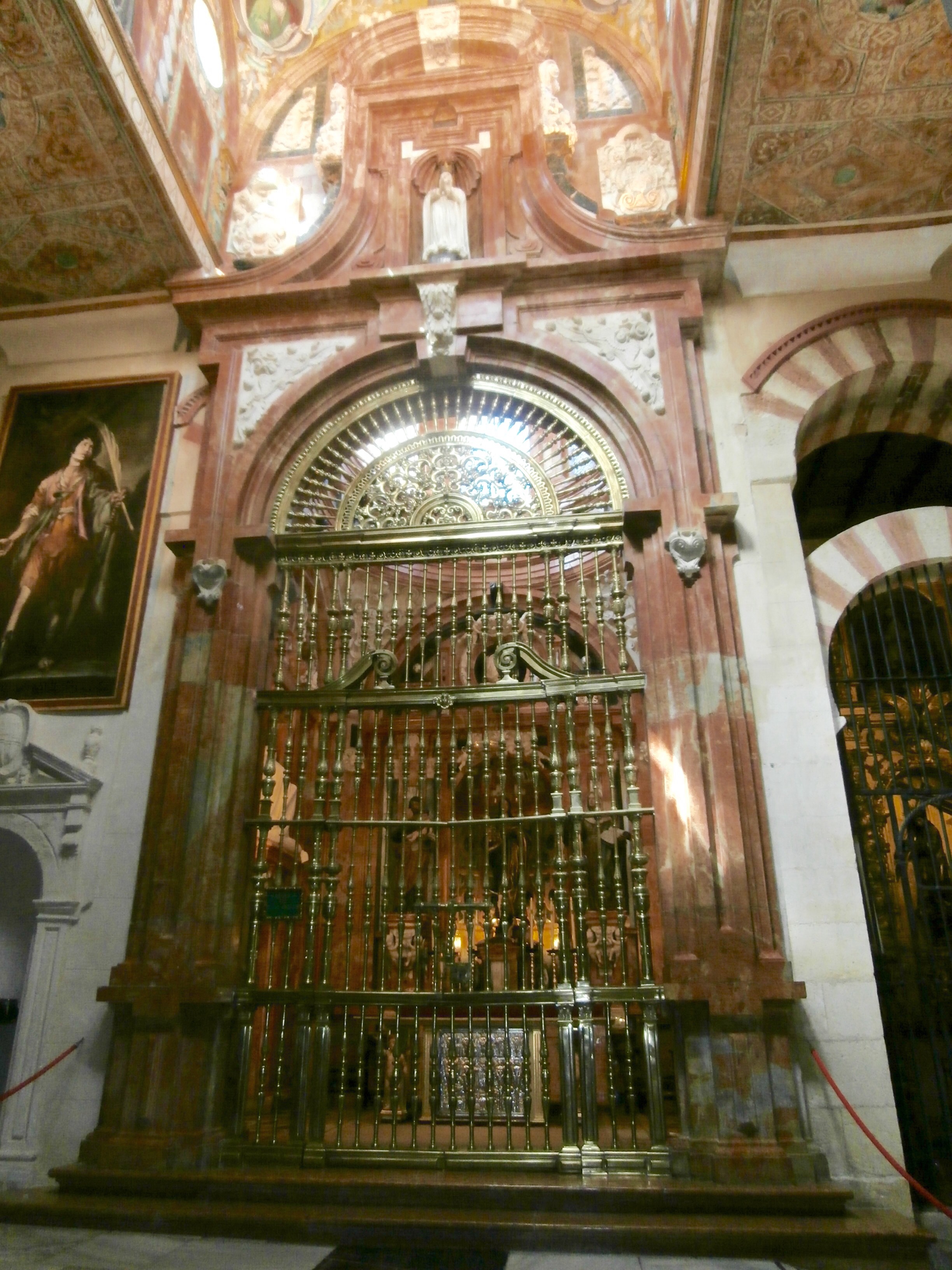
The various chapels were built by believers whose desire it was to be buried here.
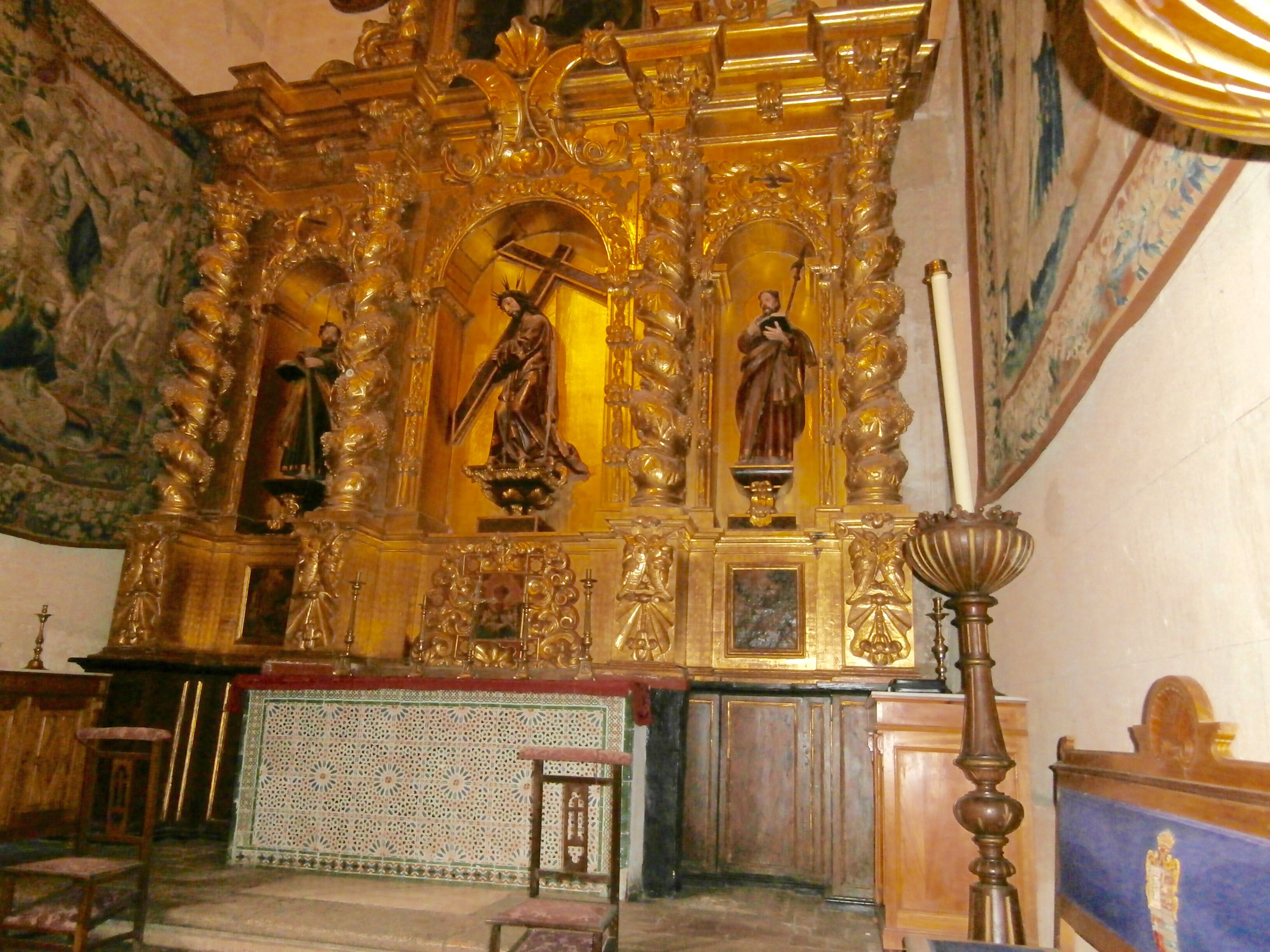
Unsure who is buried here, but Mick found this one interesting. It was right beside one similar to it, but red in colour.

Inside there are a number of museums and treasuries. One dedicated to Saint Clement (wasn’t Sister Clement our Year 6 teacher Bel?)
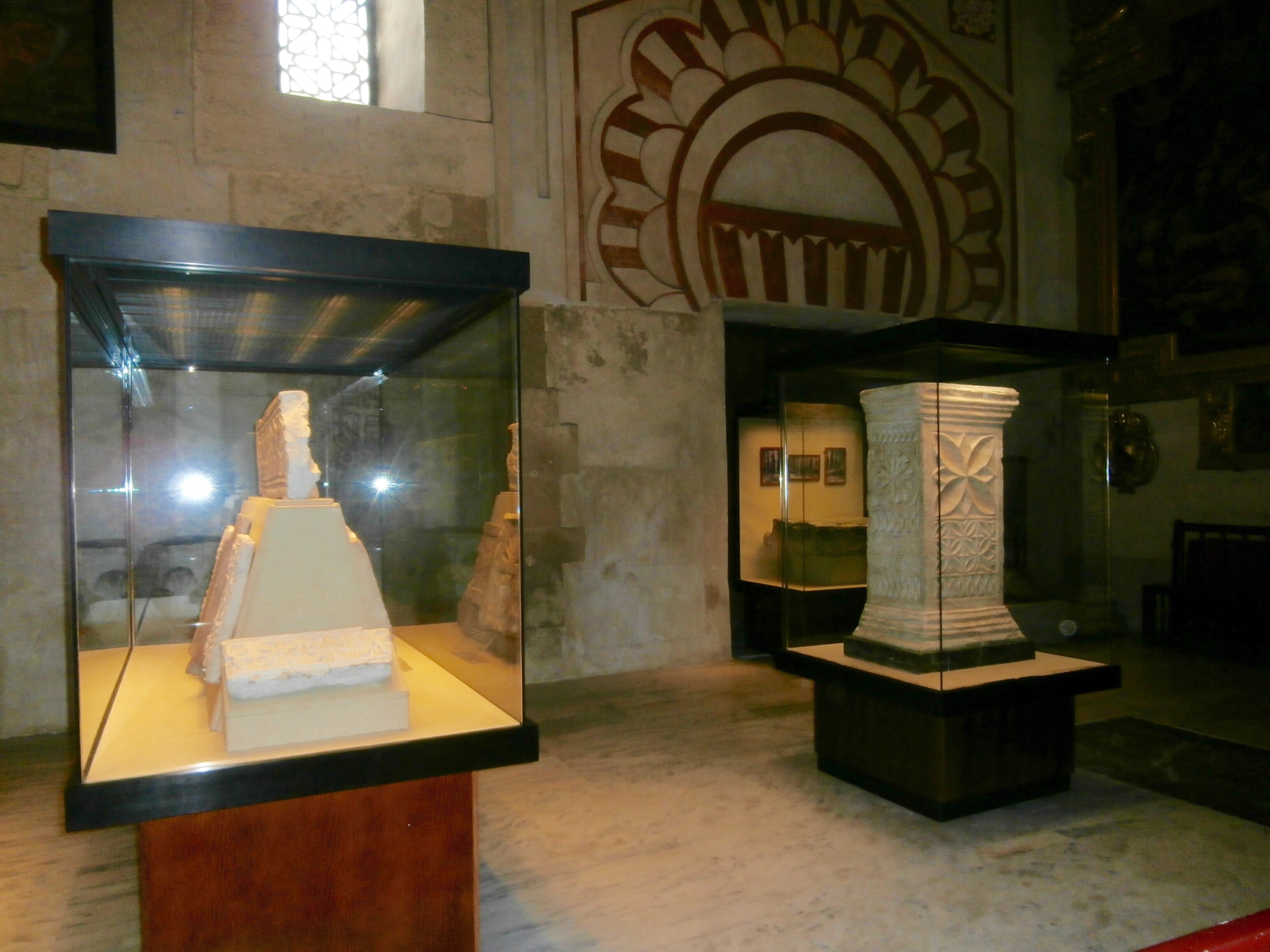
A quote from the brochure now because if I was to say this I might get into trouble.
“The Cathedral Treasury. Composed of pieces used for cathedral cult as well as for chapter and Episcopal usage.”
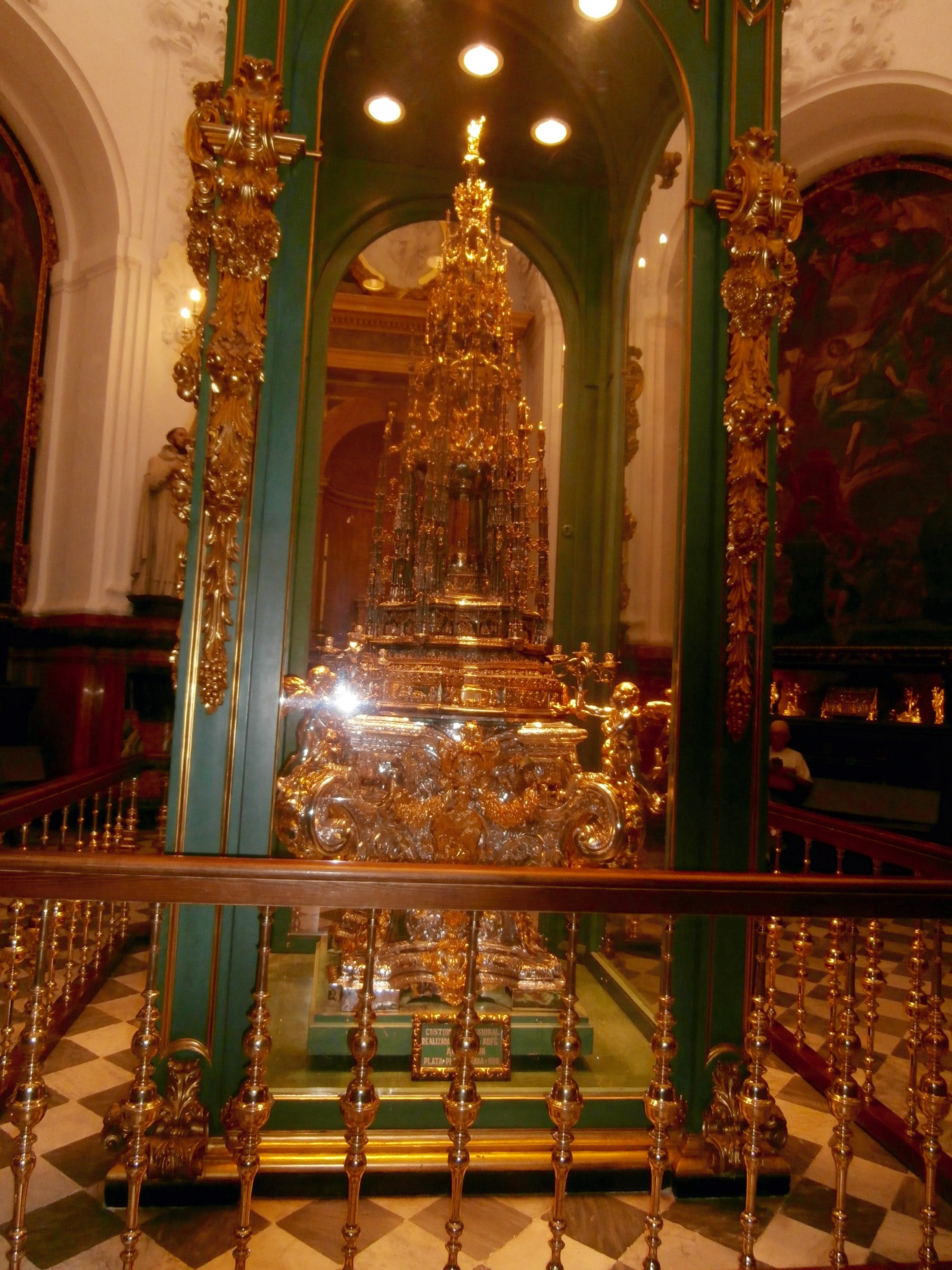
This monstrance is used in modern-day processions.
Finally, and I know this is a long post, Mick and I were disappointed to find out that since the early 2000s, Spanish Muslims have lobbied the Roman Catholic Church to allow them to pray in the Cathedral of Córdoba. And these requests have been rejected on multiple occasions, by both Spanish Catholic authorities, and the Vatican.
 Jane and Mick's Holiday Adventures
Hi Jane
Yes Sr Clement was our very old teacher. I am so glad you spent so much time in the Mezquita we did too it was the most amazing place I have ever see. From the Alhambra to this in such a short road trip!!!! We could not get over the history the detail, the music, the gold it was all amazing. We thought it was built with such devotion that was why it had lasted so long and been so cared for.we too were upset that is still not able to be shared as a place of worship for both religions. Another rant from Jude about the Catholics!!!
Keep having a good time where to next, you both sound like you like Spain as much as we did.
Bel
Sent from my iPad
>