Just as we are about to make our way to the Carcassonne Airport to catch a plane to London seems a perfect time to post this summary.
The Languedoc-Roussillon region where we have spent the last seven weeks is reportedly the largest wine growing region in the world – YES the world. (According to Wikipedia)
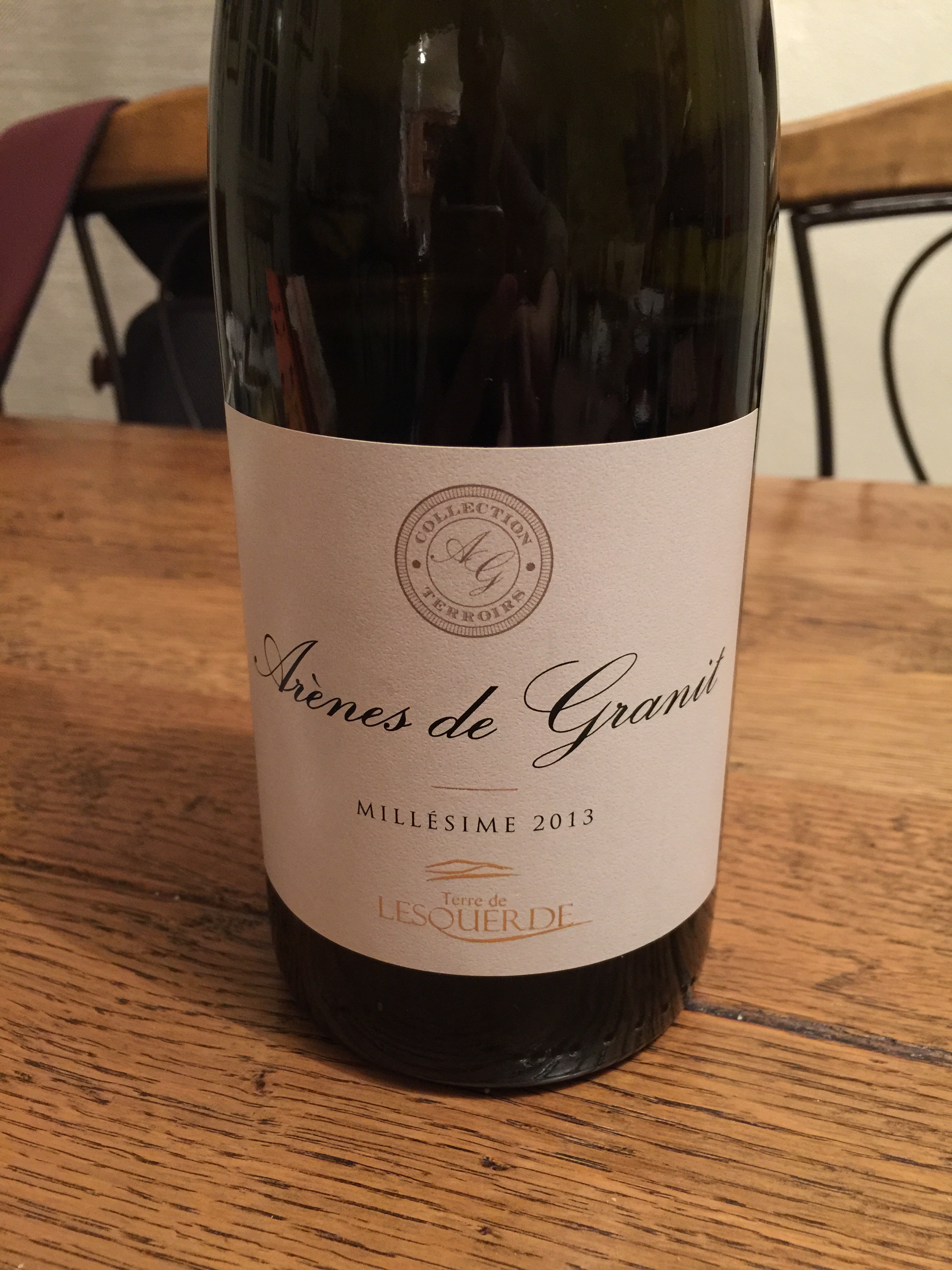
Producing about one third of all the wine made by France, has possibly been one feature that has made it one of our favourite French destinations. Initially the wine from this region was pretty ‘thin’ and was blended with better and stronger wine from Algeria, until its independence in 1962.
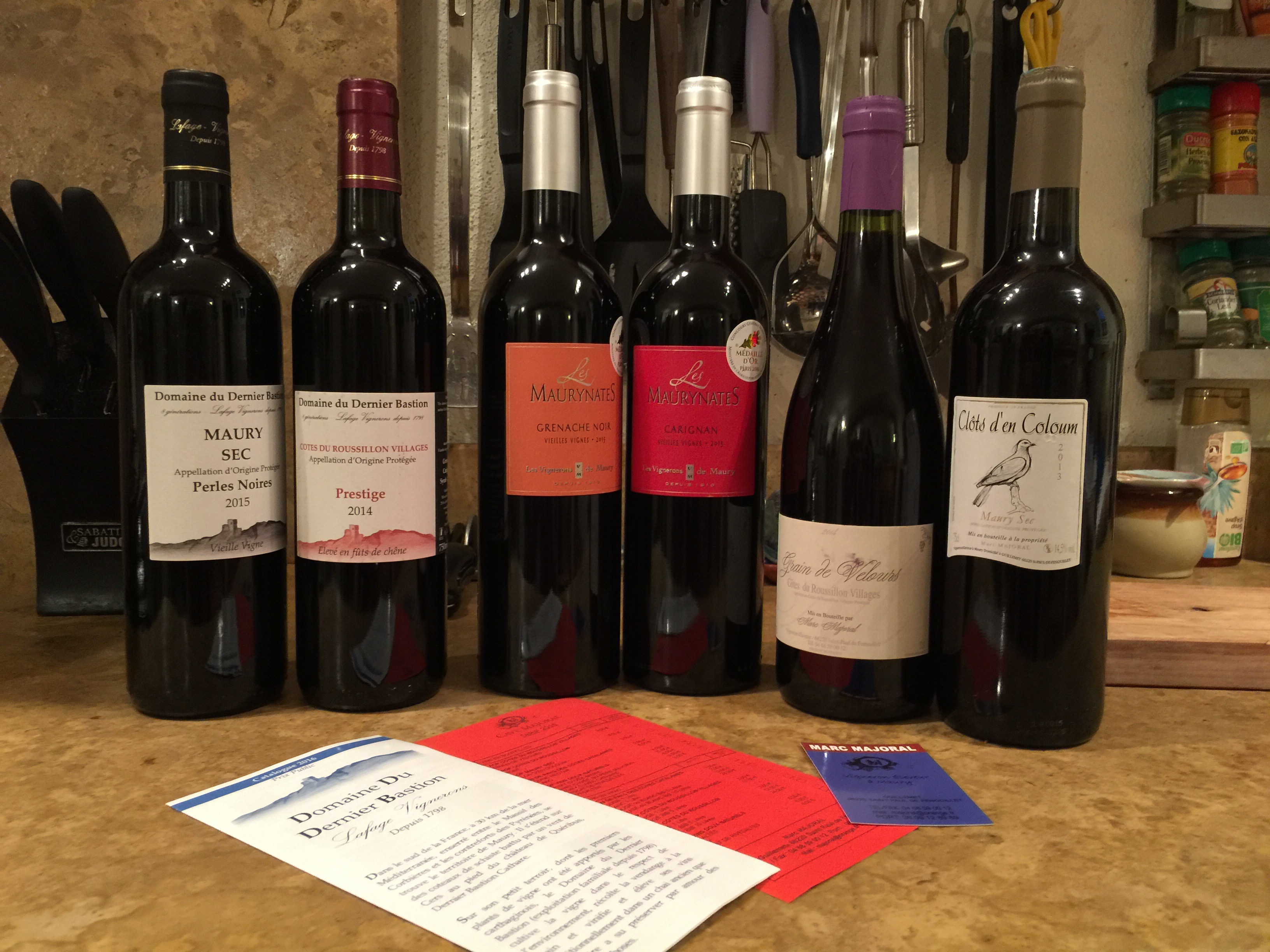
For research purposes of course, we have tried many of the local (dry) red wines which are similar to Australian reds in the alcohol content – 13.5%-15%: the number of sunny days the vines receive is a key factor in the percentage of alcohol.

But unlike Australian reds, we have not yet tasted a big chocolatey number. This has suited us very well. The local red wines are complex (far more complex than say Bordeaux varieties), but are also smooth and well-rounded. The grape varieties used here for the dry reds are similar to those used in Australia, for example Grenache and Syrah are the base for the majority of wines, with the addition of a variety we’ve not heard of before (which doesn’t mean it isn’t used) in Australia- Carignan. We’ve even tasted a 100% Carignan wine, which was very nice.

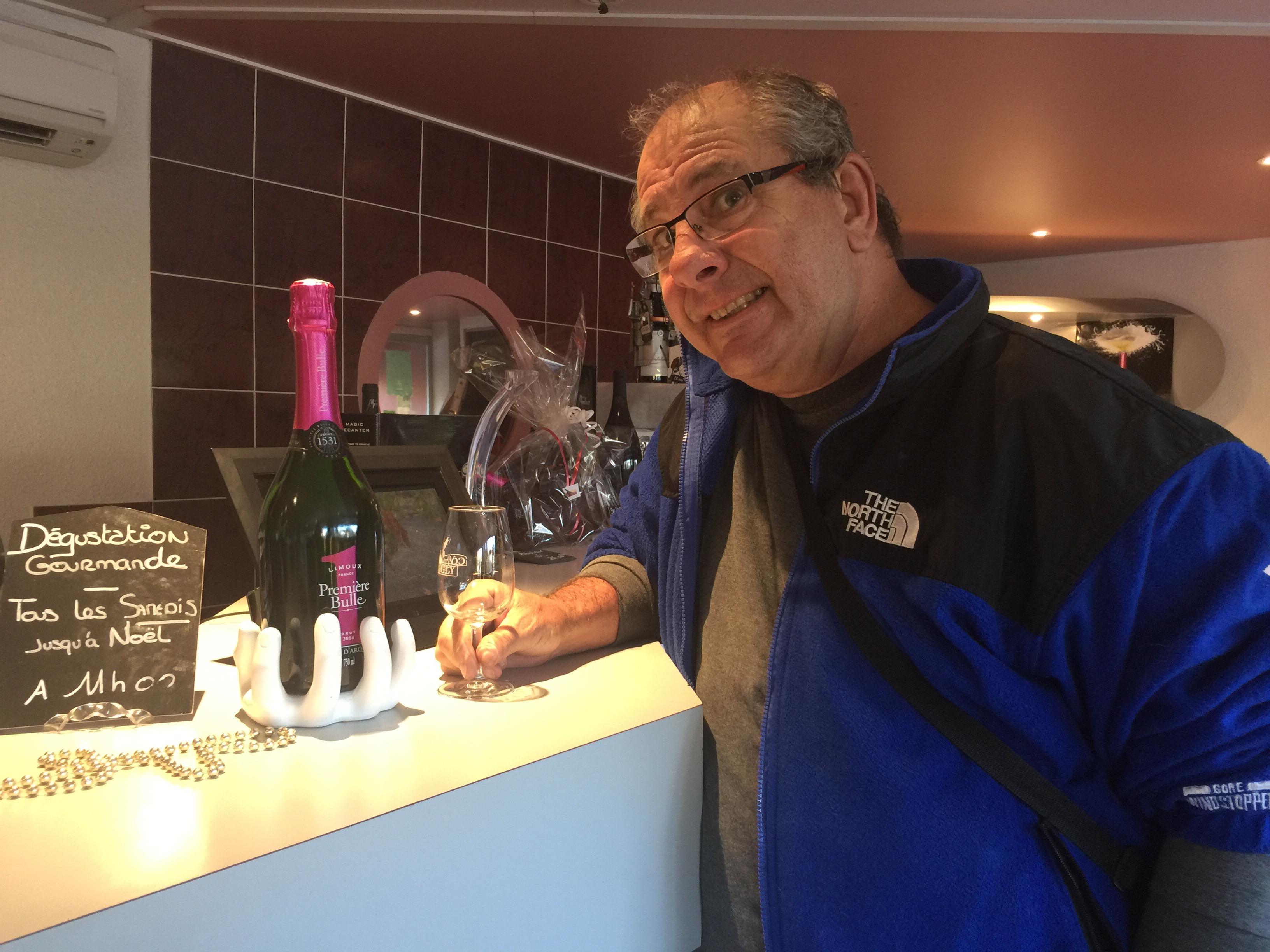
I have avoided the sweet white Muscat the region is famous for as well, although we were given a bottle by dinner guests as a gift, so Mick has tried that. There is also the Blanquette- sparkling white wine made by methode traditionale – that is produced here, and this particular one was a favourite of Mick’s. €10!
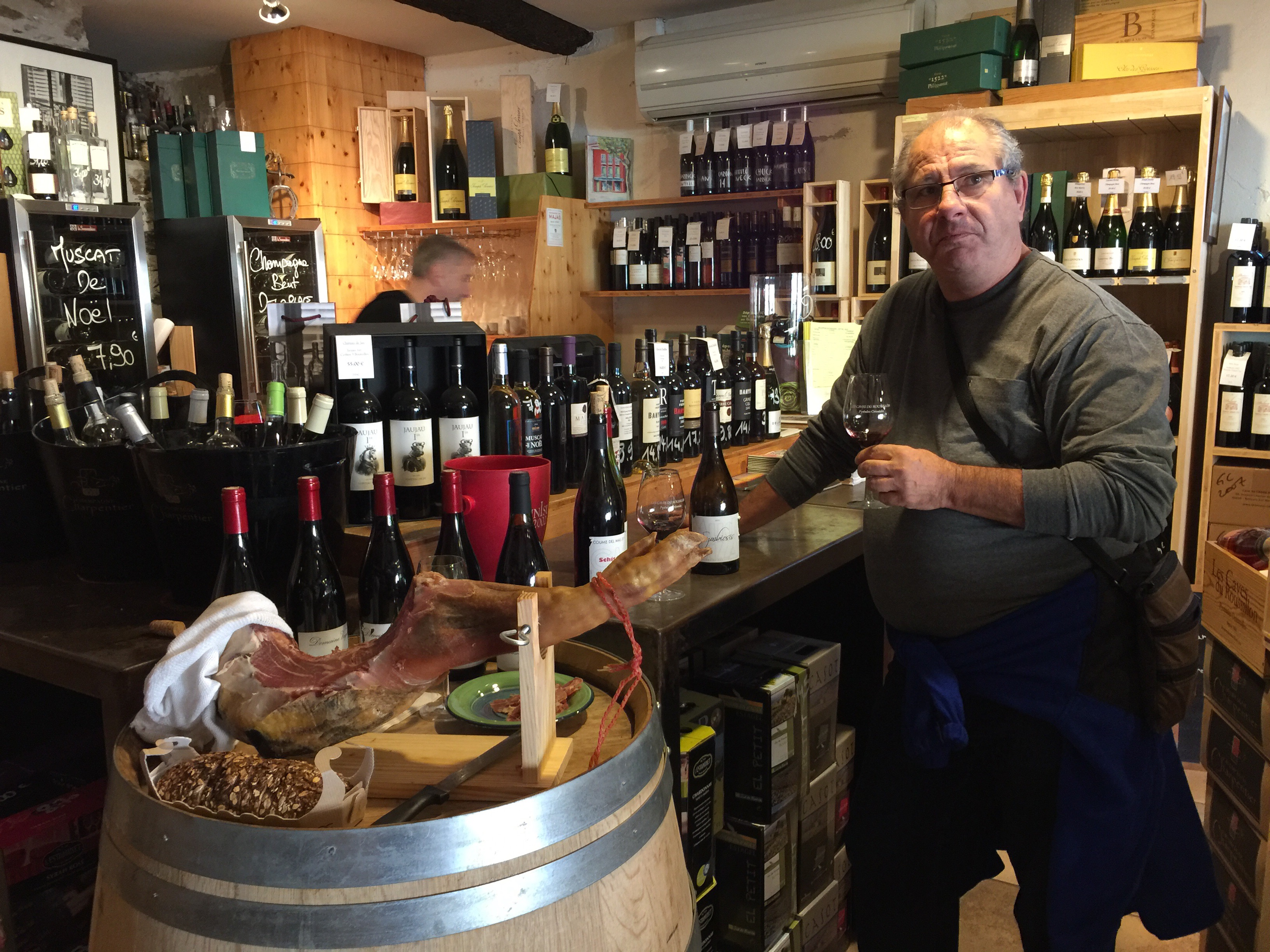
While in Port-Vendres, which is only a hop step and a jump from Spain, we enjoyed another tasting of local wine – this time with some freshly sliced Iberian ham.
Sadly for many winegrowers in this region, they have been just too good at making wine.
There has been a concerted effort by the European Union to reduce the amount of wine being made here. The area was referred to as “the wine lake”.
The EU has paid subsidies to wine growers to rip out old vines, rather than to continue to subsidise the industry against increasing competition. We saw firsthand evidence of this on our drives through the region.
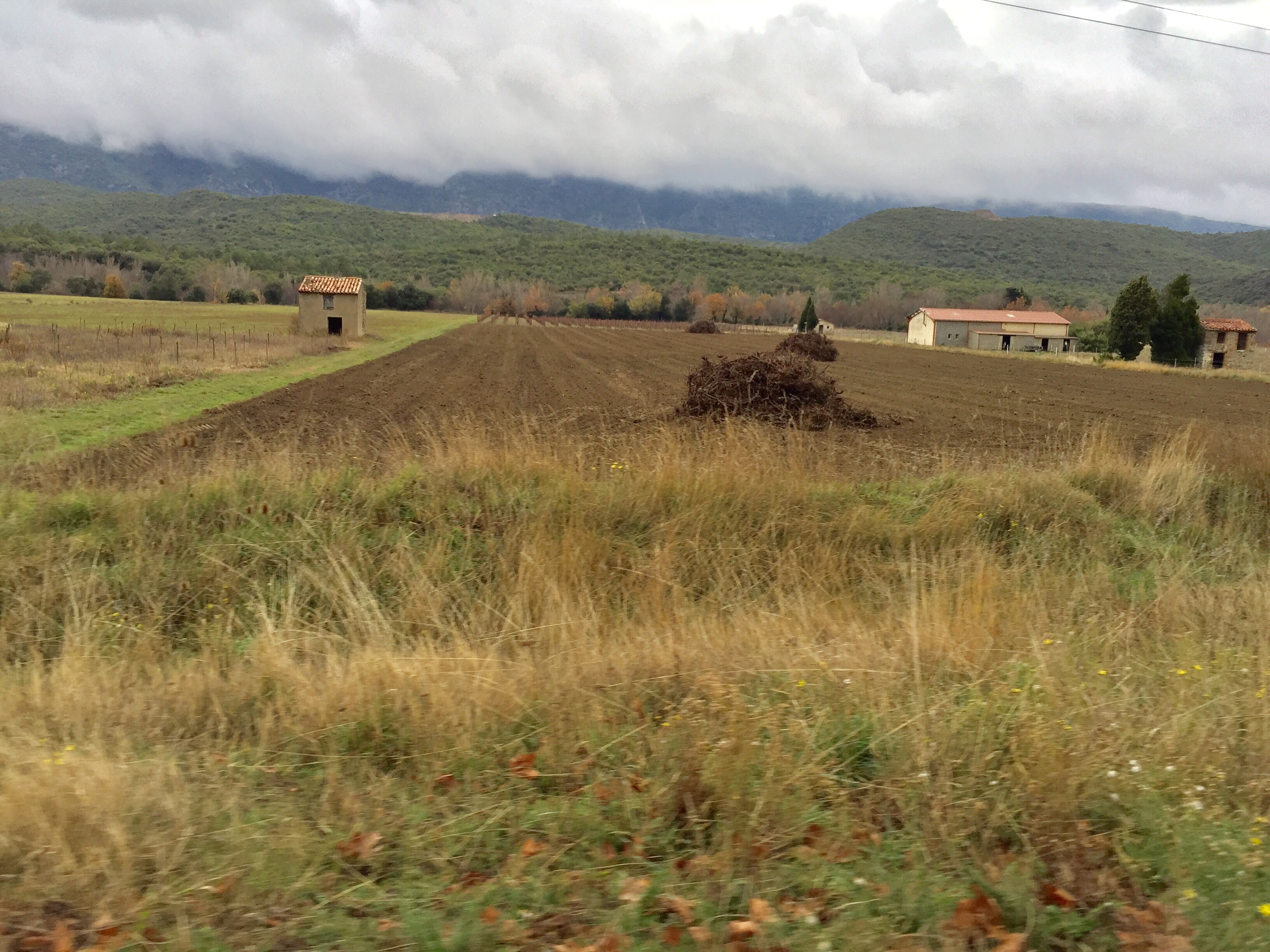
Those piles you see in the freshly ploughed paddock are old vines, ready to be burnt.
Notice also the small wine grower’s stone huts called casotes – scattered through the vineyards. They are used for storing tools and providing shade for the workers. What surprised us was how many of them there were which really showed how small each holding is.
Besides learning about the wine from here and tasting quite a bit of it, we have also learned that we serve our red wine too warm. Over here, even in winter, the wine is often chilled and served between 14-18°C.
 Jane and Mick's Holiday Adventures
If you remember Mum used to like her red wine slightly chilled. Always said room temperature in Australia is not quite the same as room temperature in Europe.