Toulouse is the fourth largest city in France with around 470,000 people (somewhere in between the populations of the Australian cities of Canberra and Newcastle). The Garonne river provides a majestic waterway through the city, and is bordered by impressive dykes that provide some insurance when it floods. The banks of the river in the city have recently received a face lift, and are heritage listed by UNESCO.


When we told people in Fenouillet we were coming to Toulouse, they told us that it is referred to as La Ville Rose (the Pink City), because of the use of clay bricks for many of the city’s buildings. We learnt that there is no building stone near to the city, and that most of the older buildings are constructed of stones and sand collected from the bed of the Garonne. The workers who collected these materials were called “Fisherman of the Sand”.
Toulouse is the Capital of Occitanie Region (previously named Midi-Pyrénées).
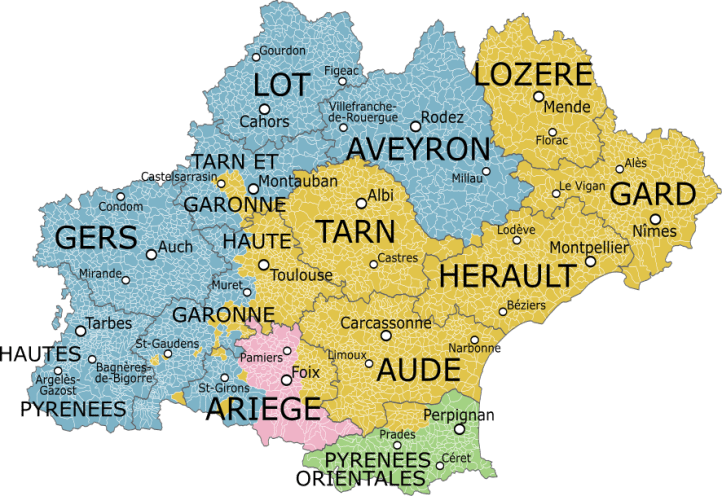
Mick and I were in this Region when we were living in Fenouillet. There are thirteen departments in this Region. Fenouillet was in Pyrénées-Oriental, Toulouse is in the Haute-Garonne, and when we move on to Auch and then on to our house sit, we will be in the department of Gers.
On our first day, Mick and I wandered around on foot and negotiated the underground Metro (which consists of two main lines deep beneath street level). We stumbled across a food markets near where we had breakfast.


On our second day we went on an e-velo (electric bike) tour (for €35 each). It was only me and Mick, and Yannick of course as our guide. It was fantastic,


Before we met our Yannick, we visited the Toulouse Cathedral which was nearby.


Mick and I though were in for a shock as we walked out. There was still no-one around, except for these fellows…..

You may need to zoom in to see the six heavily armed soldiers. We have no idea why they were there, and when we passed by three hours later, they were gone. Even our guide did not know why.
And yes, Mick had left the door open!!
The Canal du Midi starts in Toulouse and connects the Garonne River to the Mediterranean. During our bike tour, we rode along its banks for part of the tour.
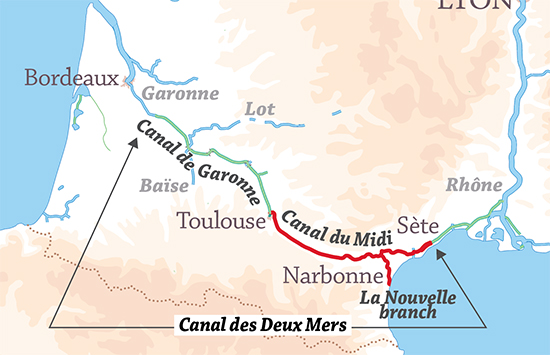
By David-waterways – Own work, CC BY-SA 4.0, https://commons.wikimedia.org/w/index.php?curid=61223716
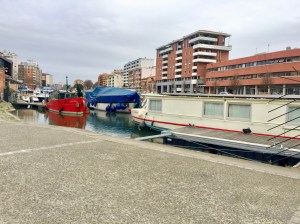
The canal is no longer used commercially, and is only used for tourism. These were some of the narrow boats we saw on our ride.
We also rode along a second canal – Canal de Brienne – which connects the Garonne River to the Canal du Midi.
We stopped here for Yannick to explain how the use of the canal had changed over the centuries. He pointed out that a very popular tourist activity is to ride alongside the canal all the way from Toulouse to the Mediterranean. Mick and I thought that sounded good, so long as we could use an e-bike.


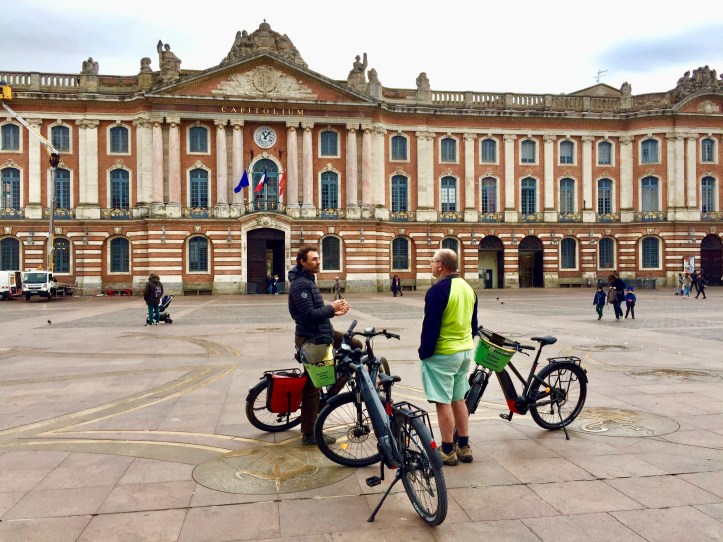
This building houses the town hall and theatre and some important state rooms, but it didn’t always look like this. In fact, that building (which is actually a number of buildings), like quite a few others in Toulouse, is hiding behind a façade. This one dates back to the 18th Century. Yannick explained that the façade was built and the property owners could buy one or two windows and then they had to connect their property to the façade.
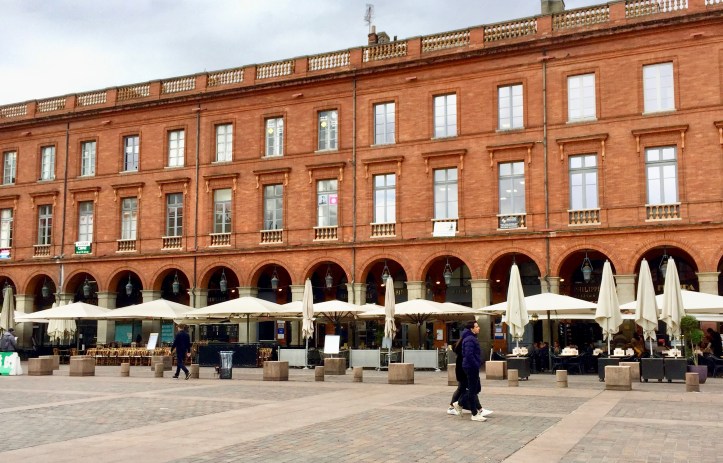
This is opposite the Capitole and in the same square.
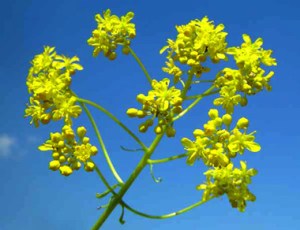 One fascinating fact about Toulouse was how it originally became such a wealthy centre – and it has something to do with this plant, which is referred to in Toulouse as Pastel.
Of course it has a scientific name as well – but it was actually the tiny leaves of this plant that were so valuable.
And that is because once the leaves were dried and ground they made a fantastic dye. The following photos show the first step of soaking the material, and then the second shows the resulting colour once the material is dry.


Our time here flew and it wasn’t long before it was time to catch our train to Auch.
 Jane and Mick's Holiday Adventures