Little did we know that we were staying very near to the once capital (then called Elusa – and now known as Éauze) of an Ancient Roman Provence. Elusa was the capital of the Provence from the 4th to the 7th Century.
A few kilometres away from Éauze, and a few more from us, lie the remains of an extraordinary villa (Villa de Séviac). It is set among the vineyards and cypress stands. Initially discovered in the second half of the 19th Century, possibly when a house was built near to, or on top of the ancient villa. In 1911, some excavation of the site commenced, funded privately by a Paris-based doctor, and ceased with his death in 1913. Then in 1959, Paulette Aragon-Launet funded extensive works and preservations to create the site we visited. She continued to fund this work until she died in 1992.
And very recently (in 2010), this modern structure was built over the ruins to protect them. Excavation is continuing. But you can walk around this site and get up very close to the remains of this villa.
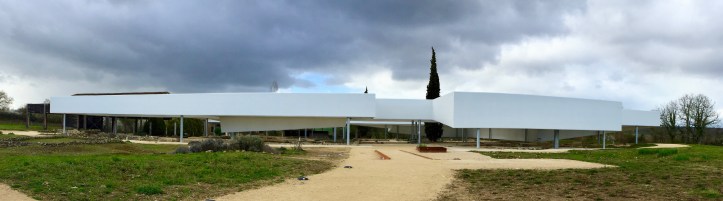
This roof is covering what was once a huge residence / palace thought to have housed a family of about 30 people with around 60-70 servants. The owners were most likely wealthy citizens of Gaule during the Roman occupation.
How big is big?
Well, the villa covered approximately 6500 square metres including more than 620 square metres of mosaic floors, which is the largest in France.


It also had a bath complex – about 500 square metres in size that comprised hot and cold baths, large and small, as well as communal toilets that could accommodate six people at a time. Running water continually flushed the drains beneath the toilets.
Pretty amazing.
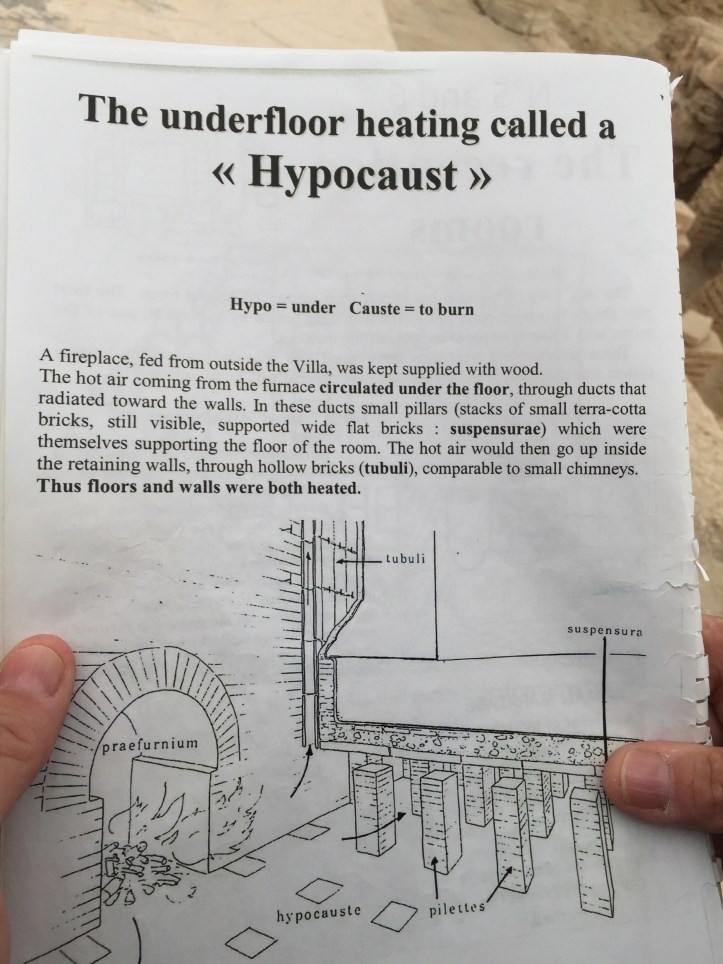
But what really surprised us was the clever underfloor heating system that was installed under large parts of the residence. Some of it apparently was later disconnected once the mosaics were completed on certain floors.
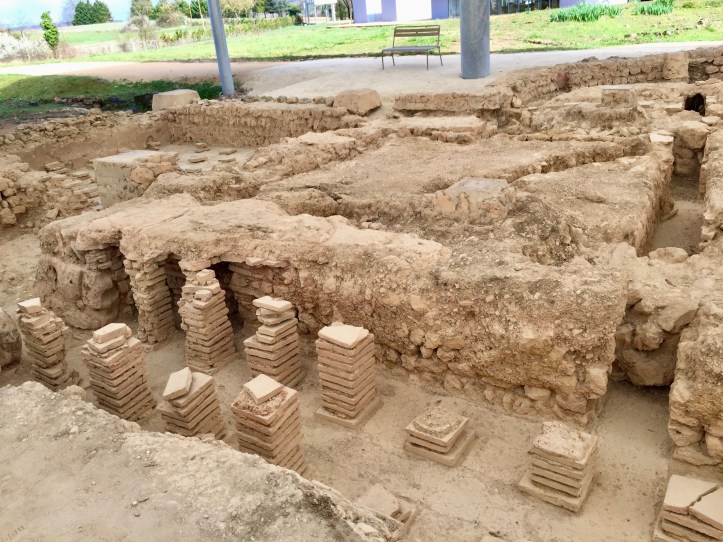
A lot of work and money has gone into excavating this site, and it continues today. It was well worth the visit at €5 each.
 Jane and Mick's Holiday Adventures