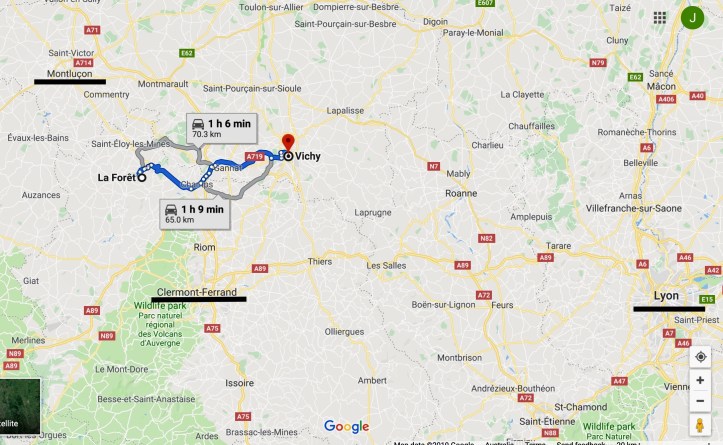
Today we visited the city of Vichy – the fourth largest in the Auvergne. It has a population of just over 25,000 and only just over an hour from where we are house sitting. The map below shows where Vichy is in relation to some of the places we have stayed so far this year – Montluçon, Clermont-Ferrand and Lyon.
It is famous for being a spa and resort town – and it welcomes thousands of French and foreign spa visitors each year. Natural carbonated sodium thermal spring water which gushes out at a temperature of between 22 ° C and 75 °C, is used for many different treatments.
But it is its place in history during World War II that it is probably most well known.
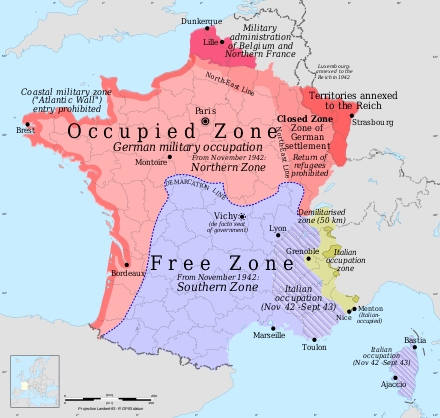 Following the defeat of France by Germany, Vichy was established as the seat of government for Vichy France; chosen because of its proximity to Paris, and also because it had a large number of hotels – which were used to house the new government.
This ‘borrowed’ image from the internet shows the demarkation zone and Vichy’s place within it.
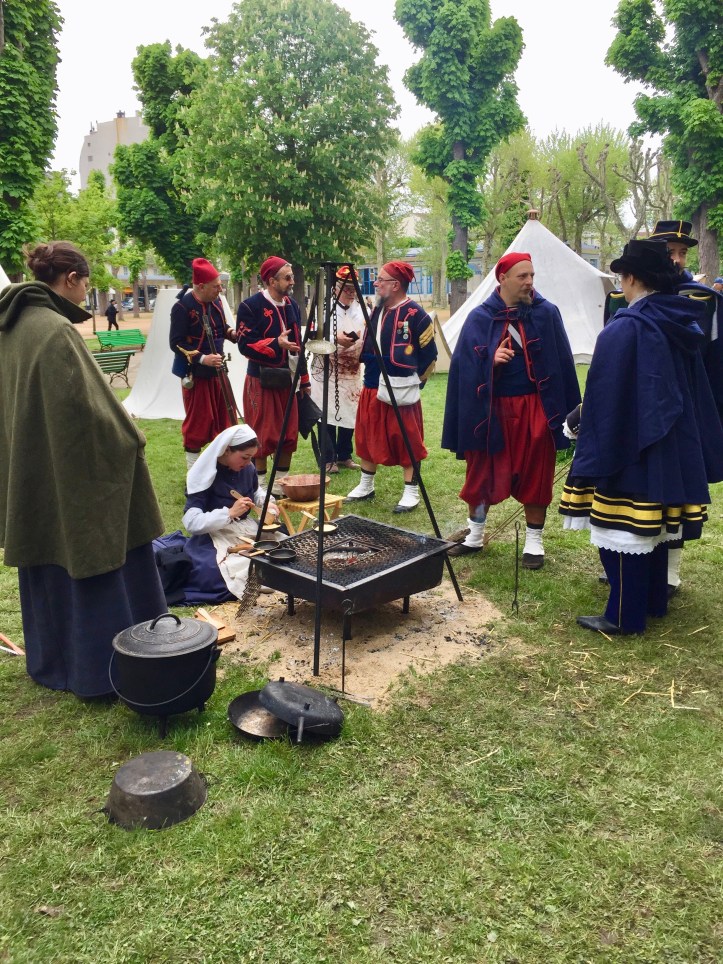
And, today when we visited Vichy, the city was celebrating history in style.
But not the relatively recent history of WWII (which I think it would rather forget), rather it was celebrating the history of the Second Empire – the regime of Napoleon III from 1852-1870.

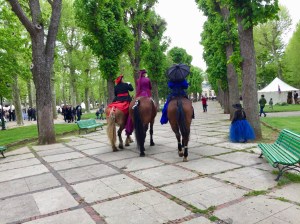
It was quite spectacular -with hundreds of people dressed in period costume, simply walking around or demonstrating life as it was back then.
The festival was being held by the association “Les Arquebusiers de l’Est” which
is a group of enthusiasts passionate about history, uniforms and military equipment; they practice the historical reconstruction of several epochs of the French military history, privileging the Second Empire (Napoleon III with all the campaigns of the time: the Crimean, Italian, Chinese and Mexican war as well as the French war – Prussian 1870-1871) and the so-called “War of 30 years” (1618-1648).


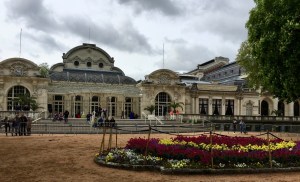 The event was being held in Le Parc des Sources de la Cité Thermale, which is right in the centre of the city, near the Vichy Opera House (left).
The demonstration that interested Mick the most was the blacksmith display. His grandfather had been a blacksmith back in Attunga at the start of the last century.


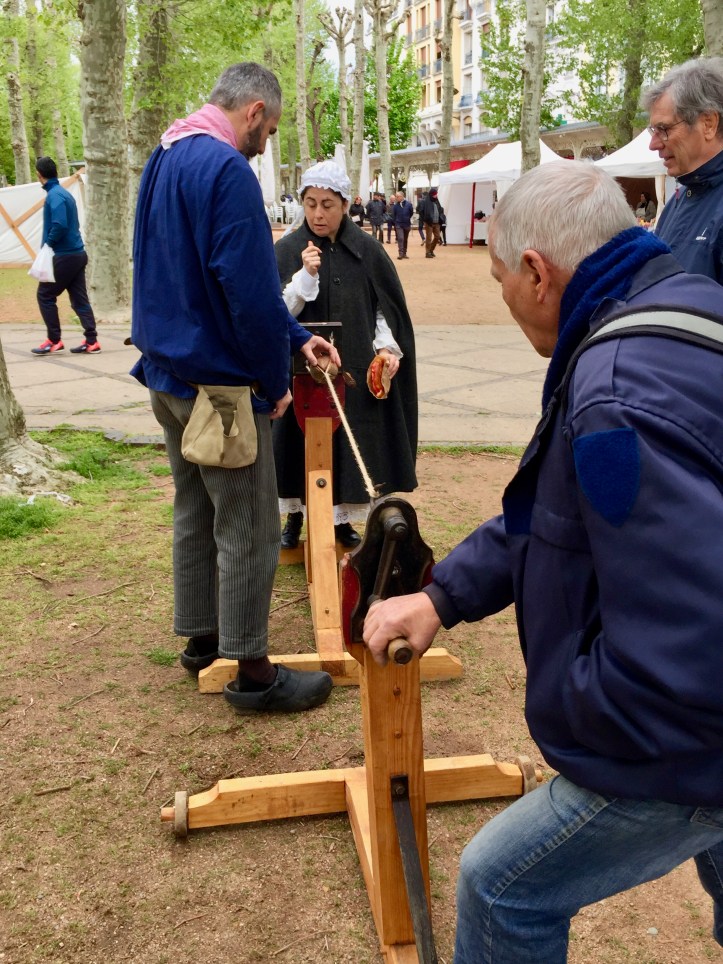
The rope-making demonstration also caught Mick’s eye. He was happy to stay and watch this process for many minutes. Meanwhile, I was observing a different display.
At the other end of the park, near the Halle des Source – where you could try the local mineral water that was bubbling up from below the ground – was a majestic hotel – Compagnie de Vichy.
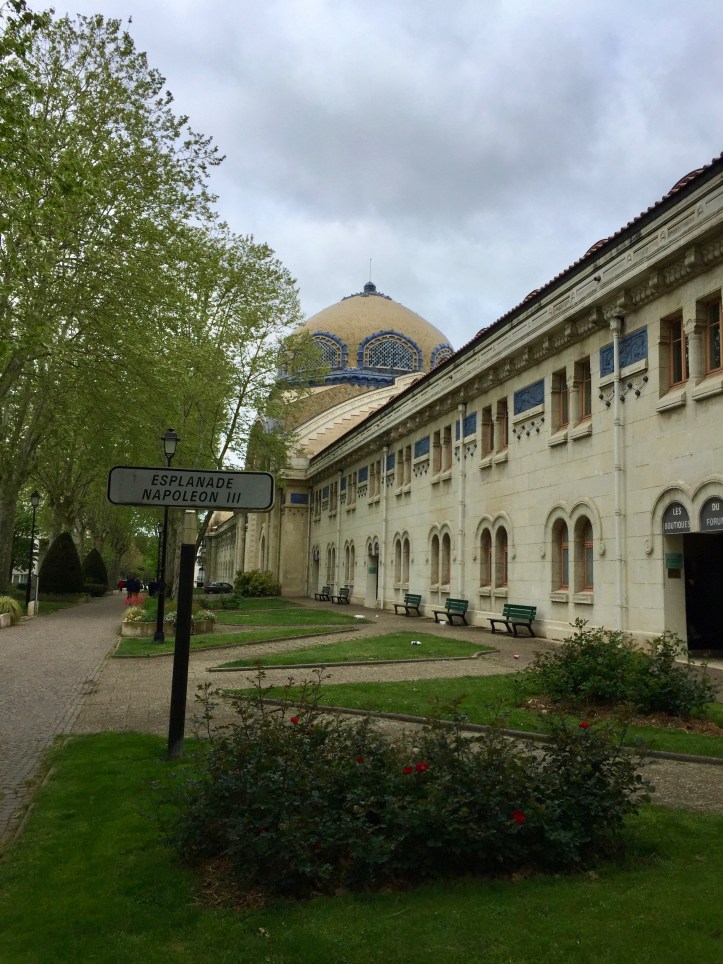
Under Napoleon III, the Vichy thermal baths (which had existed for hundreds of years) were further developed. The management of the baths was entrusted to a private company – Compagnie de Vichy – which is still operating today.
We could have spent a lot more time in Vichy – it looked like a very interesting city, but we headed back home via the Gorge de la Sioule (where we went a few days ago), and stumbled across Château Chouvigny – a 13th Century military castle that sadly is only open during the summer.

One more stop ……. for lunch.


A battle-axe is a term, generally considered pejorative, for an aggressive, domineering and forceful woman.
Maybe he meant three!!
 Jane and Mick's Holiday Adventures