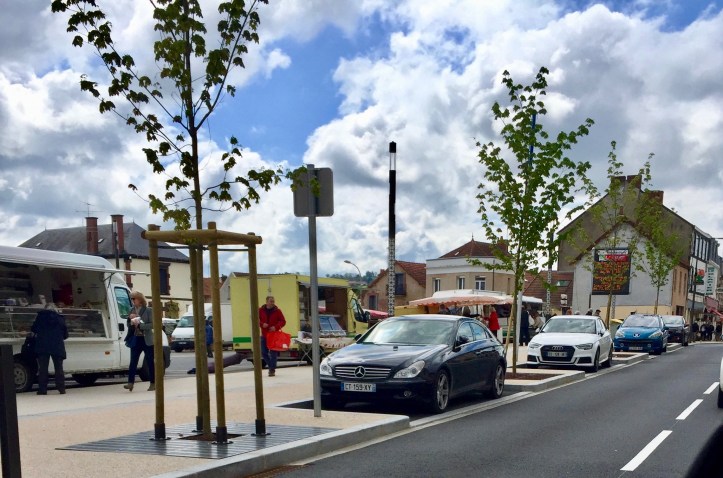
Saint-Eloy-les-Mines (pronounced something like this….cent-ay-low-wa-lay-min, and often referred to simply as Saint-Eloy) is the largest town near to us. It is not a pretty town, and despite some very recent works to the main road through the town, it still isn’t attractive. In fact, I think the new road actually makes the town look less attractive – but possibly it is more functional. Check out these car parking spaces – totally surrounded by cement gutters that make parking in them look impossible – to me anyway.
I have not been brave enough to try them – an accident waiting to happen!!
But since the 18th Century, Saint-Eloy was known as a mining town – hence the term “les mines“. So what did it mine?
Coal – from what was referred to as “the great coal furrow of the Massif Central”.
I have waited until we are almost about to leave the area to write this post because Mick and I wanted to go to the museum here. I think we were the first customers for the new season which opened today (the first weekend in May).
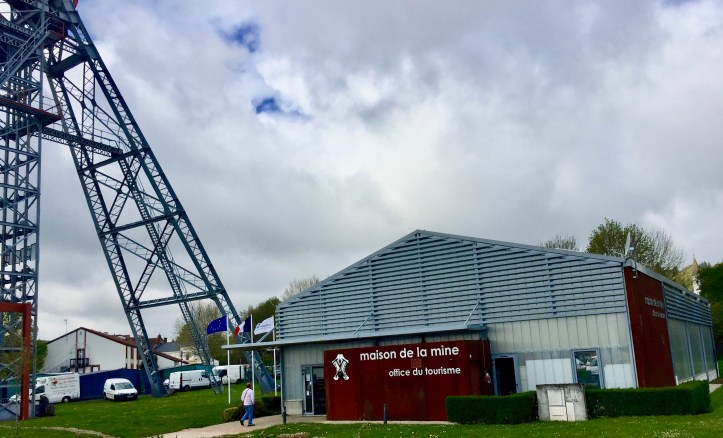
There were two elderly French men inside, both might have been ex-miners, and a young woman who took our €2 each. They were pretty surprised their first customers for the day (and only customers while we were there) were Australians. They asked us if there were coal mines in Australia. Oh, how we could have had a great conversation about what is happening at home at the moment about the proposed new coal mine in Queensland, but our conversation skills were not up for that. So, we just said “oui” and told them we found the museum very interesting – which it was.
For many years, coal was mined in and around the town. And, as with many coal mines, there are tales of poor conditions for workers and also of tragedies. There is a street in Saint Eloy named Rue du 26 Janvier 1950, because on that day 13 miners died and 20 were injured after a fire-damp explosion in the mine. There was a big section of the museum dedicated in their honour.

Some of the photos showed how the workers came from many different parts of Europe, and also from Algeria.
The once agricultural town almost doubled its population by the end of the 1940s when there were more than 3000 miners.
However, coal mining no longer occurs here because the coal is exhausted. Mining ceased at the end of 1977, although it had been predicted the coal would run out sooner than that. There had been no new people employed at the mine since 1958, and on the day it closed there were only 44 miners.
And since the mine’s closure, the population has been declining (in 2015 – around 3700 people).
Today, all that remains is the head of St. Joseph’s Well. All other parts of the mine have been demolished and removed and the town has tried to re-invent itself and attract other forms of industry to employ the locals.
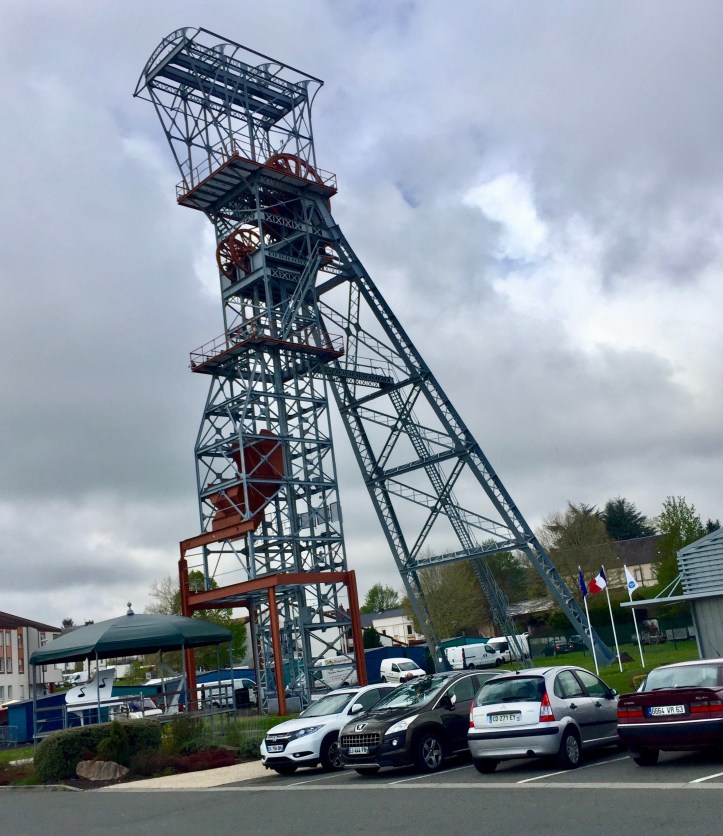
Mick commented that back when the mine was operating, the whole town must have been covered in soot. That is certainly not the case now.
We leave our house sitting assignment in the Auvergne in three days time and we have really enjoyed our time here.
 Jane and Mick's Holiday Adventures