
Pic Saint Loup is a mountain about 20 km to the north of Montpellier. The vineyards in this part of Longuedoc have a different climate and soil structure as a result of this pic. And as a result, it provides a specific ‘terroir‘ for the wine producers. The wine producers in this area have combined to form the AOP (Appellation d’Origine Protégée) of Pic Saint Loup.
We were told that Pic Saint Loup is becoming very well known and very popular. As it turned out, neither Mick nor I really liked these wines. Now that could be a first!!
Mick and I went on this tour with a very knowledgeable guide, Bertrand, and three others customers – two Canadians and one NZ woman who was in town to support the NZ women’s soccer players, who were sadly beaten by Cameroun 2-1.
Bertand told us that the AOP regulations for the winemakers here if they wanted to label their wines as Pic Saint Loup included the following. For red wines they must:
- use at least 50% Syrah;
- make up the next 40% with at least one of the varieties of Grenache and / or Mourvèdre;
- make up the remaining 10% from any combination of Cinsault and / or Carrignon.
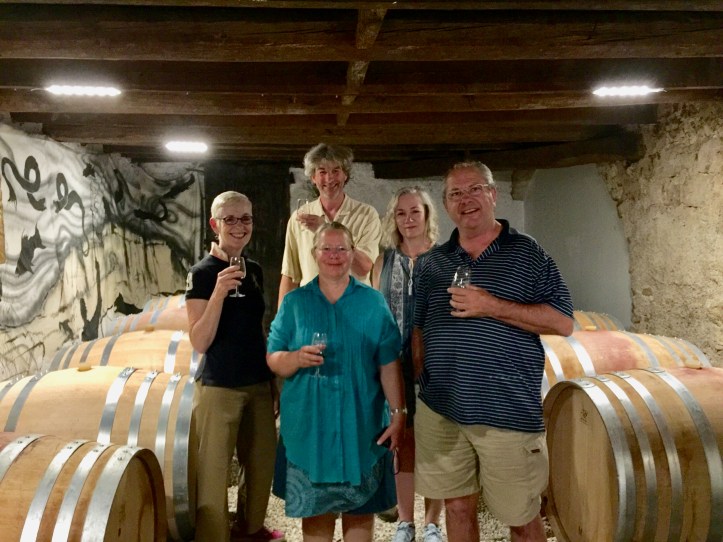 This photo was taken in the cellar of Château de la Salade Saint-Henri, where oddly enough Mick and I did find a wine we liked, but it was not allowed to be labelled as a Pic Saint Loup wine because it was 100% Carrignon. We bought a bottle for €15 and thoroughly enjoyed it.
Before you ask – this château has nothing to do with green leafy salad – the name was selected because of the discovery of a Roman helmet on the site. Obvious isn’t it?
What was particularly special about this winery was that it was one of only 4 in this AOP that was operated by women – a mother and daughter team.
Our second stop was to a different winery – Château La Roque, where we learnt that the term château does not only apply to a castle, which is what I had thought. I should have realised that not every wine maker had a castle!! Bertrand explained that a château was so called because it was ‘enclosed’ or fenced off from other vineyards – a total entity where the grapes were grown and where the wine was made. At Château La Roque they used what we would call ‘cattle grids’ across the road near the entry gates, but they weren’t being used to keep cattle in (or out), rather they were there to keep out wild boar.


This château has recently been given a full make-over and it was stunning.
There was only one part of the château that had been left pretty much as they had found it when they were doing it up…..
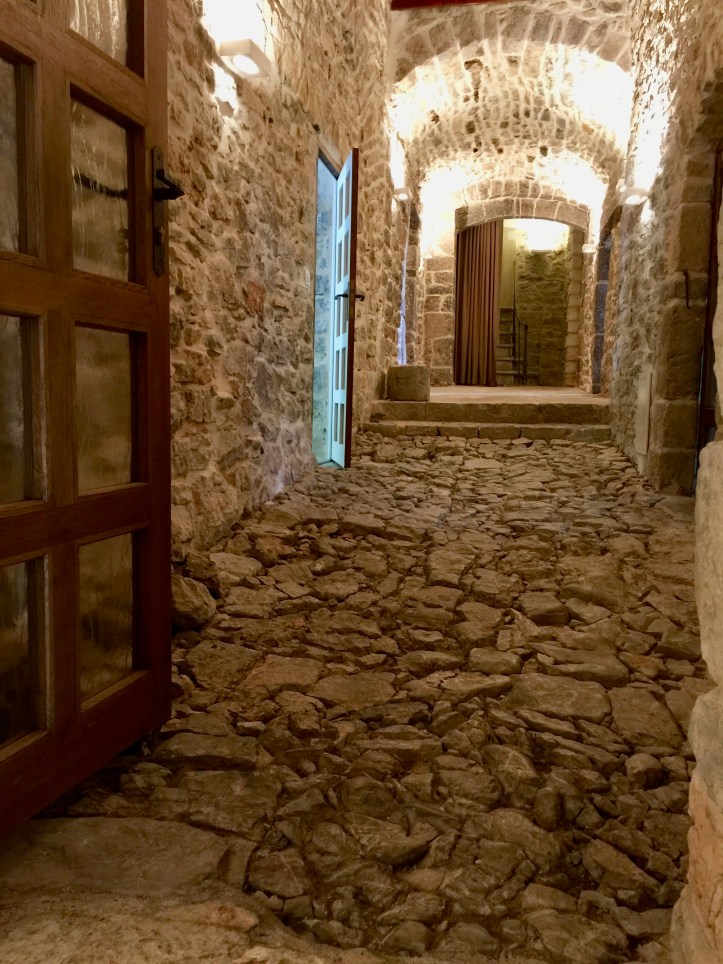 …. this section of the floor which led from the tasting room to the toilets. It was left because this in fact was an original section of a Roman road. Amazing!
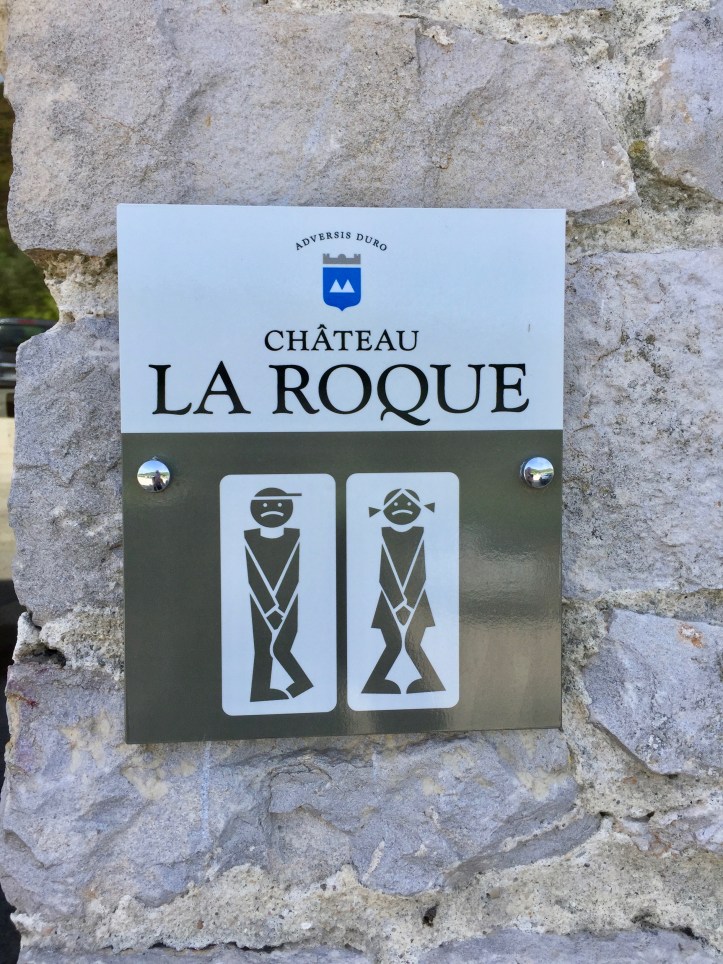
I really liked their label to identify where the toilets were!
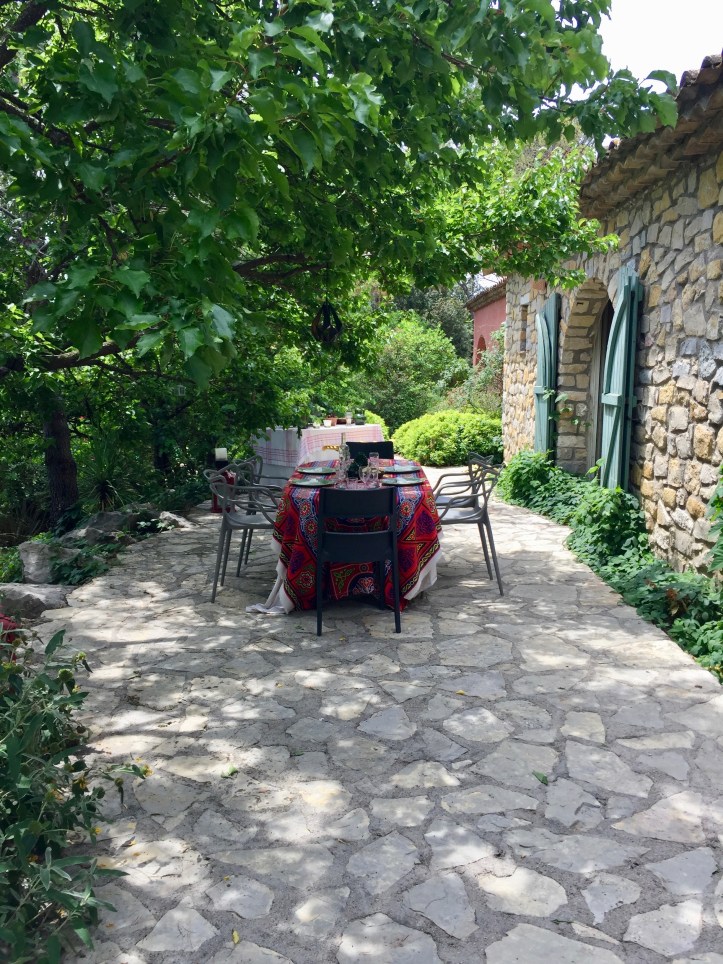
 Following the wine tastings, we went to Bertrand’s family home where his wife had prepared our lunch, which we ate with some of the Pic Saint Loup wines. It was a very nice experience sitting beneath the shade in a French village, swapping travel stories with strangers from other countries. Part of the experiences that Mick and I really enjoy about travelling.
To finish off the tour, Bertrand took us to visit a smaller village – Les Matelles – and we wandered around the pedestrian-only streets.


During our tour, Bertrand told us some of the history about how and why the Longuedoc region re-invented itself. As I’ve mentioned before, this part of France makes large quantities of wine, and many years ago it was mostly the table wines, which are lower in alcohol content. He said that in the mid 20th Century, everyone was encouraged to drink wine as it was safer than drinking the water – that was what the people were told anyway. He went on to tell us that workers would take wine to work to have with their lunch and that even some large companies provided wine for their workers at meal times.
The most surprising thing for all of us on the tour was that apparently fairly recently, in 1981, has a law been introduced in France to prevent students drinking wine at school. I did some research on the internet to find out more and this article was most helpful.
France’s historic relationship with alcohol is a complicated one. The first-ever campaign to try to get the French to reduce their alcohol consumption was orchestrated by then-prime minister Pierre Mendès France in the mid-1950s. That campaign encouraged the French to “drink less than a litre of alcohol per meal”.
In 1956, France also banned the serving of alcohol to children under the age of 14 in the school canteens. Prior to that, school children had the right to drink half a litre of wine, cider or beer with their meals. It was only in 1981 that France implemented a total alcohol ban in the country’s schools.
When Mick and I went to school, way back in the early 1970s, we went to a very ‘modern’ seniors-only school where we were allowed to smoke in our common room. That would be unheard of now. But, to think we might have also been able to drink wine if we were in France may have meant we would never have made it through university!!
 Jane and Mick's Holiday Adventures