Another gem of a French city, which Mick and I really liked.
Dijon has a very large pedestrian area around the old city and there looks to have been a lot of money spent to ensure the city is looking its best. The architecture is eclectic, and the tall buildings provided welcome shade as we walked around the streets during the hot summer days we were there.


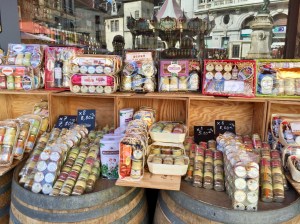 We discovered that the name ‘Dijon‘, as it relates to mustard, is no longer a ‘protected’ or ‘copyrighted’ name, and all around the world, Dijon mustards can be, and are different. What makes a ‘dijon‘ is the addition of verjuice (vinegar) to the ground mustard seeds.
Mick and I were so surprised when we got to taste a real Dijon mustard at the most famous Dijon Moutarderie – Edmond Fallot. They were very hot, and delicious.
 Edmond Fallot (pictured here with the large window and poor signage) is most famous because this company has a ‘copyrighted’ recipe for a mustard it makes called Moutarde de Bourgogne, which is made using the (inferior local) white wine Aliganté. The company makes dozens of flavoured mustards that you can taste before you buy. We also bought some honey made from the pollen from mustard flowers. They sold every product imaginable relating to mustard trees.
Two other reasons this producer is so famous is that they do not use heat when they crush the mustard seeds, which ensures more flavour, and they grow their own mustard seeds. We were very surprised to find out that most mustard seeds used in making the mustards come from Canada, and only recently did this company have enough seed to be now self-reliant. After World War II, the mustard trees were pulled out to allow production of more important and essential crops for the country.
We had a picnic lunch in Parc Darcy on one of our days in the city. It was a popular place right in the heart of the city. I thought these tables looked pretty clever and I imagine they get a lot of use in the cool of the evenings.
Another interesting fact about the city is that the museums in Dijon are free to the public. Amazing!!
Mick and I spent many hours at the newly-refurbished Musée des Beaux-Arts de Dijon, which is housed inside the Palais des Ducs et des États de Bourgogne. (There is a borrowed picture below.)
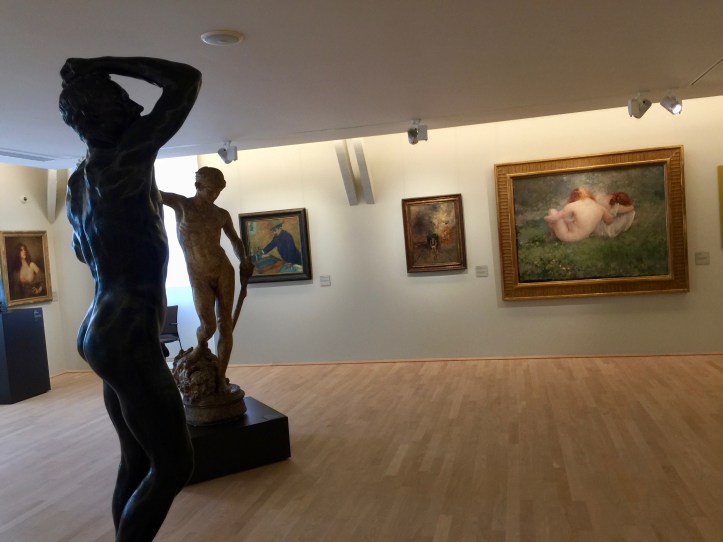
According to Mick, it was the best museum he has ever visited. Not because of the quality of the works, although it had some amazing pieces, but because of the way the collections had been ordered / organised, and how each section was explained.
We discovered that it is one of the oldest museums in France and is well-known for its collections in relation to the Ducs of Bourgogne. Its history dates back to the establishment of an art school in Dijon by François Devosge in 1766.
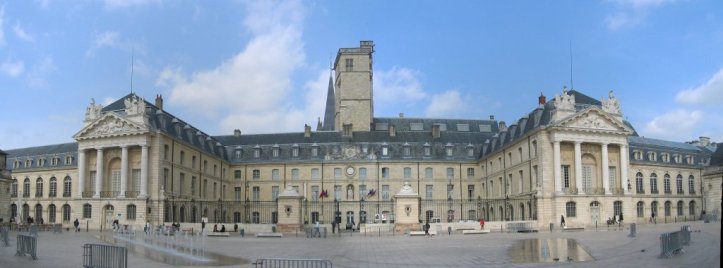 We were so lucky to be able visit this museum because it has only recently been opened (in the last month we think) after being closed, or partly closed for ten years of renovations.


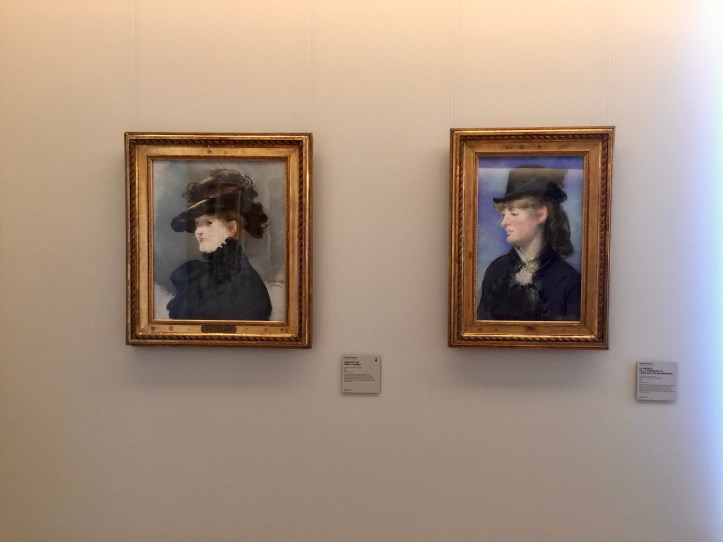
Oh, and a pair of Manet’s on this next wall.
Our accommodation in Dijon was pretty neat too, which always helps make a stay anywhere pleasant. There was a very nice garden area our third-floor room overlooked, where we enjoyed a glass of wine and some Dijon mustards, but we spotted a very interesting technique for how to keep the weeds down on pebbled pathways.


We catch a train later today to Paris – Gare de Lyon where we must get a local train to Samois-sur-Seine, to meet our next house sitting hosts and their dog.
 Jane and Mick's Holiday Adventures