I have mentioned a few times in previous posts that my favourite sculptor is Rodin. We saw some of his work in Cambridge UK last year, and more recently at a gallery in Dijon.
A few days ago, Mick and I visited an open air museum near the village of Égreville that displayed the works of a sculptor who worked in Rodin’s studio for around 13 years.
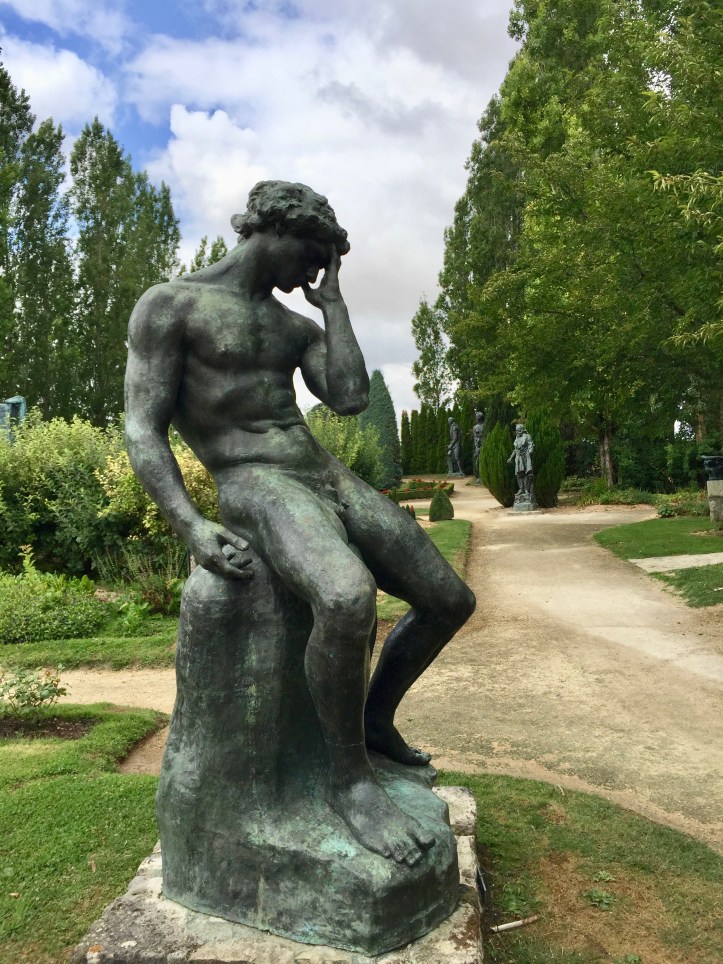 And, sometimes that was obvious.
Antonine Bourdelle (born in 1861) attended the École des Beaux Arts in Toulouse before studying in Paris and working with Rodin. He received several commissions during his time with Rodin and he later went on to develop his own style. He died in 1929.
What is interesting about this museum is the fact that the artwork is displayed in a beautifully constructed art deco style garden. The 57 pieces of bronze sculpture, and the garden, and how they are displayed were a donation from Boudelle’s daughter and her husband between 1966 and the early 1980s. And, more recently in 2009, the museum and the pieces of art underwent a thorough restoration.
While visiting this museum we not only enjoyed viewing the many interesting sculptures, but we learnt a few things on the way.

Firstly, there is a Bourdelle Museum in Paris – containing more than 500 pieces of art, including many of the 57 Mick and I saw on our visit to this one in Égreville. The Paris museum was created by Antoine Bourdelle in 1922 when he commenced turning his studio into a museum.
So how can it be that Mick and I saw pieces of work that are displayed elsewhere? And how can the brochure claim that the “garden museum plays host to a collection of 57 original bronzes.” ??
The second thing we learned was that for a bronze to be considered as an ‘original’ there must not be more than 8 copies, of which 4 can be numbered I to IV.
The pieces on display here are marked “PU” – indicating they are “original posthumous works”. They were made after the death of Bourdelle by his heirs using the models and moulds of the artist.
Now we never knew that.
This large piece was made for a monument in Buenos Aires, Argentina and Bourdelle considered it one of his greatest pieces. It took him 10 years to complete.
 The original one stands on a huge marble plinth and is surrounded by four of the larger statues you can see in the background.
To get a sense of the size, this horse’s head was part of his preparation. And Mick was keen to inspect the details.
 Mick and I listened to an audioguide as we stopped in front of each piece and there was one thing we heard over and over. And that was about a dancer who had a huge influence on Bourdelle for his female figures from about 1909. She was an American dancer called Isadora Duncan who apparently caused scandal in her day by dancing without a tutu or ballet shoes. No, she was not naked, but instead she chose loose-fitting gowns and danced with free-flowing movements. She obviously made a huge impression on him. But, you’ll have to take my word on that as I did not take photos of everything.
This next piece is called “France”, and it stands at 9m high.
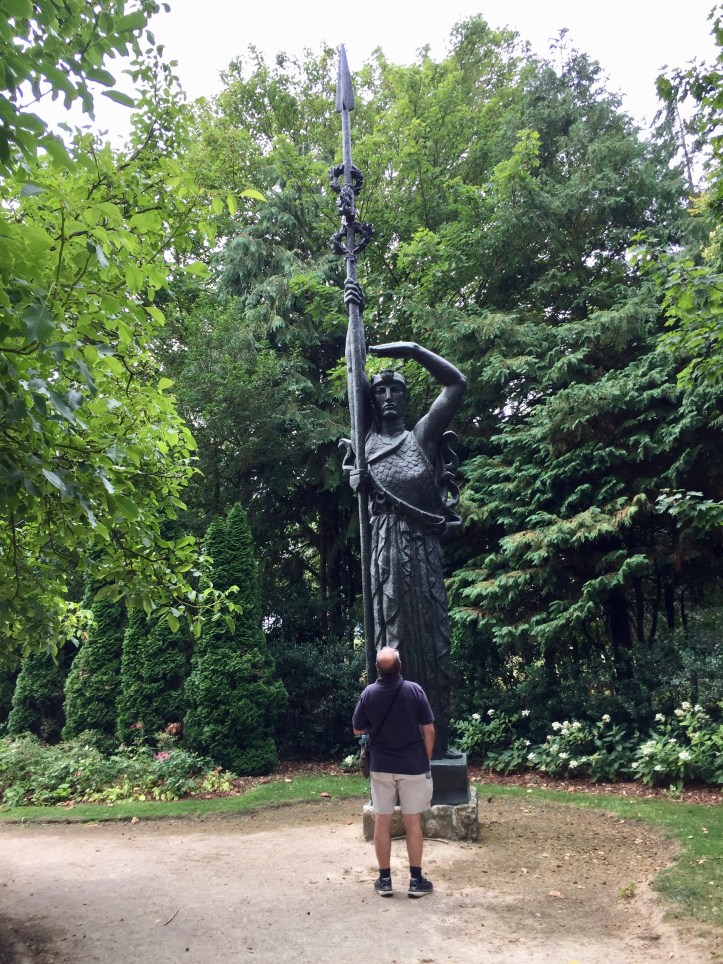 Mick was impressed.
There were many interesting pieces to view, but this one was Mick’s favourite.

It was a part of a monument to the combatants and defenders of the Tarn et Garonne 1870-1871 – something about which I know nothing. But, clearly, Antoine Bourdelle was a very talented man.
Mick and I would recommend a visit if you are in the area. We actually got a discount rate on the normal fee of €5 each because the lady assumed we were over 65. Rather than embarrass her, we saved our €1 each and put it towards a coffee later on.
 Jane and Mick's Holiday Adventures