Our excursion today took us to the small village of Châteauponsac – most famous for its museum, and its history of Roman origins and monastic past. It is located a twenty minutes drive away from our current house sit.
One obvious sign that a town (or village) is dying, is the number of For Sale (à Vendre) or To Rent (à Louer) signs on show.


Mick and I had only just stepped out of the car and started our walk when we were bombarded with these signs. There were a great many of them.
A second sign a town (or village) is dying is the number of vacant or derelict buildings there are. Again, Châteauponsac had many of these in its old centre ville.
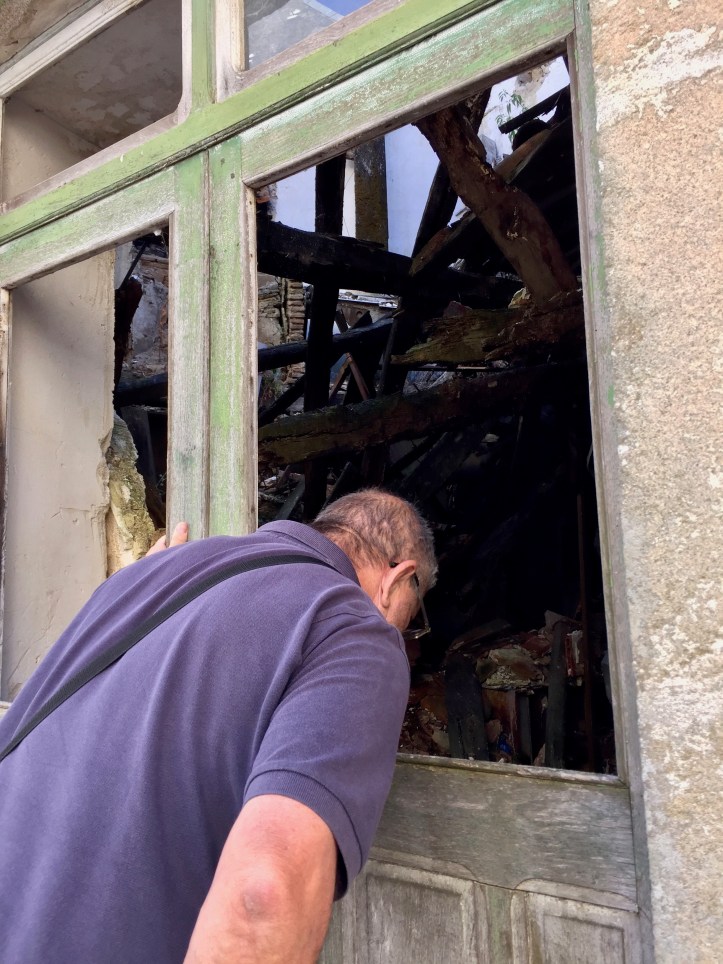
Mick could not resist taking a closer look inside this door where he found mess and rubble on three different levels – above and below him, as well as on the ground floor.


This place certainly could be promoted as “A Renovator’s Dream”.
More like a ‘nightmare’. But, we walked on wondering who on earth would buy such a mess.
Just as Mick and I had agreed that this place was obviously on its last legs, we came across the signs for the Musée René-Baubérot, a museum that is housed in an old Benedictine priory. So we followed those signs and passed through this ancient (still-standing) gate to find that the museum was closed until 2pm. It only opens in the summer / autumn months, and only in the afternoons (when we have dog duties). So we missed out on seeing what was inside. Apparently it is a place available to artists to display their works. It also houses archaeological and history collections, including reconstructions of typical Limousin interiors.


Right next to the converted priory (and now museum), we spotted a massive renovation program underway on one of the village’s churches – Église Saint-Thyrse. And, that made us re-think our conclusion about the future of Châteauponsac.
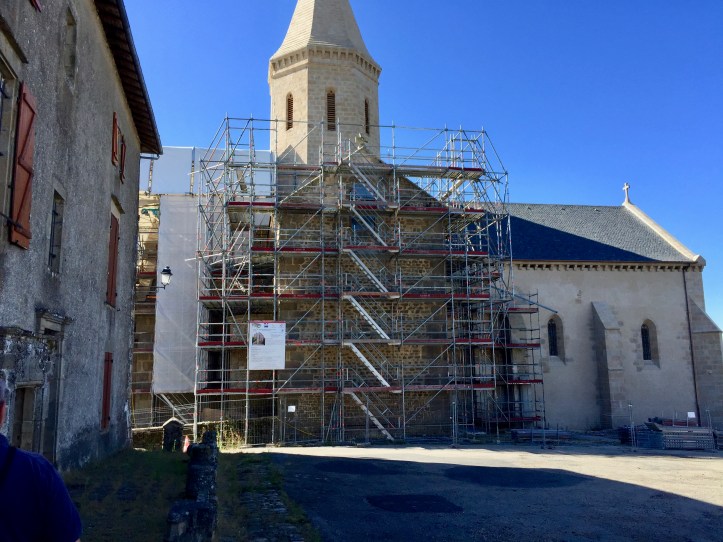
The sign on the works explained that there was a full restoration program underway on the building’s exterior in order to waterproof and protect it. The price tag…..
€1,370,000+
That’s a lot of money to spend on a church in a village with a falling population (now just around 2000), and in a country where religion is no longer as important as it once was. Its historical significance though has meant the church will be saved. At least for now.
Then we came across the town square and the mairie, which like many we’ve seen in France, was housed in a big old building, but this one also had a massive new extension on it.
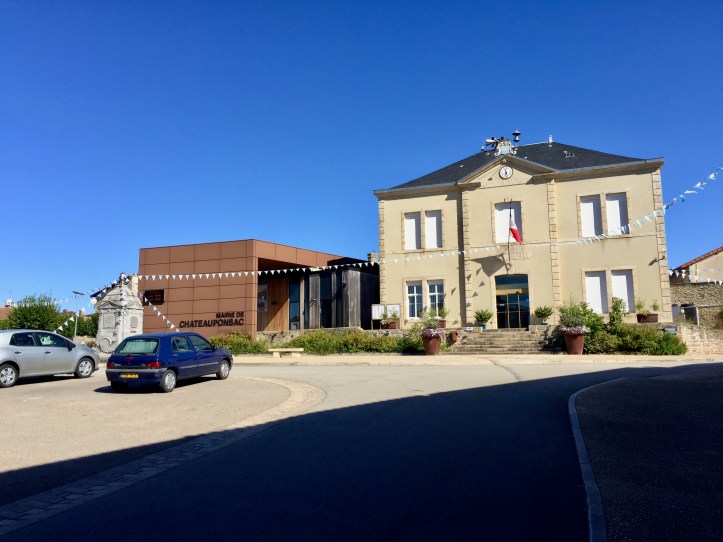
Very near here we found other vital signs of life. Yes, there was a pharmacie, but also a…
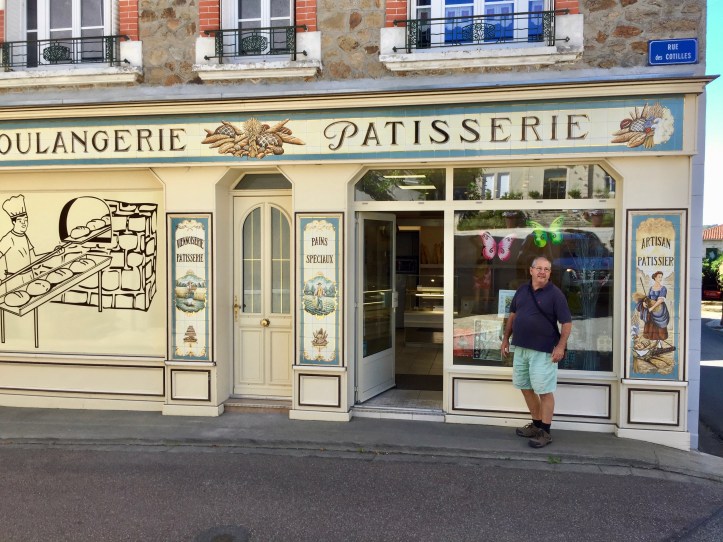
And on entering, we found out that they were sold out of baguettes (how many had they made??). Instead, we purchased a baguette-shaped loaf that had been made with cornmeal, which was very nice.
There was also a bar nearby that was getting ready for the lunch-time crowd. I wondered if they actually got one, but nonetheless they were hoping. Moules et frites were on the menu today.
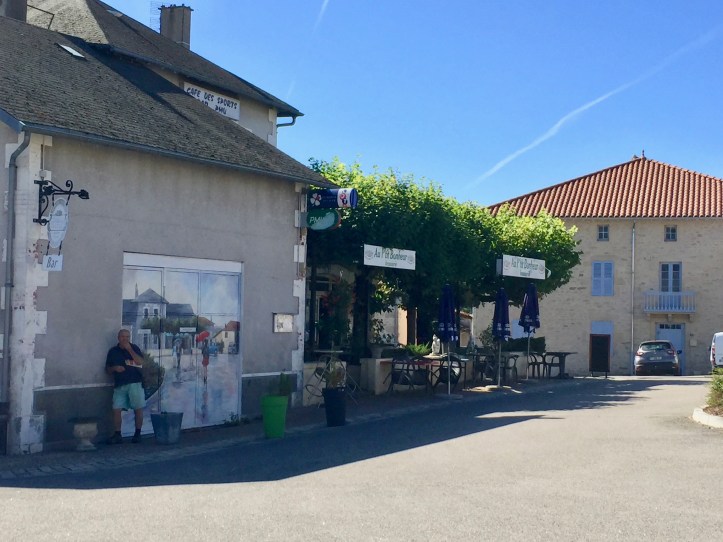 Mick is standing in front of a large mural of the actual restaurant / bar.
As we drove out of Châteauponsac, using a different road, there was evidence that the village was still very much alive – we had obviously picked the wrong place to start our tour. Phew!
POSTSCRIPT – FRENCH MAIL BOXES
Today we saw some examples that will help explain things Mick and I have learnt about residential mailboxes in France.
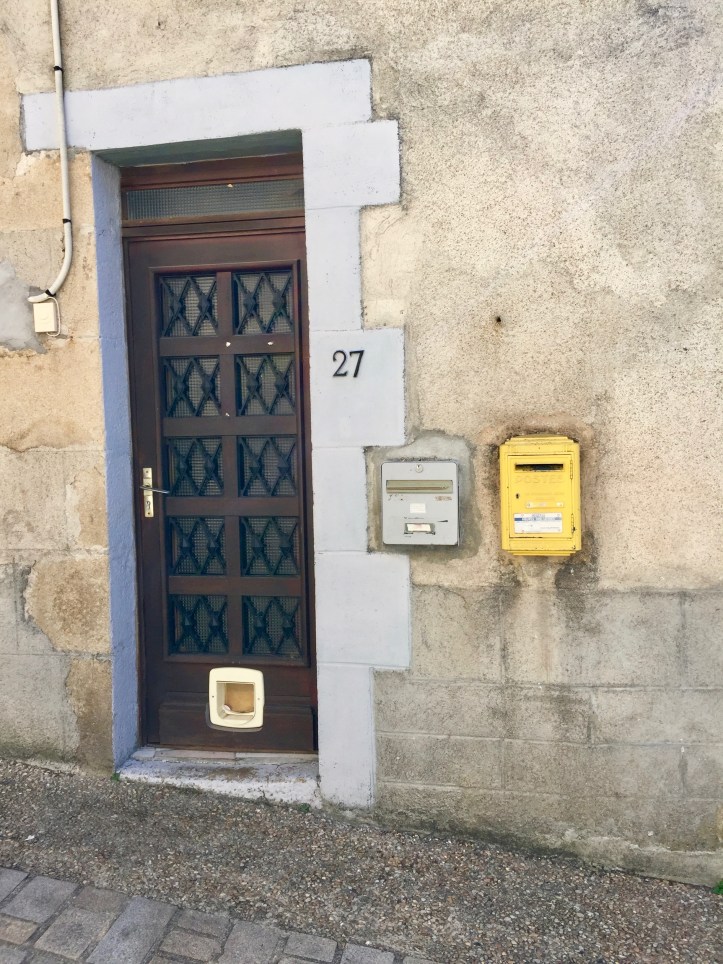
This photo shows an example of both a residential mailbox (on the left) and a public mailbox (on the right). Most houses have one like the one shown here. They are actually a box-shaped container that is accessible from both sides using a key. They can hold a reasonably-sized parcel quite easily. The postman or postwoman has keys which allows him/her to open the box and place in the mail. (I do not know how many different types of keys there are or if there is only one key).
These boxes in this photo have been retro-fitted into this very think concrete wall, which is a good idea as they are quite large and the roads are quite narrow.
But today we spotted a newly-erected mailbox where the owner was obviously not too worried about traffic knocking it over.
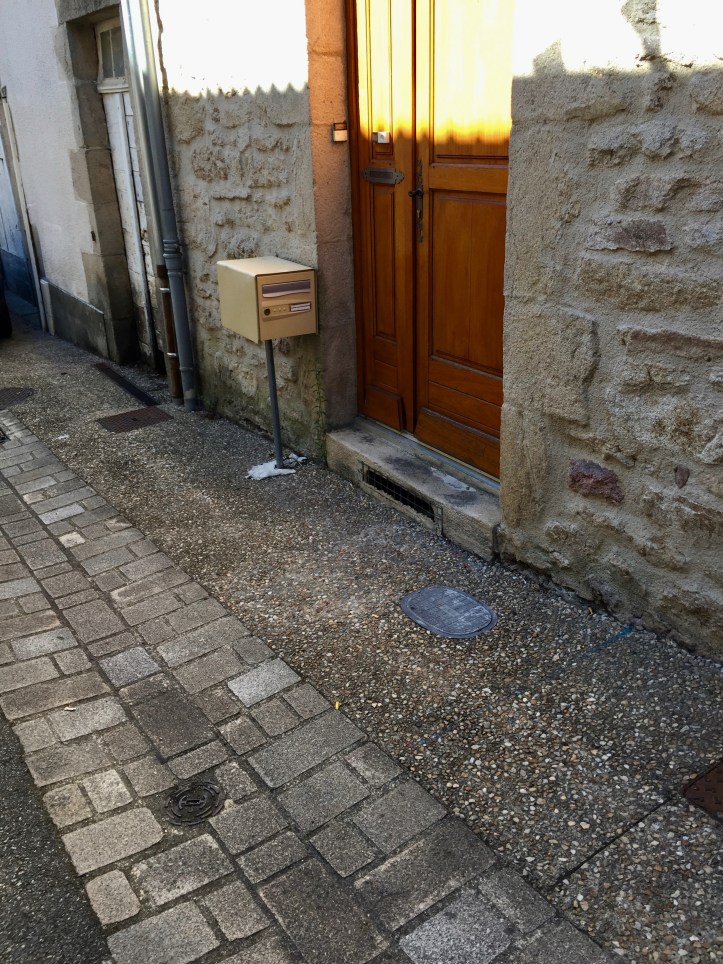 The bricks show the boundary of the road.
 Jane and Mick's Holiday Adventures