Mick and I have only a few days left at our current house sit and we decided we would go exploring one more town that we have read about. It is famous for a few things, and only half an hour’s drive from Magnac-Laval.
The first and most obvious one is to do with a title Montmorillon was awarded in 2000 as one of fifteen villages in Europe to be called ‘villages du livres‘. It promotes itself as La Cité de l’Écrit et des Métiers du Livre. (So, not only books, but about writers in general and all things associated with the written word).
We arrived quite early (at 9.30am) because we had to return one of the dogs we are caring for back to the vet for her fourth visit (since we have been here). She had one of her toes removed and the bandages have to be changed regularly. Each time, the dog has to undergo an anaesthetic. Mick and I really hope the owners have pet insurance.
Anyway, 9.30am was too early for Montmorillon. Almost nothing was opened.
We saw signs indicating that the Office de Tourisme would open at 10.00am, and we decided to find somewhere for a coffee, which was not easy either. Eventually we spotted a bar, almost next door to the Tourist Office which we thought was not open because its front door was closed (which is very unusual, but it was quite a cool morning). However, a closer look through the window highlighted the silhouette of a man at the bar enjoying a beer. Only in France!!
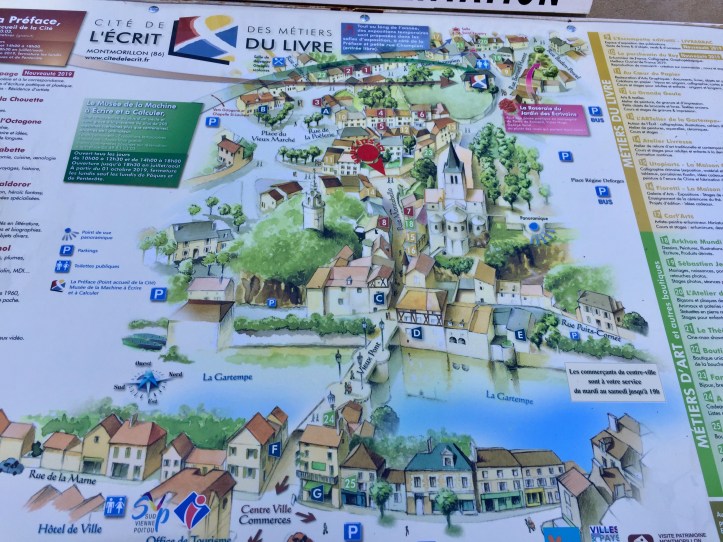
 The ‘table d’orientation‘ (shown below) helped us work out where we were and how to get there by crossing the Gartempe River. The town is split in two by the river which once supported a few paper mills (hence the connection with writing). We also noticed signs that showed the river was once used by shepherds to water their flocks of sheep.
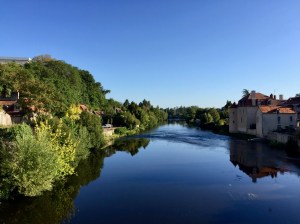
We walked across the old bridge and got a good view of the Old Palace which was built in the 15th century.
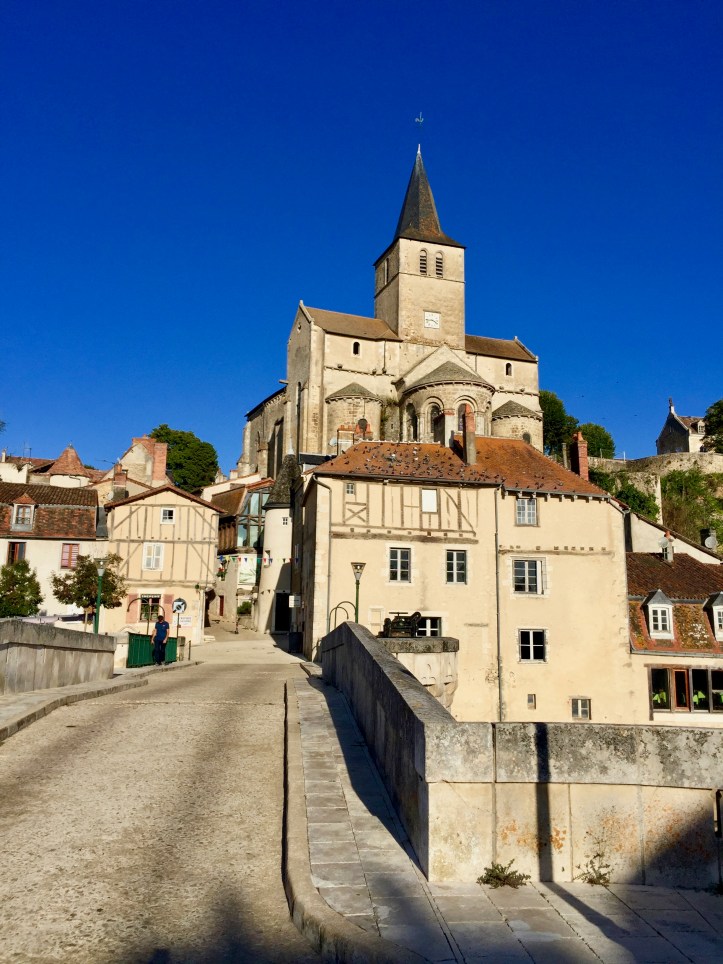
What we were looking for were the supposedly twenty book shops that the town houses in the old part of the city, housed in refurbished buildings and shops.
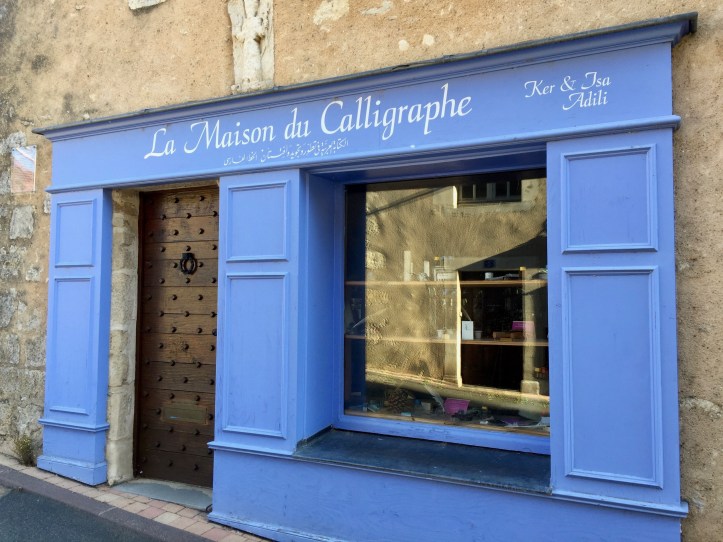
Not only were there bookshops advertising old and new books for sale, there were other shops associated with writing like this one, and also shops displaying the talents of illustrators. We even glanced into the window of a museum dedicated to machines associated with writing and calculating – typewriters and early calculators. That started Mick off – reminiscing about an old typewriter he once had and (apparently) he still regrets having sold. The keys would have made excellent jewellery (he bought me a pair of earrings made from old typewriter keys a few years ago, and they are my favourites. I think they must have been expensive – hence his regret.)
All except one bookshop were closed. And the signs on many of them indicated they would open at 2.00pm, which was too late for us to leave the other dogs. Signs on some of the shops stated that they were closed from November through until the end of February. That made us wonder how they could make a living from these businesses.
The second thing Montmorillon is famous for is its macarons.
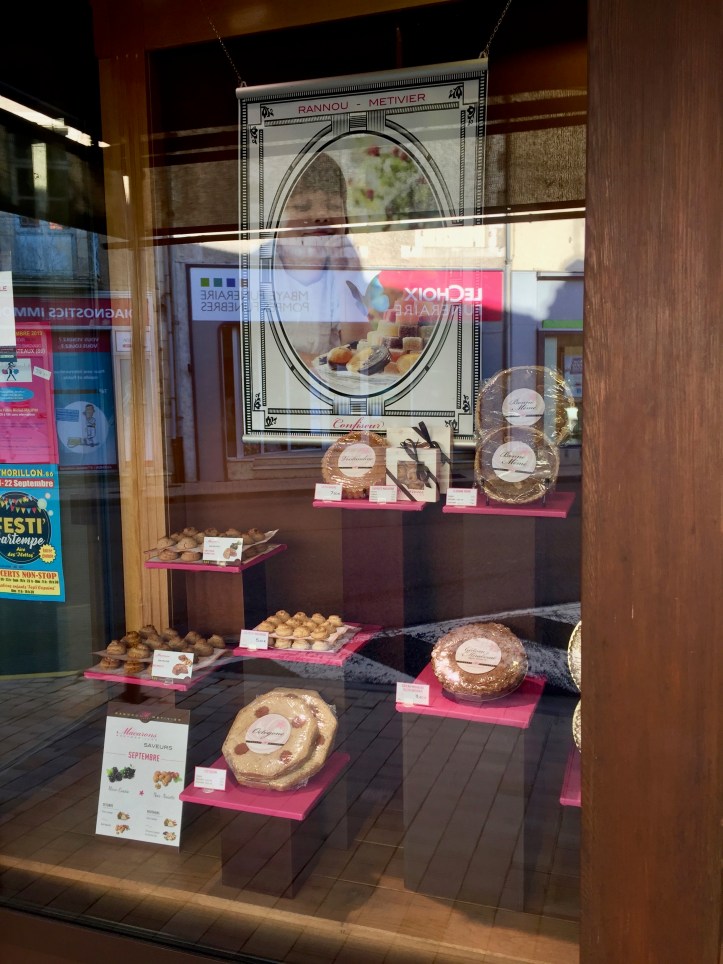
This shop was open, but the museum that is housed on the floor above the shop was not. Apparently for €3 each we could have learnt all about how these macarons are made and why this town is famous for them. Instead, we tasted some of the samples and selected the almond flavoured ones to purchase. I asked if we could get a combination of the small biscuits but was told that the minimum number of biscuits sold was six, and they had to be all of the one flavour. After parting with €4.20 and our six biscuits, we left and headed off to discover more interesting ‘things’ in this not-yet-awake village.


From the bridge we could see this statue in honour of the Virgin Mary (left photo).
A few minutes later we spotted this random monument that neither Mick nor I could understand. The over-sized watering can and wheelbarrow were situated in a square very close to two churches. That confused us even further.
Anyway, now to the third thing that Montmorillon is famous for ….
…….is for having a mineral named after it.
Montmorillonite is a type of clay that was discovered near Montmorillon in the mid 19th Century. This mineral is known by other names as well – in Australia it is more likely to be called Bentonite which is found in places near where we used to live – near Mudgee and Orange.
Mick and I left Montmorillon feeling a little disappointed we weren’t able to really enjoy all that the village boasts, but nevertheless, what we did see and experience, we enjoyed.
The next few days as we wind up our sit here will include the usual activities of packing our bags (yet again), cleaning the house and mowing the rather large yard.
Mick is not looking forward to that!!
But all that brings us a little closer to our next adventure……………..
 Jane and Mick's Holiday Adventures