The Nez de Joburg is the second most visited site in the Channel, after Le Mont-Saint-Michel.
It was a long drive today, almost 100 km there and a bit longer on the way back as we took a few wrong turns. But, it was a pretty drive. The weather was cold and windy, but luckily the rain held off and it was not dangerous on the roads.
This is where we drove to…

But, our first stop was Portbail, and again it was a pretty low tide. Mick was fascinated, and concerned about the boats beached in the harbour. But obviously, that is how it is done here. It must get busy at high tide with all the comings and goings in peak season.
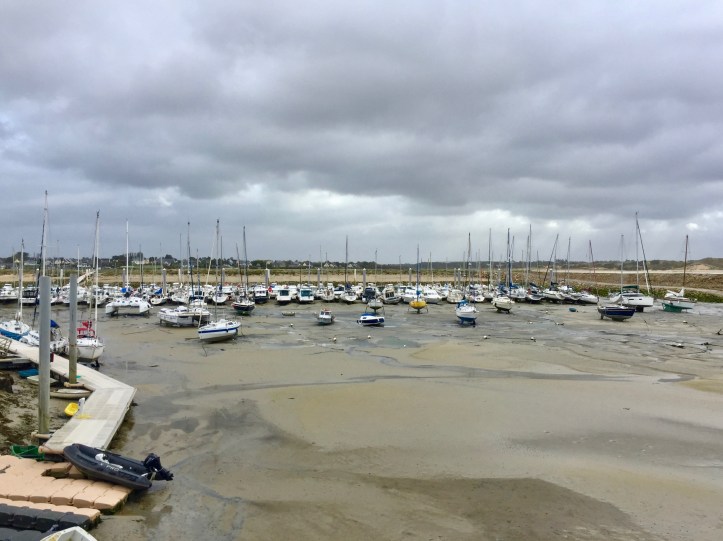
Because the tide was so low, there was little to no activity happening during our brief stop at the harbour, so we headed towards the beach. And with the exception of one other brave soul, we were the only ones there.
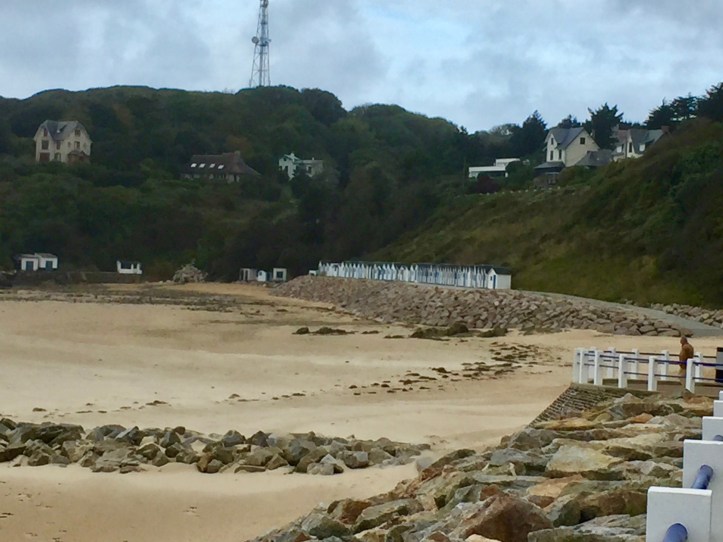

In the distance you can see the small cabins that bathers use during a nice day to get changed before and after a swim. And, this picture shows how far out the tide was when we were there. It would be a long walk to the water’s edge to get your toes wet. The beach was picturesque, but definitely not ‘inviting’.
A short drive further on to the combined community of Barneville- Carteret. This is another resort area, and like Granville, you can catch a ferry from here to the Channel Islands. Mick and I could not help but notice that every third or fourth town / village was called ‘something’ville. Honestly, there would have been more than three dozen places with a name ending in –ville.
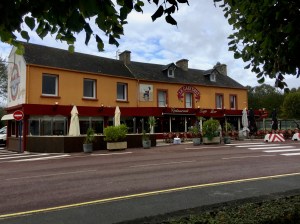 It was time for a cuppa, so we stopped at this very clean and very busy bar for a hot coffee. The nice warm bar had several patrons who had brought their dogs, and the staff were getting ready for what looked like it was expecting a busy lunch hour. The French amaze us with their ‘eating out’ habits. We observe mostly lunchtimes, because we are home with the cats in the evening, and usually all restaurants and bars have full tables. Good for them!
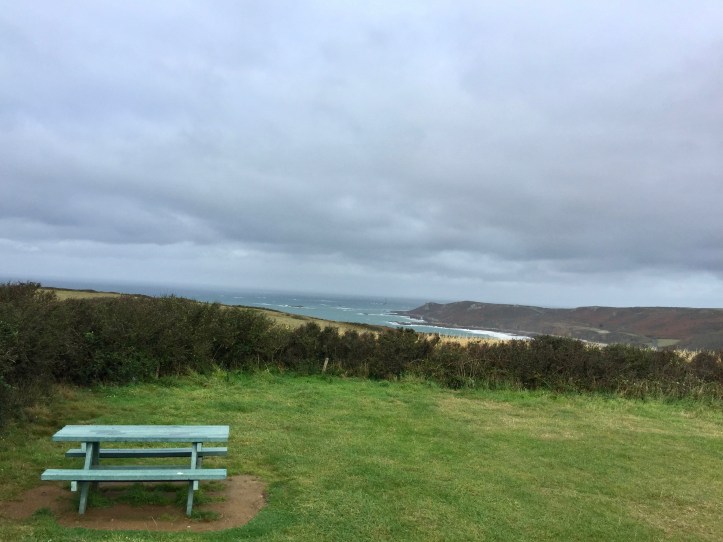 Mick and I had thought we would enjoy a picnic at Nez de Joburg, but when we got there, we changed our minds. Although there was a picnic table available – the wind almost blew us off the cliff.
Okay, what is Nez de Joburg??
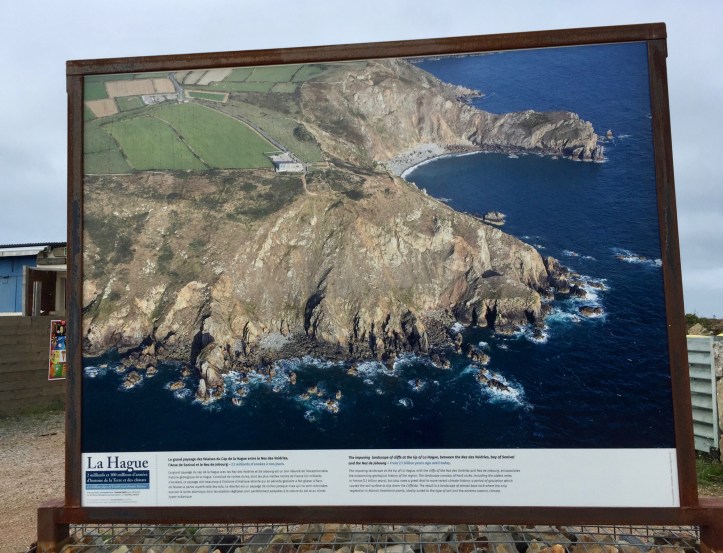
This photo of Nez de Joburg that was displayed as a poster at the site, was obviously taken on a glorious day. It shows clearly that it is a promontory or a cape. Nez in French means nose, and it is sometimes described as the ‘nose of Joburg’. Many people visit here to get a glimpse of the amazing views and to see the cliffs, which are amongst the highest in Europe. There are walks you can take around this area, some of which lead to the three caves available for people to visit. Mick and I were not dressed to undertake such an excursion, so we just enjoyed the views we could in different directions, and we also picked a few handful of wild blackberries which ended up being as close as we came to having a picnic.


Looking back towards land, the view reminded me of Ireland and some parts of England with its low rock walls covered in vines and bushes, used to partition off parcels of land.

It certainly looked bleak, and we spotted no livestock on any of these parcels on our drive in and out to the cape.
What we did pass-by was an ENORMOUS factory of some sort. We were not sure what it was until we got home and I did a search on the internet. I have borrowed these two images to show the scale of the operation.
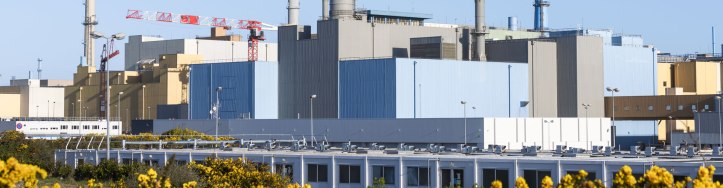
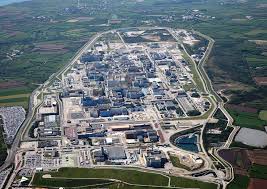 It was surrounded by an electrified barbed-wire fence. And, Mick deduced it may have something to do with nuclear energy, because his map showed we passed very close to a nuclear power station on our travels.
It was over a kilometre in length, maybe more. It was huge. I spotted a sign – “Orano La Hague“, which helped in my search.
And, Mick was right.
This site is a nuclear fuel reprocessing plant, operating since 1976. It treats the spent nuclear fuel from French nuclear reactors, and has also treated waste fuel from other countries including Japan, Germany, Belgium, and Switzerland.
I wasn’t surprised to read that Greenpeace is not a fan of the plant, and since 1990 it has been trying to shut it down, raising concerns about where the waste water goes during the ten-year-long ‘reprocessing’ process.
It was a big drive by French standards, and we ended up at home having lunch in our water-tight gite around 3pm.
Tomorrow, the weather is set to be similar, so we plan on a shorter trip and we hope we can have lunch at a restaurant our host recommended. And on Friday, as the weather is set to improve somewhat, we plan on driving to THE most-visited natural site in the Channel in Normandy.
 Jane and Mick's Holiday Adventures