We have just spent (a very quick) three days in Ely; a beautiful ‘Cathedral City’ comprising just over 20,000 people, located 23 kilometres north-east of Cambridge. Mick and I both really loved it. And I am very happy to report that Ely, in Cambridgeshire is very much cleaner and free of litter than its namesake Ely in Cardiff. Perhaps the proactive approach of the council helps.
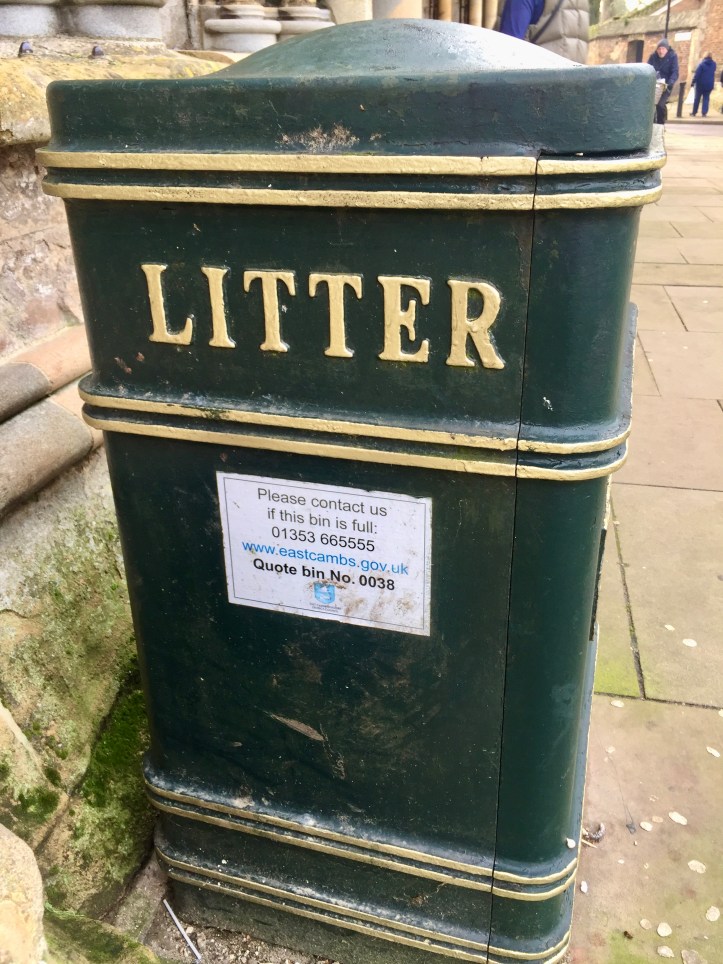 We saw a lot of these signs on the garbage bins in and around the city.
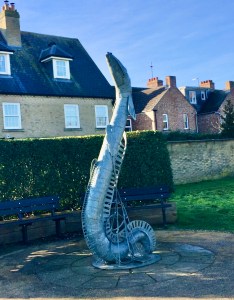 How the city got its name is disputed.
One of the suggestions put forward, and the one I like the best, is because it means “district of eels”. This statue is given pride of place in the city’s Jubilee Gardens. And each year, the city hosts the annual Ely Eel Festival, which includes a big parade, an eel food safari and even an eel throwing competition. The current record for the throw is just under 15m, and you’ll be pleased to know that the eel that is thrown is a stuffed eel. (Well I was relieved, anyway).
I was not aware before our stay here that Ely, despite being located in the middle (well a bit north of middle) of the country of Cambridgeshire, was once an island. This gave the city a great advantage as a position of defence during its early history. Ely was surrounded by a large fenland (or a marshy swamp – obviously perfect for breeding eels) until the 17th Century, when the area was cleverly drained using a network of canals designed by the Dutch.
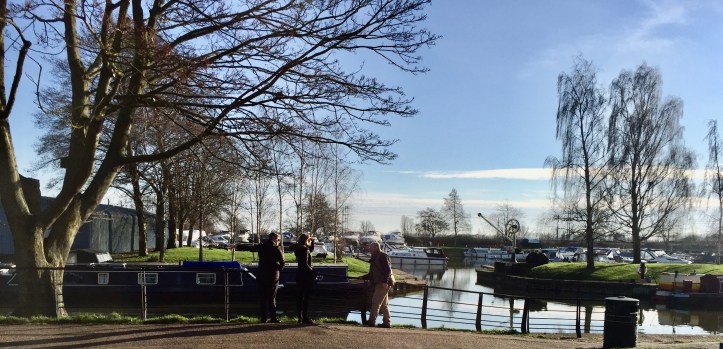 The canals today make a great spot for narrow boats and other pleasure craft. There is quite a large marina on the edge of the city centre.
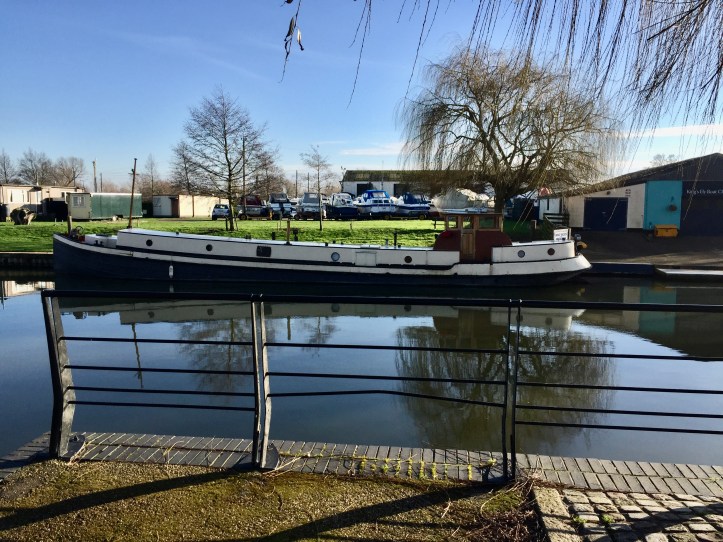 At the site of these boats, Mick becomes nostalgic, recalling our week on a narrow boat on the Leicester Line (Grand Union Canal) in October 2010. We travelled with my sister and brother-in-law and had an amazing experience. Perhaps, one day we will go again – if we are lucky.
One one of the days we explored Ely, we stopped for lunch at a restaurant beside one of the canals. The weather was amazing and Mick had to borrow our son’s sun glasses so he could enjoy gazing at the canal and the boats while he was eating.


Ely though is famous for its cathedral.
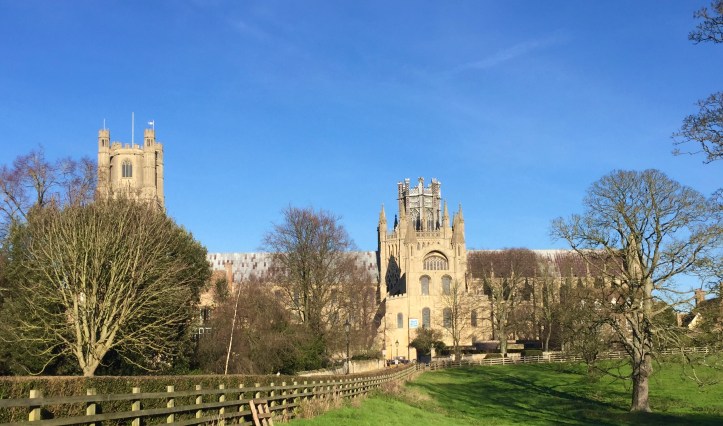 I took this photo of the Cathedral as we walked through the King’s School and then through Cherry Hill Park.
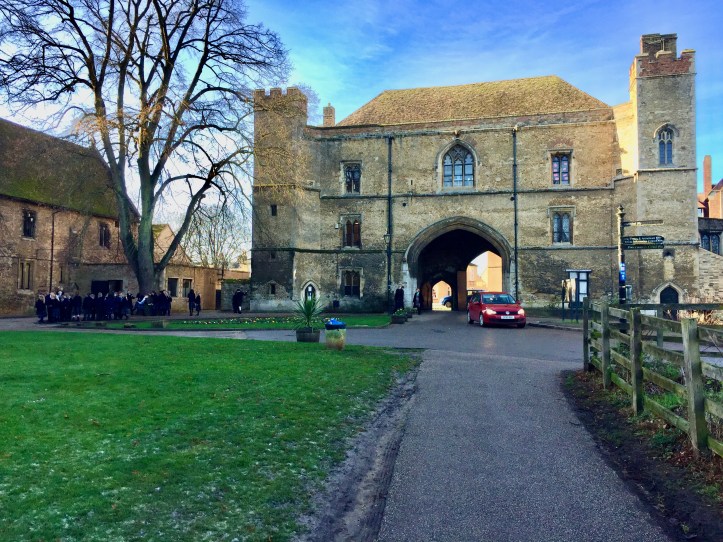
The King’s School is a coeducational boarding school which was granted a royal charter in 1541 by none other than Henry VIII. It claims to have existed since 970. There was a group of students gathering under the tree on the left as we came through that archway.
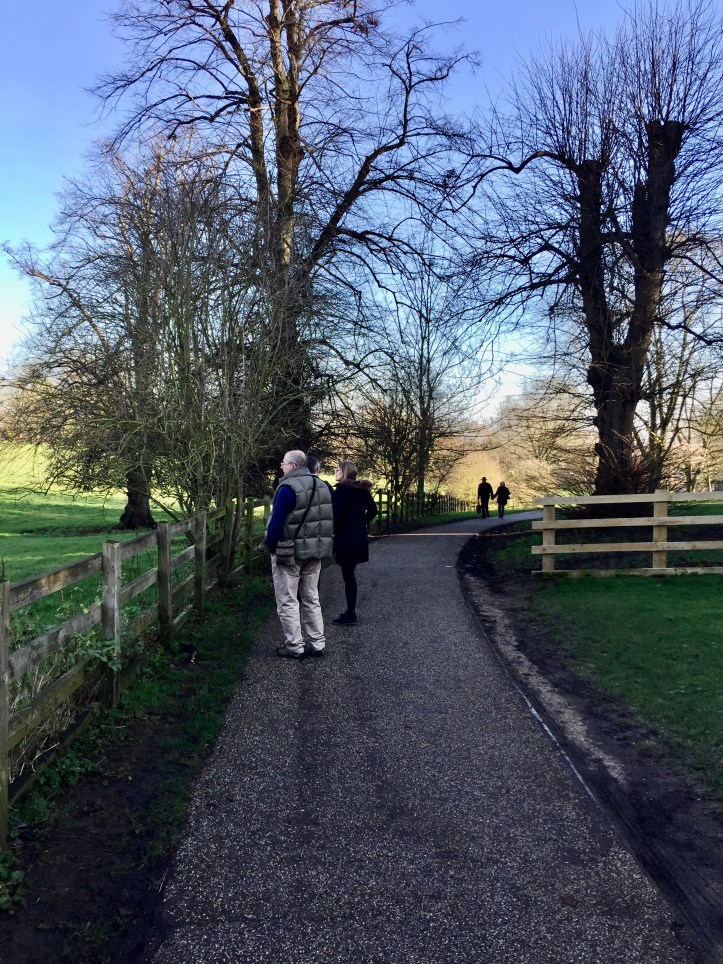 Cherry Hill is the site where Ely Castle was constructed, although there are no visible remains of the motte and bailey castle, other than the mound. It was built by William I in 1070.
The motte is a raised mound or earthwork which would have a stone or wooden keep on top. A keep is a kind fortified tower. The bailey is an enclosed courtyard that was protected by a ditch and a palisade – which is a wall made from wooden stakes.
Now, back to the Cathedral.
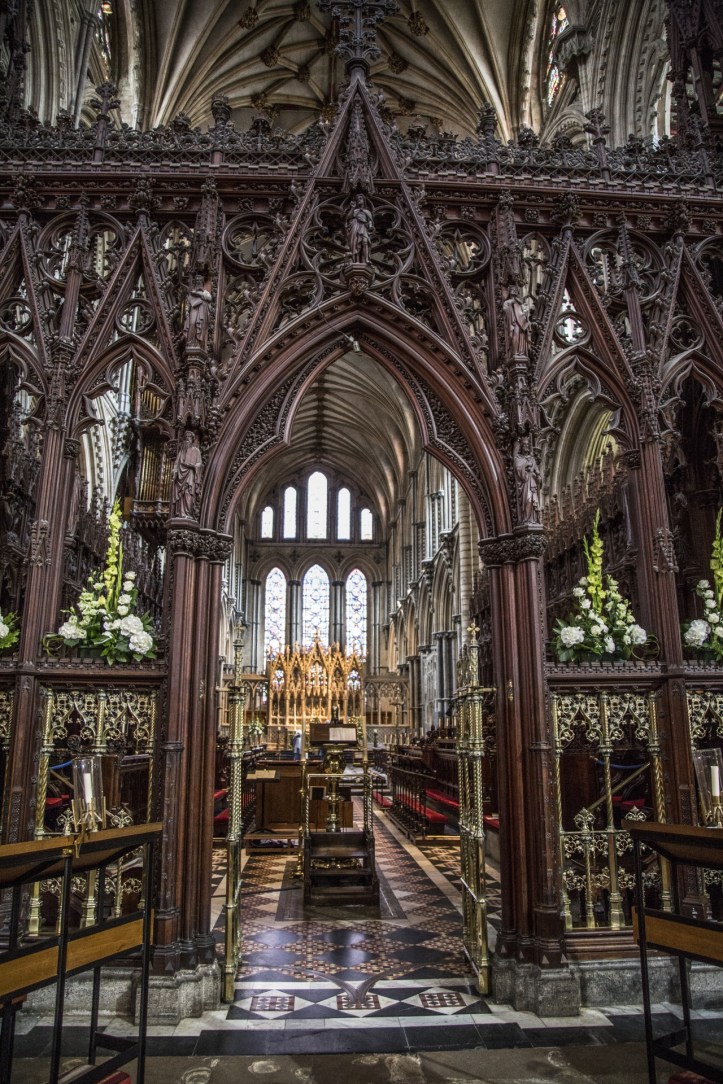
I was unable to get a good photo of the interior of the Anglican Cathedral, but I did get a few of the outside – but sadly they don’t really show the scale of the Cathedral. Now known as the Cathedral Church of the Holy and Undivided Trinity, this building dates back to 1083.


The outside of the building is comprised of dozens of empty display ledges. Back in Henry VIII’s day, during the Reformation, and the emergence of the Protestant Church, the shrines to the Anglo-Saxon saints were destroyed, and nearly all the stained glass and much of the sculpture in the Cathedral was destroyed.
In the Lady Chapel the free-standing statues were destroyed and all 147 carved figures in the frieze of St Mary were decapitated, as were the numerous sculptures on West’s chapel. The Cathedrals were eventually spared on the basis of three useful functions: propagation of true worship of God, educational activity, and care of the poor.
The following image is one I borrowed from the internet.
While in Ely, Mick and I celebrated our 43rd wedding anniversary and we shared a lovely meal with our son and his girlfriend. Mick prepared slow-cooked Greek lamb with Greek lemon potatoes, and I made a walnut (because pecans were too expensive) meringue pie. Both old favourites or ours.


Tomorrow we have a big day ahead of us involving several taxi rides, a train trip (Ely to Cambridge) and then two buses (changing at Heathrow Airport) to Exeter.
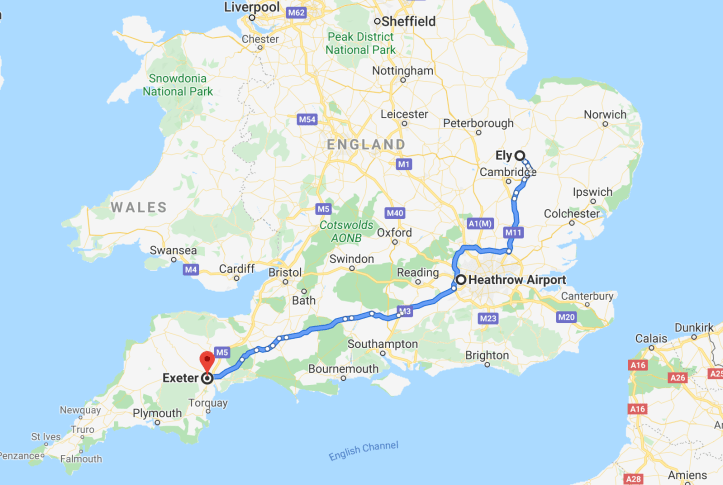
Why you might ask?
Mick and I commence our fourth UK house sit thirty minutes drive out of Exeter on Friday. But, more on that in future posts.
 Jane and Mick's Holiday Adventures