Yes, I kid you not! But……
……..I don’t think Prince Charles knows about it, as he was not there at the time.
When Mick and I set out for our excursion this morning, we had no idea we would be passing through the largest landholding in the Dutchy of Cornwall’s portfolio; it comprises one third of Dartmoor National Park.
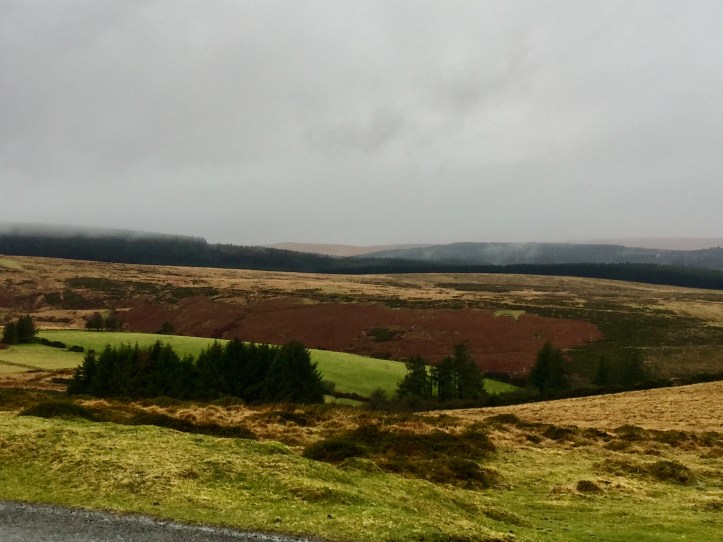
This photo was taken about 20 minutes drive from our current house sitting assignment.
Prince Charles, the Duke of Cornwall, and his wealth has been in the news recently, what with Harry and Meghan deciding to make a break from The Royal Family. Part of the reporting of that news here in the UK was about how Harry and Meghan were going to be able to fund themselves when they settle in Canada because at the moment Harry, as a son of Prince Charles, is paid an annual sum from the Dutchy of Cornwall – £2.3 million per year. Now, that is not to be sneezed at.
The Duchy currently provides an annual income of £21m which The Prince uses to support himself, his children and their families as well as his philanthropic work, which raises over £100m annually for a variety of good causes. The Prince voluntarily pays income tax on all revenue from the estate.
The Duchy of Cornwall is a private estate that was established in 1337 by King Edward III, and this landholding in Dartmoor National Park (27,300 hectares) is mostly used for agriculture – with about one third of this being occupied by farms. Almost all of the rest is considered common land, and as you drive through this area the speed limit is 40MPH because there are sheep and cattle and ponies (which you must not feed) grazing the moorland. It is not much good for anything else.
Mick and I stopped at this pub on the side of the road for a coffee. The pub also had some outdoor seating that would obviously be very popular in warmer (and drier) weather.


It was here we met a very nice waitress who told us some of the history of the area.
She explained that this very pub was in fact owned by Prince Charles. She also said that all the (20+) farms in the area were his as well. But she did not mention if he had ever had a beer in here.


I did some research when we got home and found out that on this particular Dutchy of Cornwall’s holding he rents out 50 houses, five pubs, four hotels and a wide variety of small rural workshops. So that explained where he gets some of his annual income.
After his time at university, the current Duke of Cornwall spent time working on a sheep and cattle farm on Dartmoor to get first-hand experience of the difficulties faced by tenants in such tough conditions. In the decades that followed, The Duke helped to create a number of initiatives and partnerships to support the local community, including the Dartmoor Hill Farm Project, The Dartmoor Farmers’ Association and the Dartmoor Woodfuel Cooperative.
He also helps preserve the dwindling butterfly populations by encouraging the grazing of animals on the common land, because “under-grazed, neglected or abandoned habitat patches quickly become unsuitable for the butterfly.”
After our cuppa, we drove on for about another fifteen minutes until we came to the small town of Princetown. Do you know why it is called this?
Correct – it also belongs to the Dutchy of Cornwall – or more importantly, the large HM Prison Dartmoor belongs to him. And, it is run by Her Majesty’s Prison Service.

I have borrowed the two images of the prison as there is no way you could get a sense of the scale of this place. These look a bit like what Mick and I saw but I have to point out it was raining quite heavily as we drove around the cute town of Princetown.

It is still an operating prison, although it is gazetted to close in 2023. I could not imagine how uncomfortable this place must be, having been built between 1806 and 1809 to house French prisoners captured during the conflict (war/s) with Napoleon I.
I mentioned before that one of the things I find hardest in Devon is driving on the narrow roads. Today’s excursions threw up a few challenges which did result in a little bit of bad language and raised voices, and that was only in our car!!
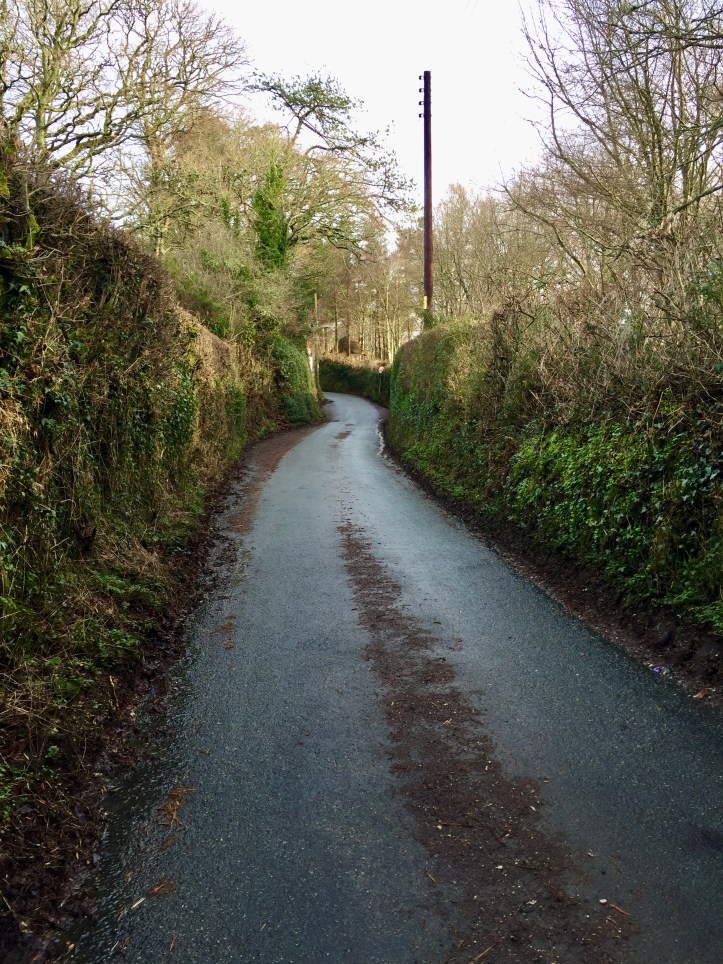 This is a typical roadway that really is only suitable for one way traffic. If another vehicle is heading towards you, one of you must try to find the closest pull-off point to allow a bit more room for passing. Today on a very narrow and wet section of road, I came face to face with a truck. There was not an inch on either side of his vehicle and so I realised I was the one who needed to back up. I hate reversing, and even with a reversing camera, it was a very poor attempt on my part. Mick was not impressed when he thought I had reversed past a perfectly good spot to pull over, but I had decided I needed to reverse another 150m to a much larger area. After a few ‘words’, the truck safely passed, as did the tempers!
Then, a few miles later, thankfully on a much bigger road (it actually had a centre line) we came across a herd of cattle being driven between two paddocks.
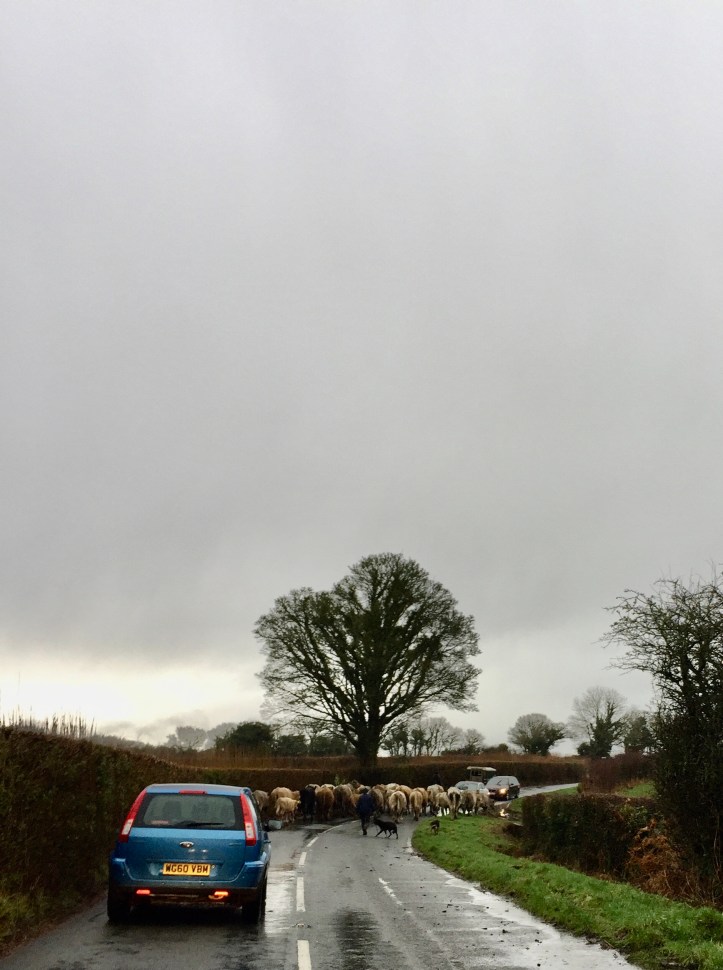
There was no warning that the stock was up ahead and there was no indication of just how long this was going to take, but there was nothing else to do than to follow that blue car in front of us, in first gear, until the desired paddock was reached. It took about ten minutes in total.
But that was definitely not as stressful as the tiny roads!!
 Jane and Mick's Holiday Adventures