Our current house sitting location is in central Devon, surrounded mostly by Dartmoor National Park. I say mostly because within Dartmoor, as far as I can work out, there are towns, villages, private homes and farms as well as the National Park, with its own homes, farms and other buildings, as per my post about the Dutchy of Cornwall’s Estate.
The home we are staying in used to look like this.
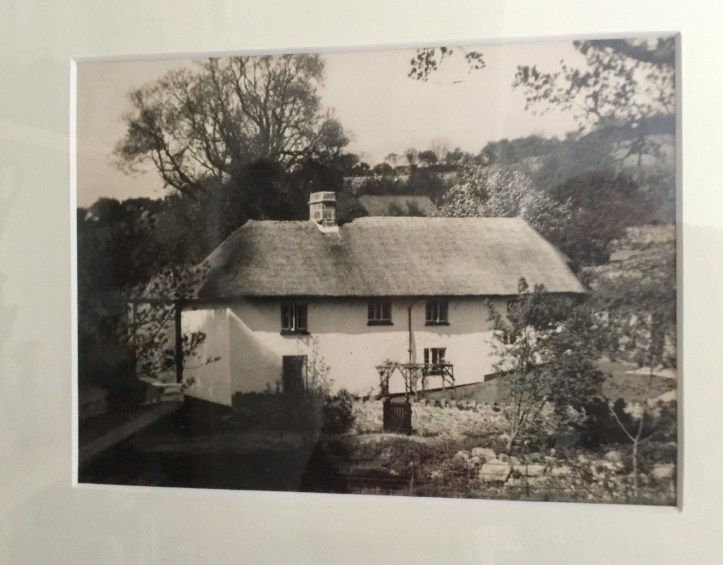 As depicted by this restored 100+ year-old photo.
The current owners bought the home and its many out buildings about 12 years ago. They told us that when they first moved here, the main house was in a big mess and required massive alterations, including replacing the thatched roof, before they could move in to live in it. There are three bedrooms upstairs, with one of those being used as a study, and a bathroom. Downstairs is a lounge room, dining room and kitchen. From the outside it looks much bigger than that. Perhaps it is the roof.
The next photo is one I took from the top of their driveway showing the main house and the surrounding smaller buildings.
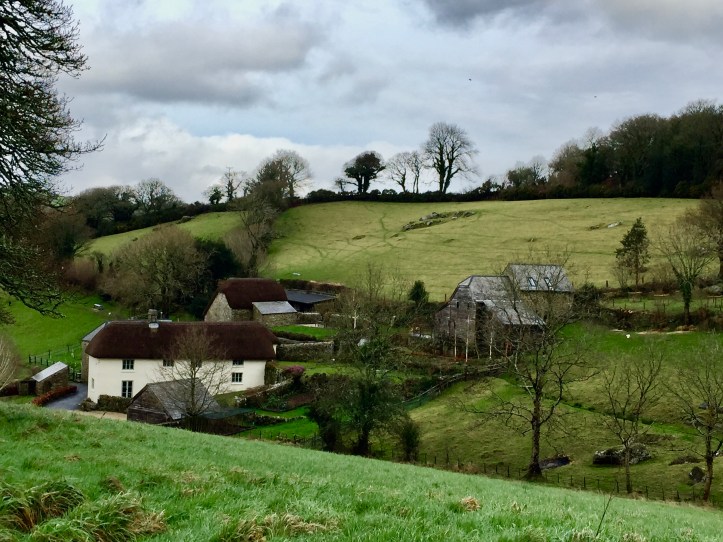 During the renovations to the main house, the owners lived in a fully self-contained building opposite the main house, and hidden from view in that last photo.
 This they call the Coach House, and it works well for them now as space for family and friends when they visit. There is also a carport that can store two large cars.
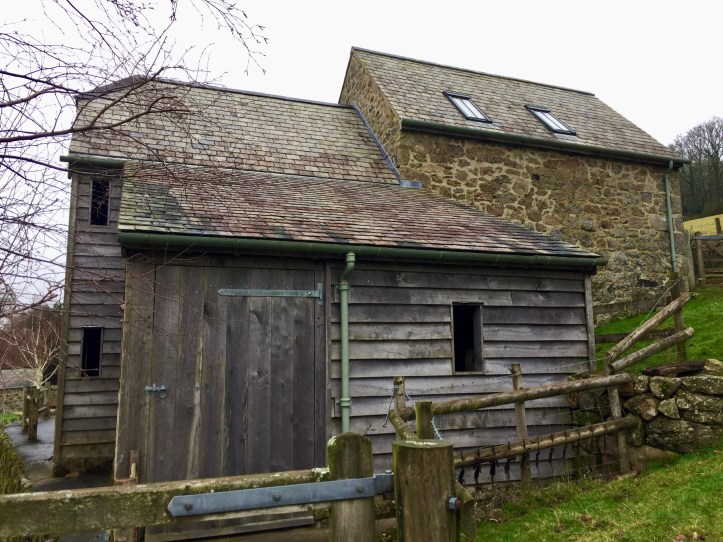
This is one of the many sheds and storage areas on the farm.
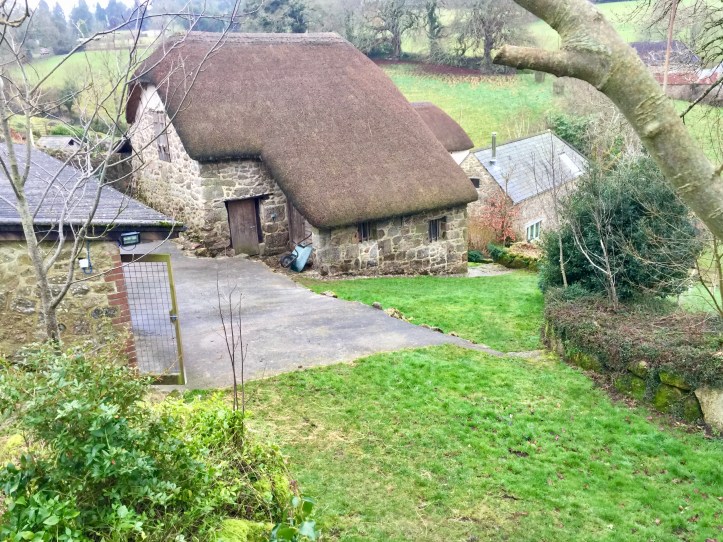
 The owners had a new thatched roof put on to this next building, even though when they bought the property it was made of different material. Up close, the thatched roofs are works of art. In the front and to the left of this photo is the building that houses the horse stables and kennels.
 Near the butter maid cave I wrote about recently, is this small building called the Ash House. The main part of this building is used for storing the wood for the two fireplaces in the home.
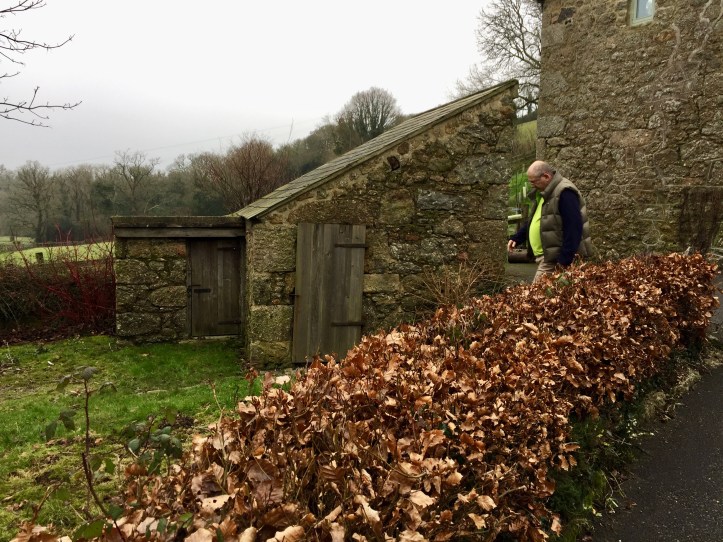 I have left Mick in charge of gathering the wood from the Ash House, and lighting and managing the fires. The owners advised him before they left that it is important to keep an eye on the fires so that the flues do not get too hot as the thatched roof might catch on fire. Mick takes great care to ensure that does not happen.
There are some neighbours adjoining this property. The farm in the next photo is the closest and this photo was taken from the top of the sheep paddock.
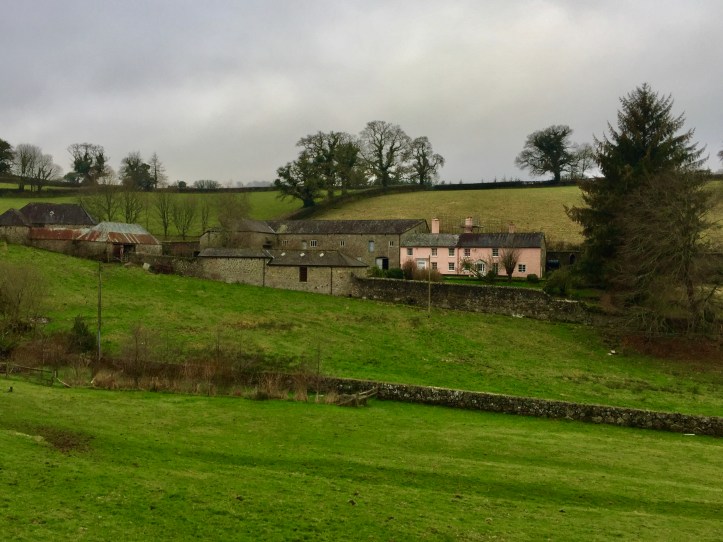 It is such a treat for Mick and me to experience living in such an old building in this part of England. The home is very comfortable and very warm, and well maintained. The owners make sure there is no mess anywhere on their property – everything is very neat and uncluttered, which works well for me. But it must be such a temptation not to fill up every space they have available to them on this farm.
 Jane and Mick's Holiday Adventures
What an extraordinary place to be home-sitting! I love all of the stone construction. Hurrah for people who have the inclination and the funds to repair and restore places like this — and for people who visit them and help take care of them and savor them and share them with the rest of us via wonderful blog posts!
Thanks willedare – we are every lucky indeed.