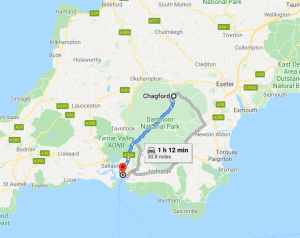
 My confidence in driving along the small roads in Devon almost caused us some terrible grief this morning.
As the weather has been pretty wild over the last few days, including periods of snow and sleet, we have stayed at home, only heading out for walks with the dog when there was a break to do so.
But when the sun came out this morning, we decided to head off to visit the “ocean city” of Plymouth. (That’s how it promotes itself).
The drive took us on roads I had driven on before, through Dartmoor National Park. As there was very little snow left lying around the farm we are house siting, we did not even think for a minute it would be different up high in the moorlands. Wrong.
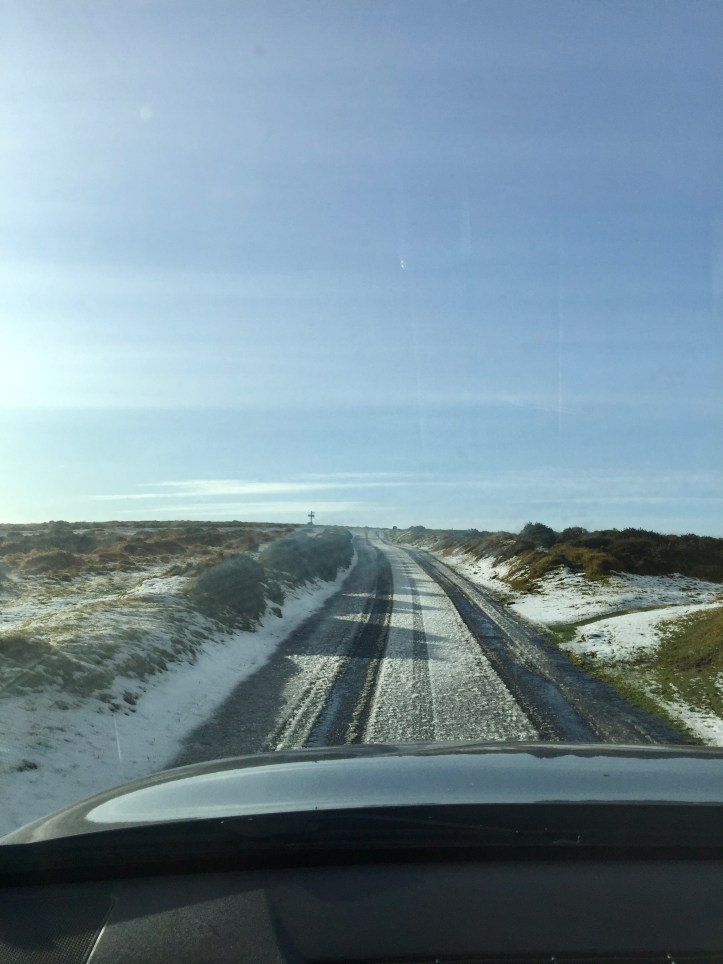 At this point early in our journey, Mick took some photos while I tried very hard to drive the car up a steep part of the road without slipping off it, or worse still, sliding back down from where we’d come from. I was just grateful we did not have to get off the road at any point to allow another car past because we could have become severely bogged.
Once off the tiny back road and on the main road through Dartmoor National Park, we both could appreciate the beauty of the snowy countryside.


The photo on the left was taken this morning and is of the pub where we had lunch with our son and his girlfriend last Saturday (while the photo of Mick on the right was taken last Saturday).
Thankfully, we made it safely into Plymouth (in just under an hour) and found a public carpark not too far from the city centre, where we enjoyed a well-earned coffee.
Mick and I were struck by how spacious the city centre was – with large pedestrian-only streets surrounded by stark, square, and fairly modern (ugly) buildings. It looked obvious to us that this part of Plymouth must have been rebuilt during the last part of the 20th Century, we suspected following bombing raids during WWII, which was later confirmed with a little research.
It was in March 1941, however, that Plymouth suffered its heaviest attack to date. The city’s shopping centre became the target of a mass raid which began at 20:30 on the 20th. The attack started with incendiaries followed by wave after wave of bombers dropping high explosives. It was easily the most terrifying raid that Plymouth had experienced to date.
I had read a bit about Plymouth before we set off, and I was keen for us to visit the area known as The Barbican; the area surrounding the old port with narrow streets and quaint buildings, pubs, art galleries and cafes. When we found it, we were sorry we had not waited to have our coffee here. There are more than 200 listed buildings in this area dating back to the Tudor and the Jacobean periods.
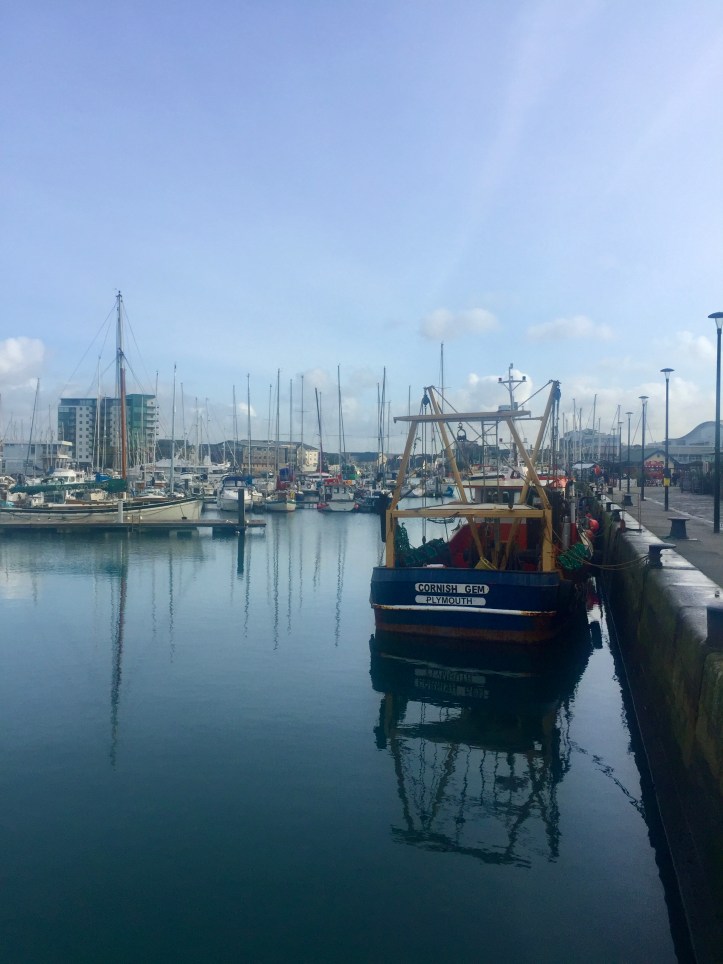 Plymouth has a very long history as an important port. Mick and I knew before our visit to Plymouth that the Pilgrims fled from England to America to avoid religious persecution, and that they departed from here. But what we did not realise was that this year (2020) was the 400th anniversary of that trip (1620). And these were the steps the passengers used to board the Mayflower – in the photo below.
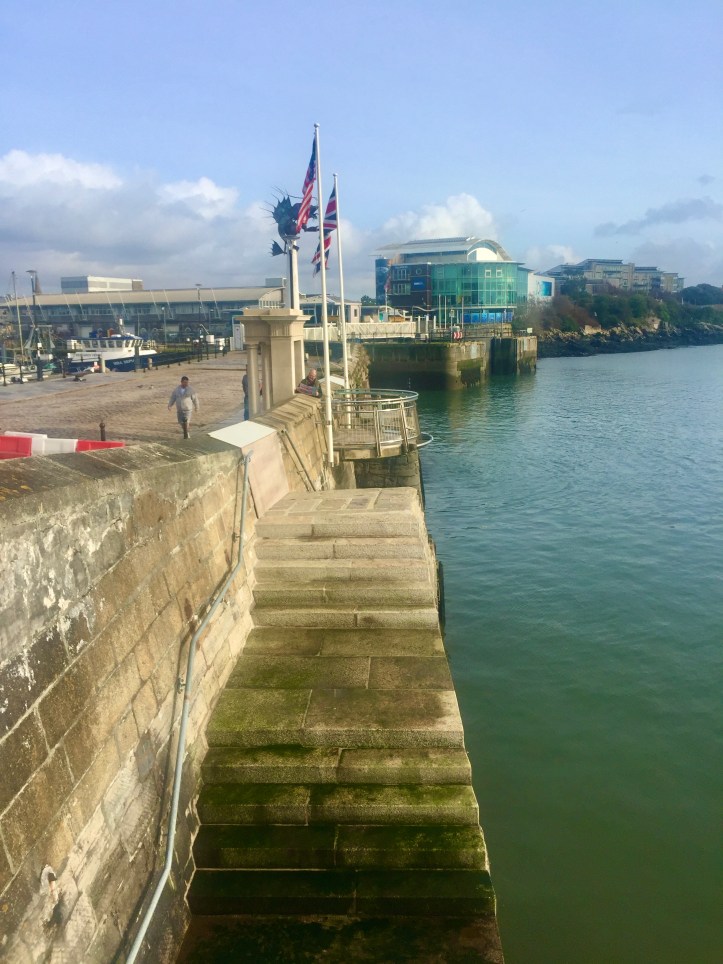 Can you spot Mick in this photo consulting a map to confirm just exactly where we were?
There was a lot of information about other significant voyages that had used Plymouth as the departure port, including:
- Sir Francis Drake in 1572 – set sail to become the first English man to navigate the globe;
- Sir Humphrey Gilbert in 1583 – set sail for Newfoundland which he claimed for Queen Elizabeth I;
- Charles Darwin in 1831 – set sail on the HMS Beagle;
- Captain James Cook – set sail on all three of his voyages of discovery; and
- lots of emigrant ships heading to Australia and New Zealand.
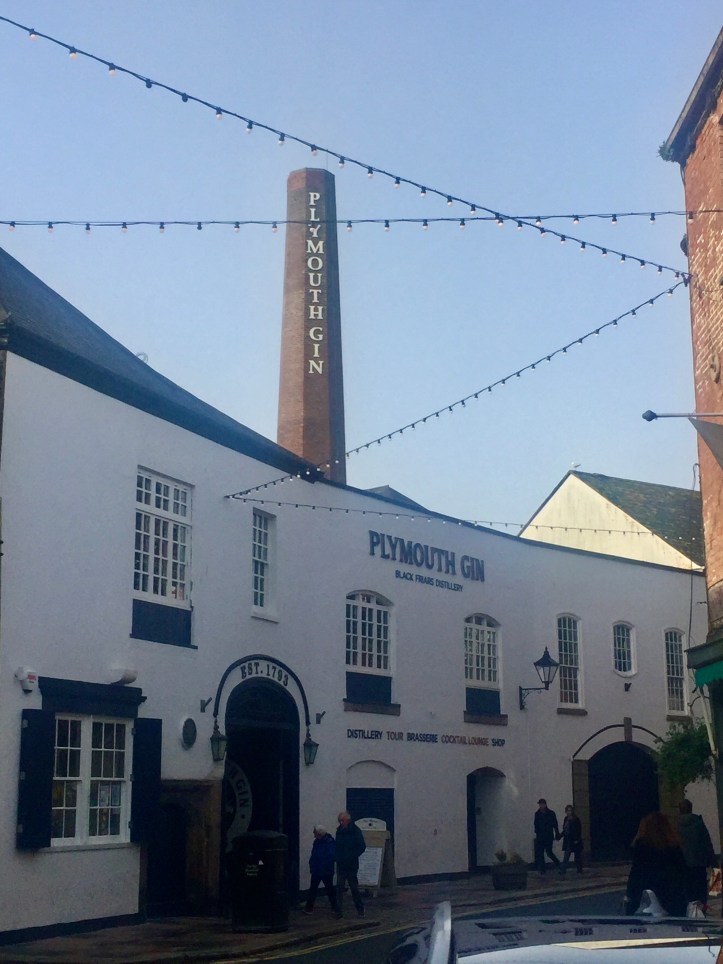
Plymouth is also famous for the Plymouth Gin Distillery which has been making gin since 1793. Mick and I walked past it on the way to the port, but our time today was too short to engage in any tours or tastings – mores the pity.


This is a closer photo – below.
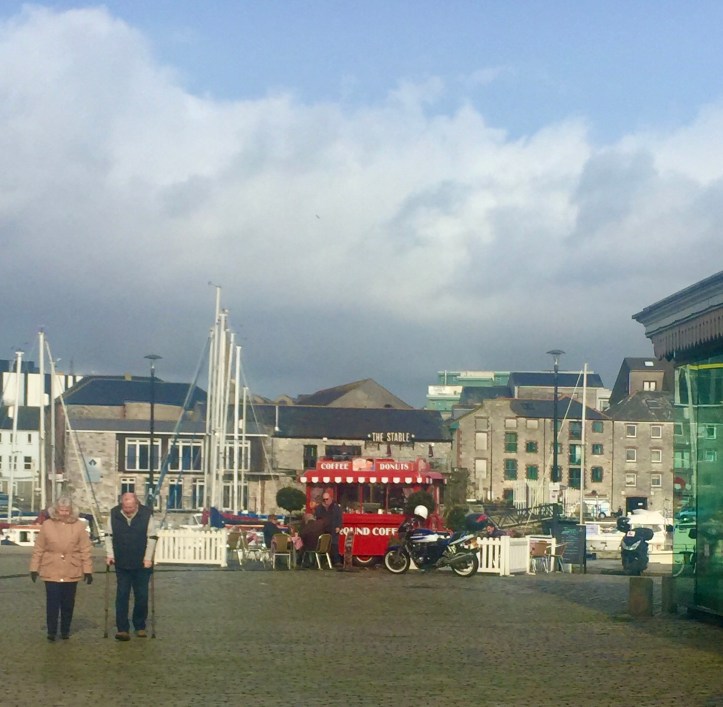
 While it was pretty cold during our visit, the sun was out and quite a few people were doing exactly the same as us – strolling along the water’s edge and enjoying the seagulls’ serenade.
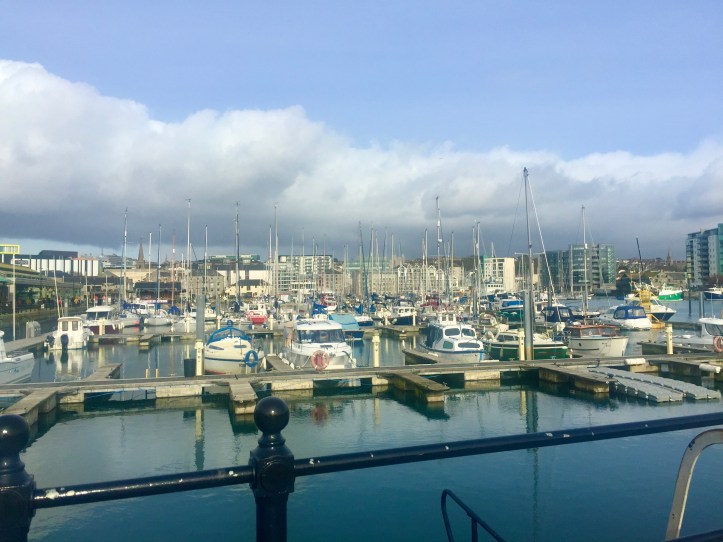 Mick spotted a sign on a boat advertising (3.5hour) fishing trips for £25, where participants got to keep their catch. He would have loved to have gone on one of those.
He was also sorry we weren’t here for longer because there were some great looking old pubs and inns he would have loved to explore.
 Our time in Plymouth flew and we had to depart to get back to the dog. We were very happy we had seen (some of) this city as it had a lot of charm. If we weren’t already booked to stay in Exeter for a few days after we finish this house sit, we would have definitely come here for a few days. Maybe on another visit.
But if you get the chance – make sure you include Plymouth as a stopover.
 Jane and Mick's Holiday Adventures