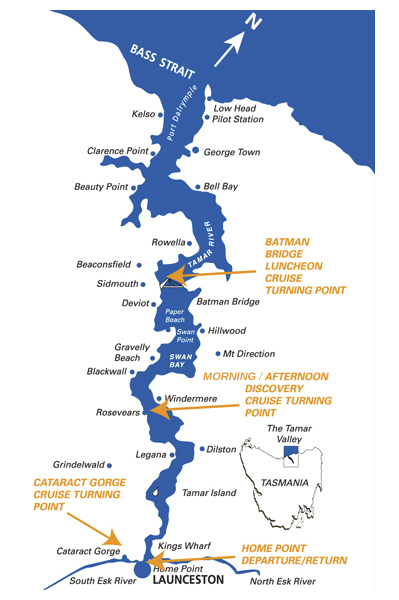
It was a fresh start this morning – down to 8°C, and it felt like it. But Mick and I braved the conditions and headed down the hill to Launceston city and on towards the harbour, to meet our skipper for our four-hour cruise.
I borrowed this image from the website to show exactly where we went.
We weren’t alone – there were at least 40 other passengers, but there was plenty of room for us all.
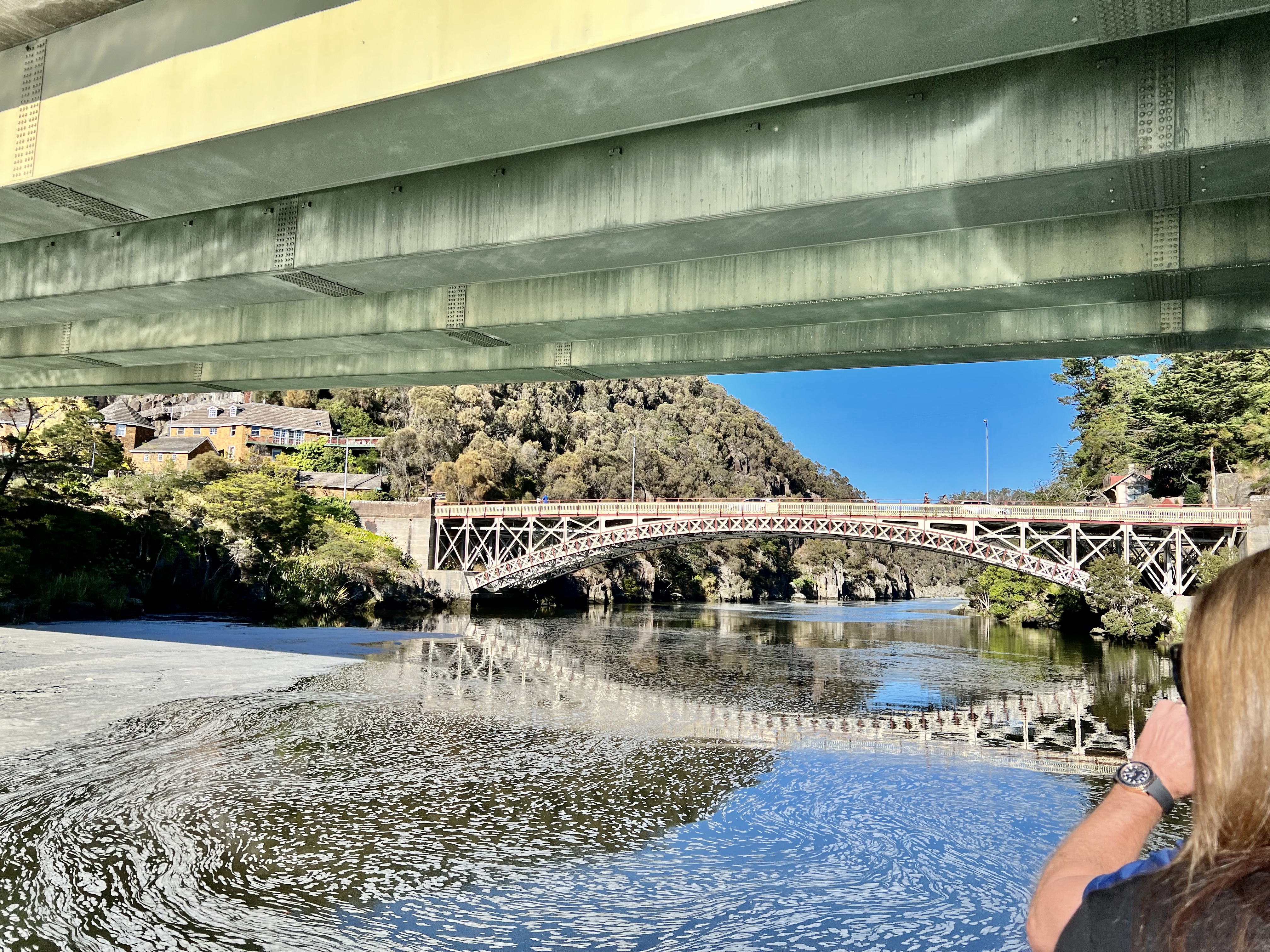
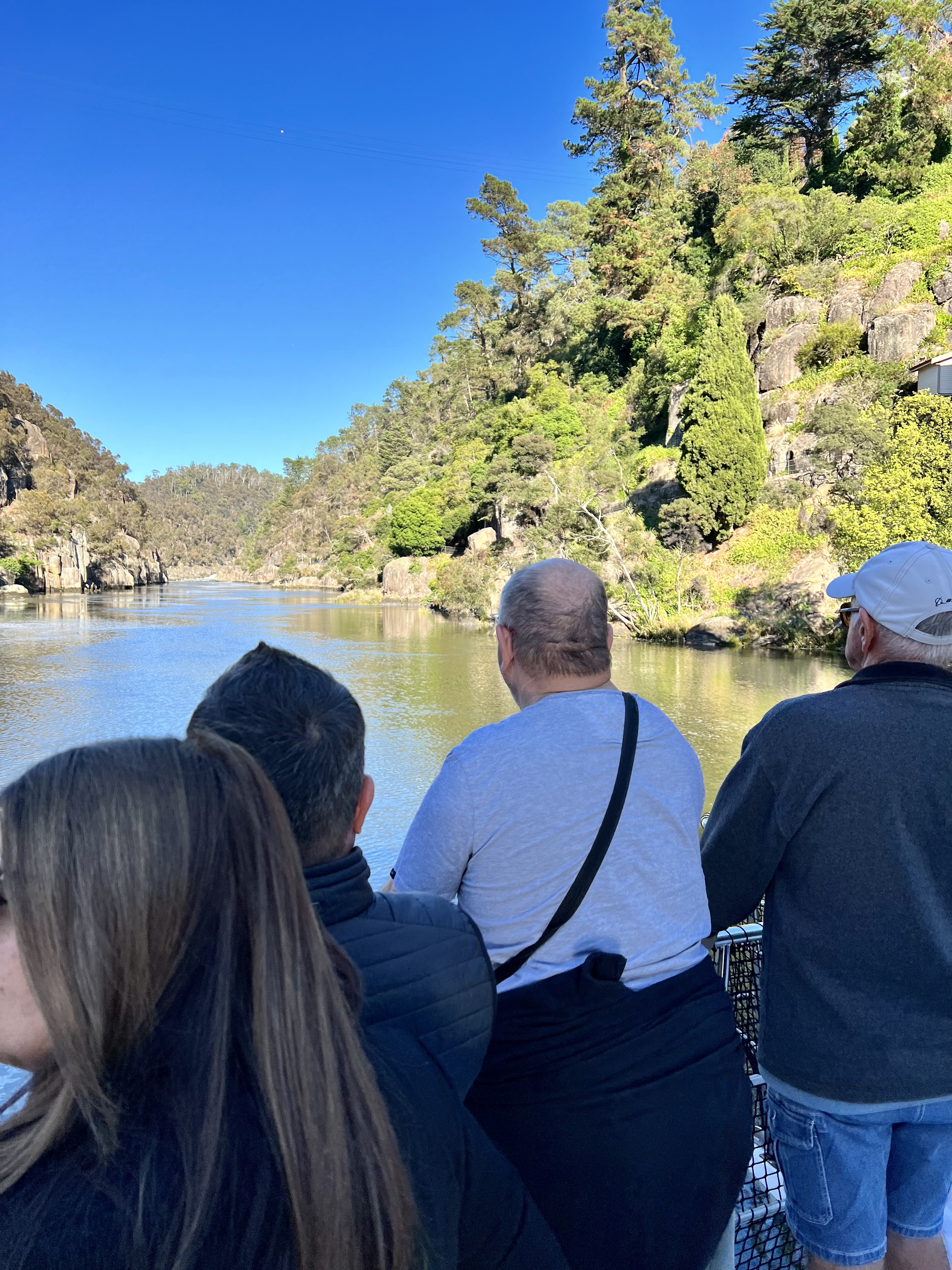
We started by going under Kings Bridge and on to the Cataract Gorge. Mick got a great spot on the front of the boat, along with a few other brave souls.
It was good to be able to get a different view of where we had spent a few hours walking yesterday.
The weather was absolutely perfect for the cruise, but once we sped up heading towards Bass Strait, you definitely needed a jacket.

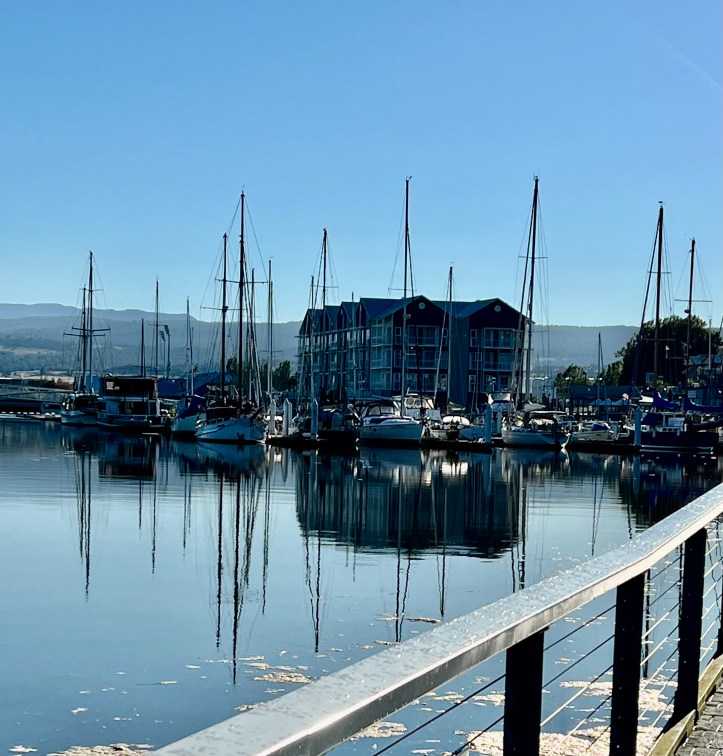
The departure point was very close to a resort and lots of sailing ships.
Across this stretch of the water was a very interesting looking hotel which we found out was actually made from converted silos. Hence its name – Silo Hotel.
We learnt the developers wanted to construct a 14 storey building in the area, but Launceston Council’s building codes would not allow it. They reached a compromise by allowing the conversion of the disused silos into an eight storey complex.
It looked pretty interesting.
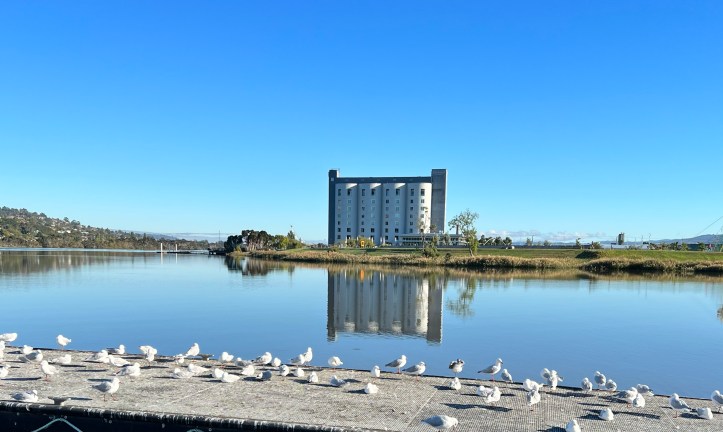
Mick and I were very surprised by the lack of craft, and activity (like fishing or swimming) during our journey. The water was so perfectly still – at the start at least.
Having said that, we did notice a few craft moored in the middle of the estuary.
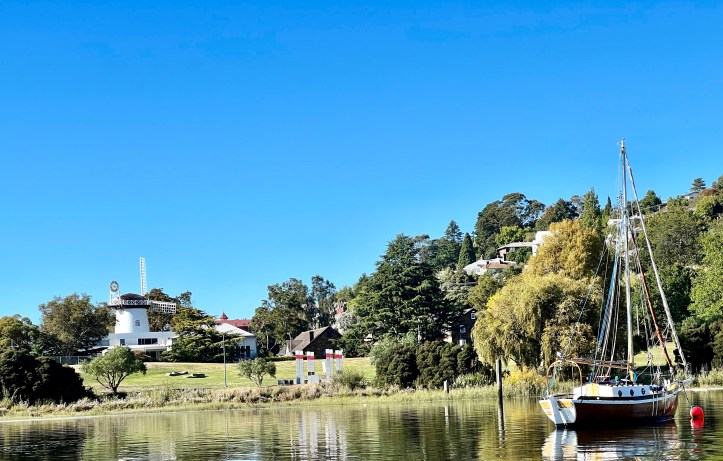
The scenery and the commentary kept us entertained during the cruise. There certainly were some similarities in the view with those we had enjoyed years ago along the Rhine River.
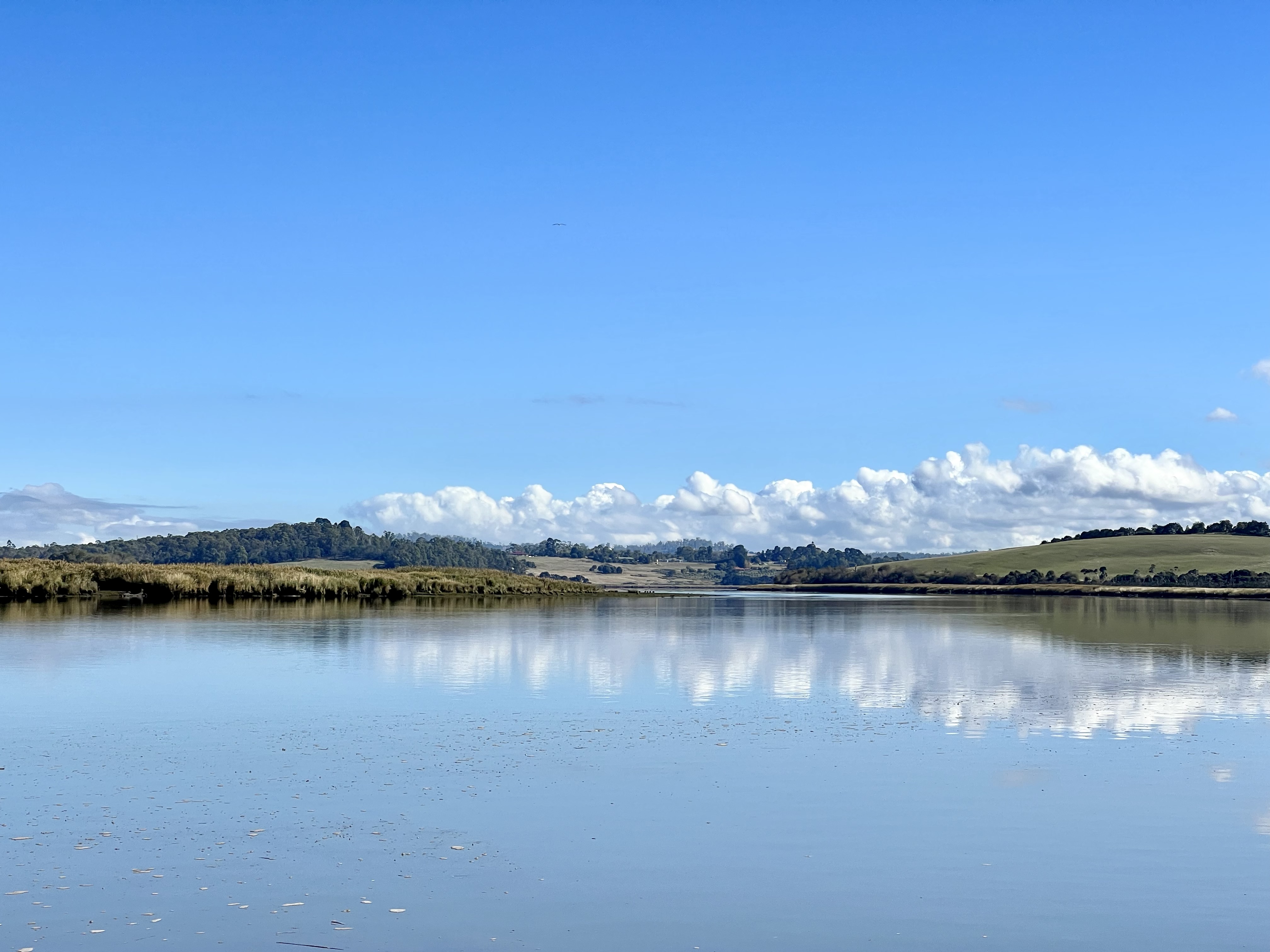
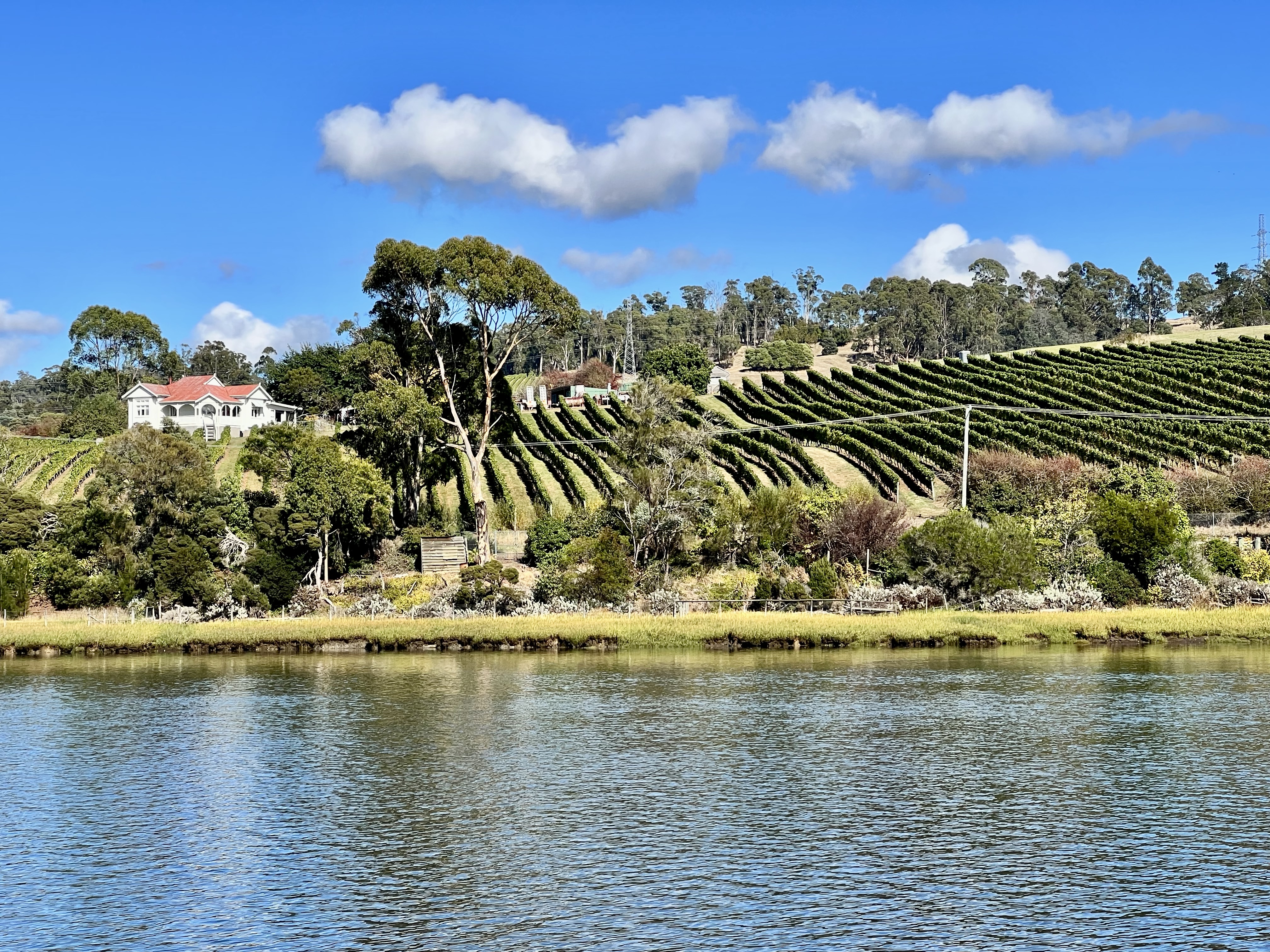
Now this was not only a cruise! It was also a wine tasting and luncheon. If the scenery was not enough to keep us entertained, we now had something else to distract us.
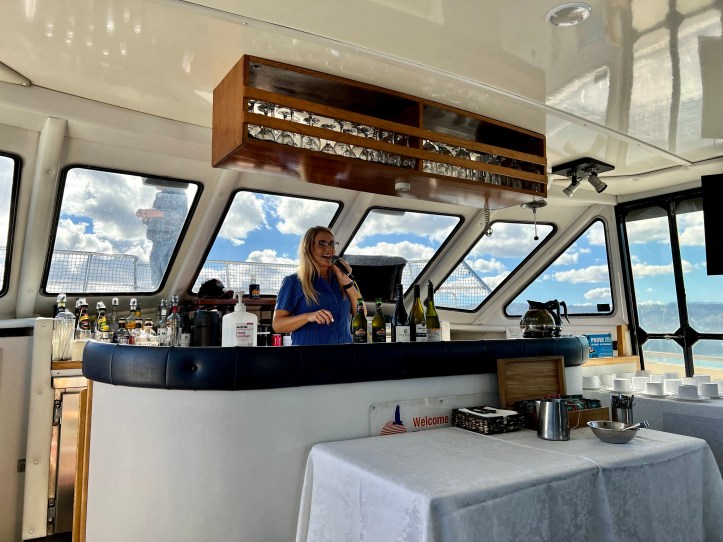
We sampled three local wines – a pinot gris, a sauvignon blanc semillon (we had tried many of these blends during our tour of Western Australia late last year), and the ‘signature’ wine of Tasmania – pinot noir. Thankfully, the pinot noir was much nicer than the one I had the previous evening.
We learnt that Tasmania grows about 1% of (wine) grapes in Australia, with half of the state’s crop comprised of pinot noir. The cooler climate suits the variety. Mick and I are sure we are going to hear more about that during the next few weeks.
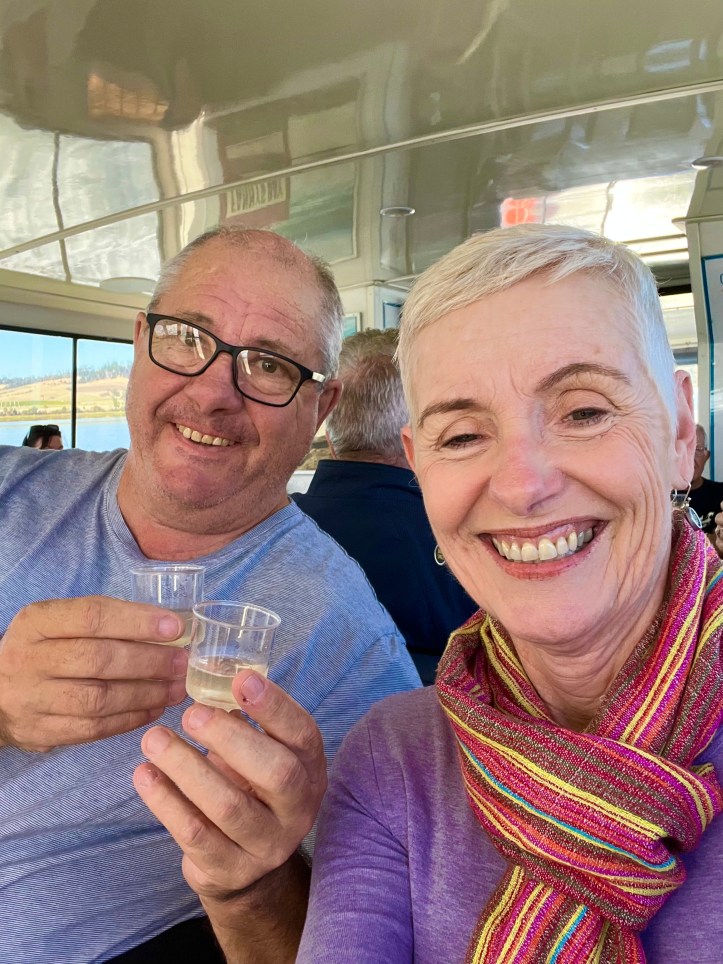
You needn’t worry about how we managed after all those tastings – we were only given a thimble full of each.
Oh, and we finished off the tasting with a (full mini glass of) James Boag Premium.
Lunch consisted of some very fresh sandwiches, followed by a cheese / fruit platter.
There was more than enough to go around.
We were both interested to get our bearings about the region on the left-hand side of the river on our way up to Batman Bridge. We will spend three nights here early next week, plus we’re expecting to visit some of the many wineries located here on a wine tour we have booked for tomorrow.
One of the many interesting facts we learnt during our cruise was that the area we were cruising past that now had relatively new homes located on it, was previously filled with apple orchards. There were still a few piers / jetties along the edge that had been used to collect the apples for export to the United Kingdom. This production earnt Tasmania the nickname of “The Apple Isle”. But after Britain finally joined the European Economic Community in the early 70s, the market for apples dried up. Apparently apples are still grown in the southern part of the state for the Japanese market.
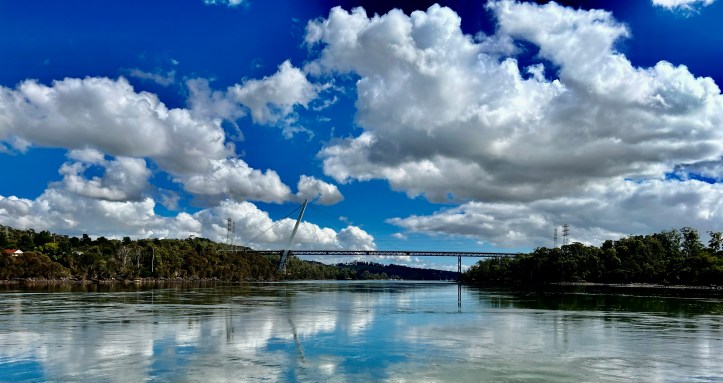
Once we passed beneath the bridge, the skipper skilfully turned the boat around for our return trip. The Tamar River is at its deepest at this point – 55 metres, and it was here we experienced the only bumpiness due to very fast flowing tidal currents beneath the water. This swift water energy has been trialled with an energy turbine.
Tasmania does not use fossil fuels in its electricity production. Ninety percent of the electricity generated is produced by hydroelectricity, and the remaining is generated by wind energy. Now, tidal energy looks set to be added to the mix. I’m sure there are lessons to be learned here for the mainland.
We have decided on a quiet night in tonight in readiness for another full day tomorrow.
 Jane and Mick's Holiday Adventures