I felt that I just had to see Mount Fuji -Japan’s sacred symbol, tallest mountain and most well known feature, etc. etc..
It is the tallest mountain in Japan, the second-highest volcano located on an island in Asia and seventh-highest peak on an island in the world.
Not quite the best or the biggest (as Kumiko, our first tour guide, had explained how Japan likes to be the best) – but still very impressive.
Of course, Mick had seen it before on his trips to Japan, but both times it was covered with snow. However, I was still quite excited.
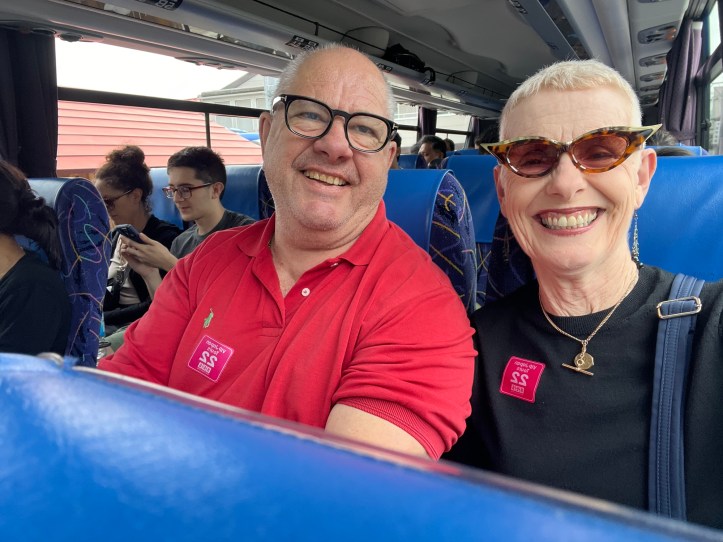
Our full-day tour to Mount Fuji and its surrounds departed pretty much on time. There were just over 20 of us on the bus, and Mick and I were the only Australians. Our tour guide’s name was George – he was a Spaniard who has lived in Japan for half of his life (his words). He is now aged 46.
George spoke to us in English for the whole trip, but I have to be honest and say that he was very (read ‘extremely’) hard to understand. I also have to mention that he wore a face mask for the whole trip, which muffled everything he said. Thankfully, he repeated key information many (many) times, so eventually we got the gist. But when he pronounced the Japanese names of places we were going to visit, I became totally confused. In fact, I had no idea and had to look on Google Maps to see where we were.
Saying that, Mick and I both enjoyed the scenery as we travelled out of Tokyo city.
For the first 45 minutes George talked to us about…
..lunch!!!
He explained what was going to be on the menu, how much it would cost and if we would like to change from our original online order or to add something to our order, and whether we could pay with cash or with card. He did not tell us where we would be having lunch or when, but he went on and on and on.
Lordy!! Lordy!!!
It took us almost 2 hours to get to our first stop – which I did not know the name of until I saw a signpost, despite George saying it many, many times. George then broke the bad news (to Mick) that the stop involved 400 stairs and lot and lots of walking. But he assured us that we would be visiting “the most beautiful” Shinto shrine ever. (Mick was not convinced).
Our first stop was Arakurayama Sengen Park.
Here there was a very old Shinto Shrine, and a pagoda – which was built as a peace memorial and completed in 1963. Supposedly, you can see Mount Fuji from here.
But, I couldn’t.
George really through the cat amongst the pigeons just before we arrived here, as he told us that the Japanese were “very religious”.
This was the exact opposite to what our first tour guide, Kumiko, had told us. So, I needed to ask Google.
Religion in Japan is manifested primarily in Shinto and in Buddhism, the two main faiths, which Japanese people often practice simultaneously. According to estimates, as many as 70% of the populace follow Shinto rituals to some degree, worshiping ancestors and spirits at domestic altars and public shrines.
Our first bus stop was at Shimoyoshida Station (and I know this only because I took a photo of the station). As we followed George and his flag pole up towards one of the 300 shrines and temples around Mount Fuji, we passed several perfectly manicured market gardens, like this one here.
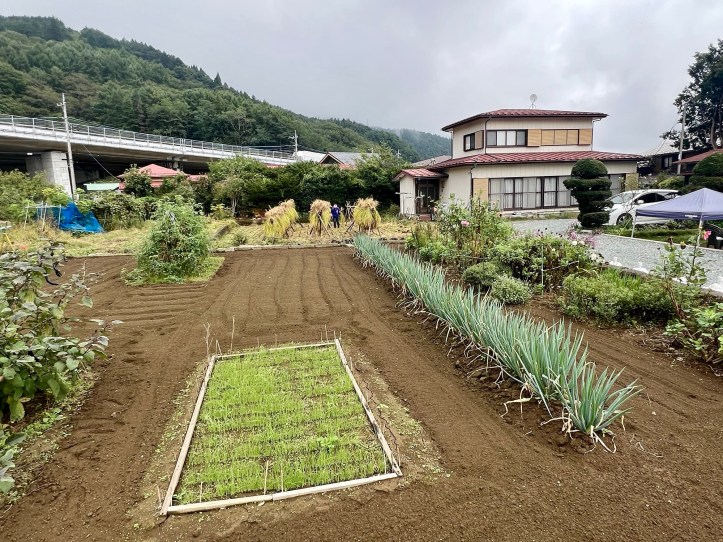
We also spotted a man manicuring his topiary tree, precariously balanced on a ladder.

And then we arrived at the start of our destination.
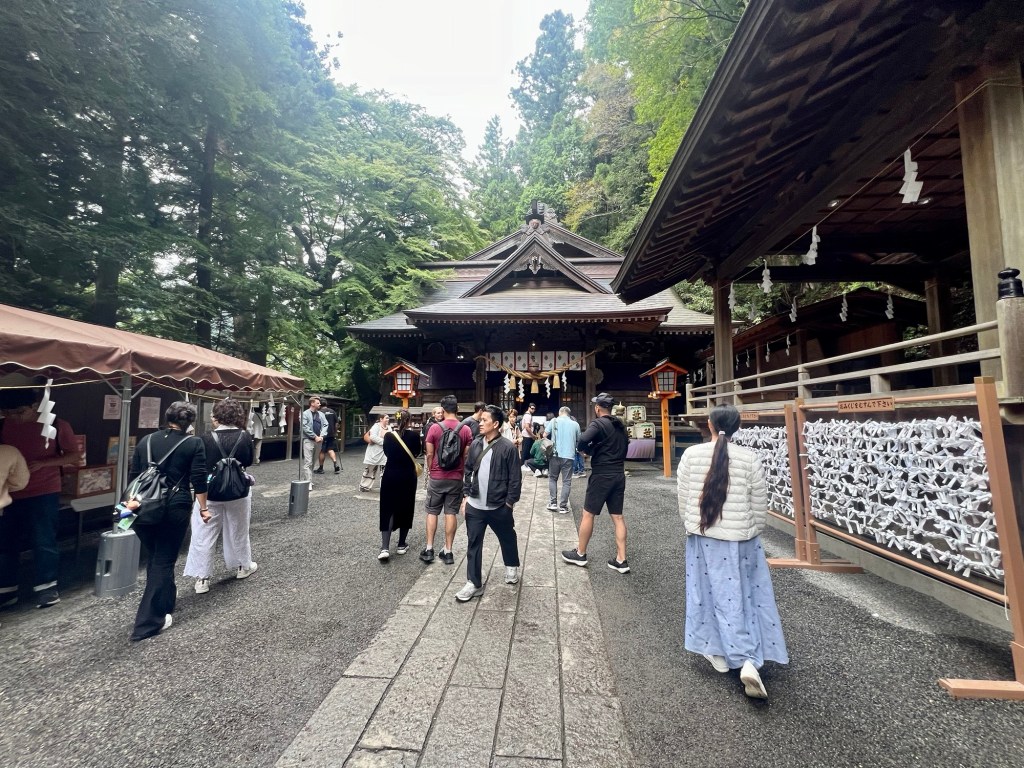
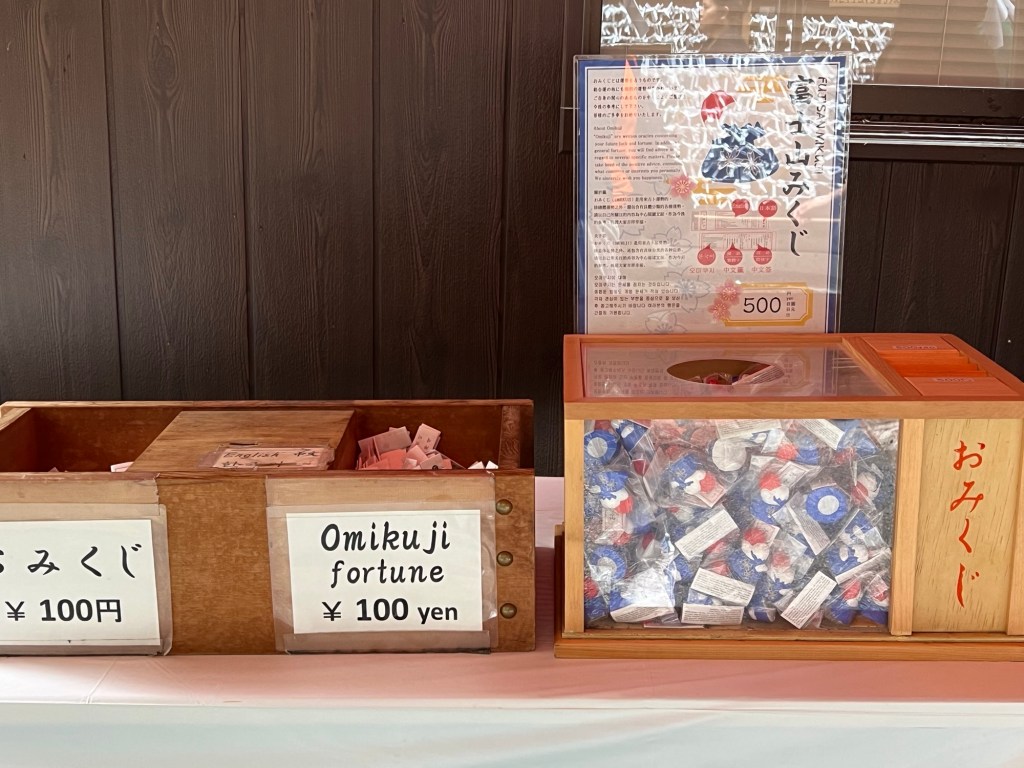
Mick decided to sit it out and wait for me to climb the steps – a wise choice!!

Once at the top I could enjoy the view of the pagoda, with its typical five floors.
.. . each story representing one of the five elements: earth, water, fire, wind, and void (sky, heaven). The finial is also divided into five parts.

I decided to walk back to the Shinto Shrine, and to Mick, via a very curvy walkway and not the stairs. It was much easier, but took longer.
We then enjoyed a cup of coffee here for only $3 AUD each.
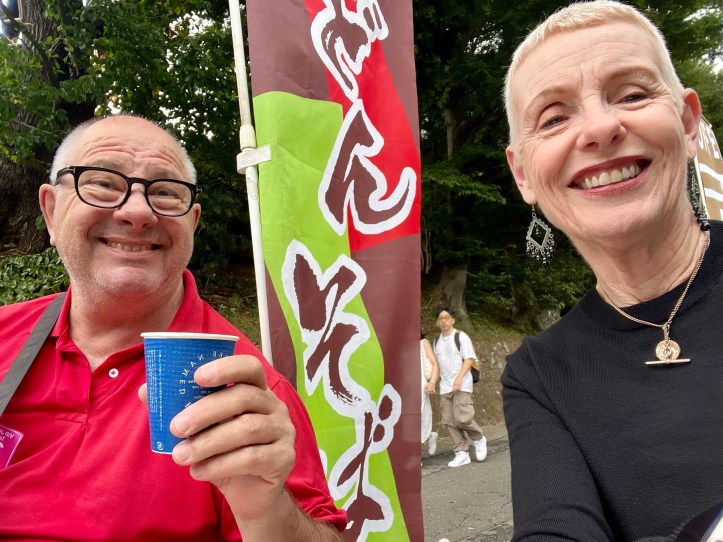
We had to be back to the bus by 11.30am (which George mentioned many, many times), because our next stop was lunch. And of course we did!
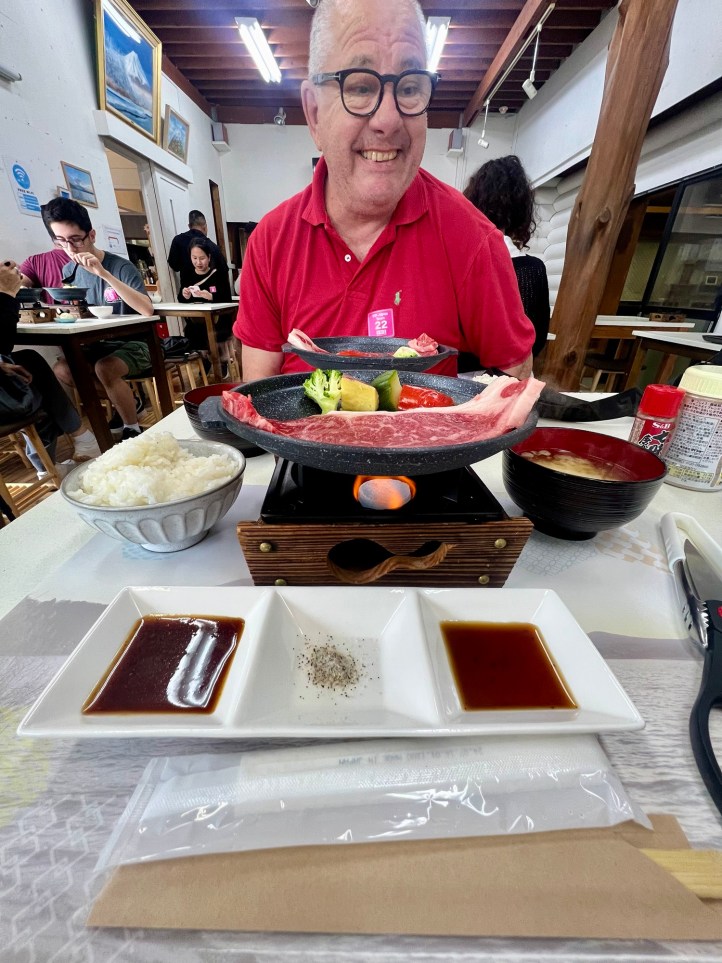
I had ordered the beef lunch, as Mick loves beef.
Our restaurant was located on the edge of Lake Kawaguchi (at altitude of 830 meters and spanning 5.7 square kilometers) and was called Craft Park. Once a very beautiful place, but now quite out-dated and in much need of a facelift. A bit like myself.
After lunch, we went for a walk along Lake Kawaguchi’s shoreline, looking for a glimpse of Mount Fuji. It was very beautiful.

So, we headed back to wait for the bus (and George) and found a great spot to take a photo to remind us of our visit.

Our next stop was Oishi Park, further along the shores of Kawaguchi (which by the way, George told us was the second biggest of five lakes around Mount Fuji), which had a beautiful garden and an ice cream shop, and the chance to see Mount Fuji. The backdrop was ideal.
But sadly, no Mount Fuji. However, we did share an ice cream here.
There was some useful signage here that explained how important Mount Fuji is to the Japanese people. It is referred to as Fujisan, and talked about as if it is a person; in fact as a god. It was listed as a world heritage site in 2013, along with the lakes and the shrines surrounding the mountain.
Onwards to the next stop.
Saiko Iyashi – where there is a recreated Nenba village. The original village was destroyed by a landslide following a typhoon in 1966. Around 20 houses have been constructed with thick thatched rooves that look similar to a samurai helmet.
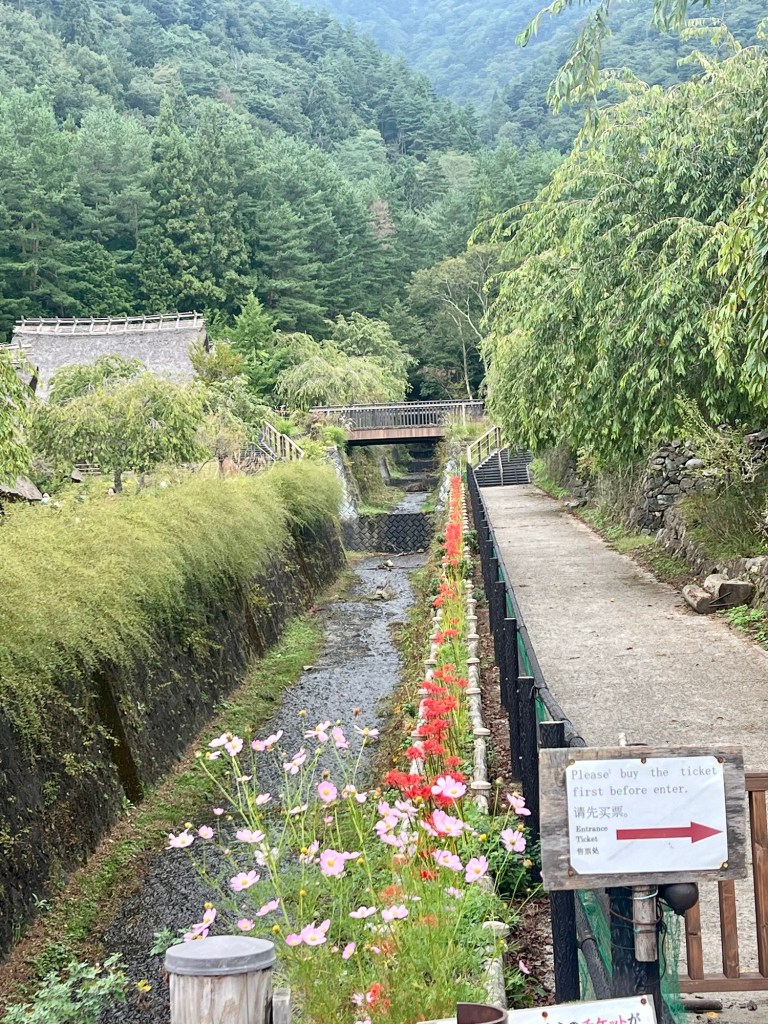

Images of this village during cherry blossom season look amazing.
But during late September, the trees and the village look very different. And there was still no sign of Mount Fuji.
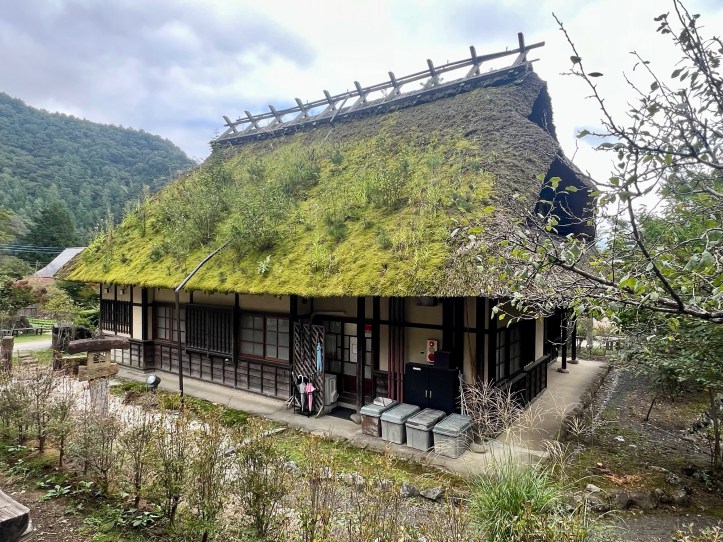
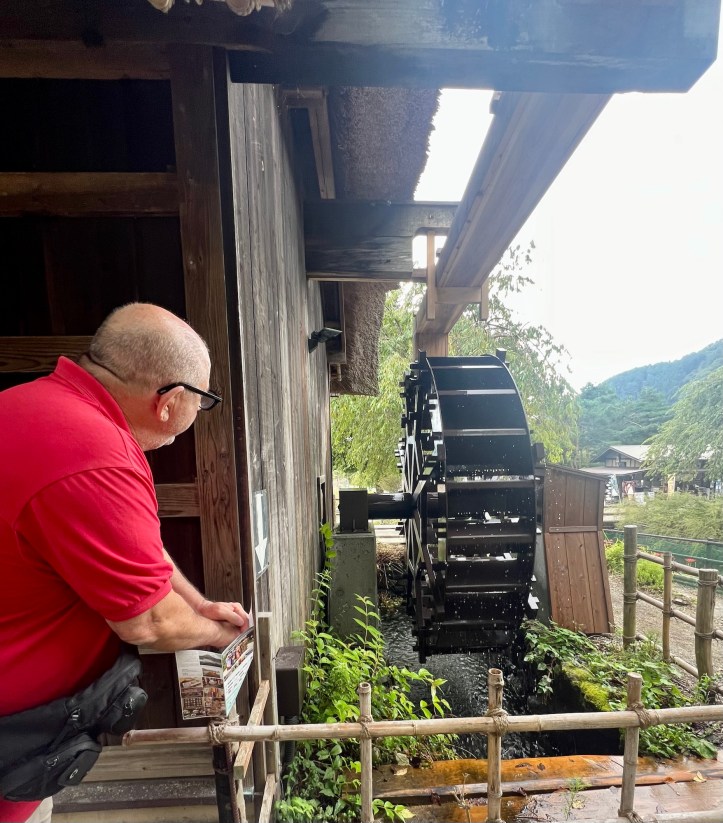
Mick was keen to see the traditional water wheel up close, but was disappointed to see that it was not connected to the mill.
And then, 10 minutes before we were to depart, Mick spotted it.

Our bus tip home was much quieter. George was exhausted; he had worked hard all day and deserved a nap. Being a Monday, the traffic was great and we made it back to our drop-off point well before 6pm. Time enough for us to do a load of washing in one of the hotel’s laundromats and to go across the road for dinner; back to the same place we went to on our first night here.
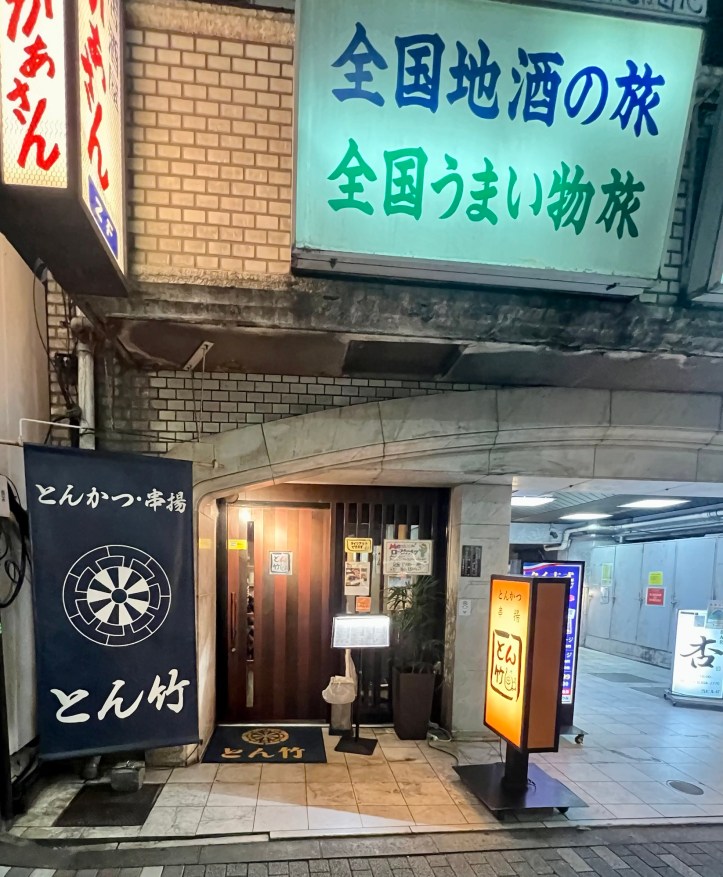
We were lucky to get a seat, as this place has such good food, and is cheap. The small tables were filled with local business men and families, and as soon as a group had finished, people who were lined up outside were invited in.
This group of young men sat next to us towards the end of our meal and fascinated me as they appeared to play games on their phones. One even carried an extra power-pack in case his phone ran out at a key point.

Tomorrow is our last day in Tokyo and we will make our way to Narita as the next leg of our around the world trip departs rather early.
 Jane and Mick's Holiday Adventures