And yes, there are two Blue Mosques that I know of, and possibly the are others.
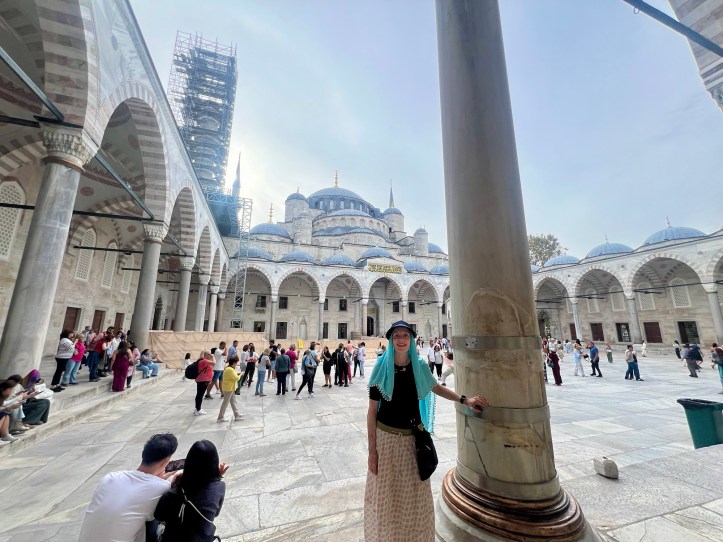
The Blue Mosque is named after the blue iznik tiles that decorate its interior – more than 20,000 of them.
The tiles were made in the town of Iznik, also known as Bursa, and are some of the world’s oldest hand-decorated tiles. The tiles were first produced by the Byzantines and were sometimes used in churches and palaces. 70-80 % of an İznik tile is composed of quartz and quartzite.
Mick said he was up to the challenge, despite coughing his heart out during the night, to visit the Blue Mosque, opposite the Hagia Sophia, and only about 400m from our hotel. It was not as busy today. I’m unsure why, but it was very pleasant spending time in the park after our visit.
To enter the mosque we had to pass through a check-point where our clothing was checked to see if it was appropriate. For some people who were wearing shorts, they were given a skirt with an elastic waist to put on over their clothing – both the men and the women.
There was no entry fee for this mosque, but you could make a donation at the exit if you wanted to.
When we got to the outside of the entrance, we had to remove our shoes. There was some shelving inside where shoes could be left during the visit. The smell from all the empty, sweaty shoes was pretty terrifying.
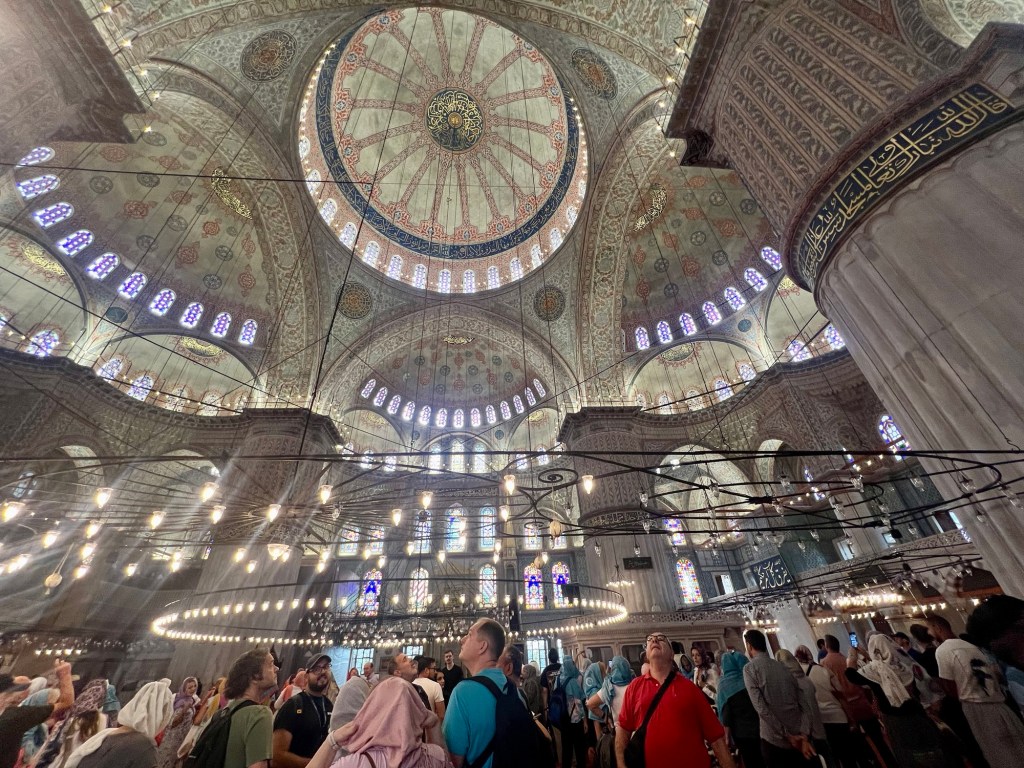
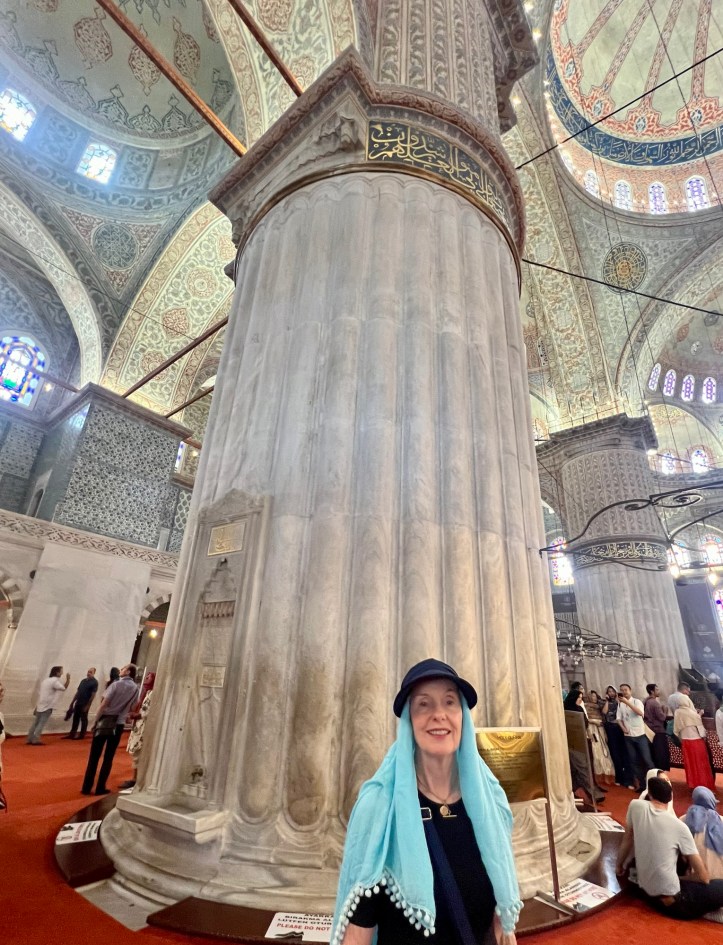
….also known by its official name, the Sultan Ahmed Mosque, is an Ottoman-era historical imperial mosque. It was constructed between 1609 and 1617 during the rule of Ahmed I and remains a functioning mosque today.
We did observe some women praying in the specifically designate area for them during our time inside the mosque.
This place was impressive, and we were both pleased we’d been able to experience its beauty.
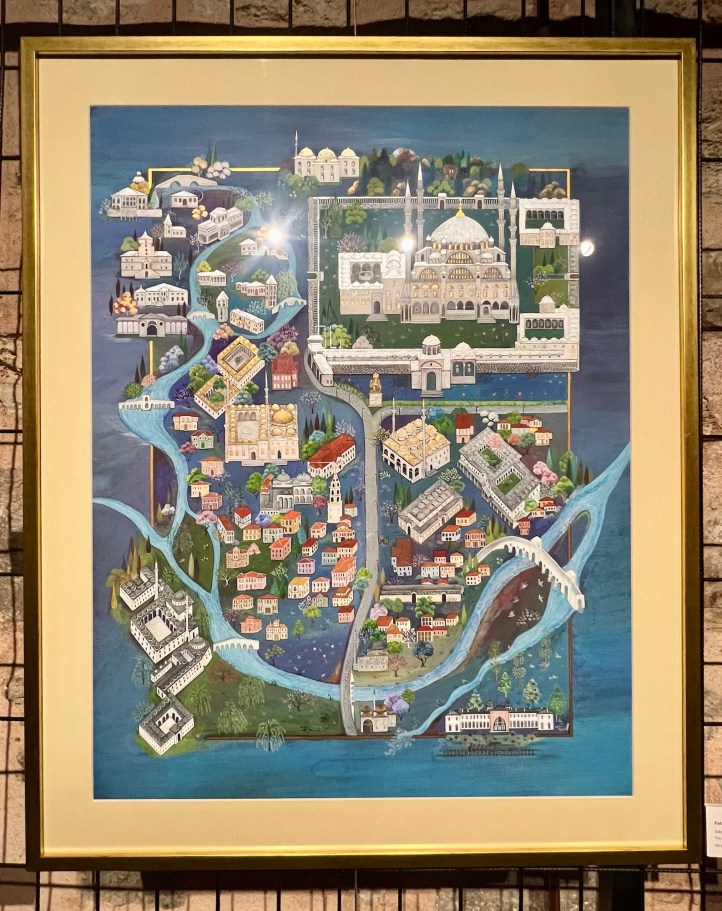
After our visit, we walked across the hippodrome area, in front of the Blue Mosque’s entrance to the Museum of Turkish and Islamic Art and entered here for free – because currently there is a festival in Istanbul which ends today.
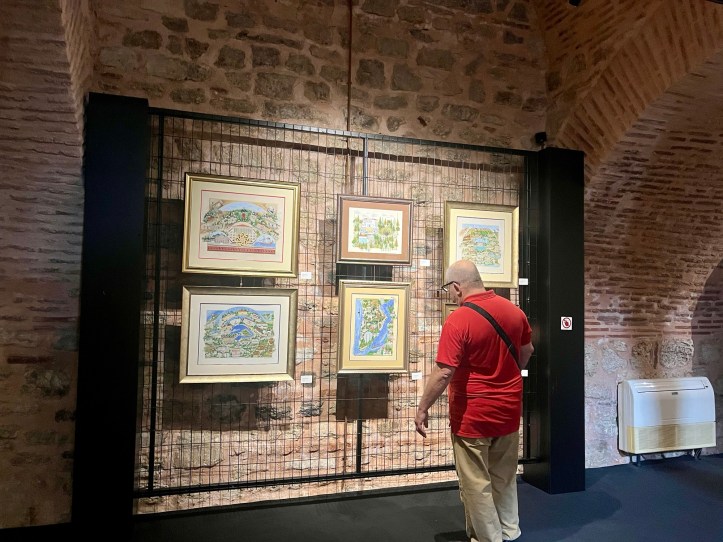
The display featured “Miniature Art”: paintings depicting a story. The earliest known form of this art dates back to the 8th Century. The drawings do not use shadows or perspective. The elements of the drawings are stylised by outlining the main features.
We had morning tea in the park then went back to our hotel where I set Mick up with some medication for his cough, and my laptop so he could watch the NRL (rugby league football) grand final. We were going for different teams, so best that I left him to be disappointed.
I set off on foot in search of the “Real” Blue Mosque, which is the name our guide Mohammad called it when he told us about it on our walking tour a few days ago. He said it was a hidden gem of a mosque that some people describe as “a miniature Blue Mosque, without the crowds”.
I walked through some interesting streets, and actually located two places Mick and I are going to over the next few days – one for a fancy dinner and one for a whirling dervish show.
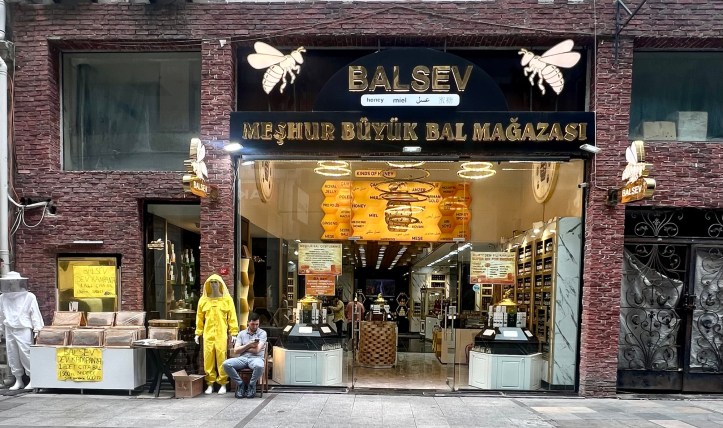
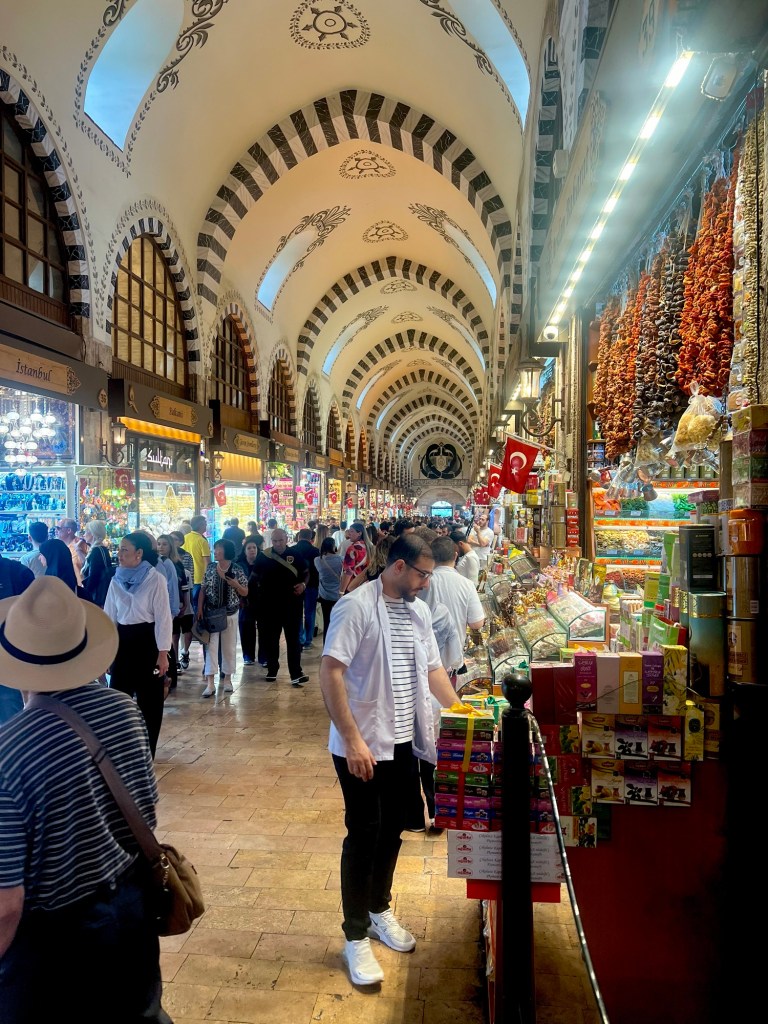
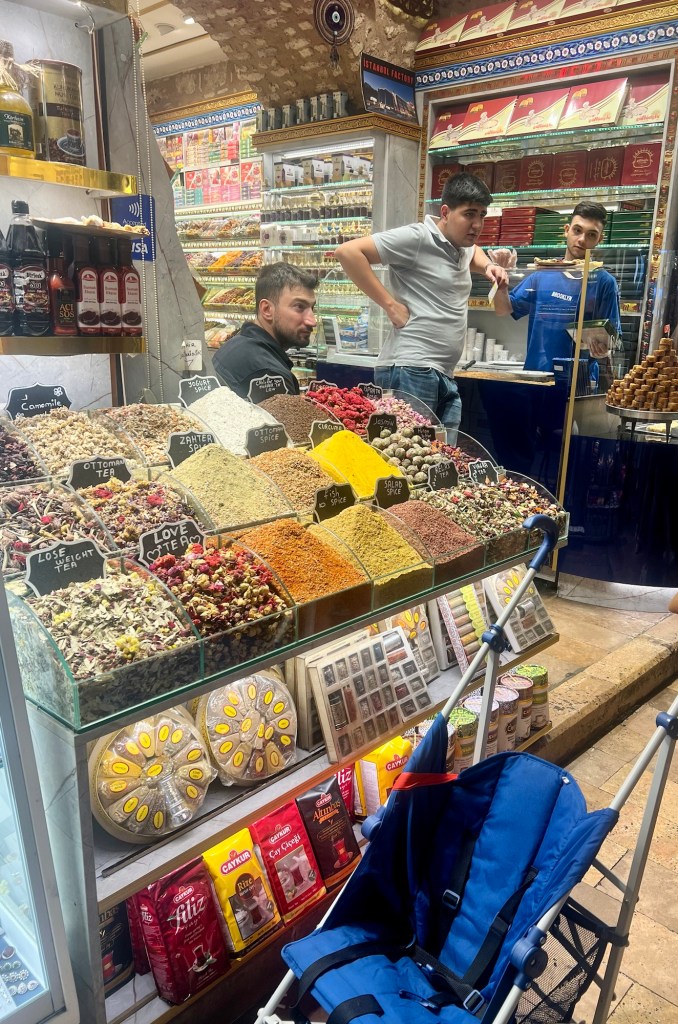
Rustem Pasha Mosque, which was completed in 1563 ( more than 60 years before the Blue Mosque was completed), is located almost inside the Spice Bazaar, actually, just on the edge of it. As I walked through the Spice Bazaar it had a better ‘feel’ to it than the Grand Bazaar – it was certainly much smaller and the crowds were not as massive.

There was an inconspicuous sign for the mosque (cami), near an opening to some steps leading upwards. You wouldn’t find it if you didn’t go looking for it (without a guide or Mr Google).
At the top of the stairs was a landing to an enclosed courtyard. There was a tour group here that had obviously just been inside; some people were still putting their shoes back on. When I entered the mosque, I was the only visitor.
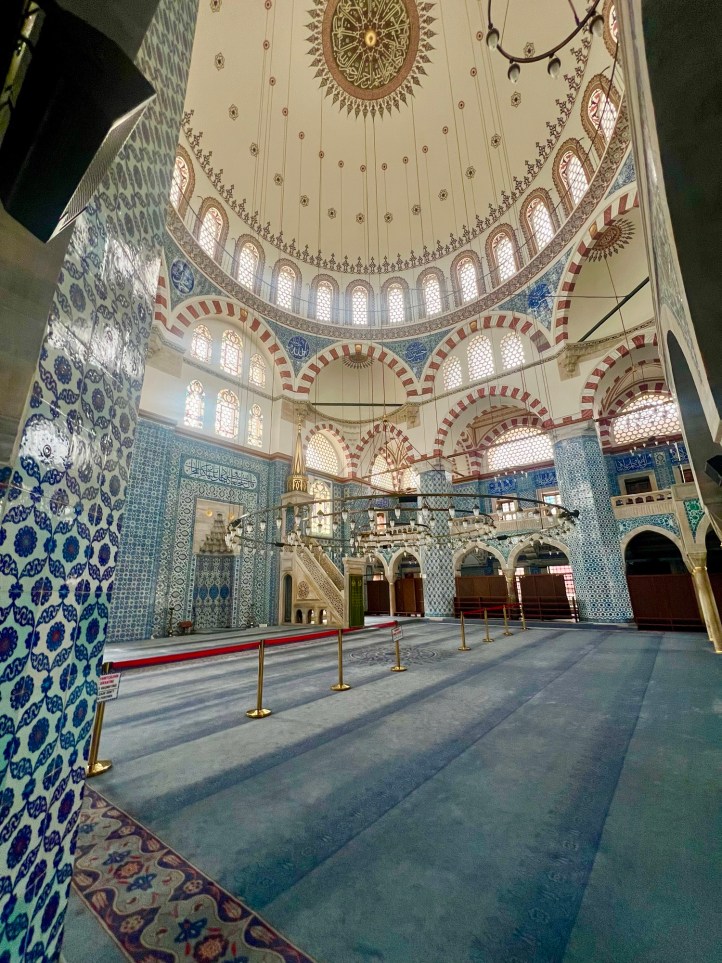
Considered one of the most embellished mosques of the Ottomans, its inside walls are covered in iznik tiles as well. These intricately designed blue tiles come in a wide variety of floral and geometric patterns. The mosque has a single minaret.
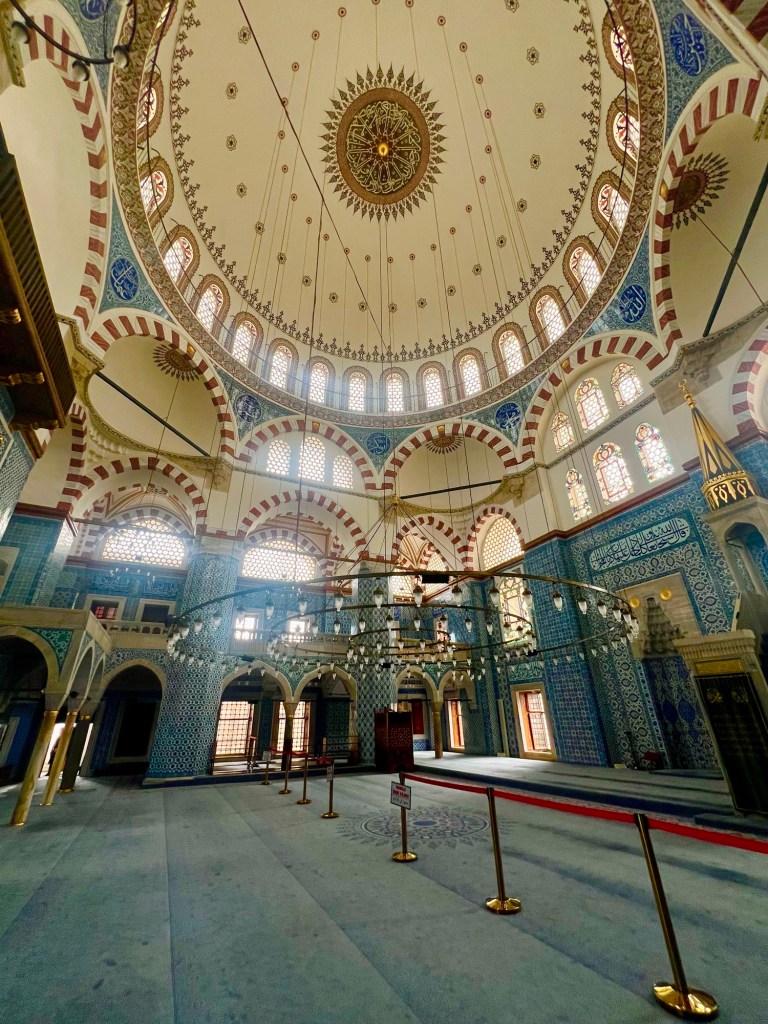
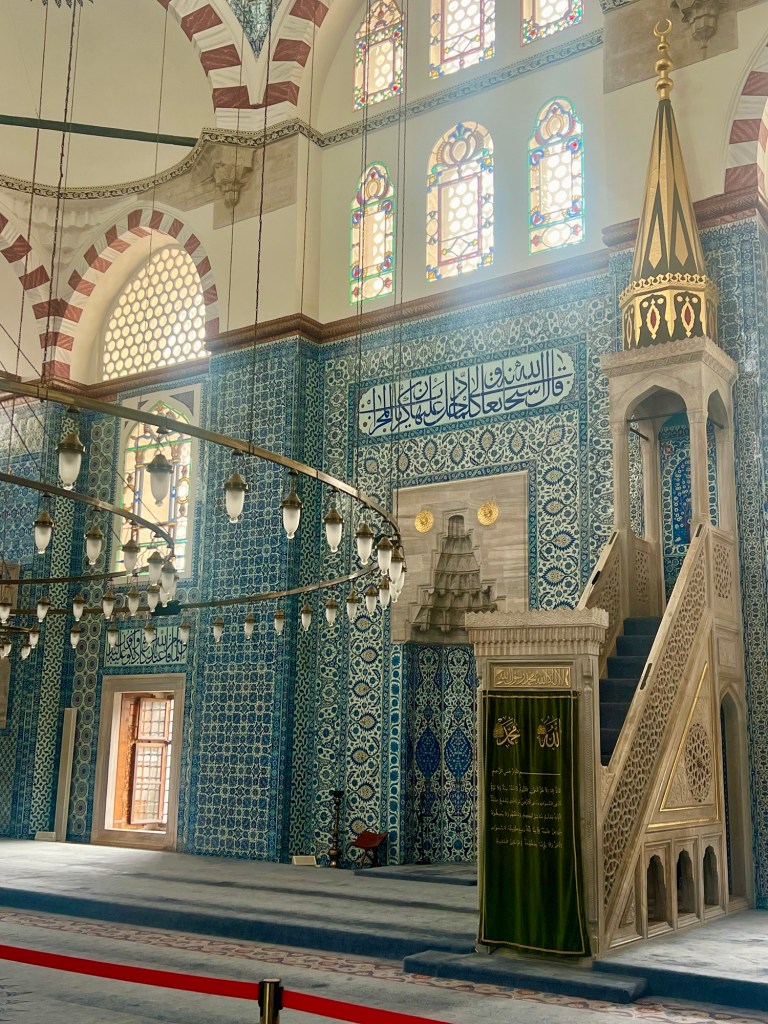
It really was spectacular as well.
Mick was feeling a little better, despite his team losing the grand final, so we headed out to find somewhere close to our hotel where we could get something small for our dinner. There are loads of restaurants near us and every one of them has at least one person out the front trying to entice people in for a meal or a drink.
Mustafa was the one that ended up convincing us that his restaurant was for us.
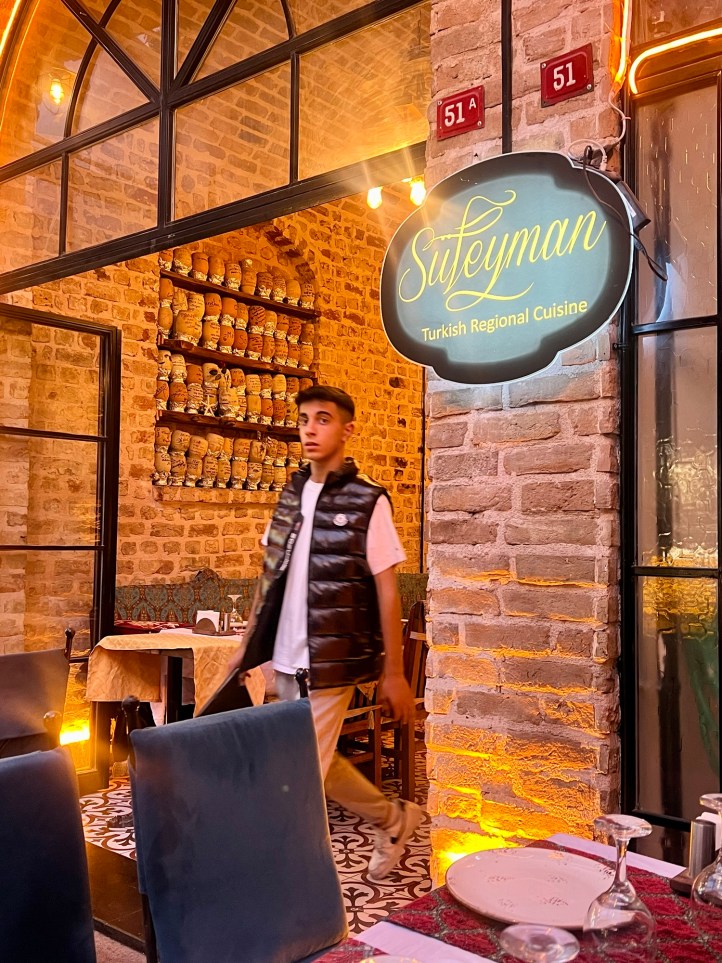
We chose a traditional Ottoman meal, listed as Testi Kebap Cappadocia on the menu, cooked in a ceramic pot and finished on an open fire in front of us, which we shared. We had seen this process at a different restaurant a few nights ago. It is impressive.
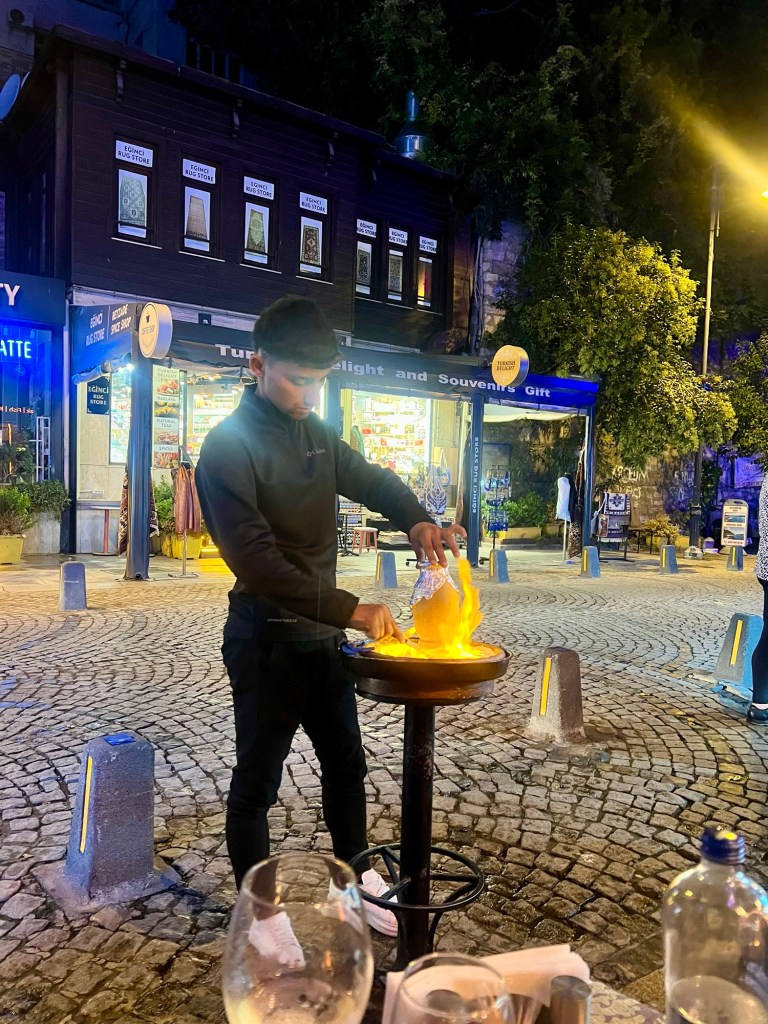
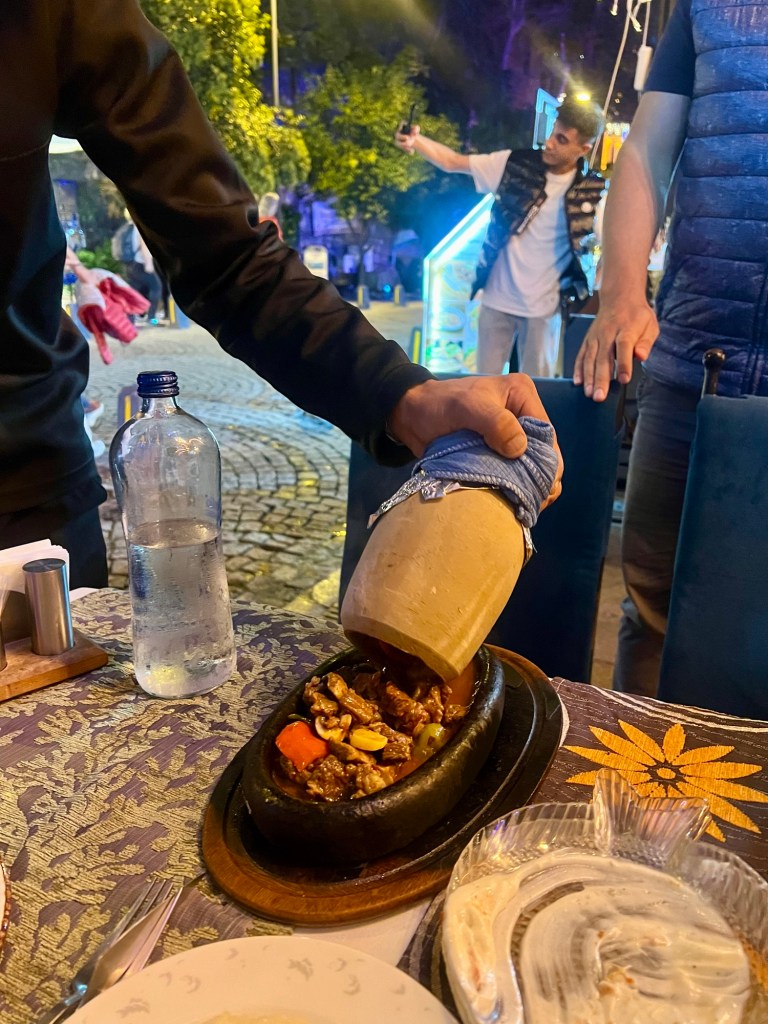
While it was a little spicy, it was also delicious.
 Jane and Mick's Holiday Adventures