I had thought about this visit for several days.
After passing long queues of people every time Mick and I walked towards the main square, who were waiting to buy tickets and then required to join another line to pass through security in order to enter Istanbul’s most famous landmark, I had decided there must be a better way.
Our hotel is only 300m from the entrance to Hagia Sophia. This morning around 8.30am, I left Mick in our hotel room, as he had decided he couldn’t manage too much walking, and headed straight to the Hagia Sophia security line. I had purchased a skip-the-line ticket for here online a few days earlier.
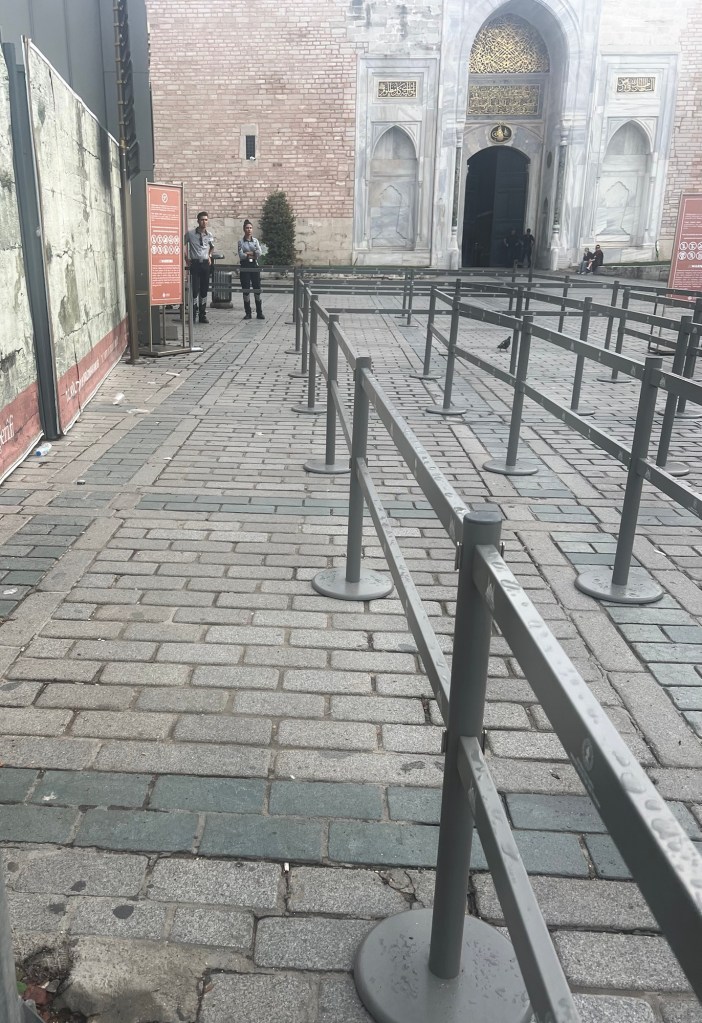
While I was not the first to enter, there was only a handful of others inside. But, it wasn’t long before several tour groups joined me in being amazed by the beauty and the sheer scale of this mosque. While walking, I listened to an audio recording describing key features of the mosque and its history, which I found very useful. It was just nice to be able to stand quite still and absorb the majesty.
There was no need to remove my shoes, as I had anticipated following my visits to the Blue Mosques, as the tour was conducted above the actually mosque.
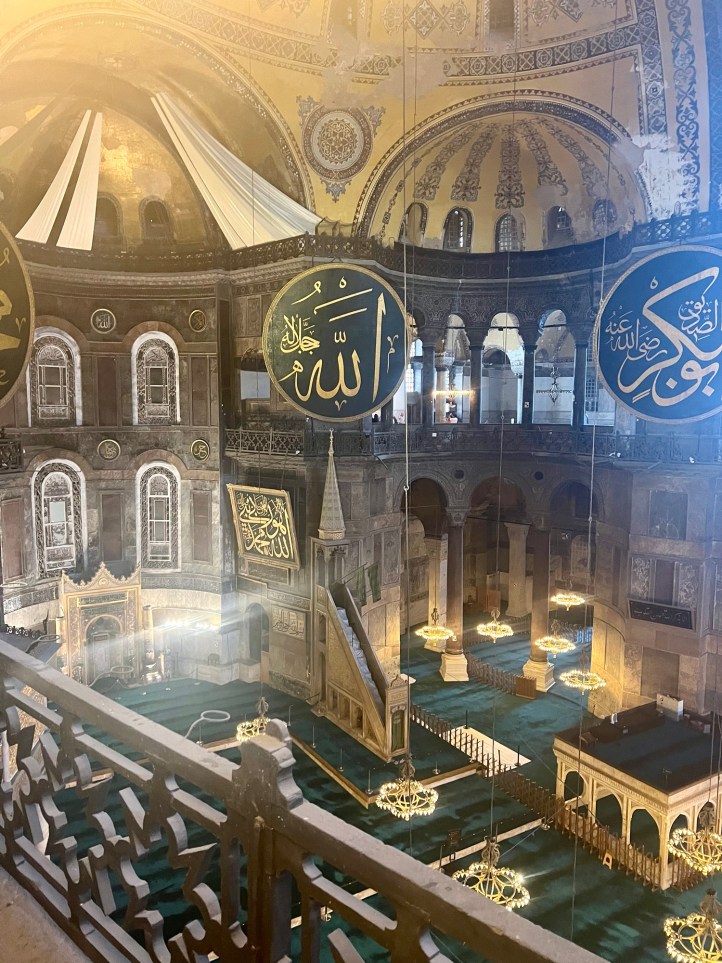
As mentioned in a previous post, this is the third Sophia Hagia built on this site. It took less than 6 years to build this one, with the help of 10,000 workers.
Completed in 537 AD, it was initially a Greek Orthodox church, and then for a brief time a Latin Catholic church. After the fall of Constantinople in 1453 led by Mehmed II, it was converted into a mosque. The painted faces were white-washed or covered, the alter was relocated and a minaret was added during the conversion process.

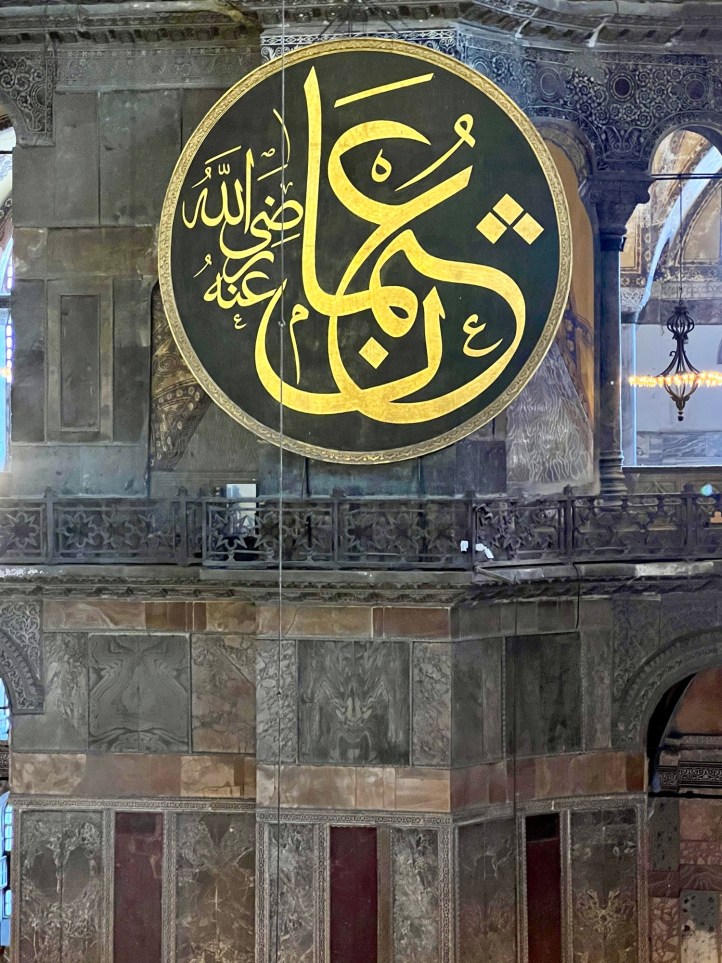
One of the large calligraphic roundels. These are wooden panels that separately bear the names of either “Allah, Mohammed and his grandsons; Hasan & Hussein and four caliphates.” Apparently they were to be removed when the mosque was converted into a museum in 1935, but, they couldn’t fit through the doors.
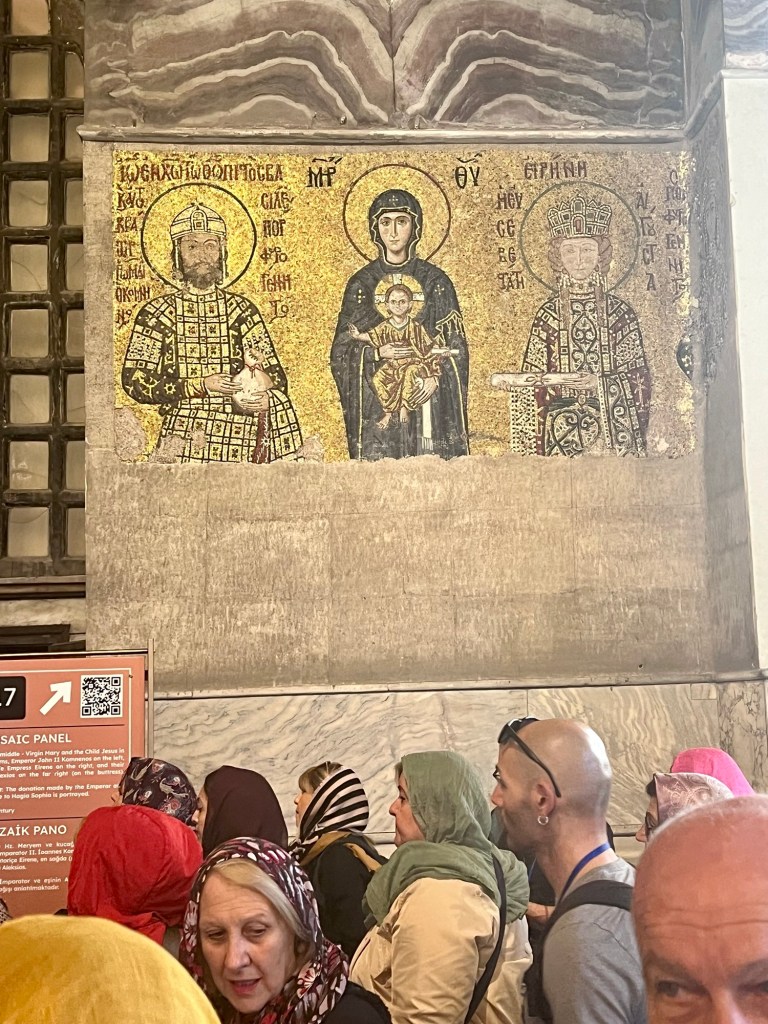
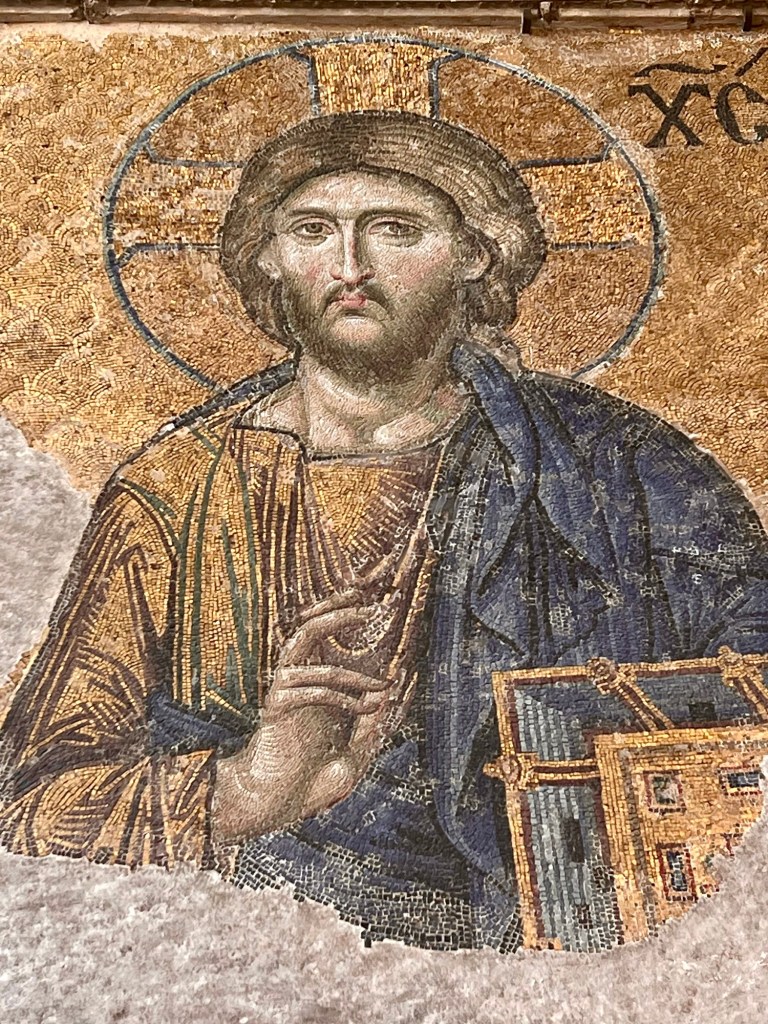
I was surprised to find some Christian images inside the top level, and learnt that Mehmed II did allow some mosaics to be preserved, even some with Christian figures such as Mary and the Child.
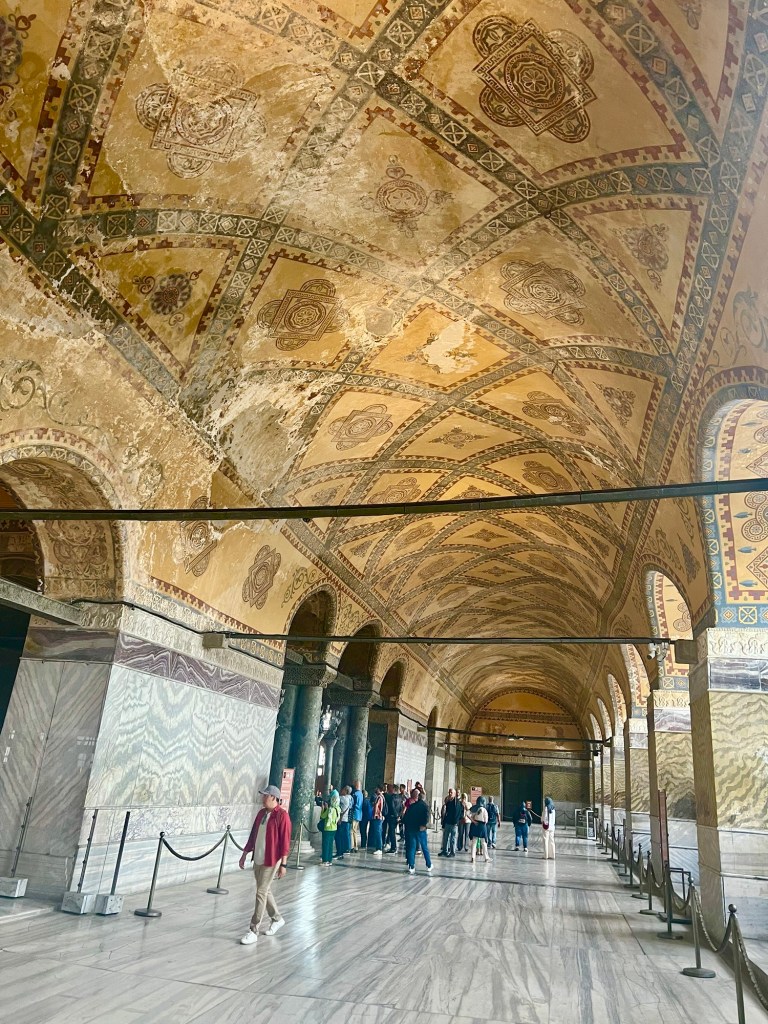
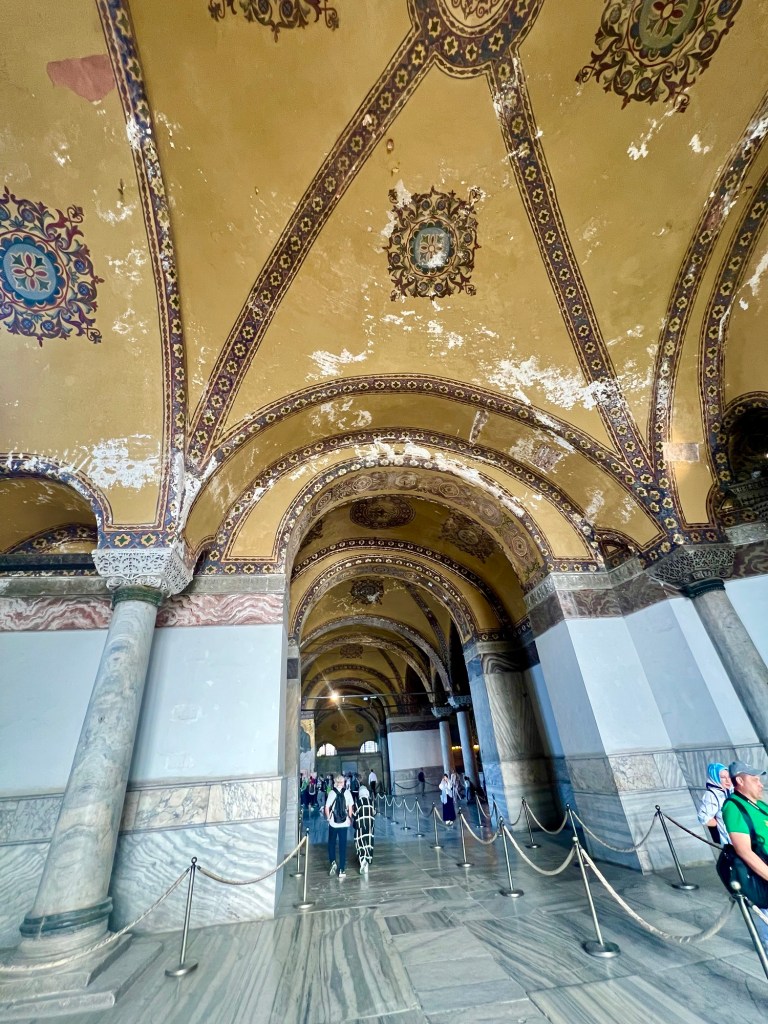
The details in the ceiling and columns, despite some areas showing their age, were wonderful.
As I exited the mosque I saw the courtyard (sahn) where worshippers perform the ritual of washing their hands, feet and face before praying.

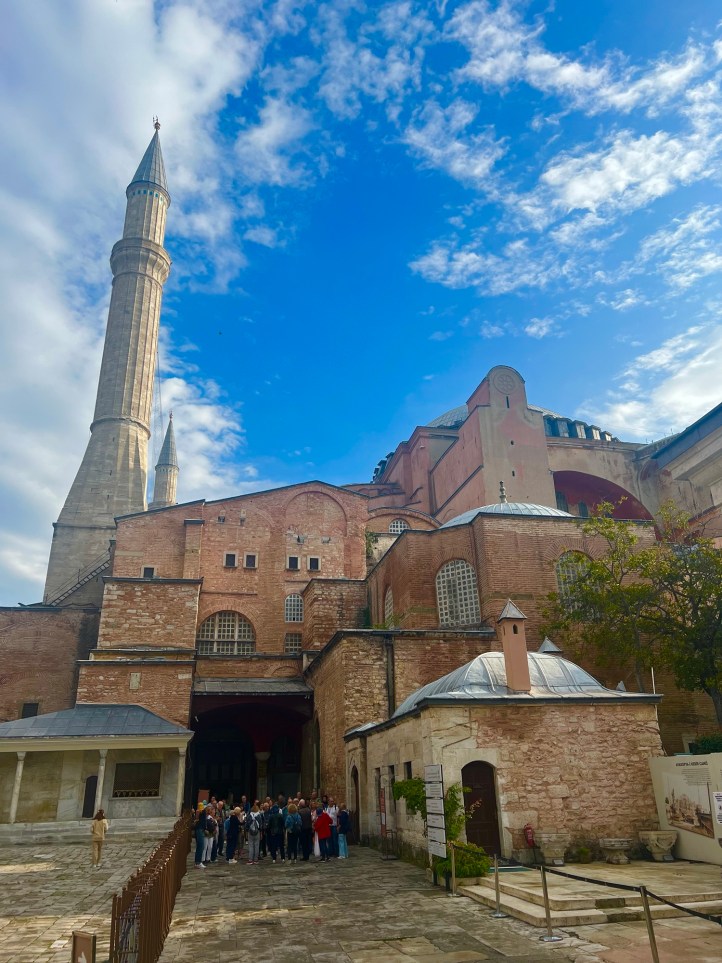
Looking back towards the mosque as I exited I could see one of the minarets……
I was sorry Mick did not experience this visit, but I had taken many more photos which I showed him when I returned. We later returned to Sultanahmet Square to have a coffee and enjoy some more people-watching.
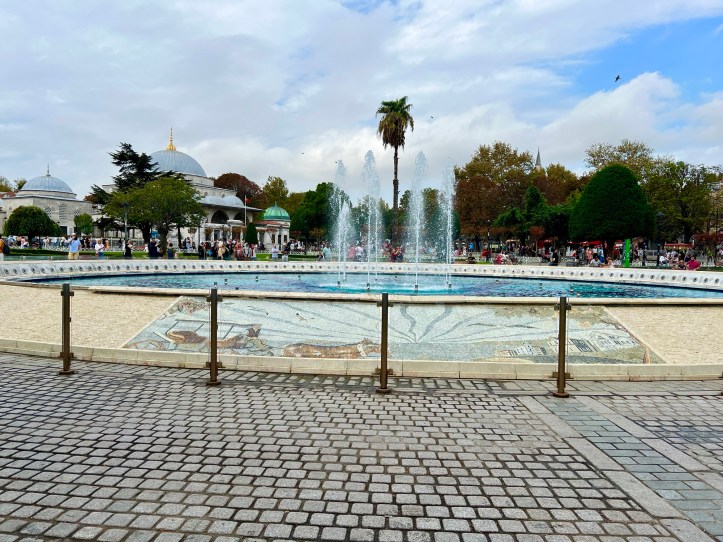
This is our favourite spot to sit while we enjoy our morning coffee, when we are lucky enough to get a seat. It is a perfect backdrop for photos, and therefore perfect for us to observe others.
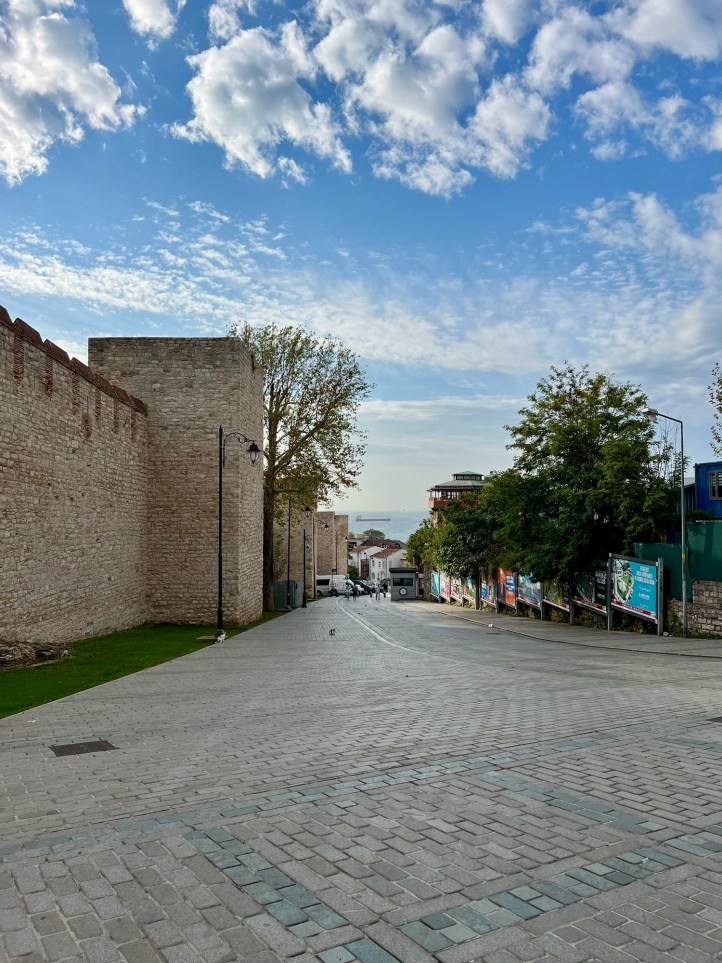
On our way back to our hotel, we saw a large shipping vessel travelling along the Bosphorus River. The view from here is amazing.
A quieter afternoon for us both, before we headed out to enjoy dinner, this time on the roof terrace of a nearby hotel. We have tried several of the local wines – white, rosé and red. Usually we do not get to see the bottle, which handicaps us a little in trying to work out exactly what we are drinking. So far we have had sauvignon blanc (made from that grape and blended with sultana / table grapes), and red wines made from a native grape (Öküzgözü), often blended with shiraz. And so far, we haven’t found one we really like.


 Jane and Mick's Holiday Adventures