We beat the sun again this morning and decided to head out early to finish the itinerary from the online tour from yesterday. It turned out to be a massive day.
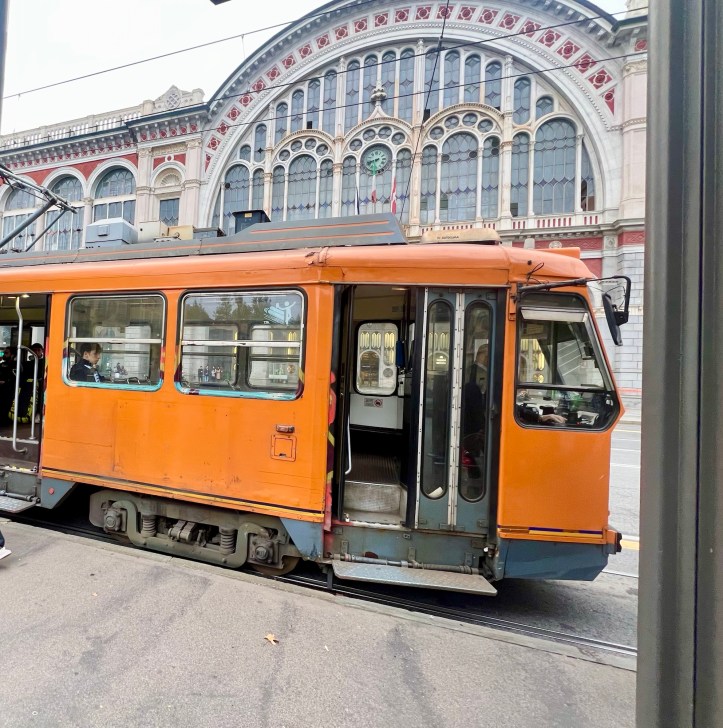
We had spotted this yesterday and decided this would be a good way to see parts of the city without having to walk too much. The cobbled stones used for paving in Europe are gorgeous to look at but pretty hard on your feet and also pretty hard to clean – the cracks are great for capturing cigarette butts. And there are loads of those.
Described as a sort of “museum in motion”, these vintage trams travel through the old city. Apparently they are the only ones like this in Italy; it looked very similar to the one we caught in Lisbon years ago (Line 28).
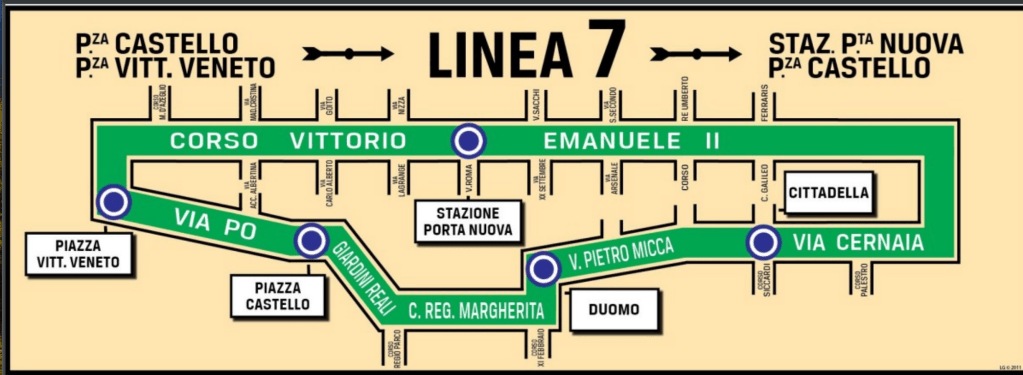
We waited to catch the tram in front of Porta Nuova. We had been told that we could buy tickets on the tram or from a tobacconist. We had decided on the first option. When the tram pulled up there were only two other people on it, and when I asked the driver about buying a ticket I got hand signals that equated to a “no way”. So, we just sat down and enjoyed the trip – for free.
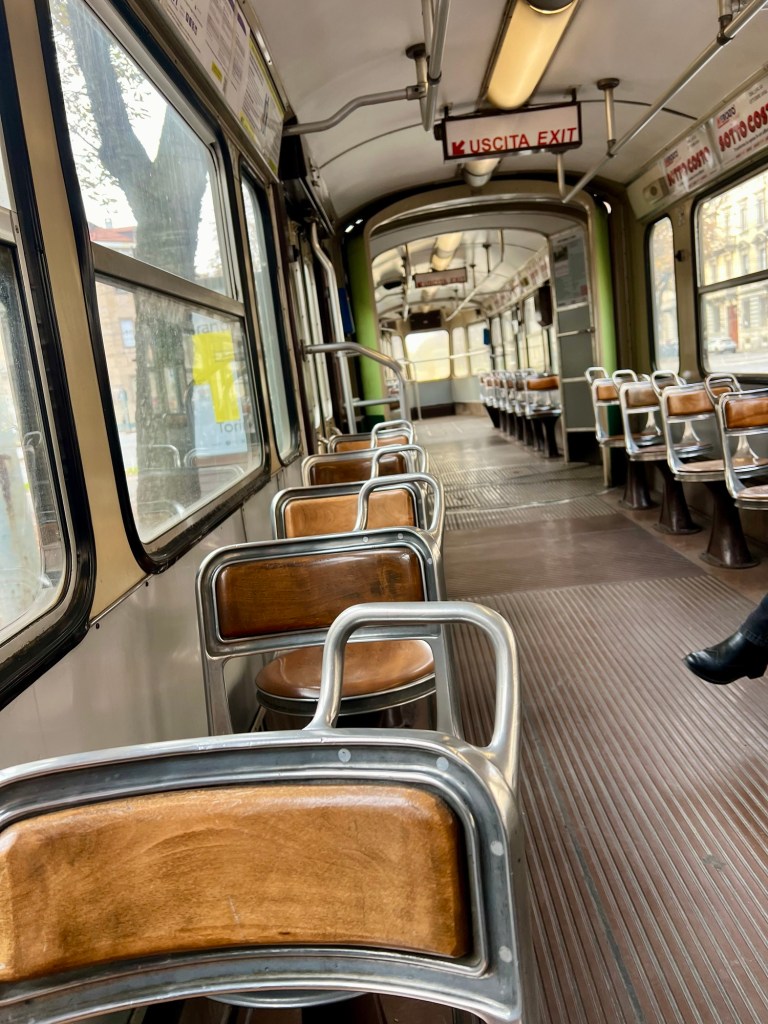
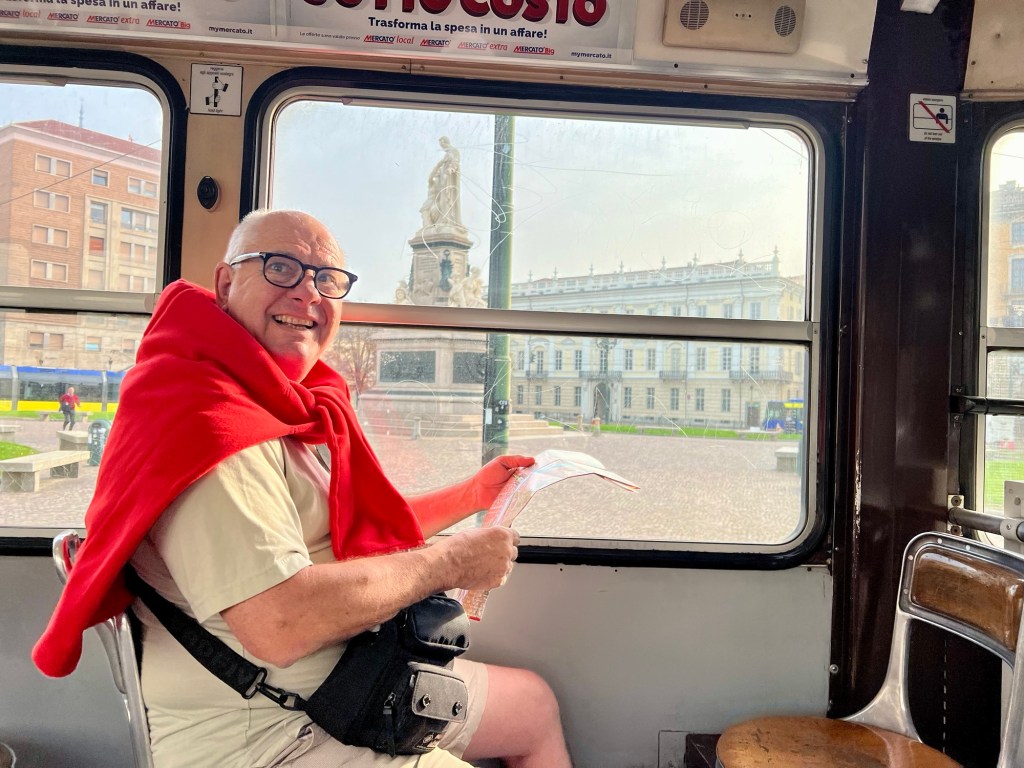
We had thought we’d make a complete loop back to our starting point. But that was not to be. It stopped – as in really stopped – at a point not even listed on the above map – Piazza Carlo Emmanuele II. Later I read that this was indeed the final stop for the tram. So that map was useless.
Anyway, Mick and I hopped off and started to make our way back towards the place I had booked us into for a special treat later in the day.
I wanted to visit a Caffè Storici (Historic Cafés) to try a bicerin – a traditional hot drink native to Turin, made of espresso, drinking chocolate, and milk served layered in a small glass.
The women at the Tourist Office had given us a brochure listing a number of the historic cafés we could try. The brochure described these cafés as “the expression of a lifestyle, of a way of being, with an innate sense of sobriety and elegance.” So we had to find out.

I was able to make an online booking for Caffè Platti. It serves “elaborate pastries and cakes in an ornate dining room with gold accents”. The café was opened in the late 1800s by two brothers – Ernesto and Peitro Platti.
Before we went there, we passed by another one of these historic cafés – Caffè Torino – so we headed in just for a coffee – at the bar. I finally learnt how to order a coffee for Mick – he usually drinks a latte, but here it is called a latte macchiato. On our first trip to Italy we learnt that if you had a coffee at the bar, it was much cheaper than if you sat down at a table. And it is a very common thing to do here.
So the day turned out to be a bit of an historic café crawl – and we ended up buzzing a little from all the caffeine.
Caffè Platti was amazing – we arrived a little early but that was ok. Mick and I were seated at a small table in front of a very large mirror, and after using Google Translate to help us with parts of the menu we ordered a Royal Snack (Merenda Reale) for Mick – a bicerin with some biscuits, and I ordered a bicerin and an egg and asparagus sandwich (tramezzino grande). Our waitress explained the correct way to drink this special treat. Definitely do not use a spoon to mix it all up.
Wow and Wow.
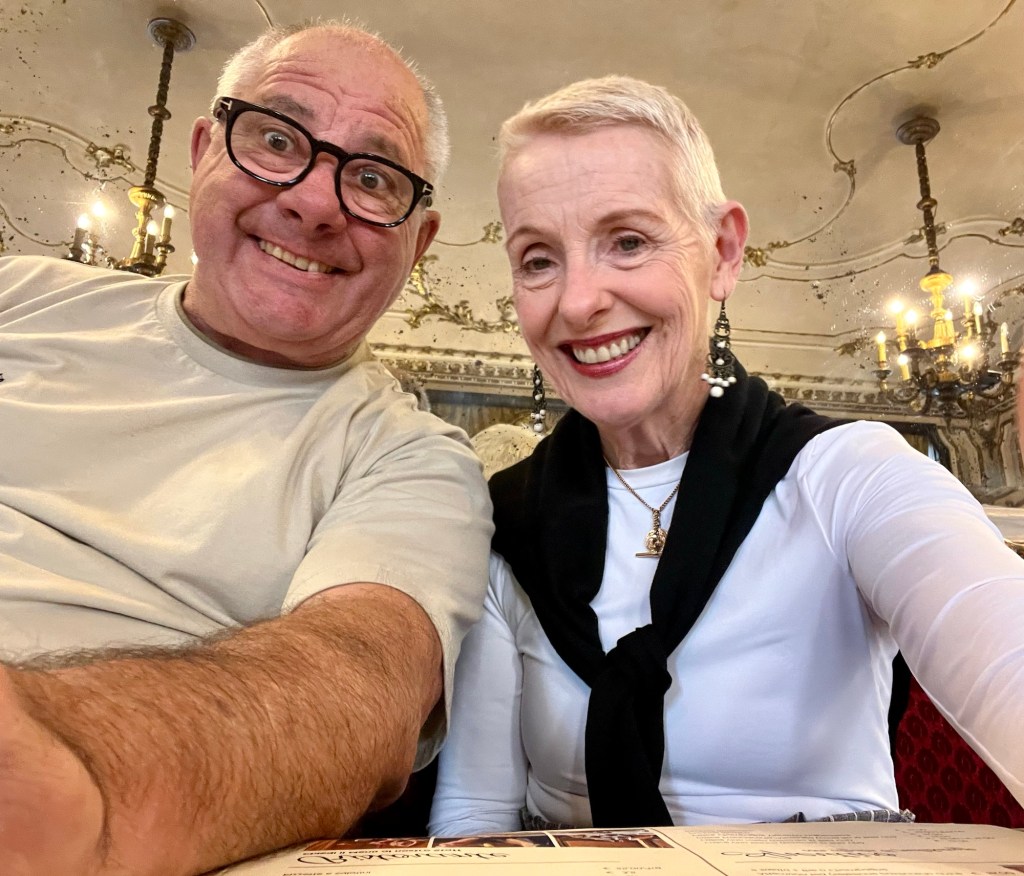
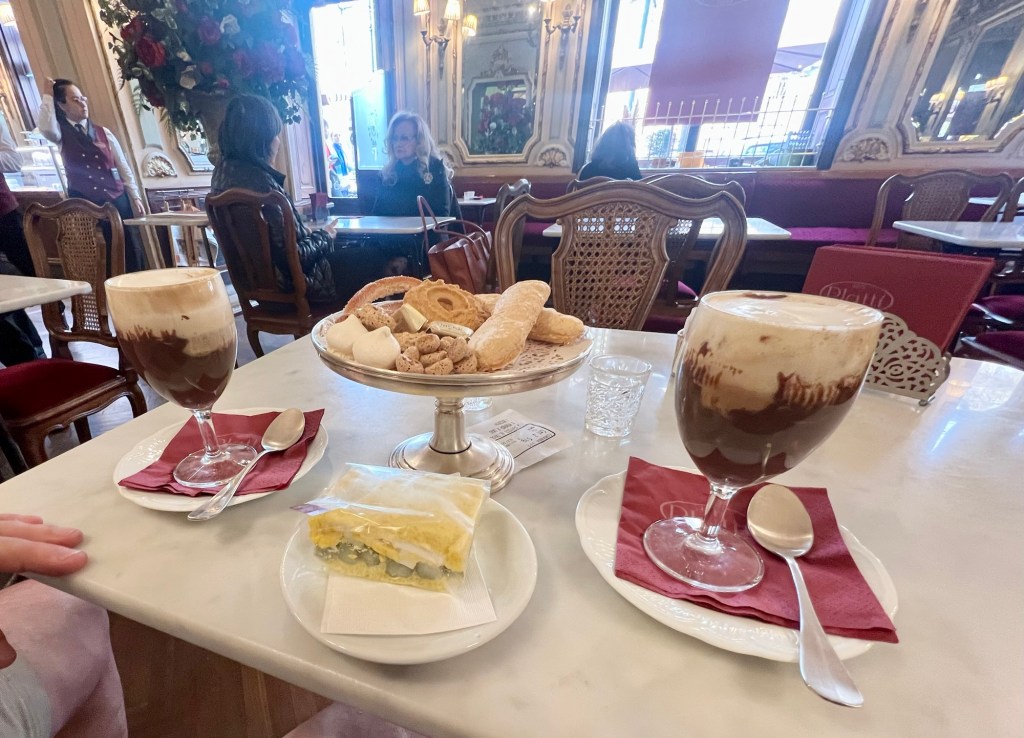
While we were reading the menu, we noticed that this is one of the places in the city that offers Vermouth tastings. So we booked a degustation of three different vermouths from Turin for later in the afternoon.
We also found Turin’s famous symbol – Mole Antonelliana. This is a very tall structure that originally started out being built as a synagogue. The name really comes from its size (mole) and after Alessandro Antonelli, the architect who designed it. It was completed in 1889. The photos I took did not do it justice.
Walking on further, we came to Piazza Vittorio Veneto. Are you keeping with the piazzas? There are so many of them, but this is one of the largest in Turin. It is named after a battle in 1918.
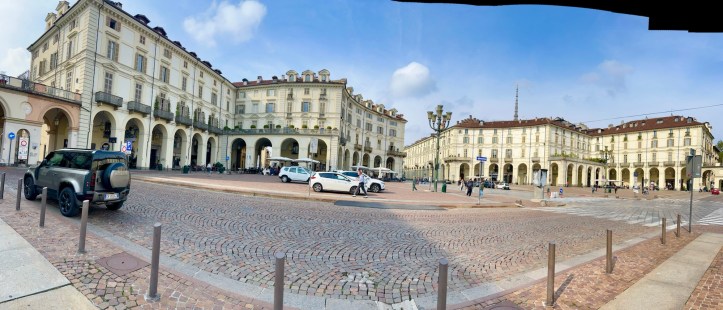
It was almost time to taste the vermouths from Turin, the experience is called “Extra Vermouth”. The price to taste three different vermouths is the same in all participating establishments in Turin: €18. The wine is paired with different samples of food, aimed at enhancing the flavours of both the food and the wine.
A young man explained the history behind vermouth in Turin, in perfect English, and then recommended that the three we try were the best to go with the samples of food that had been prepared for us.
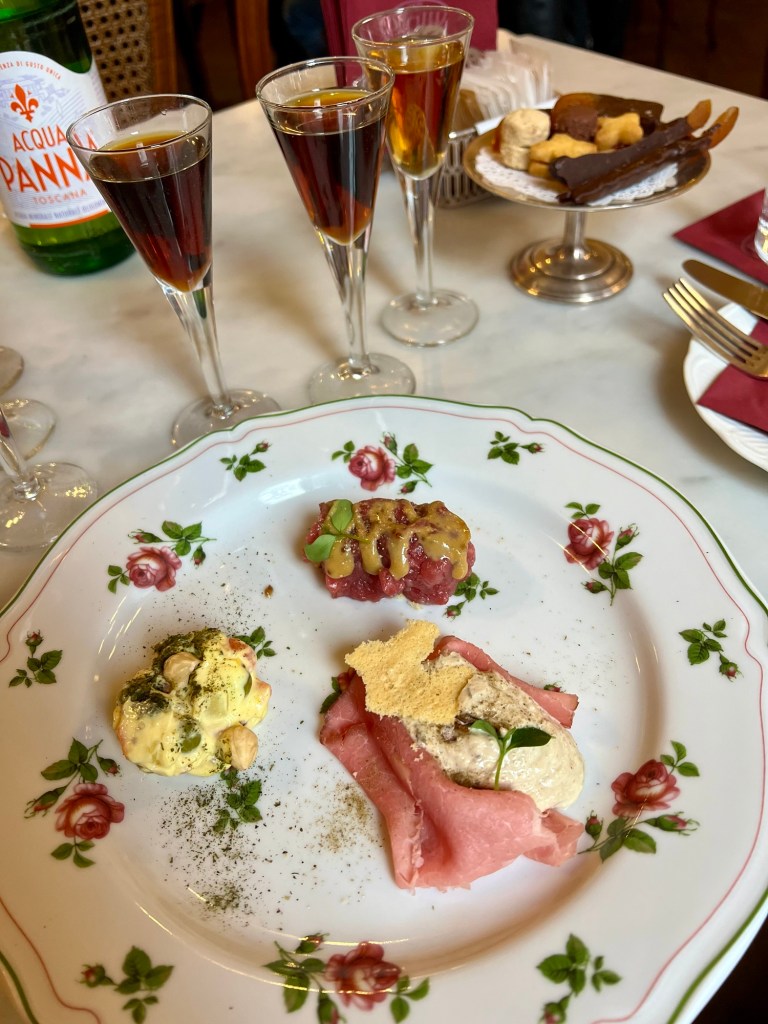

The first vermouth was the one that was created in Turin in 1786 by Antonio Benedetto Carpano, known in English as ‘Ancient Formula’. It was a very intense amber colour, with hints of raisins, figs and dates along with herbs and spices of star anise, cinnamon and hints of vanilla. It was suggested we taste that with the Russian Salad – that small yellow mound at 10 o’clock on the plate. Not sure what it was, but it was amazing.
The second vermouth we tried was the house special named Vermouth Torino 1757 – it was inspired by the Cinzano brothers’ recipe, with floral and fruity notes followed by a velvety and bitter aftertaste. It was suggested we taste that with the shaved pork and the raw beef. Wow. This was our favourite one.
The final vermouth was to go with the sweets – dark chocolate covered orange slices and peel. It was called Pio Cezare and it was a blend of 26 aromatic plants including absinthe, it had been then left for about 40 days in an infusion of alcohol and a small amount of white wine (from Pio Cezare).
Dinner at home again tonight – we didn’t need much after that experience.
 Jane and Mick's Holiday Adventures