One of the most well known features of Barbaresco, not including the wines of the same name of course, is the Torre di Barbaresco – a small siege tower that can be accessed via elevators, for a fee of €5 (for seniors). The view from the top is amazing – a full 360 degrees.

You can even enjoy a glass of local wine while you are on the very top of the tower, but we chose not to. Some of the floors were actually made of thick perspex or plastic that you could see through – which was a little disconcerting.
There is a restaurant at the base of the tower where you can do a wine tasting or have something to eat. It looked very popular. We enjoyed the entrance walk to the tower, featuring many of the local wine growers in black and white portraits.
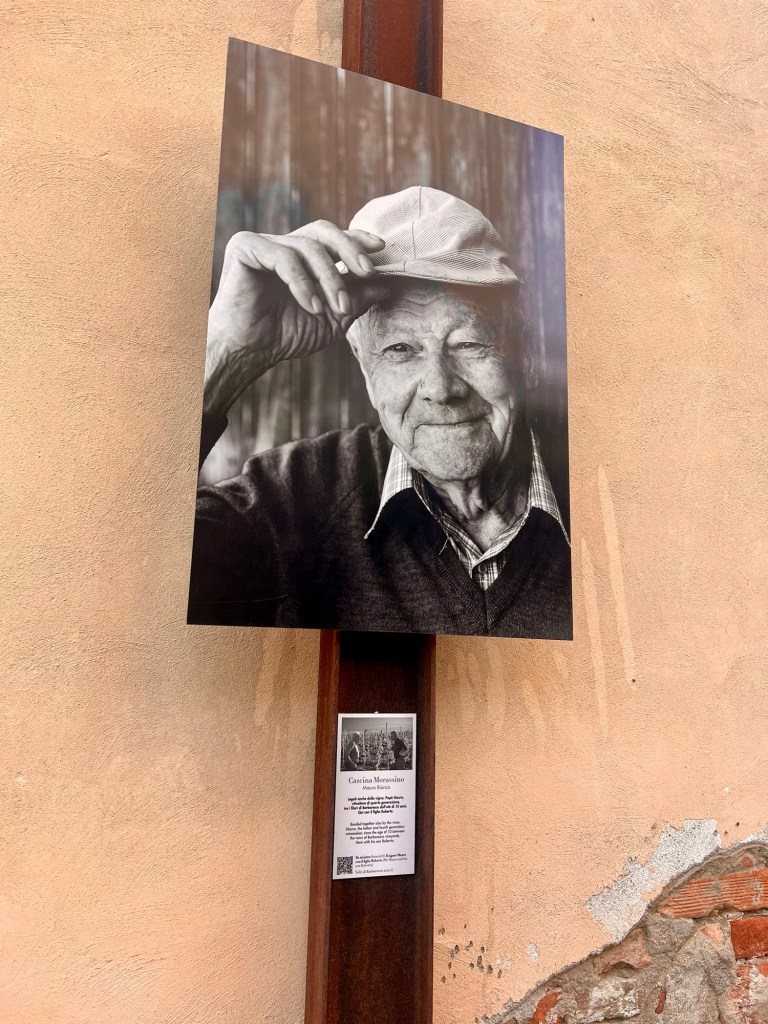
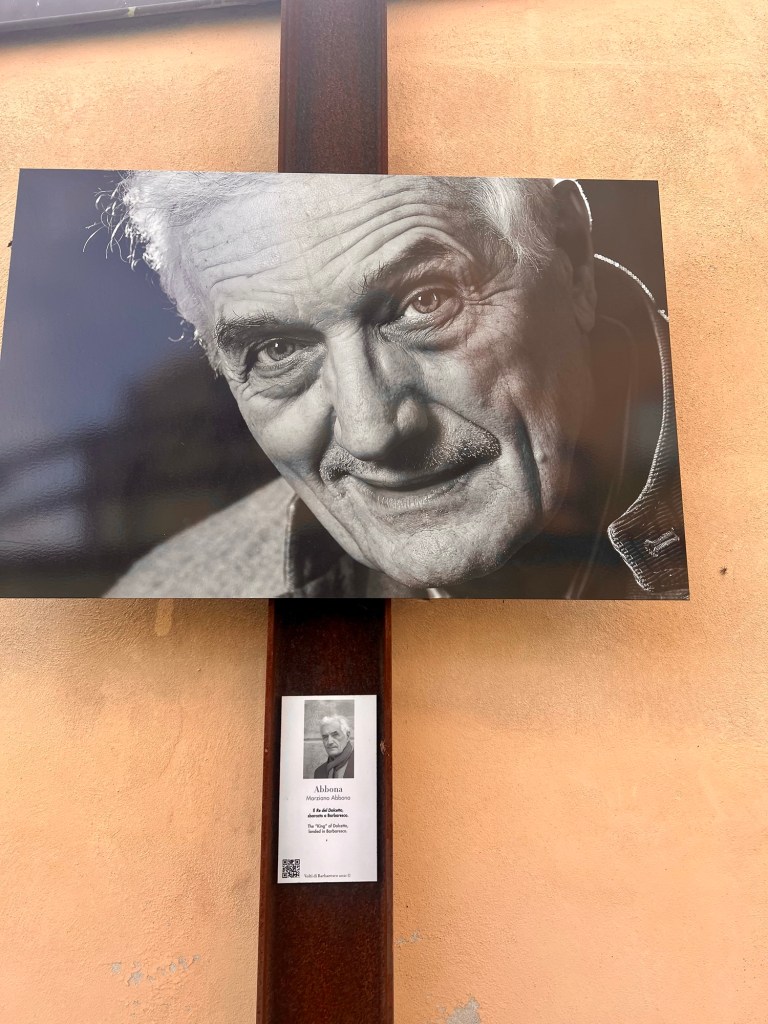
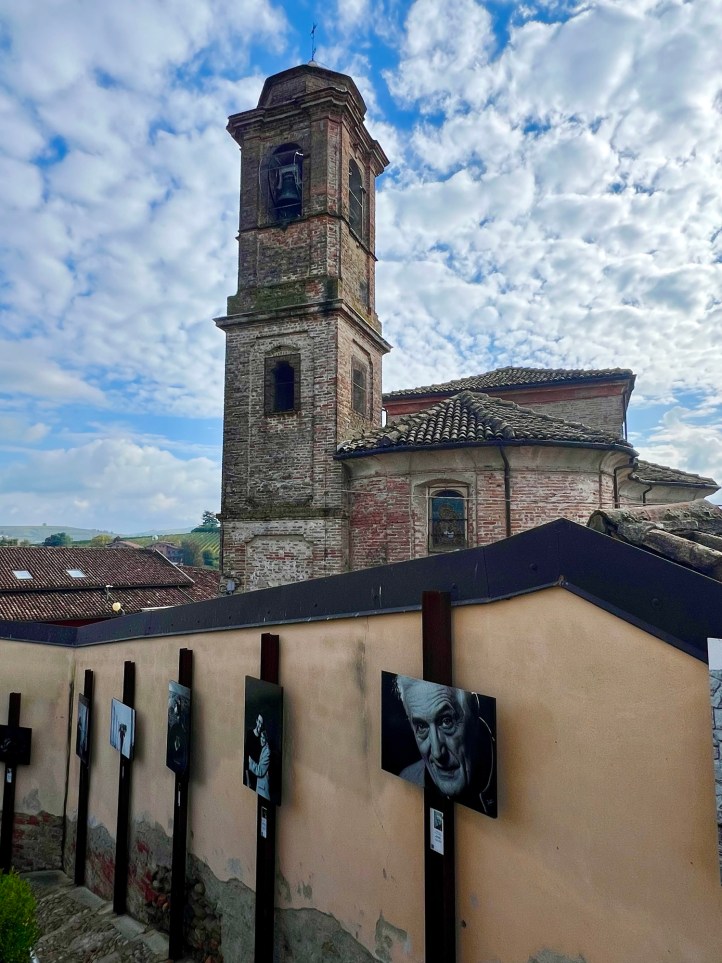
The Commune di Barbaresco boasts 47 wine cellars, 1 distillery, 6 restaurants, 4 wine bars and a handful of other stores. There was no need to get in the car at all today.

Our host had suggested we have lunch today at a restaurant on the edge of the village called Rabayà. It was almost a kilometre walk to get there, but this time Mick was able to manage this as it was mostly flat.
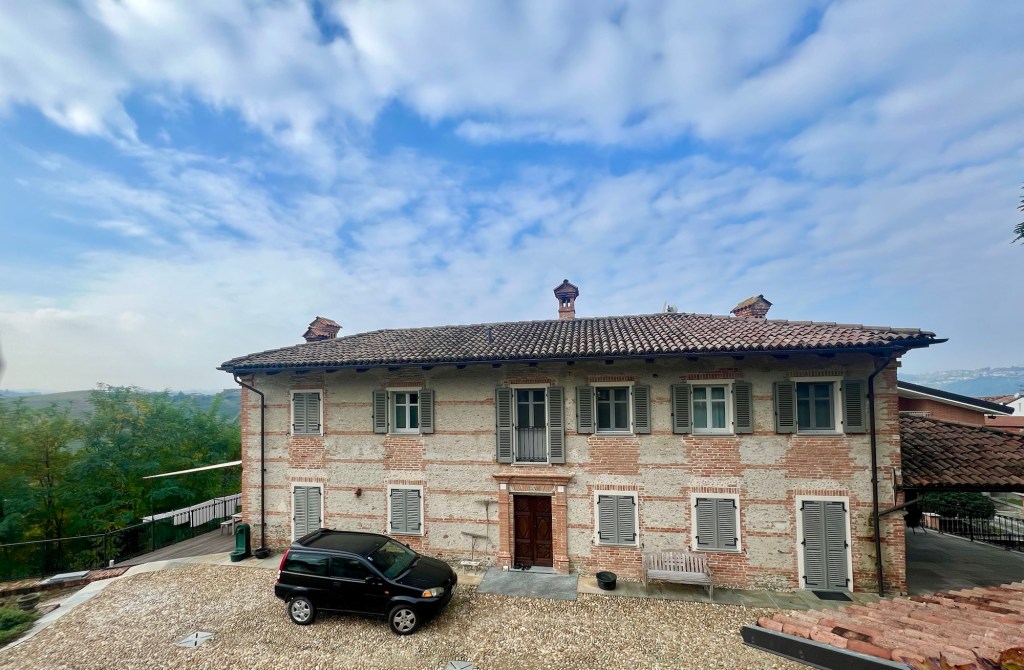
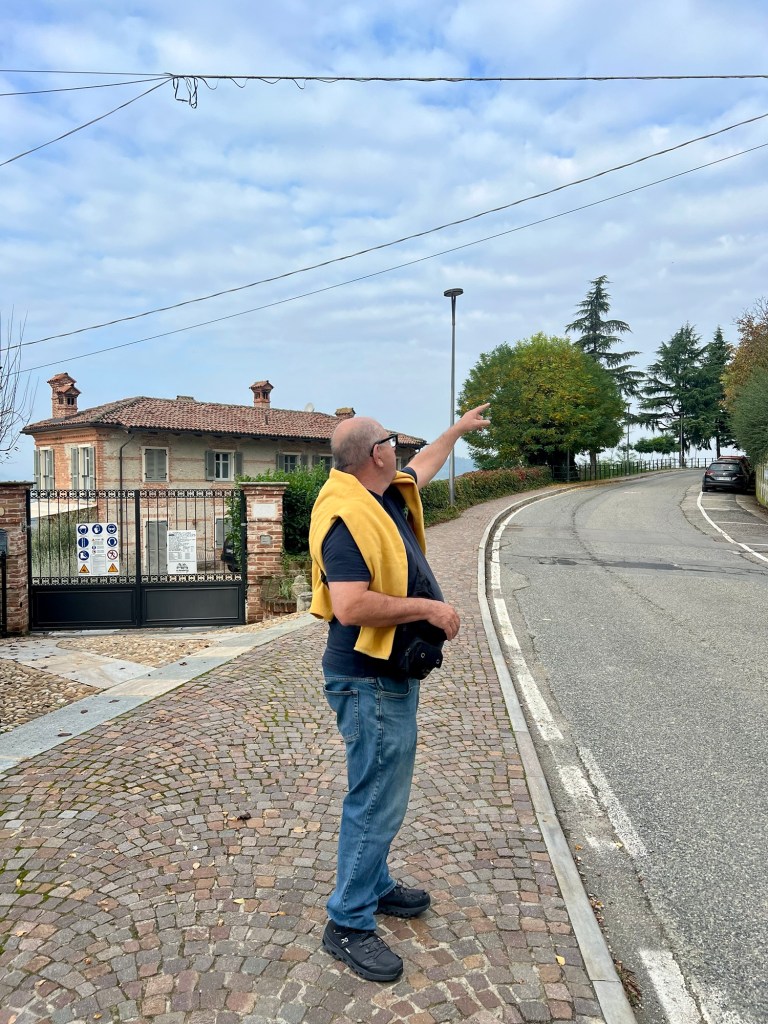
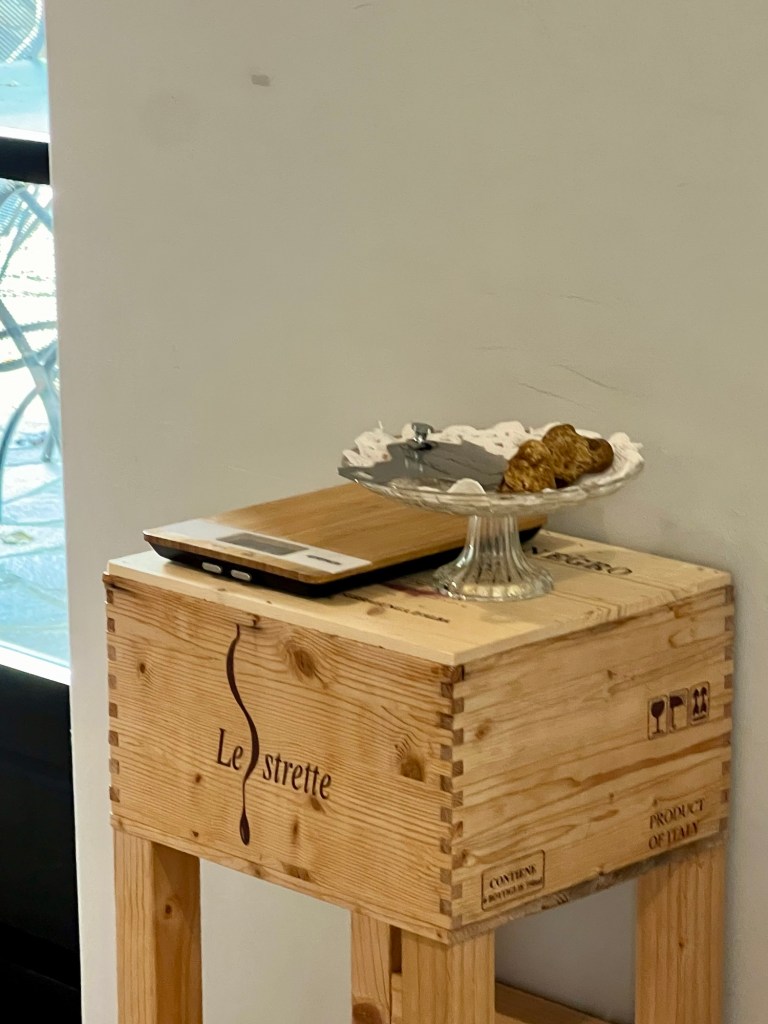
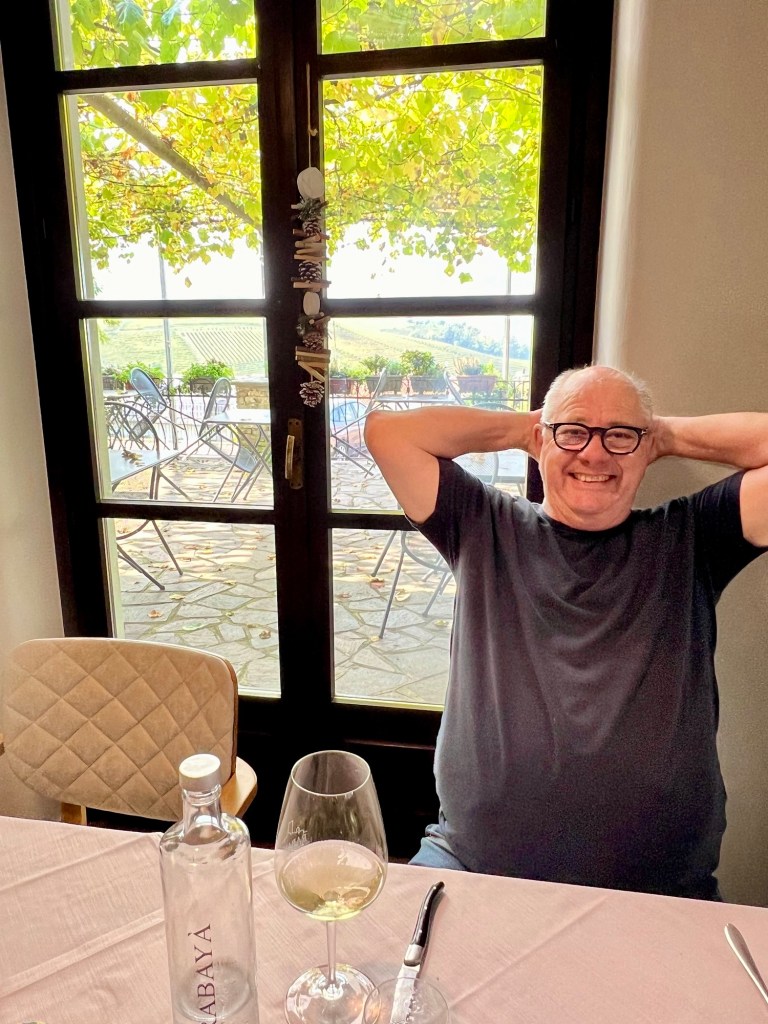
When we arrived at the restaurant it looked like it wasn’t open, but after opening two different doors, sure enough there were quite a few tables with people enjoying lunch. Neither of us was brave enough to order a course with the famous white truffles found in the neighbouring area of Alba, but the people sitting next to us did. It certainly was a piece of theatre. The waiter brought out the white truffle, a set of electronic scales and a large blade. He then shaved the white truffle on to the top of the meals the people had ordered, weighing the truffle both before and after.
On our walk back to our accommodation, other visitors to the town were finsihing their lunch too. There was obviously a tour group, again they sounded American, who had booked a special tour that involved being driven around the region in small, mostly red, Fiats. (Note: Turin, which is not too far away, is the home of Fiats).
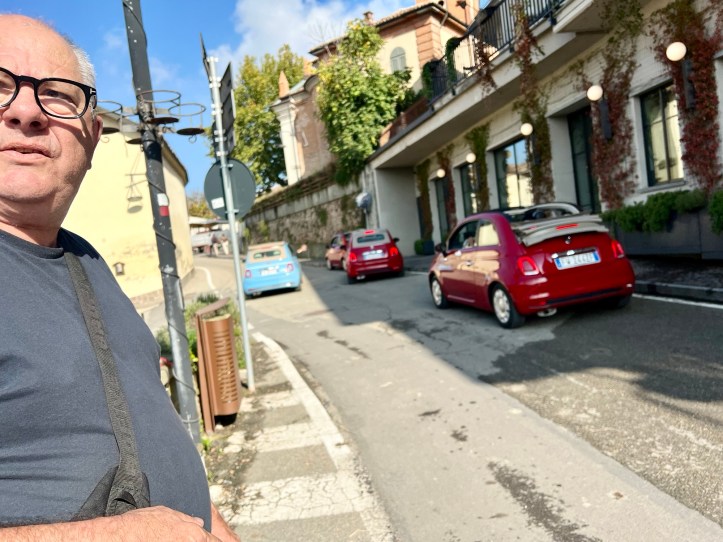
The people in the back (let’s be honest – the women), did not look too comfortable at all.
There are eleven cantina (or cellar doors) in the little village of Barbaresco. These are each owned by individual wine growers and makers and offer tastings and sales of the wines they produce. In addition to that, the town has an Enoteca Regionale which stocks wines from many of the local growers who don’t have their own cellar door.
The Enoteca Regionale is located inside a converted church. And of course, we had to visit here.
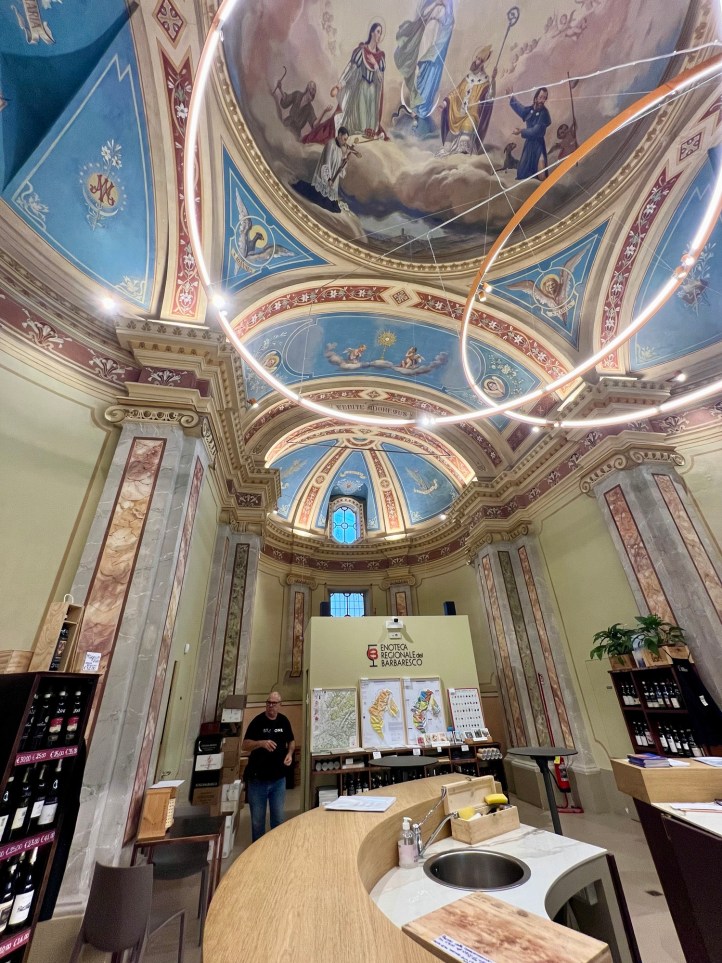
We were able to taste three different Barbarescos wines here (as they only had three bottles opened) for €8. We figured that they must alternate the wines on different days. And I guess the only way to find out is to visit again tomorrow.
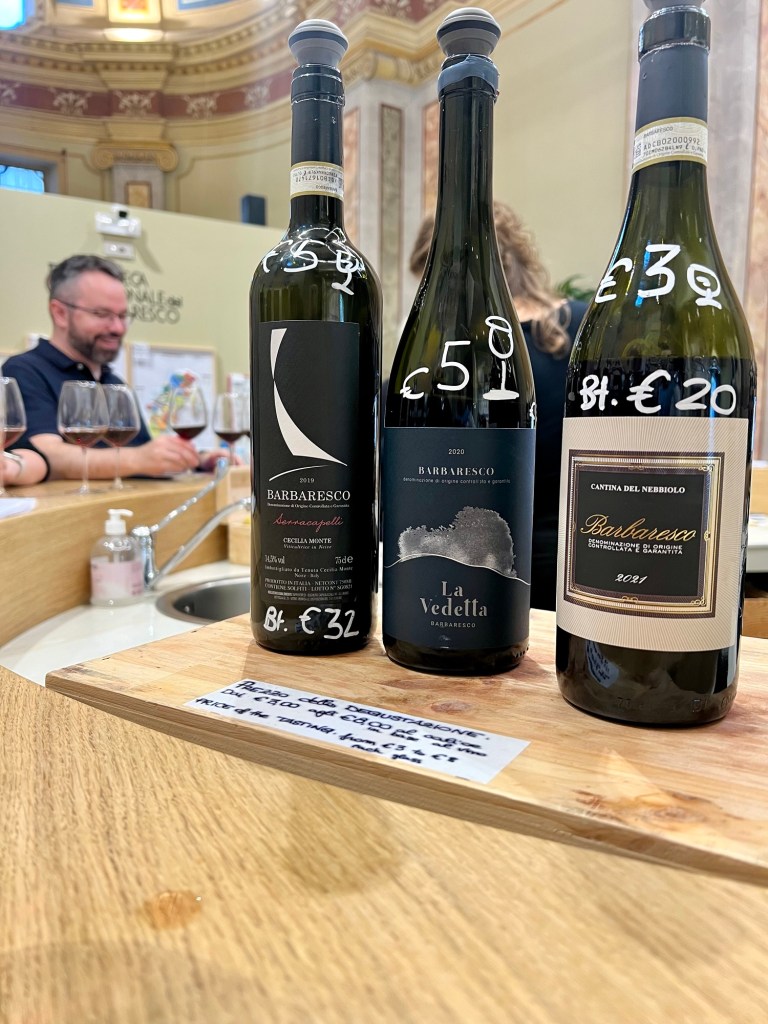
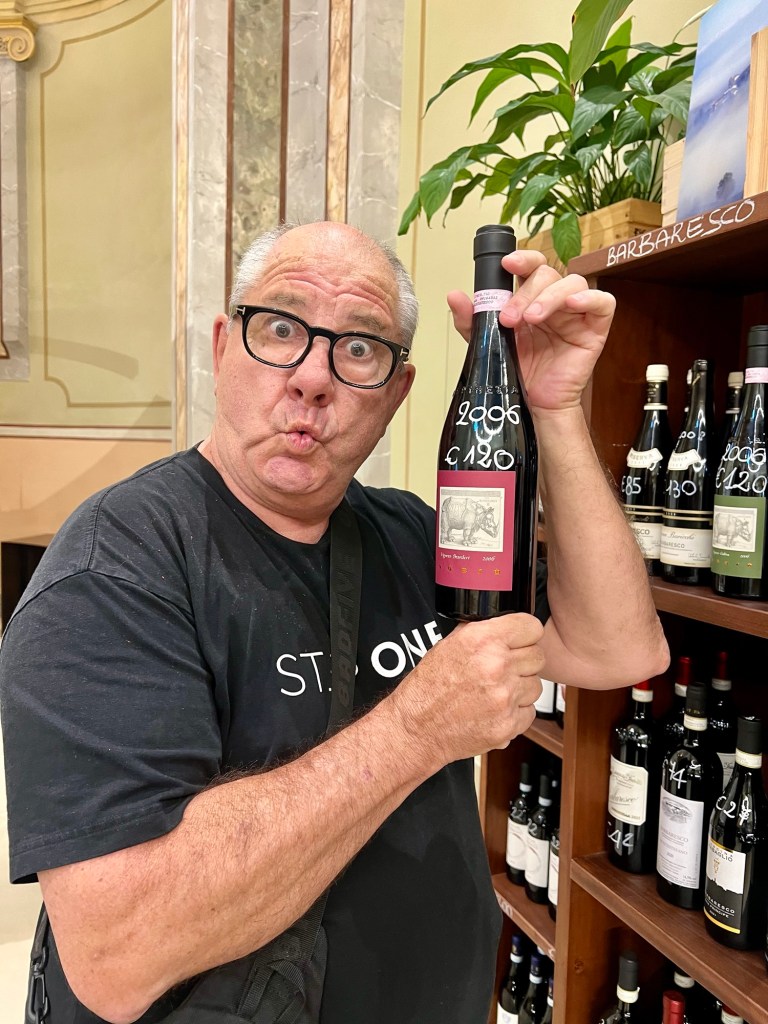
Instead, Mick decided he wanted to buy an older Barbaresco than the ones he had just tasted and picked a 2016 we tried later on the terrace of our accommodation.
At this enoteca we learnt some information about the aging times of Barbaresco.
DOCG regulations stipulate that Barbaresco wines must be aged for a minimum of 26 months (at least 9 months in wooden barrels) prior to release and aged for at least 50 months to be considered a riserva. The wines must have a minimum 12.5 per cent alcohol level though most wines are closer to 13.5 per cent.
Quite a few producers use oak barrels or barriques, often Slavonian oak, known as “botti”, as encountered in Barolo.
Time to move on.
But we did not get too far. We stopped off at Nonsolovino, one of the bars to try the local white wine from this region – called Arneis.


The verdict – the straight Arneis was better.
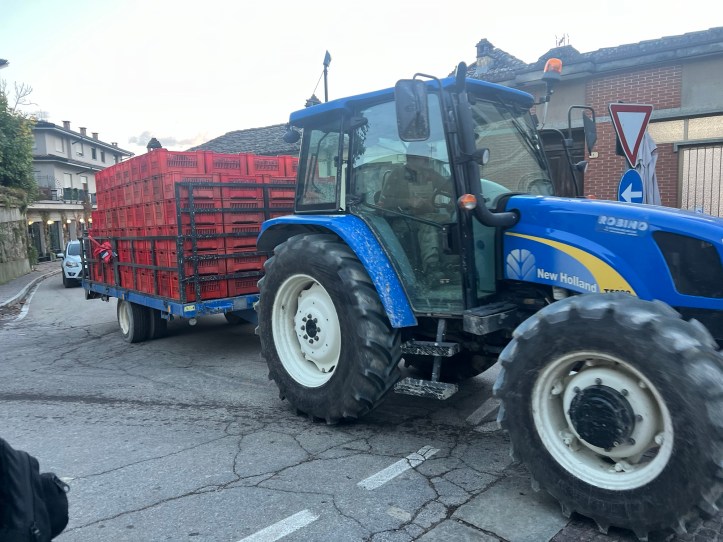
While sitting there, on the edge of the road, we had to hold our breath and breathe in as a tractor loaded with freshly picked Nebbiolo grapes trundled by towards one of the wineries in town.
And to finish off our wonderful day in the village, just before we headed back to our fabulous B&B, another rally of cars drove past – this time they were Ferraris. The owner of the enoteca said that was probably about €10 million we just saw drive past. I was a bit slow in reacting to get a great photo.

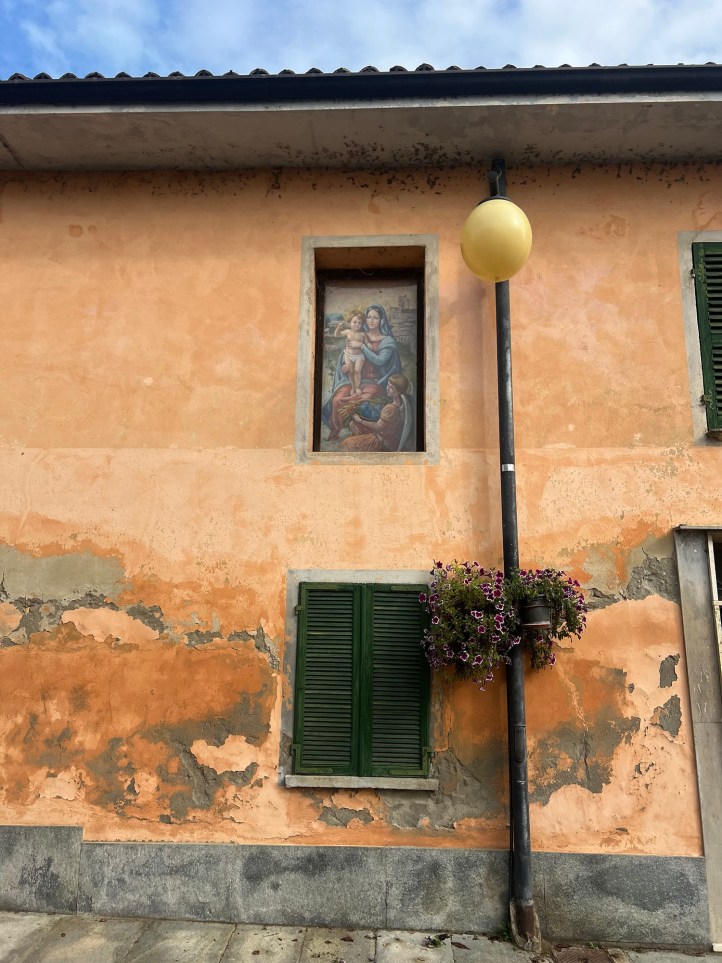
Almost opposite our accommodation is this old building with a beautiful painting in one of the window frames.
Mick’s observations on Barbaresco wines so far
The notes are very floral and sweet with obvious cherry and red fruit, not unlike those you might find in a Pinot Noir. In some cases there was the smell of dates and prunes.
Those same aromas come through in the taste, with the mouth being quite full. Tannins and acidity are medium to high with rich, spicy flavours emerging.
One of the bigger wines we’ve tasted (at 15%), was a young wine (a 2021) really benefited from ‘breathing’ for at least an hour. To start off with it was almost too big with an obvious alcohol burn. This mellowed and turned out to be delicious.
Mick is starting to wonder if he has some Italian heritage – he feels quite at home here. And then we spotted this…..
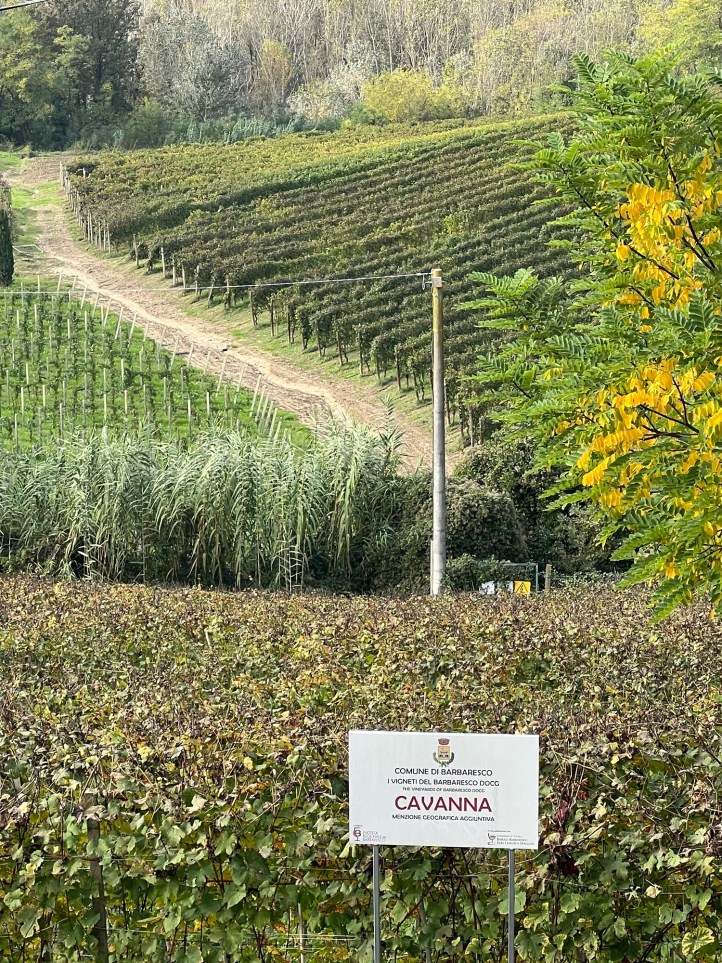
The spelling might be different, but the pronunciation is very close. This local winemaker – Luigi Giordano – uses grapes from this vineyard of his to make some very special wines.
Tomorrow’s Plans
For our last full day in the region, we are planning on visiting the neighbouring town of Alba. No, not for the white truffles, but to try the wine that is famous there – Barbera d’Alba.
 Jane and Mick's Holiday Adventures