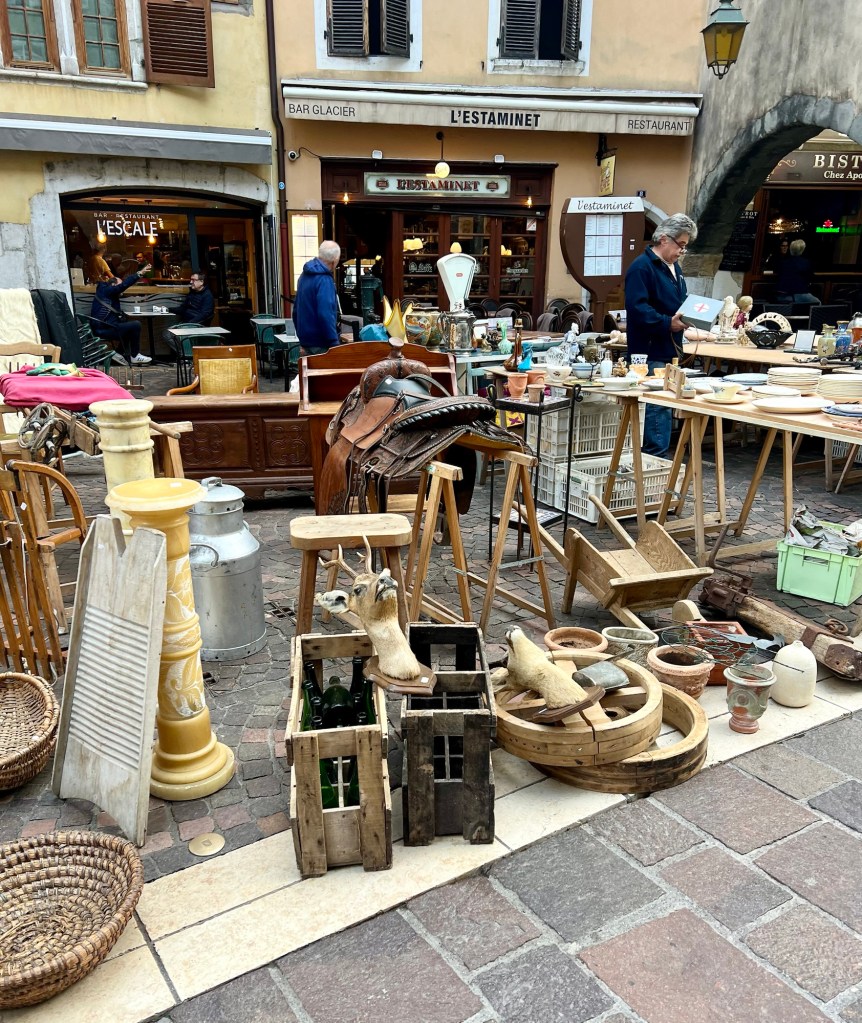
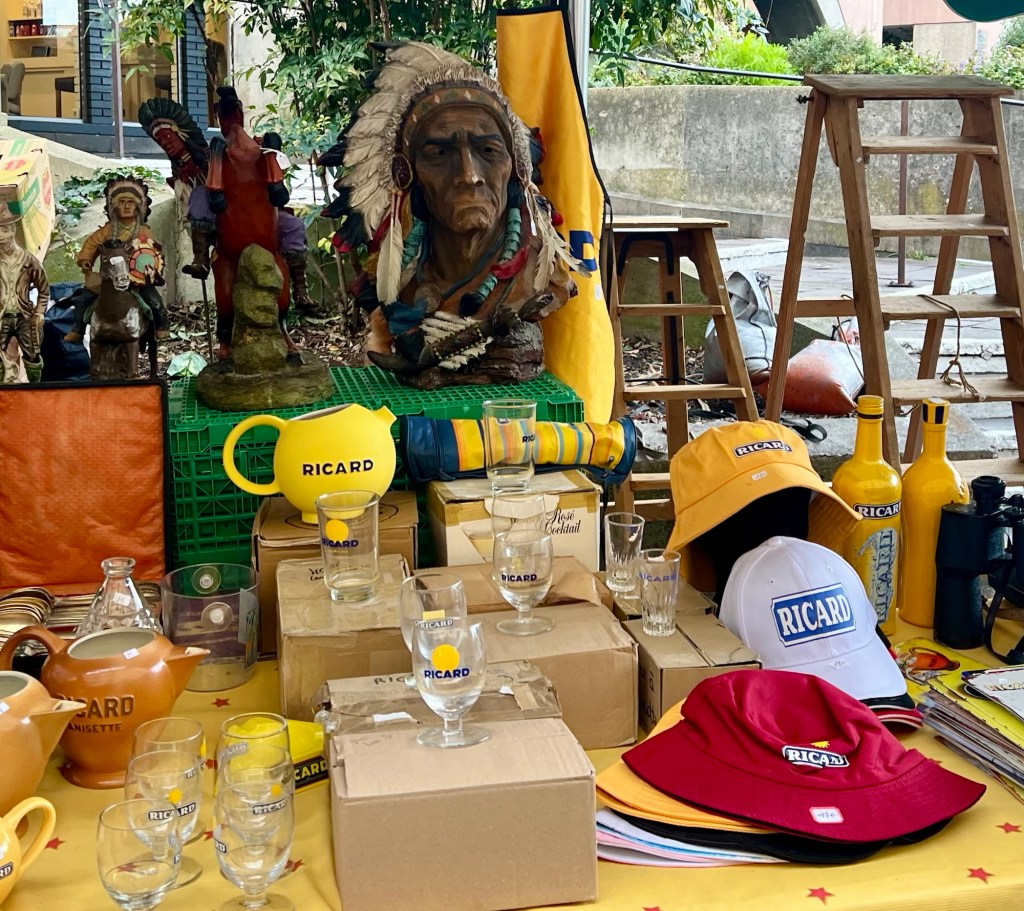
A stroll around our area this morning revealed that today was the day for the brocante (or flea market), and while there weren’t as many stalls as yesterday, there were some interesting things. I tried not to look too hard as I did not want to find anything I couldn’t live without. I was just glad that Mick was not with me as he would have definitely wanted something from the man selling the Ricard paraphernalia.
We dragged our bags slowly, avoiding the crowds gathering for the market, the 600m we needed to go to catch the Flix bus to Chambéry. Only to find out that we were a week late!
No, not because I had made a mistake with our accommodation booking, but because last weekend the annual Cœur de Savoie & Chambéry was held. The event celebrates the winegrowers, vineyards and wines of Savoie where apparently there are 800 hectares of vines under cultivations.
The Savoie wine region is located on the border with Switzerland, along the Alps and Lake Geneva. Their vineyards are planted in pre-Alpine areas at 250-600 m above sea level. They produce mainly white wines (70%), some reds (20%) with a little rosé (6%) and sparkling wines (4%), called Crémant de Savoie
Some of the grape varieties used here to make their wines are varieties I’ve never heard about. But Mick and I were hopeful we would get to try some before the day was over.
Again we chose to stay in the main part of town. This makes it easier for us to get to and from the train and bus stations, plus it is usually where many of the historical buildings are located.
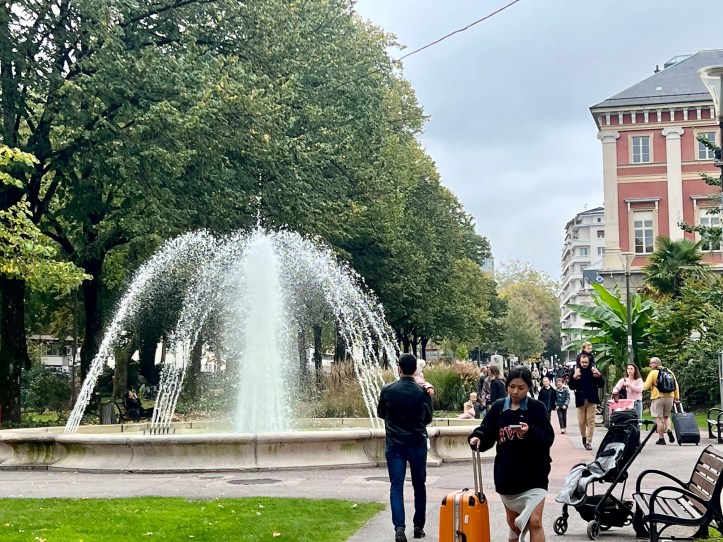
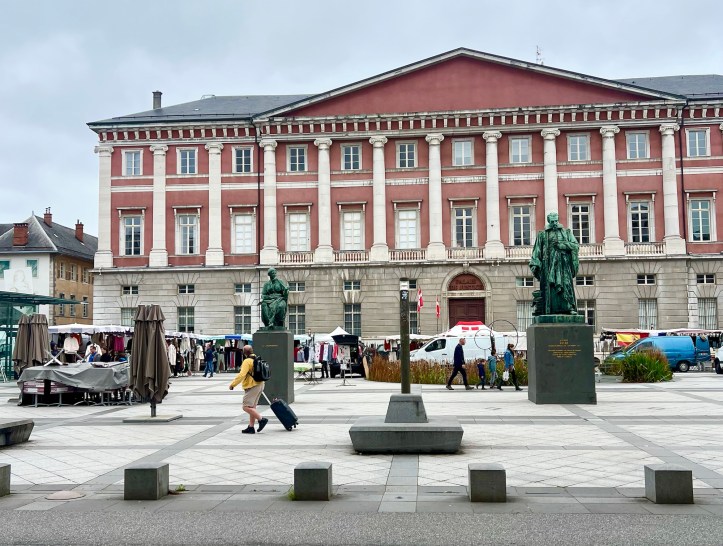
Can you spot Mick and his bag in the right hand side of the above photo? He was leading the way today. At the very next corner, near a large square in front of the Palais de Justice, there was a local clothing market underway. Most store holders seemed to be selling bags and belts.
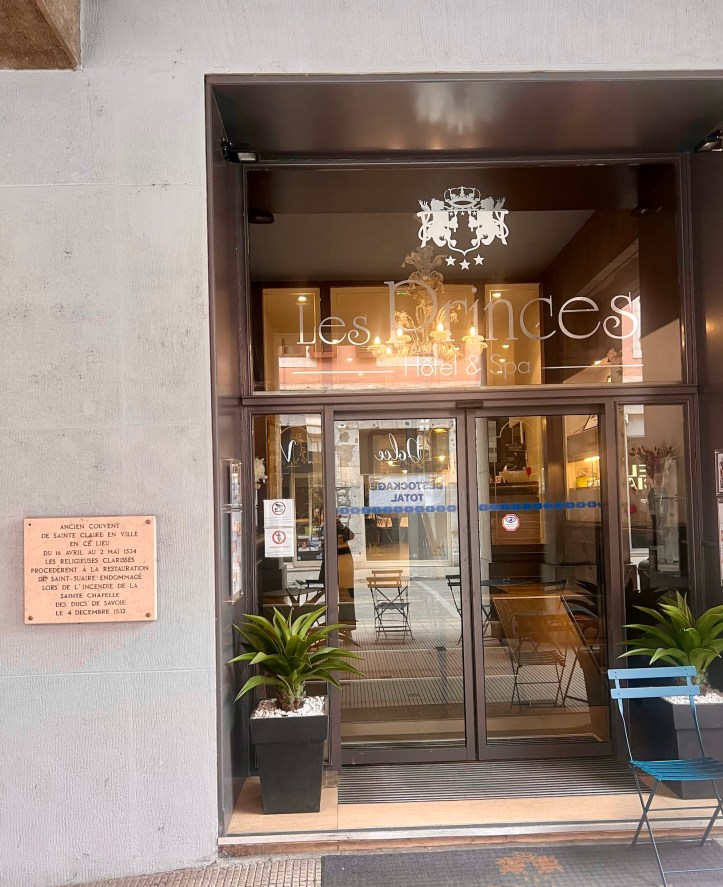
We found our hotel quite easily, but we were a little too early for our room. We were surprised to find out that our hotel was once a convent where in 1534, between 26th April and 2 May, the nuns here restored the Holy Shroud after a fire in the Dukes of Savoy’s chapel in late 1532 had resulted in it being damaged. Remember we learnt, during our stay in Turin, that there was also a fire in the Cathedral in Turin that almost destroyed the Holy Shroud as well?
We had spotted yet another market being held in the main town square, in front of Les Halles (the commercial hub and covered markets), only metres from our hotel, so we headed off with our backpacks to explore.
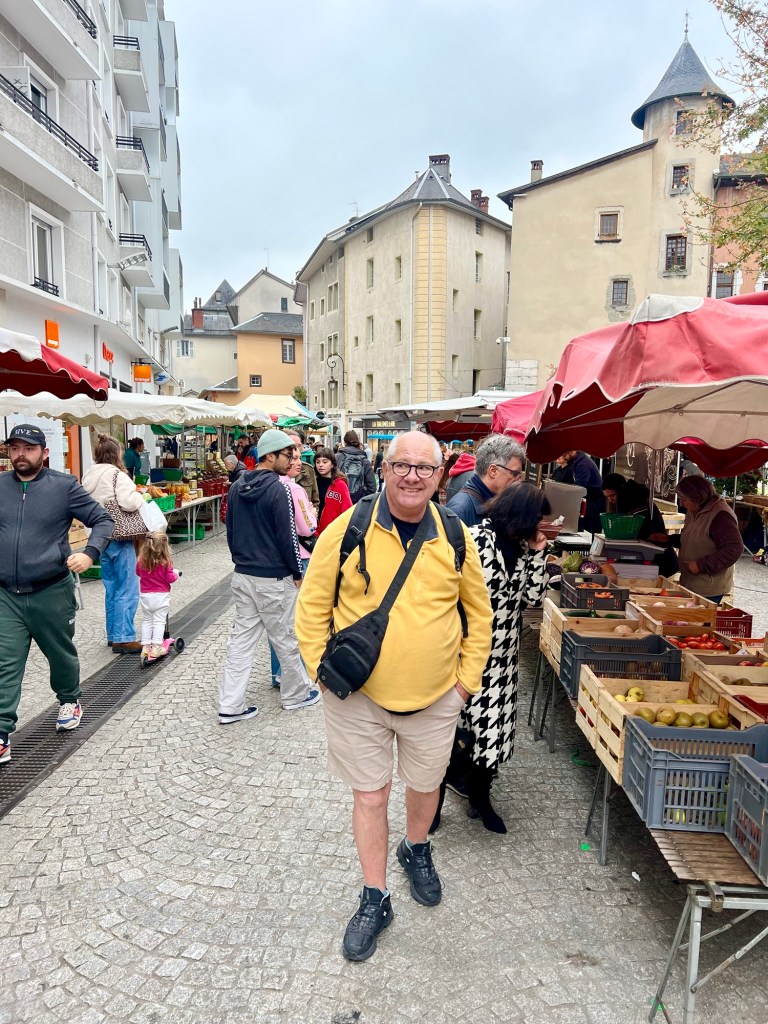

Mick was in search of a bottle of local wine, and while he did not buy one here, he found another gentleman selling his wine. He offered us a taste of his only white wine – which was labelled as ‘Apremont‘. I asked about the grape used for this wine and he explained that it was made from a local grape called Jacquère.
A variety of white grape found primarily in the Savoy wine region of France. It is a high-yielding vine variety which is used to produce lightly scented, refreshing and gently aromatic dry white wine, such as Vin de Savoie.
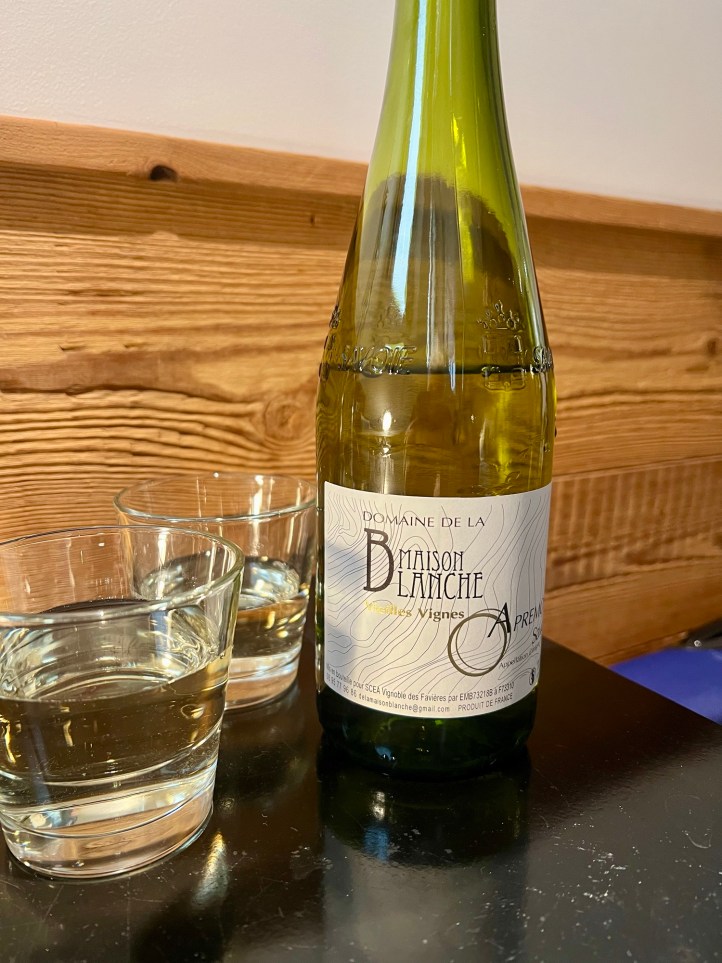
No vintage was listed on the bottle. At 11.5% alcohol, the taste was light and dry with notable mineral characteristics and a few tiny bubbles on the tip of the tongue.
Mick said it was not bad, but that he would not buy another bottle. For €6, we won’t complain.
Apremont is one of the best known white wine crus – located near the small village of the same name, south of Chambéry.
Chambéry was once the capital of the Savoy Duchy (which existed from 1416 to 1847) until 1563 when Turin was made the capital. It now boasts a population of around 60,000.
Once the markets came to a close, we headed off in search of the Castle of the Dukes of Savoy. Really only about 200 metres away.
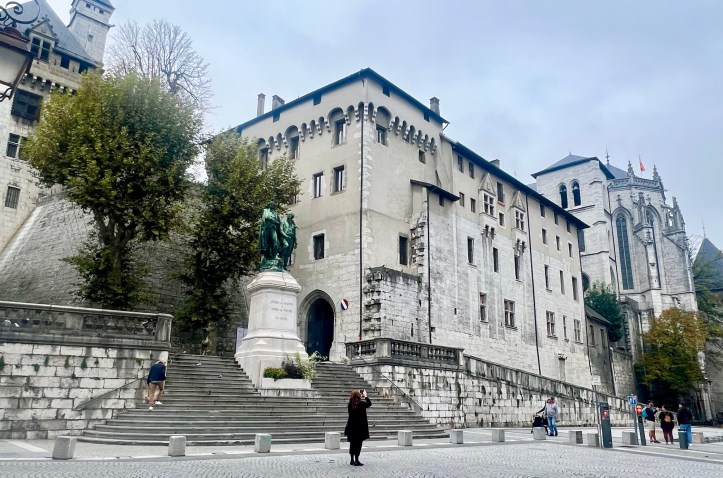
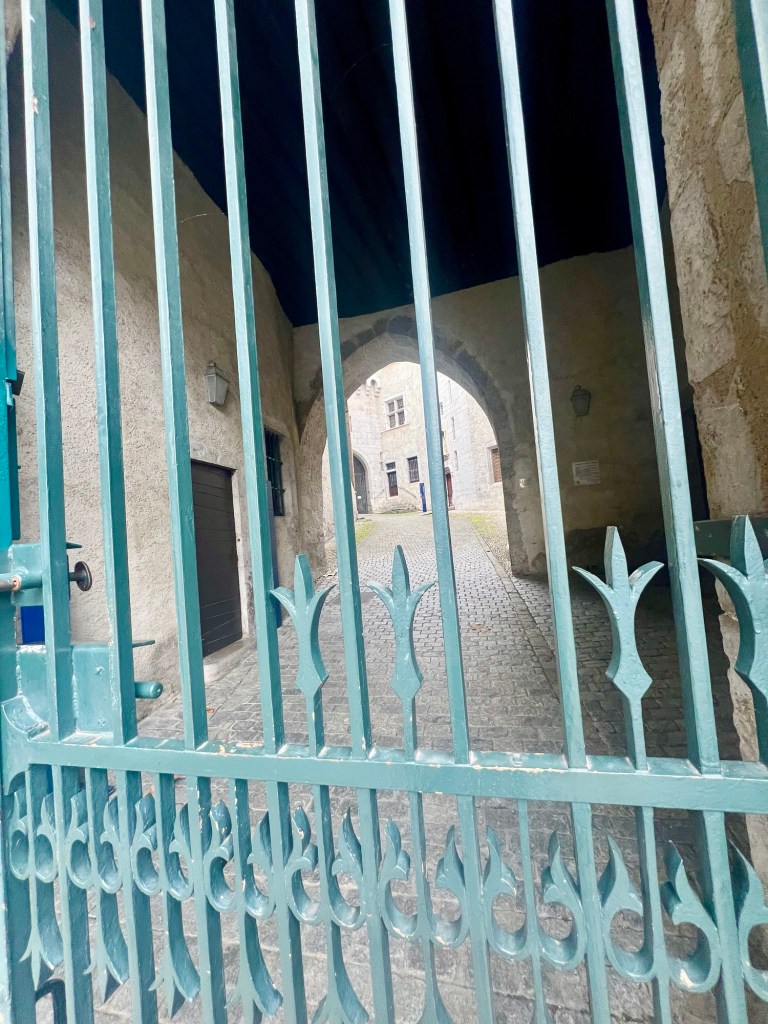
Hugely impressive, and today very few people were around. I was keen to go inside to explore – I had read that entry was free. But I soon realised why there was no one around.

The statue was of Jospeh de Maistre and his younger brother Xavier – both were born in Chambéry, and both were philosophers.
Joseph was a Savoyard philosopher, writer, lawyer, diplomat, and magistrate. One of the forefathers of conservatism, Maistre advocated social hierarchy and monarchy in the period immediately following the French Revolution.
Mick had read that the Count of Savoy actually bought this castle in the 13th Century. Probably a very good investment back then. It had originally been built as a fortification, but once in the Savoy’s hands it was expanded with the extension of, among other things, the Chapel.
Walking away from the Castle, we came upon another very famous statue.

The 1838 Elephant Fountain honours the 18th-century general Benoît de Boigne, who donated loads of money to the city, supposedly one third of his considerable wealth made in India.
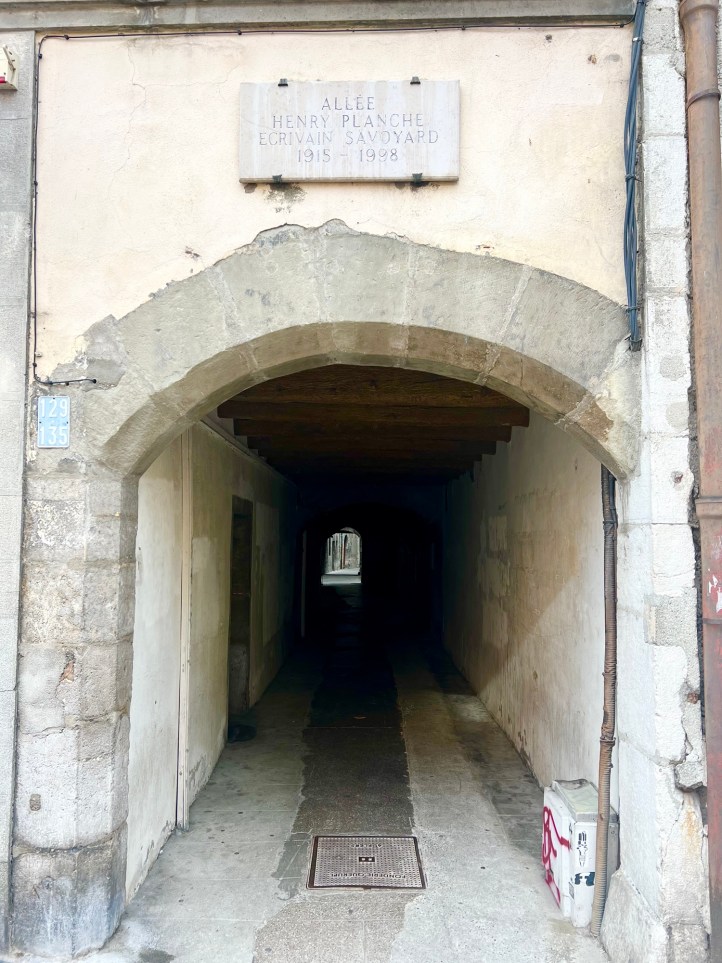
We had come across ‘traboules‘ when we visited Lyon, and Chambéry boasts ‘alleys‘. These are like little corridors that allow people to get passed the larger buildings. Each one appeared to be dedicated to someone important.
Then we spotted this cute aerial passage which connects two buildings. This is the city’s last one. Most were removed as they were considered to be fire hazards.
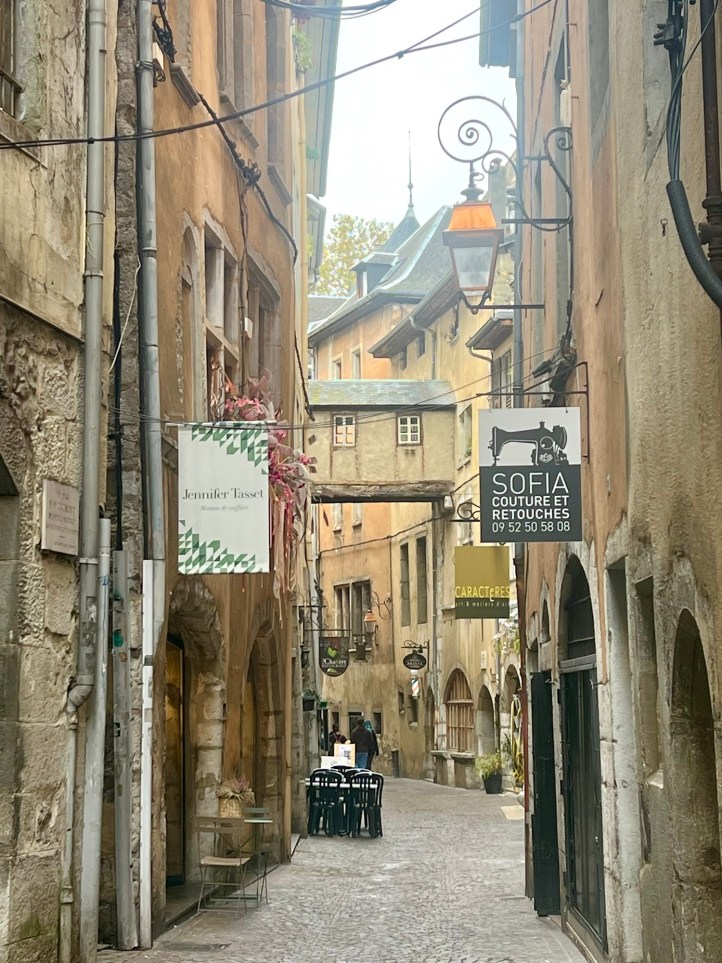
During the 14th Century a tax was imposed on the main width of buildings, so to get around that, most of the buildings were constructed with a very narrow facade. That explained why many of the buildings looked like they did.
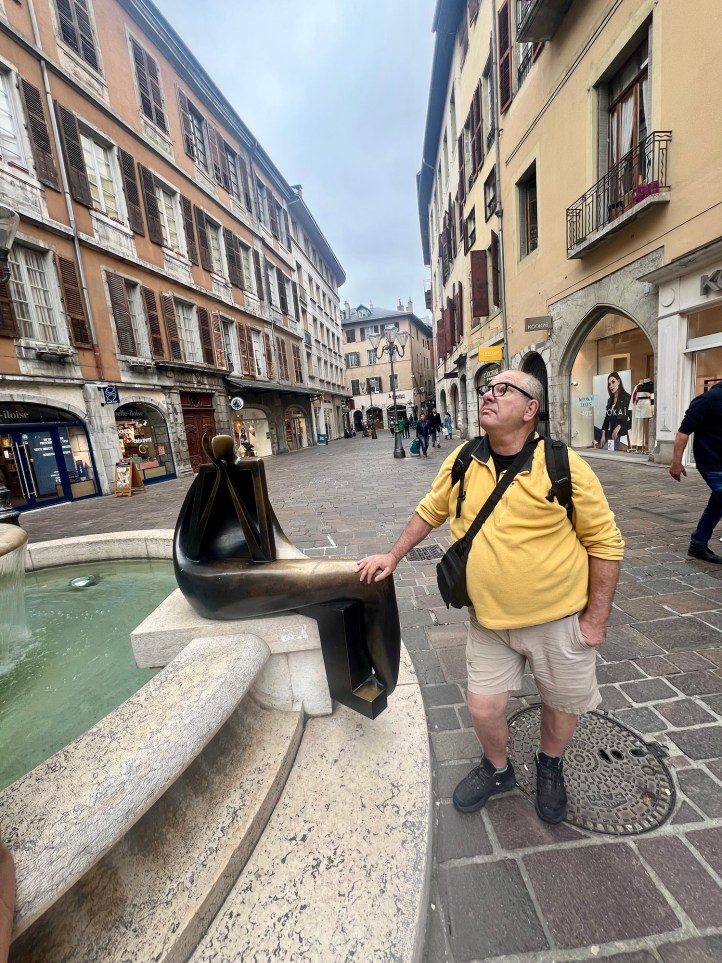
After a little rest in our hotel room, we ventured out in the early evening to find a glass or two of the local wines. This little bar had lots of local wines listed on its menu – so it was our first stop.
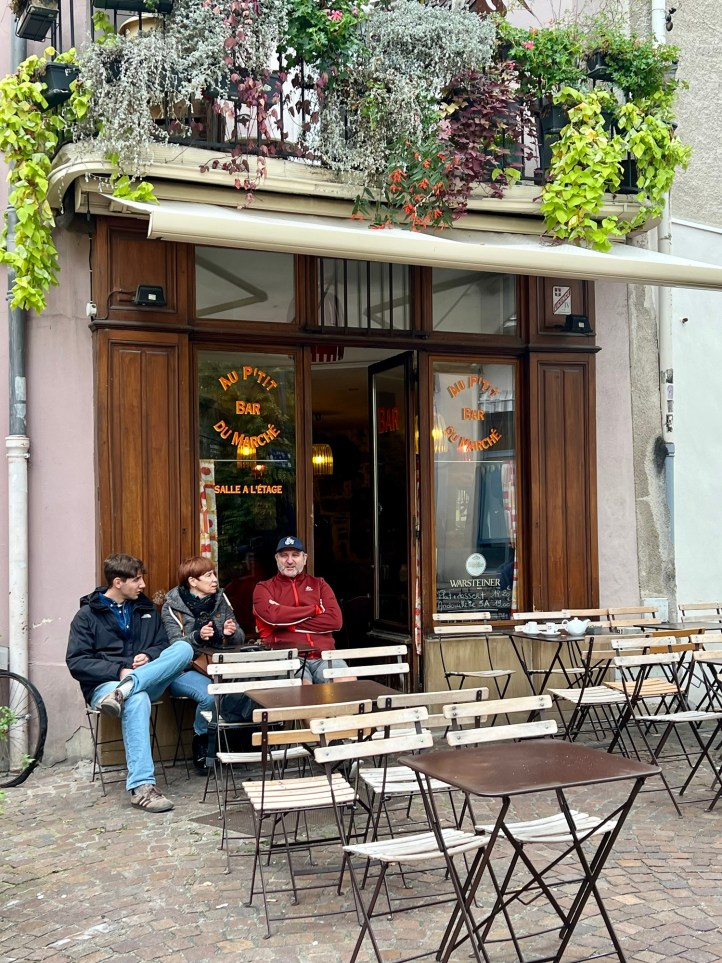
Here we tried the local white wines of Chignon and Chignon Bergeron. The second being superior to the first – Mick’s description was “skinny”, the Bergeron had more going for it with a taste of cloves.

Then I tried the rosé from the region made from Gammay – and it was ok. And, only OK. The waiter gave us a taste of the local spirit, obviously picking up that we were connoisseurs of fine wines.
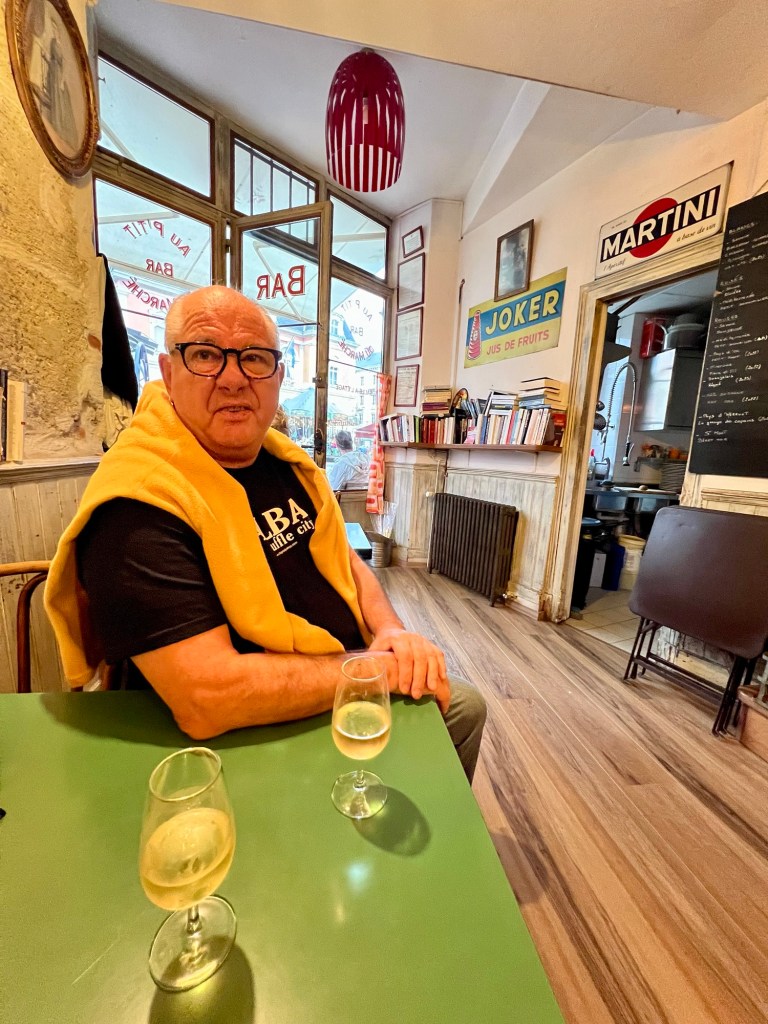
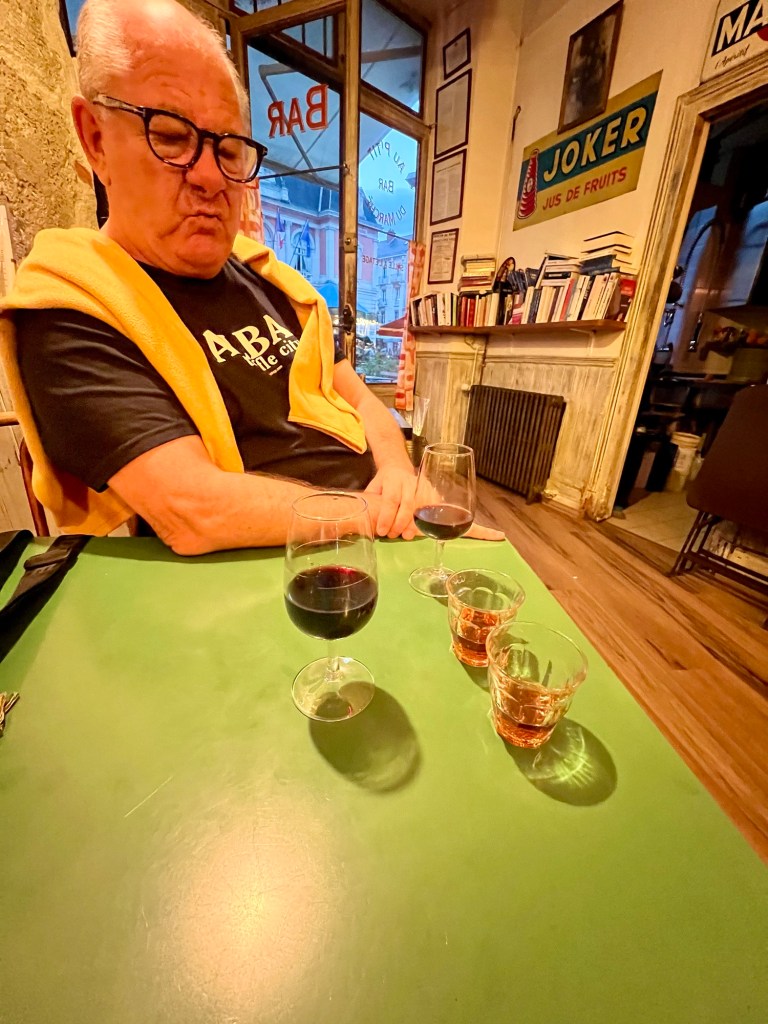
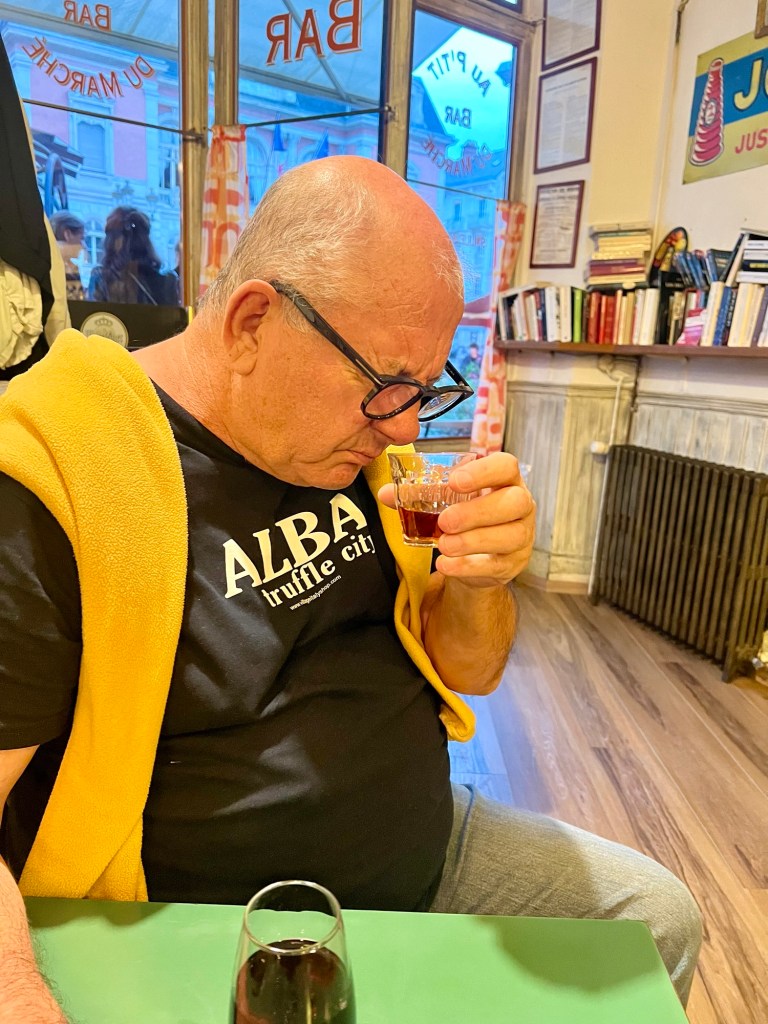

But we needed to try a red !! Mick ordered a Mondeuse from Savoy – but I had had enough and ordered a glass of Minervois – from Longuedoc- Roussillon, an area we know well. Neither was great. We changed establishments and Mick tried a local Gammay but I chose a Crozes Hermitage, as we are heading to that region tomorrow. And now, we are both excited about that as the wine I chose was wonderful. (I have to wait for Mick’s technical notes, mine are a bit simple!)
Tomorrow we pick up an electric hire car from the main railway station in Lyon, Part Dieu, and I will drive us to a small town which is at the start of the Northern Rhône wine region.
Fingers crossed we can work out the EV charging arrangements.
 Jane and Mick's Holiday Adventures