Starting in Vienne and stretching as far south as Valence, a distance of almost 70 kilometres, the Northern Rhône wine region is famous for its Syrah, often co-fermented (but never blended) with a small amount of Viognier, although the law permits up to 20% of the white grape variety, and the white wine made from Viognier (100%), called Condrieu.
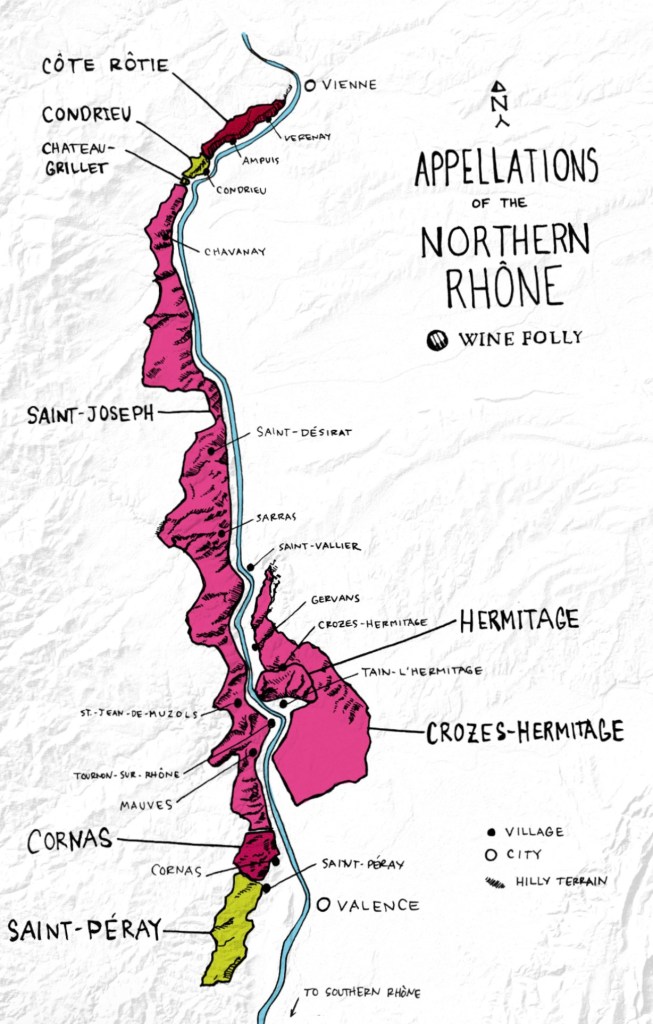
It is really a small wine growing region, and produces only 5% of Rhône wines. Now that surprised me! But what it does produce is thought to be more prestigious, read “more expensive”, than the wines from the Southern Rhône, with the exception of Chateuneuf-du-Pape, of course.
Our morning started with finding an EV charging station. Not that it was urgent, but we were keen to see if we could manage it. And, it was so easy. And, so cheap. A few kilometres from where we stayed we found a Carrefour Supermarket with 4 charging stations. We were the only car there. We charged the car from 51% to 85% in around 15 minutes and it cost us €7.68 (or $12.75AUD). Then we went shopping and had such a wonderful time. We love European supermarkets, French ones in particular. We will be staying in apartments for the next 9 nights, so we were able to stock up. And yes, Mick bought another rabbit! But not for tonight – he is going to cook some fresh trout.
We were booked into a tasting at Domaine Barge Côte Rôtie in Ampuis, about 250 metres from where we stayed last night. This cost €10 per tasting. I chose not to taste as I had a fair bit of driving to do.

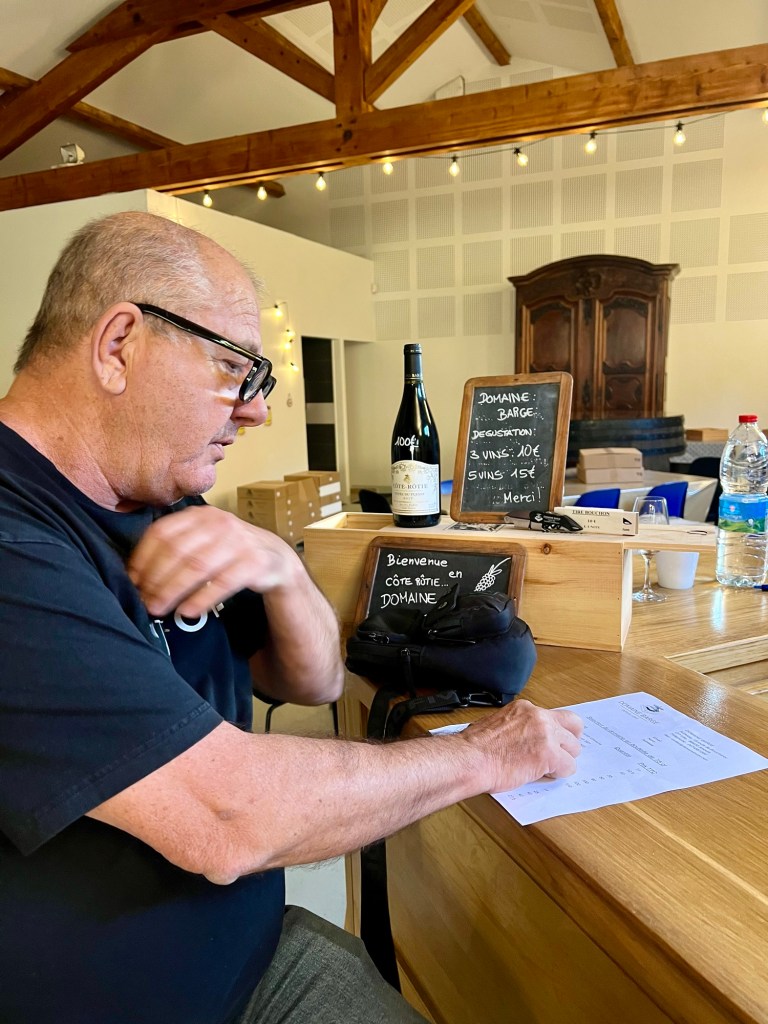
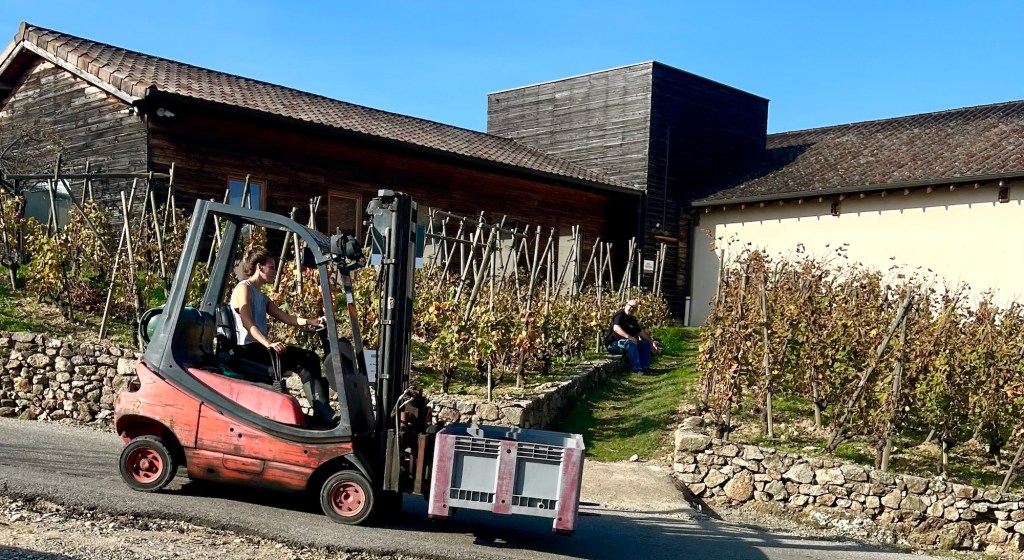
The young woman was the sister of the wine maker, Julien Barge. He was the seventh generation making wine at this Domaine. It was only a small winery and was very busy – as it is “vendage” (grape/wine harvest) here. There were pickers on the steep slopes. M Chapoutier – has vines very near here too – the growers seem to share the hills.
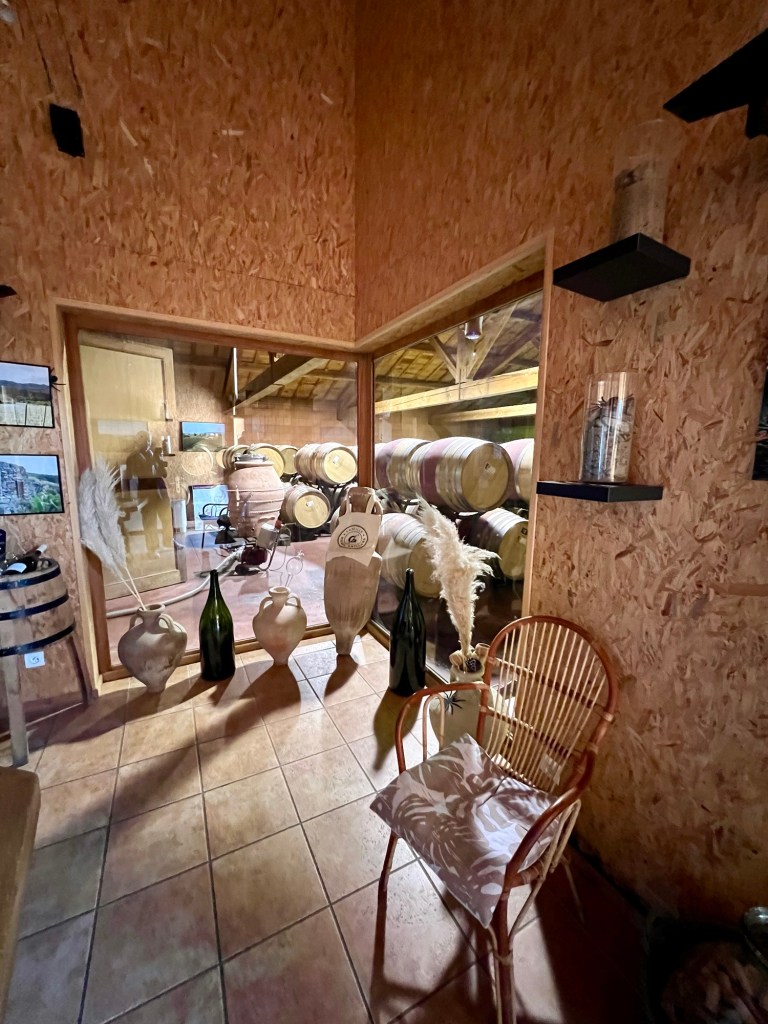
Julien’s sister took us on a tour of the winery. She showed us the barrels used to mature the Syrah – most of them were Austrian oak. Then we returned for the tasting. She chopped up some salami and served it with biscuits and then Mick tasted four of their wines. The first was a Condrieu and it cost €40, which is quite expensive for the latest vintage white wine we thought – but we had to remember that the prices in the north are steep. Like the hills the vines grow upon.
He then tried three different red wines
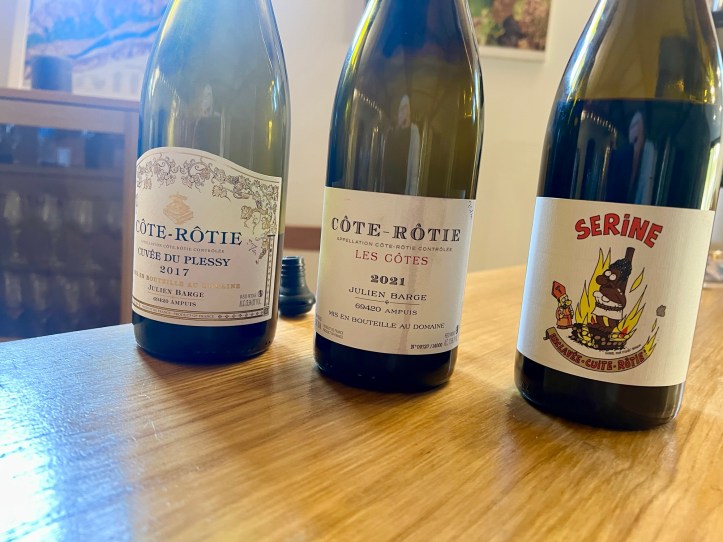
I could not even stand the smell of the 2017 – we think it had been opened for too long. But Mick tried to work his way past the smell and said he thought it tasted ‘flat’. He liked the Serine the best as it had the ‘edge’ he likes in a red wine, but thought I would like the 2021 the best, so we left with a bottle of that. And he was right.
Côte Rôtie means “roasted slope” in French, which well describes the area, these are one of the steepest slopes in Europe with inclinations up to 60 degrees, facing south and southeast for optimal ripening. These wines are well-known among wine enthusiasts for their texture, weight, and elegance, which are similar to Burgundy wines.
I had read that the local bar / restaurant Café La Poste was a great place for lunch. So Mick and I joined quite a few locals for the plat du jour. It was excellent.
We then headed south for about 20 minutes to get to our next wine tasting. You need to book online for tastings in this region and we arrived a little before it was opened.
When we entered the tasting room, we were met with a scene we’ve not encountered before. The centre table had four ‘sinks’ that were used as spittoons.

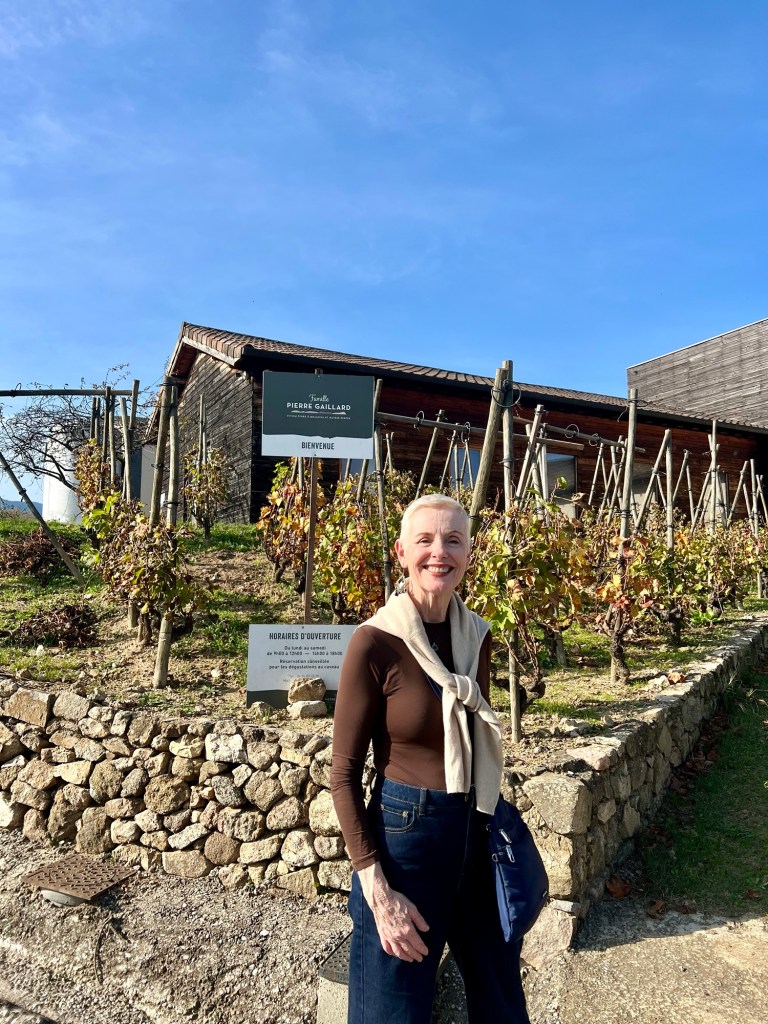
I called the number on the sign and finally spoke with someone in French saying we had booked a tasting, and that no one was there. She said she would send someone, who ended up being her daughter, and she gave us a brilliant tasting. And here it was free.
.
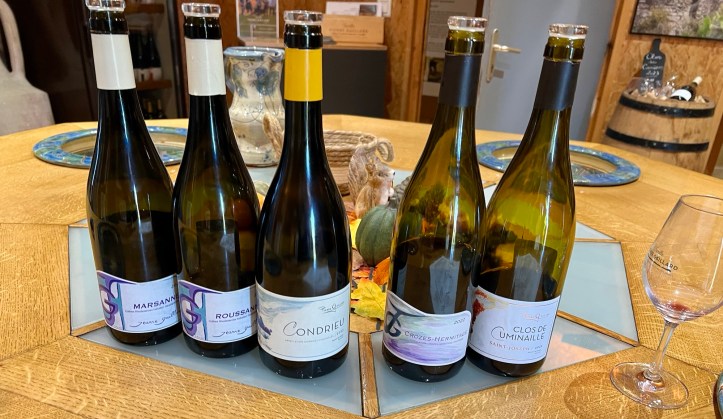
We could have tasted anything here, but limited ourselves to five, including another Condrieu. I even tasted as I could use that cute little sink. This family has vineyards in five different locations, including two in the Longuedoc-Roussillon. The wine here was great and the prices were much more reasonable. We left with two bottles of their wine – a 2023 Marsanne and a Saint Joseph (100% Syrah from grapes grown on the first plot her father had planted), which was her favourite.
I then drove us on the back roads to Tain l’Hermitage; to our accommodation for the next four nights. I had not received any instructions about how to get in and despite me calling the two phone numbers listed we were stuck in front of a very locked gate. I then tried one of the numbers using WhatsApp. Thank goodness for WhatsApp!! Our host was ‘abroad’ and was surprised I had no information about how to get in. Anyway, she was able to give me all the codes. Mick was able to get the keys and we are now safely in our one-bedroom apartment.
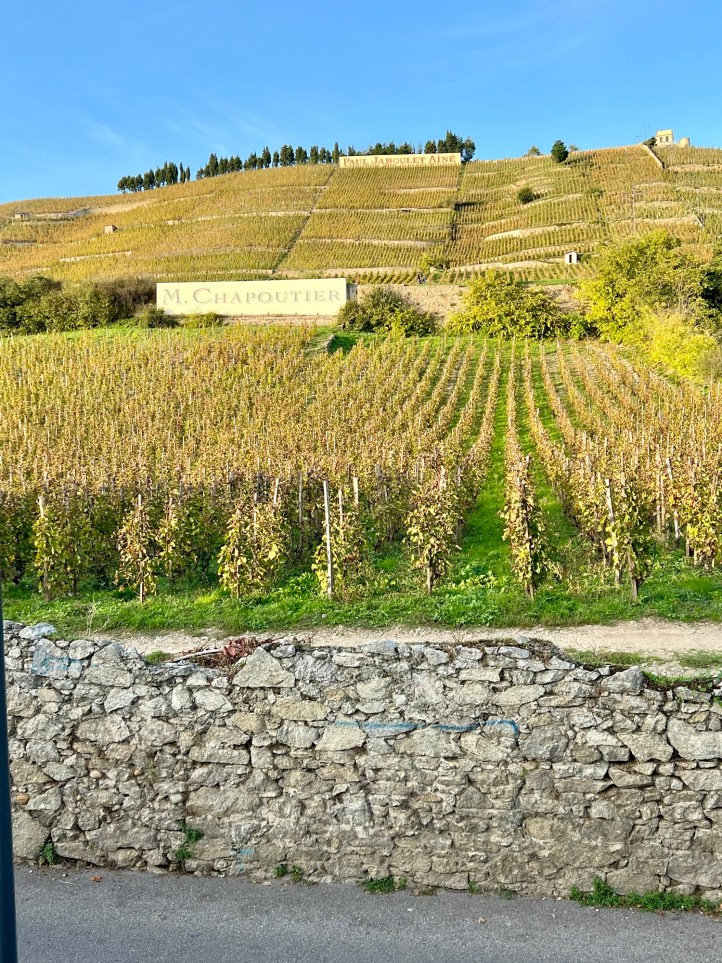
This is the view from our little bedroom porch, And yes, that is the same name from Ampius – M Chapoutier. Mick and I have tried some of the wines under this label before in Australia where they are sold quite cheaply. And they were not outstanding. But I said to Mick, they must have some other wines that are not made in bulk for the export markets that are worth trying. So we will endeavour to find out if that is true while we are here in Tain (the local name for this town).
We have really lucked in with the weather. It looks like it will be fine for the next 10 days. I had written notes in my diary for this trip that average temperatures at this time of the year were lows of 5°C and highs of 11°C. Today was a low of 11°C and a high of 21°C. Perfect.
Lucky too because there were flooding rains over a week ago, and in many places as we drove adjacent to the Rhône we could see lots of rubbish that had been caught up in the floods.
We’re looking forward to our next few days here.
 Jane and Mick's Holiday Adventures