Today we did not use the car. Instead, we chose to explore the town of Tain on foot as, from what we had read, there are lots of opportunities to taste local wines from providers who have cellar doors in the town as well as at wine bars that offer local wines by the glass. We liked that idea as it would give us the chance to sip a wine more slowly and decide if we liked it or not. But what we didn’t count on was, being a Tuesday, not everything was open.

Tain has a population of fewer than 6,000 people and sits on the Rhône River in the Drôme Department. Halfway through the river you can see a dotted line splitting this department from the Ardèche. That puts us on the Left Bank of the Rhône.
I found that interesting.
We are here because this commune is famous for its production of wines. The reds are from Syrah and the whites from Marsanne and Roussanne, and sometimes the wines are a blend of both varieties. There are three different AOCs here – Hermitage, Crozes-Hermitage and Cornas. And we needed to at least taste each of them while we are here.
But first there were some chores to be done. A load of washing of course, a rabbit casserole to get underway (that was Mick’s job), and then a trip to the local garbage / recycling spot which was about 5 minutes walk away, near the cemetery. Since we were in France last, around five years ago, the communes have introduced a collection bin for green waste and vegetable scraps. But I wonder how they manage the vermin that surely must be attracted to such a source of food.
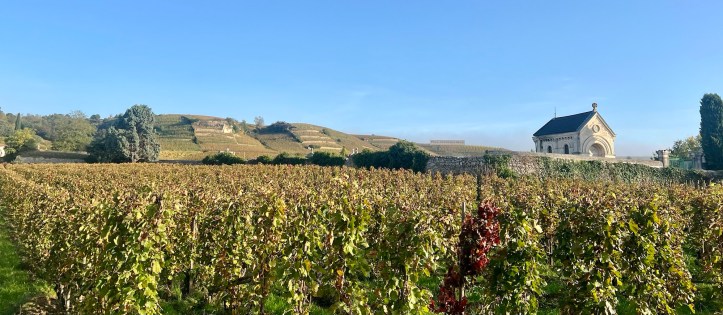
There were grape vines growing beside the cemetery; the little chapel is set in front of the old headstones.
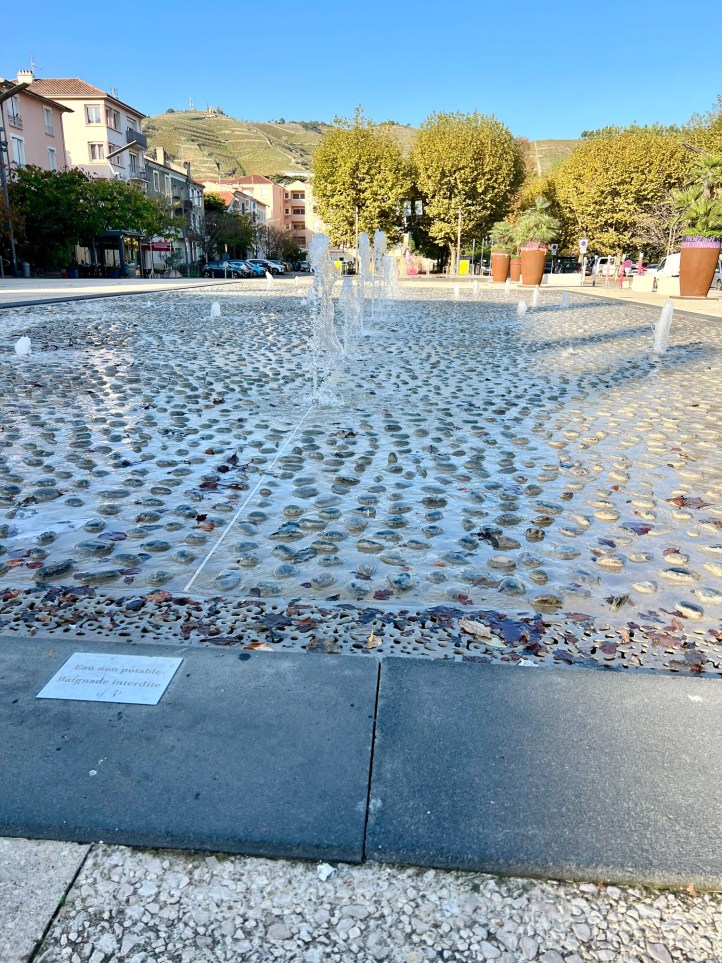
The centre square has a beautiful water feature, but there were few people around to enjoy it. Maybe again because it was a Tuesday.
Not too far from here, we discovered a small, mostly pedestrian street that led to the river and to this bridge – Passerelle Marc-Seguin.
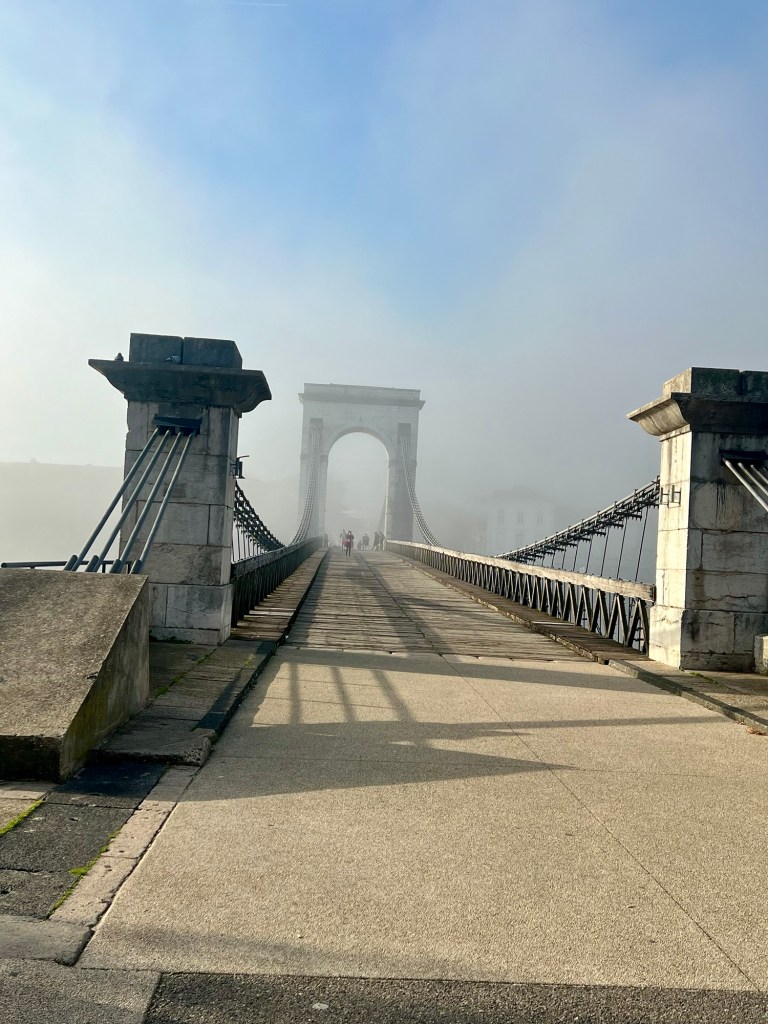
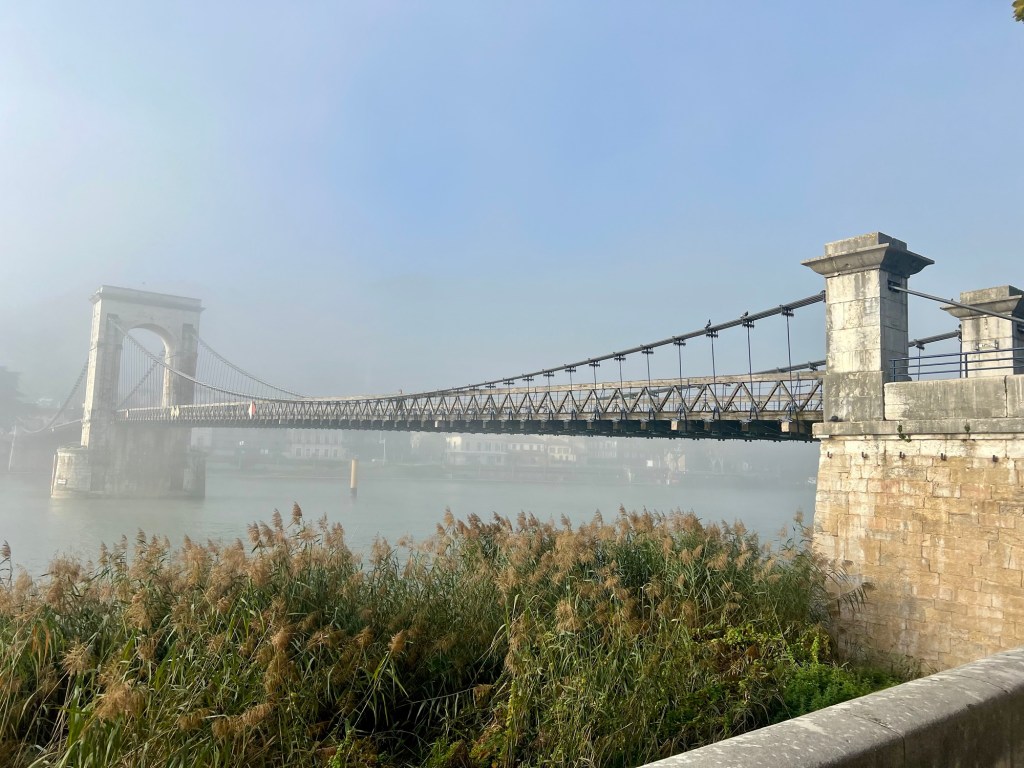
This suspension foot bridge over the Rhône river was completed in 1849 using a technique involving wire cables – Mick was fascinated how the cables had been secured. It is an exact replica of another bridge, dating from 1825, which was once further upstream from here, however it was “demolished in 1965 as it no longer complied with safety and river navigation standards.”
As I have mentioned before, we are here for the wines. But just how did this area get so focussed on growing grapes and producing wine? Well it is a long story. Basically it started with the Romans, from as far back as the second century. It was the Romans who brought winemaking and viticulture to this part of France. But it took until the 18th Century before the wines from the Rhône Valley were ‘discovered’ by the Parisians. Then, the British got a taste for them, including for Côte Rôtie, not only because they were good, but because of the phylloxera infestation in Britain, which effectively wiped out many of the vineyards over there.

The phylloxera infestation then moved across to Europe, and in 1863, vines initially in the southern Rhône, started to be infected. The disease then just kept spreading. It took until the 1940s before the wine industry recovered. The wines from here were again noticed around the world, the prices soared and the rest, as they say, is history.
We started wine tasting in the afternoon. First stop was the Cave de Tain, a 200 metre walk from our accommodation. We were impressed by the story of this place which was started by Gambert de Loche just over 90 years ago. It is a cooperative, and produces and markets five different cru wines. Saint Péray being one of them. And Saint Péray is the only one that produces white wine only.

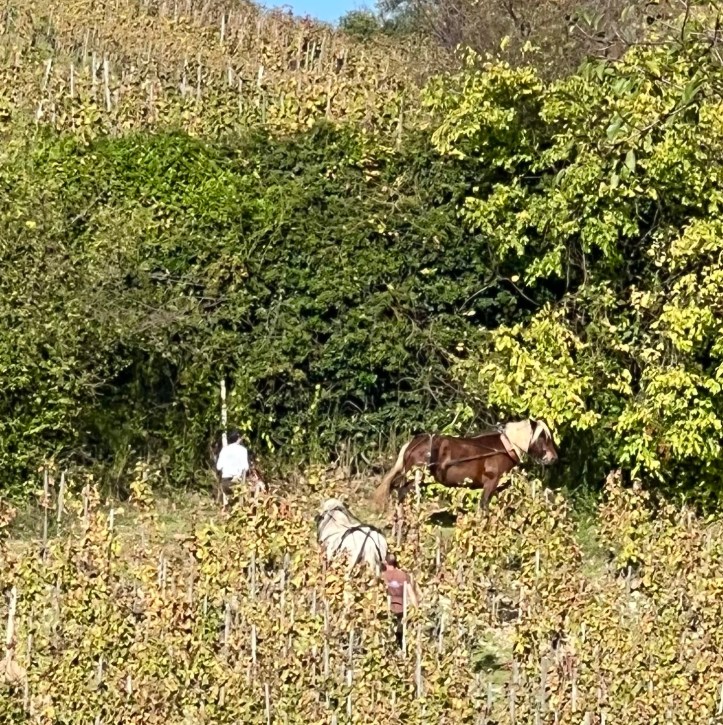
The Cave de Tain has its own vineyards in various locations, but mostly in Hermitage – with one parcel located just outside and across the road from the large complex. I had read that the parcel of White Hermitage (Marsanne) was planted using 100 year old vines and was grown organically using horses to plough the vineyards to reduce compaction of the soils. And as if on cue, as we entered the Cave we saw this in action, although this photo is definitely not a close up.
The man who provided the degustation for us was very knowledgeable and patient with us. We were able to try several Marsanne wines from different AOCs, and several Syrah wines. We learnt that the wines from the Cornas AOC were more powerful and that the name translates to “burnt soil’. While it was nice, both of us decided to buy a bottle of the 2017 Hermitage. I was interested to see that in their brochures they use the term AOP (Appellation d’origine Protégée) as opposed to AOC, as the first one is the European equivalent of the latter.
While we were there tasting, the place filled up with some serious buyers – they were wandering around with large trolleys. It is possible to purchase wines very, very cheaply here, including from a “Bag in a Box” or a cask as we call it, as well as purchasing what they called “Exceptional Wines” or museum wines. Mick was tempted by a bottle of 1985 Hermitage for €120, but he decided to think about it.
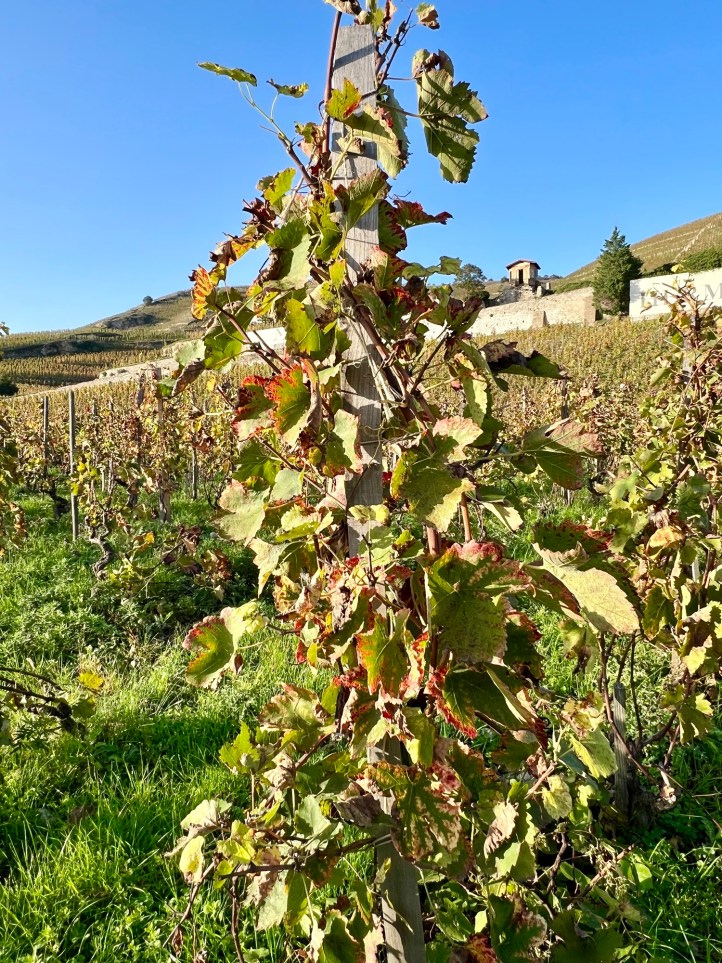
We learnt from this man that the way the vines are trained using wooden stakes or échalas; an ancient tradition suited to steep slopes and the weather conditions.
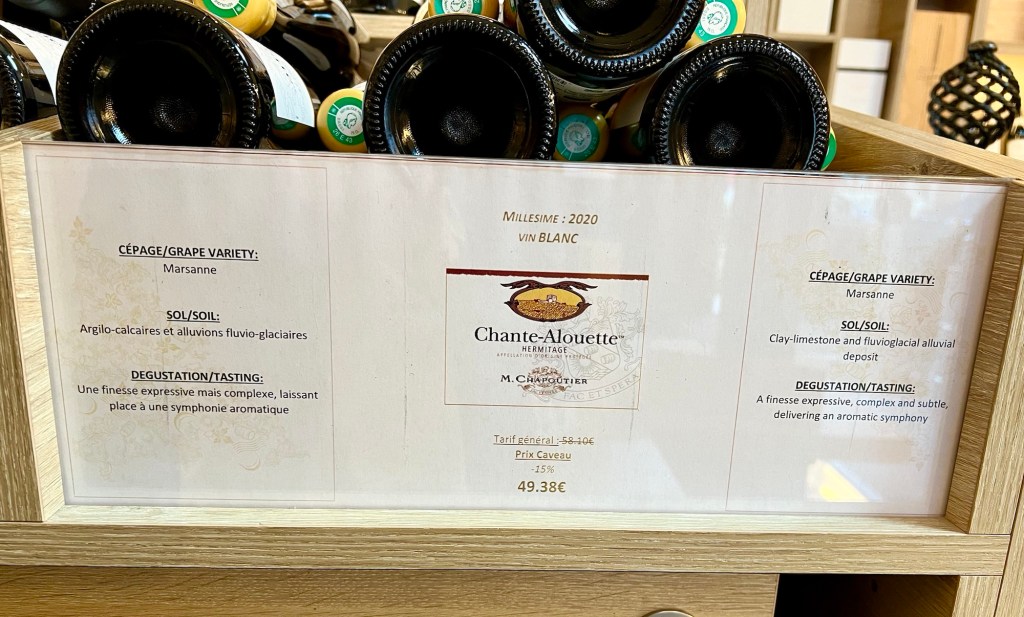
Next stop was M Chapoutier and it was here that a very nice young man gave us a taste of several wines based on what we said we were looking for. But this place was overwhelming – so much wine. This company owns parcels of land for growing wines pretty much all throughout the country and they had bottles available for tasting and for sale of course. But I did like the way information was provided about each wine at the end of the crate – including the grapes used, the soil type and the price of course. Mick tried this one and I liked the name Chante–Alouette, but it was too sweet for him. I’m lucky that he doesn’t like sweet things!!
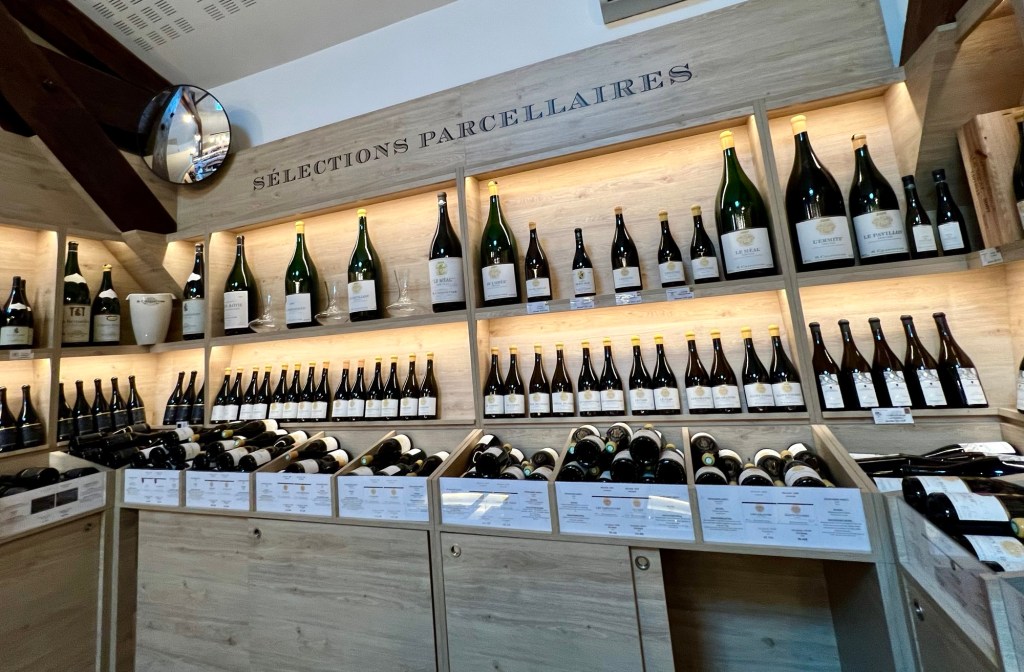
Quite a few people came in while we were tasting, and most of them knew exactly what they were after, and they were buying it by the half dozen, at least: Marius. Named after M Chapoutier’s father (I think the young man said). And it is their base label with prices starting from €5,20 and the Syrah we tried being the most expensive at just under €9. But it was a “no” from both of us.
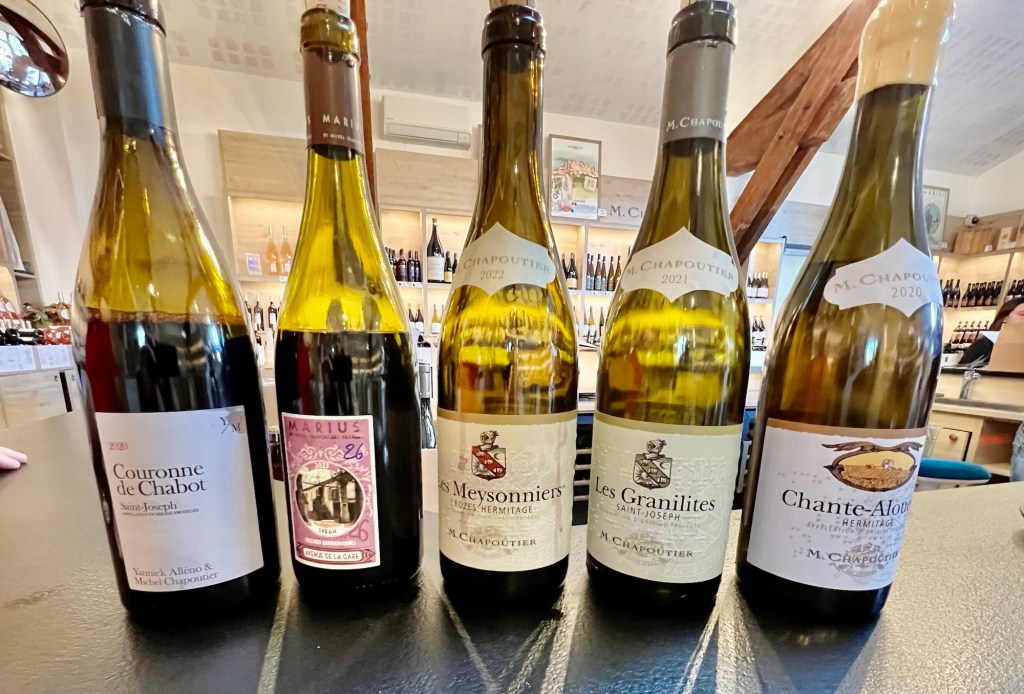
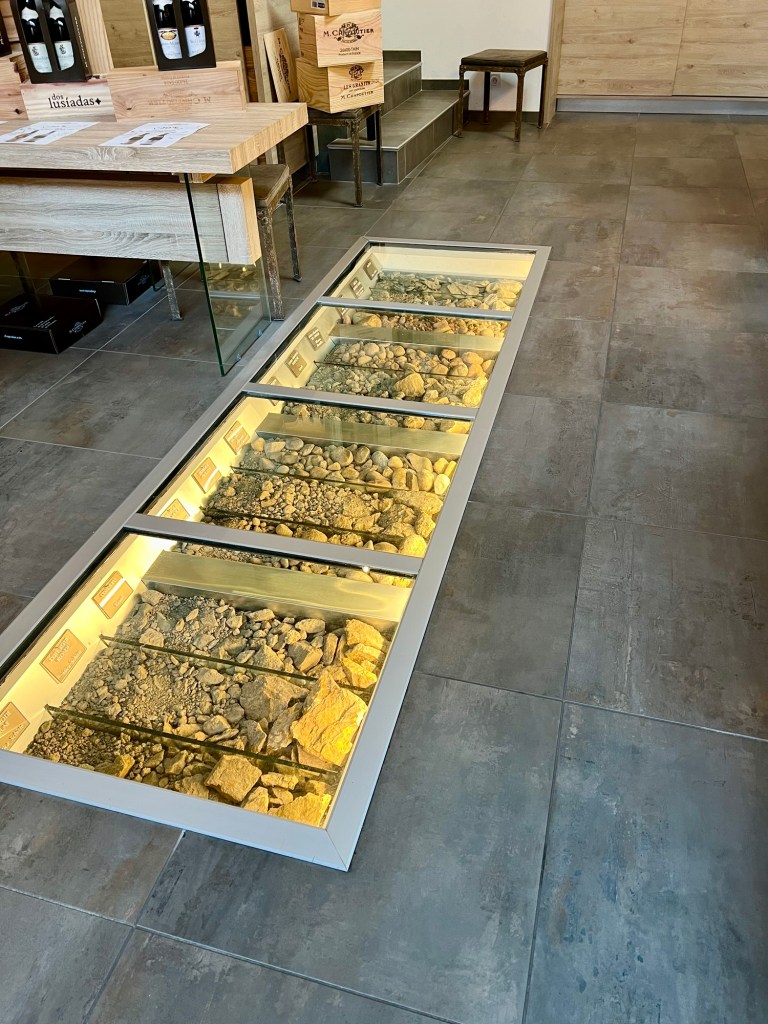
On our meander back to our apartment, Mick came across one of his favourite things about France; the petanque area, and as a bonus we found out what people do on a Tuesday afternoon in Tain.

Dinner tonight was another outstanding rabbit casserole, paired initially with a Marsanne (White Hermitage)and then I couldn’t resist the Saint Jospeh Mick purchased at M Chapoutier. It is a bit of a gimmicky wine that was made by Michel Chapoutier and a famous French chef, to go with the meals the chef likes to prepare.
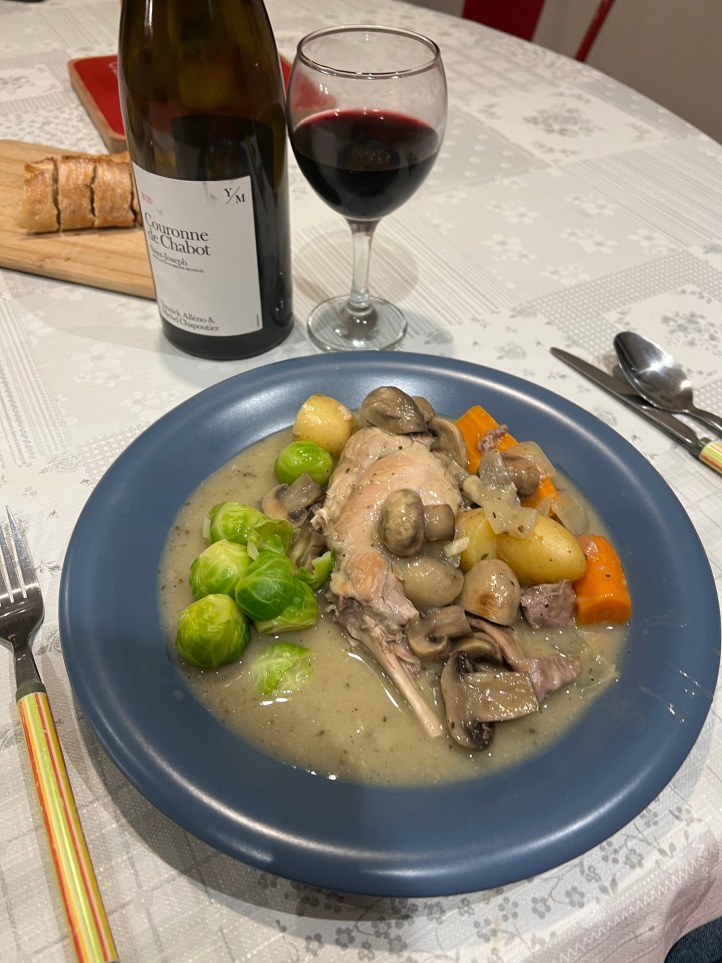
We’re off to a market in Saint Péray tomorrow. Mick is not confident we will get a park. He is hoping there might be some huitres (oysters) though.
 Jane and Mick's Holiday Adventures