Having an electric vehicle today was a real bonus.

We arrived in L’Isle sur la Sorgue just before 10am hoping to beat the crowds. This charming Provencal town, with its numerous canals and branches of the Sorgue have given the town the nickname of the “Venice of the Comtat”, and it is famous for its Sunday morning markets.
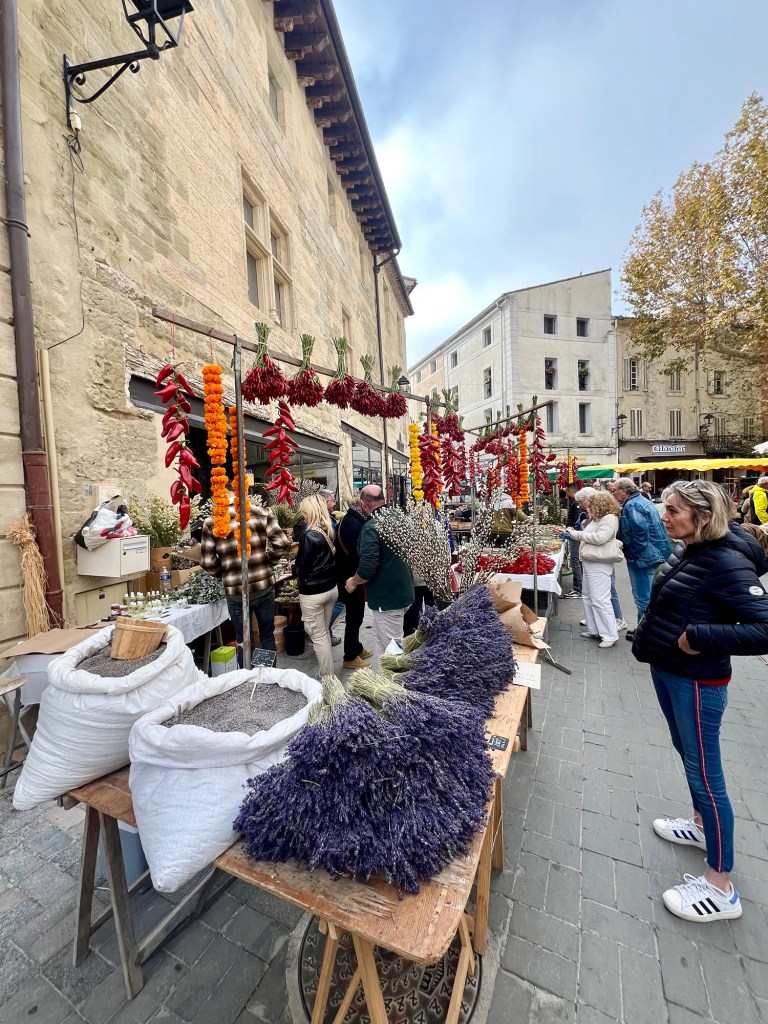
But these aren’t your ordinary village market. They were huge, boasting 300+ stalls, and they reminded us of the markets we’ve been to a few times in Céret. Blended with the usual store holders were many second-hand dealers.
So, we soon found out that finding a parking spot was nigh impossible. Until we spotted the vacant spot for EV charging. Mick happily connected the car to the slowest charging option to give us time to wander the markets – it was perfect.

For the first hour, the temperatures were low and it felt quite wintery. But there were so many pretty things to see here.
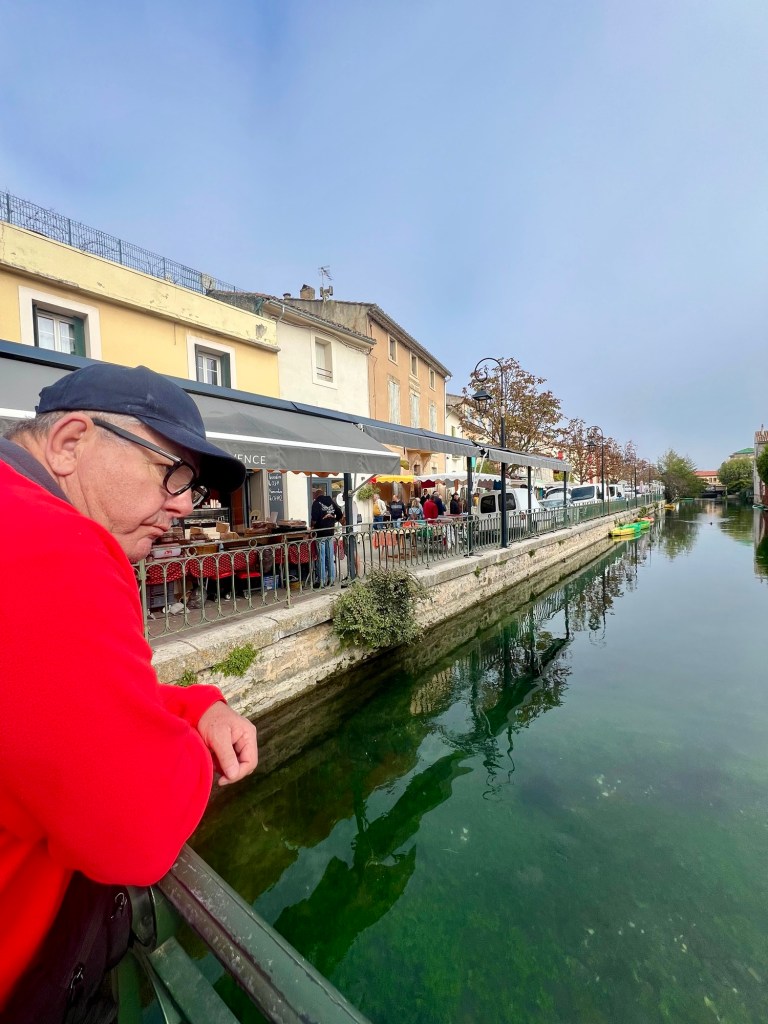

The crowds were large, but not unbearable. We found a bar for a coffee and Mick later found a guy selling amazing frites for €3.
We thought about having lunch here, as we had a fabulous car park, but after the frites, we weren’t hungry.
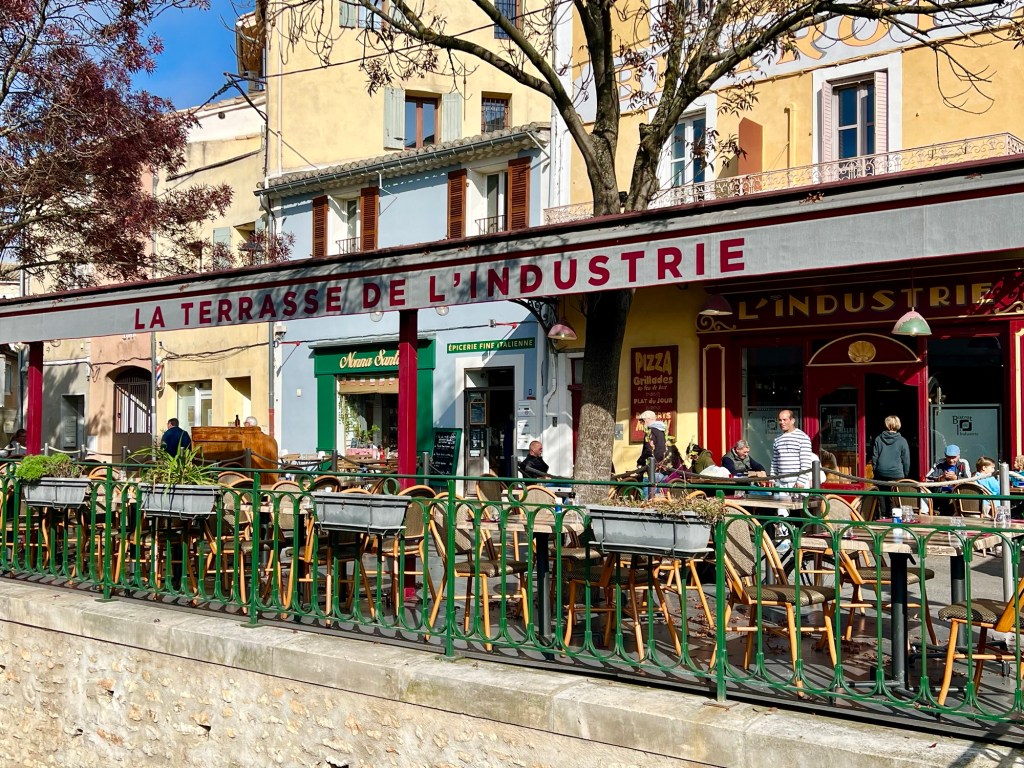
Lots of people were eating and drinking at one of the many restaurants lining the canal like this one.
It took us over two hours to wander through the market area, enjoying the sights and the smells.
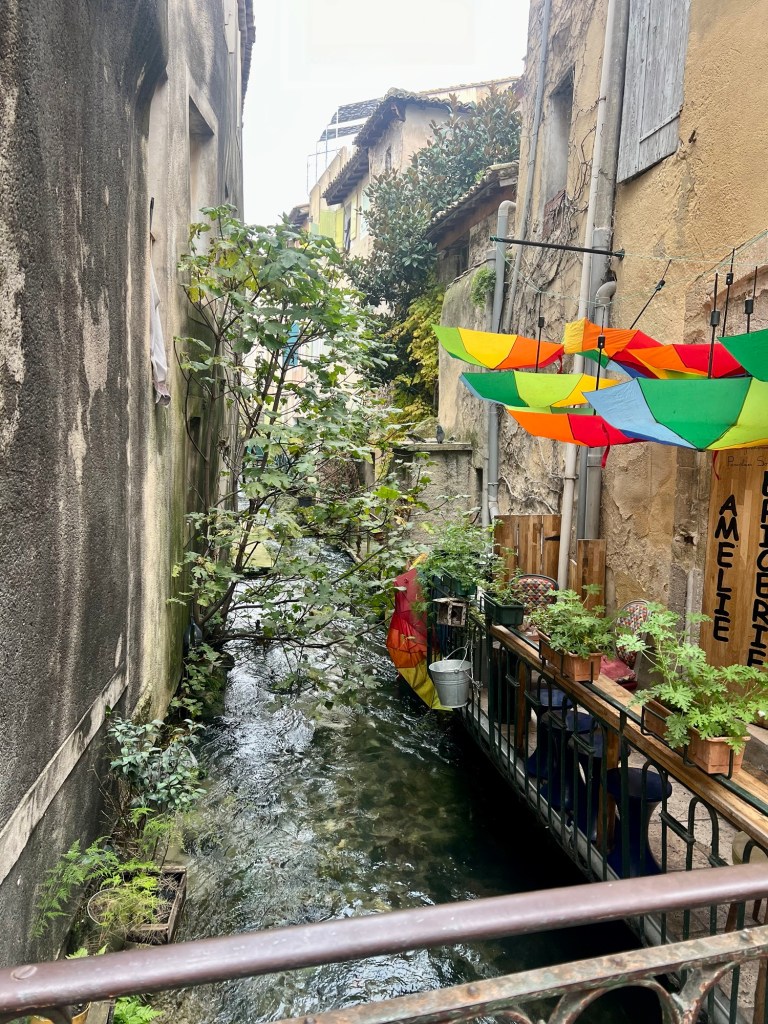
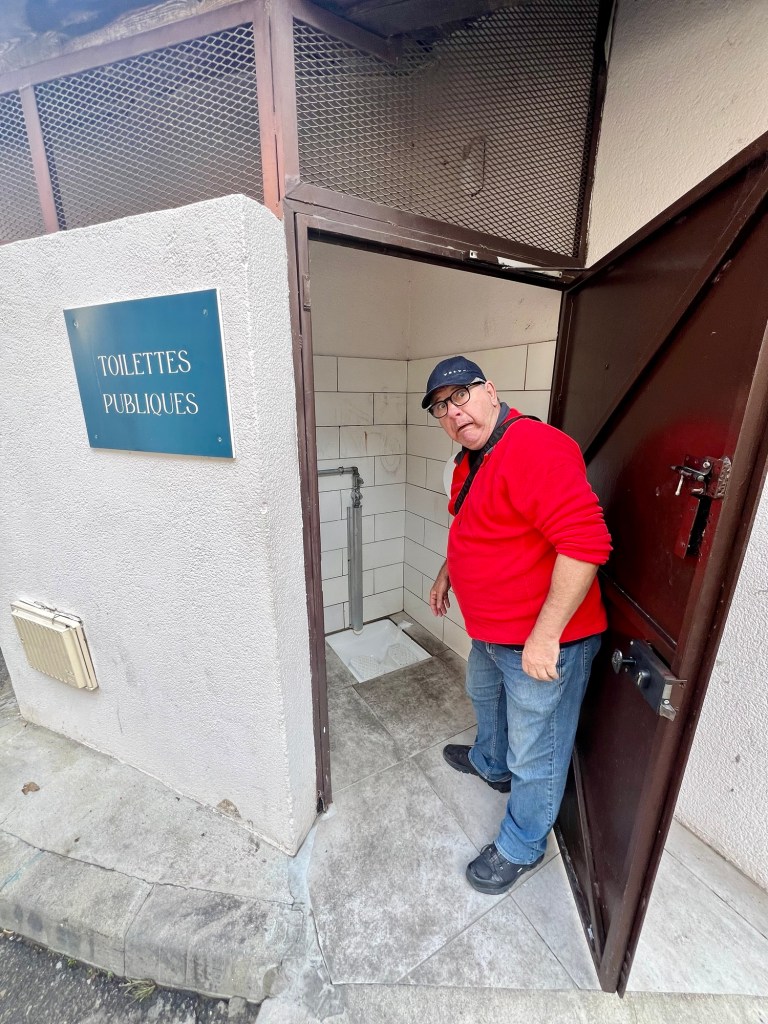
Just before we left, Mick needed to find a WC. While it wasn’t modern, it did the job.
Next stop was Sablet, a small commune with a population of 1600. We felt sure we could get a park there and it was on the way back to Vaison-la-Romaine and close to our next appointment at 2pm.
We thought we might find a place for lunch there. And got excited when we heard some loud voices emanating from the Café du Sports.
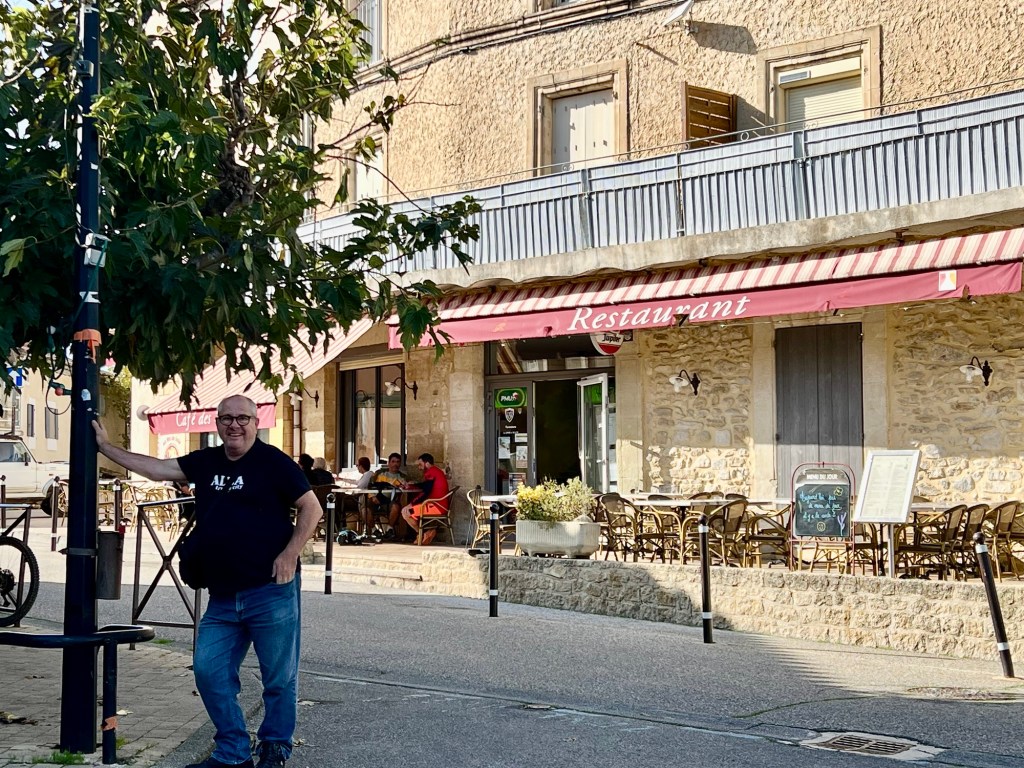
But not today. Sunday meant the restaurant was closed, and it was too early for a beer or a wine.
Mick spotted a boulangerie a few shops away from this bar and I bought us a piece of pizza to share in the next, even smaller village.
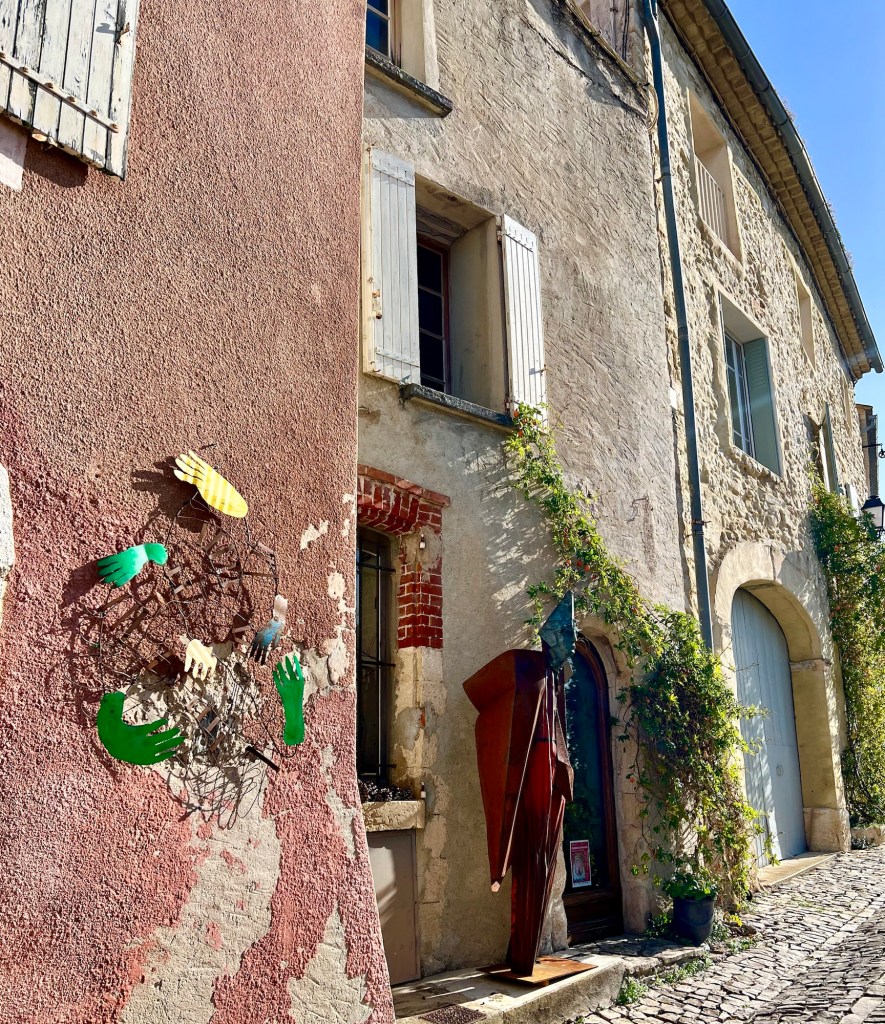
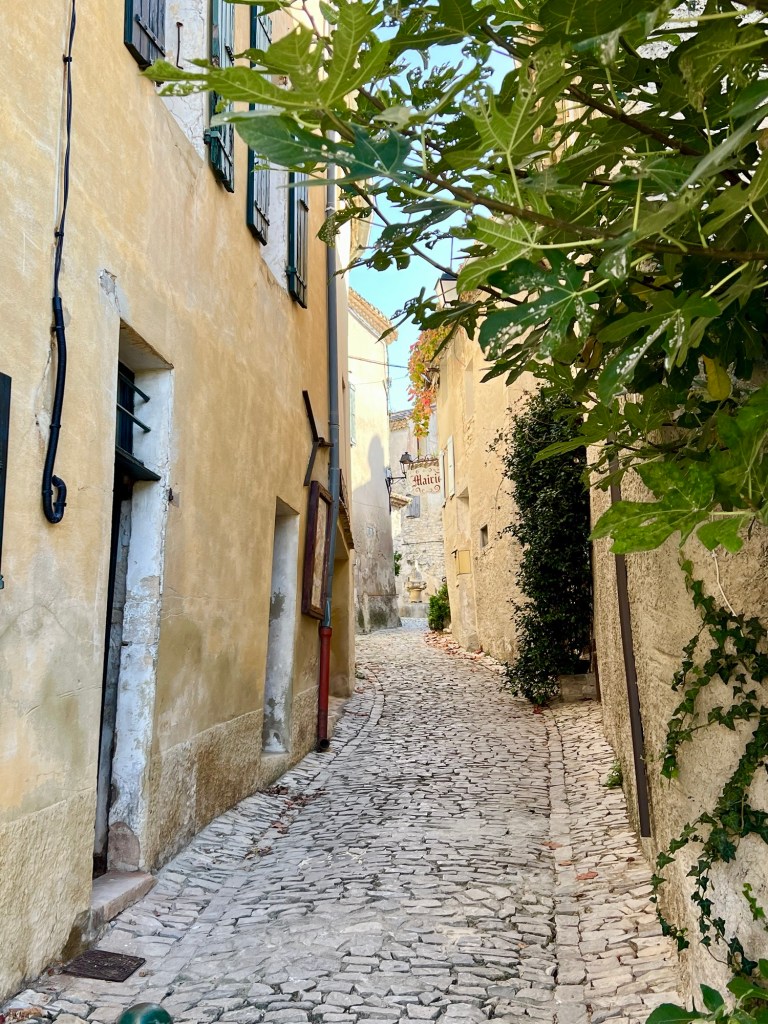
Two kilometres away was the township of Séguret, one of France’s Beaux Villages. As we got closer we could see the village clinging to the hillside. But as we got closer we realised we could only reach the medieval village on foot.
Mick chose to watch the car.
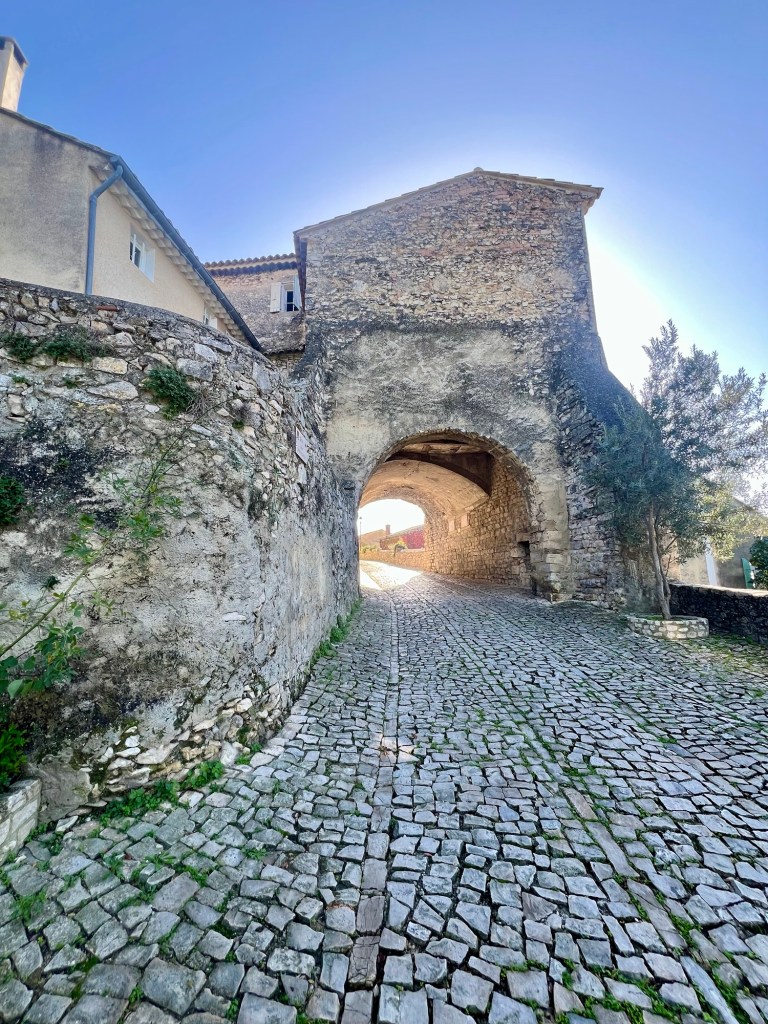
The word séguret in Provinçal language means security. I could see how this was possible with this archway.
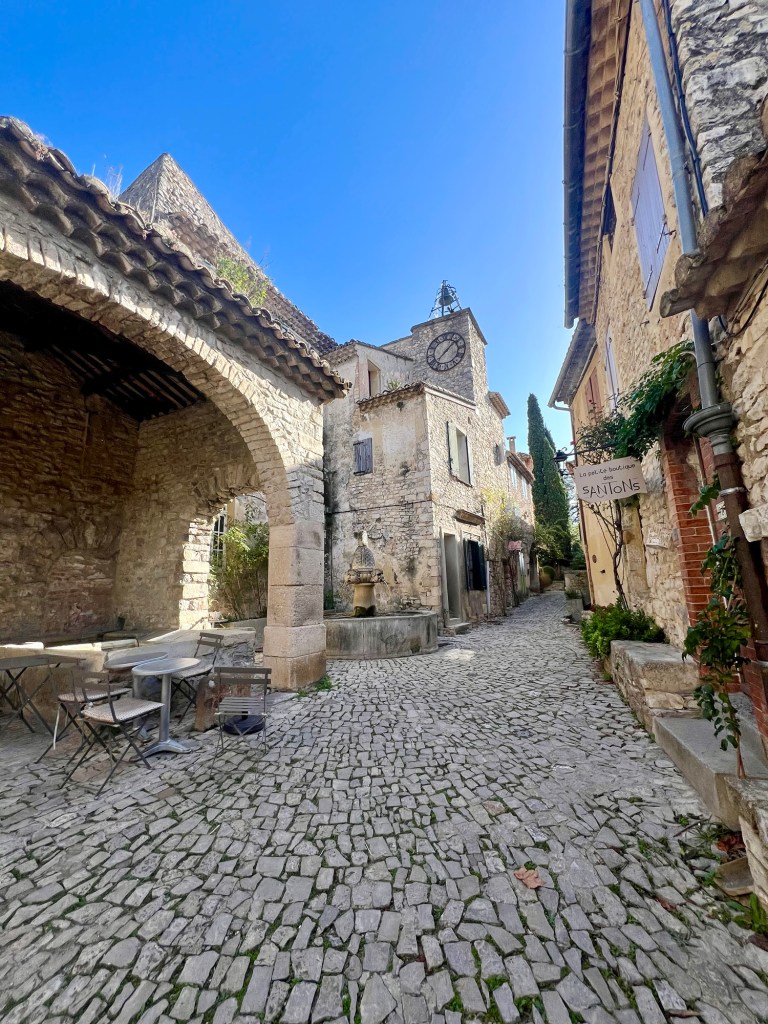
There was also a château located here which I chose not to explore as Mick was waiting for me, and it was almost 2pm.
It was only a ten minute drive to our next destination in the town of Rasteau.
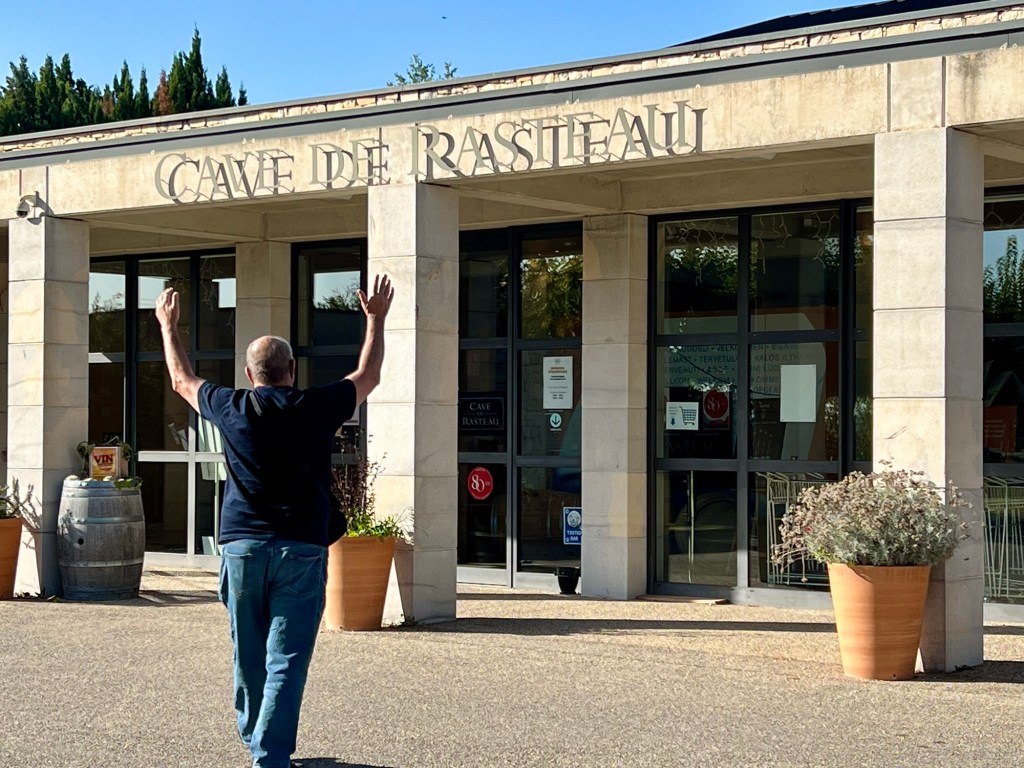
After all, that is why we’re here. Here in the Southern Rhône the blending of wine varieties is common, and it is this area that produces 94% of the Côtes du Rhône wines. With more than 10 varieties found here it is Grenache, Mourvèdre and Syrah that are the three most commonly used.
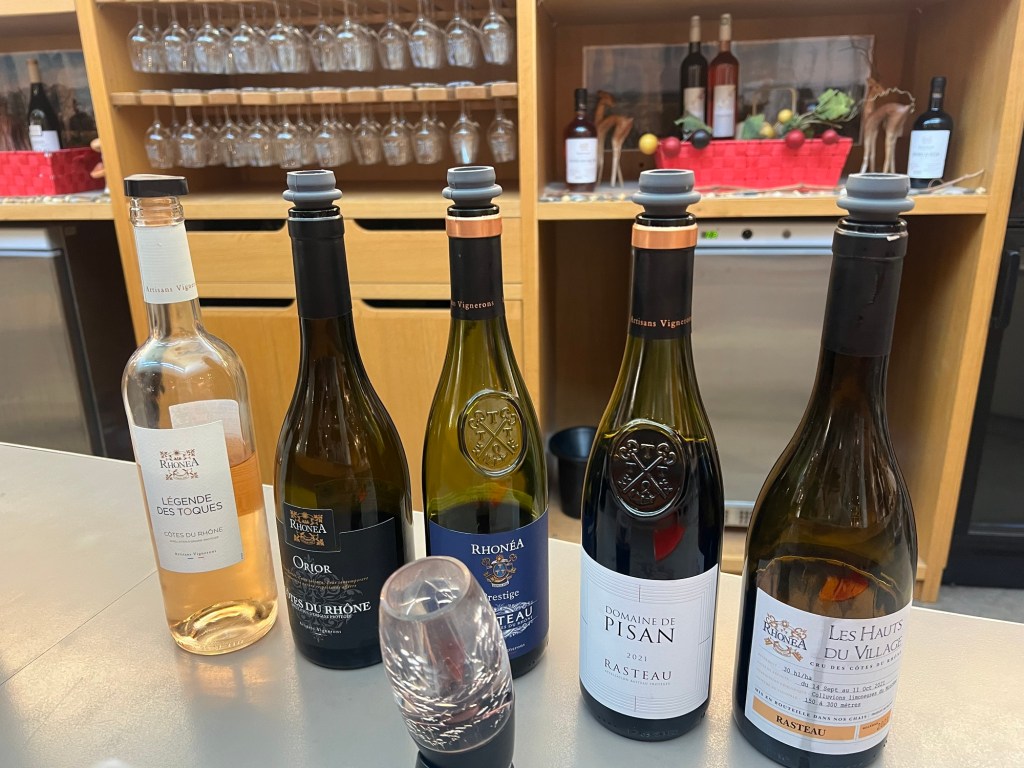
Caves like this one are common in each village; each promotes the wines from their local area but also have wines from other villages. We will likely visit a few different ones over our next few days.
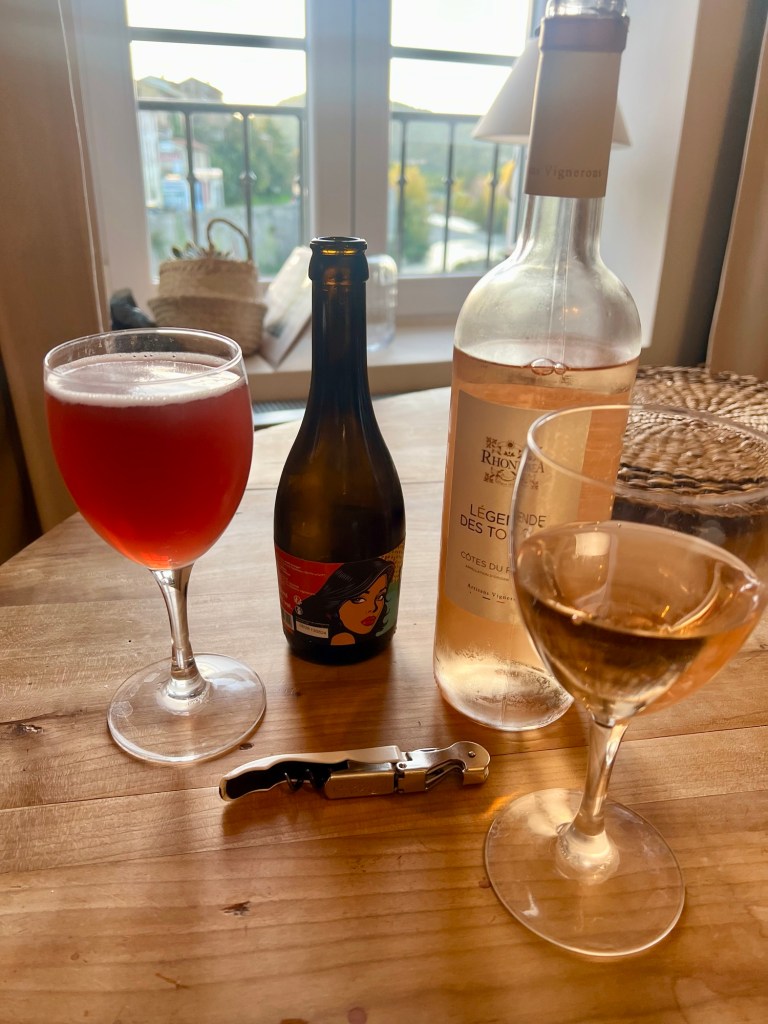
We left here with a rosé made from Grenache, Carignan and Caladoc (never heard of it before) – which was typically Provence in colour, plus a bottle of red wine made with Grenache (50%), Syrah (40%), Carignan (10%). Both excellent and well priced.
Mick also bought a bottle of artisan beer made with 10% Grenache; called Betty, my mother’s name. He couldn’t resist. He loved my mum.
But sadly, the beer wasn’t to his liking.
We’re off to possibly the most famous wine-producing village in this area tomorrow.
 Jane and Mick's Holiday Adventures