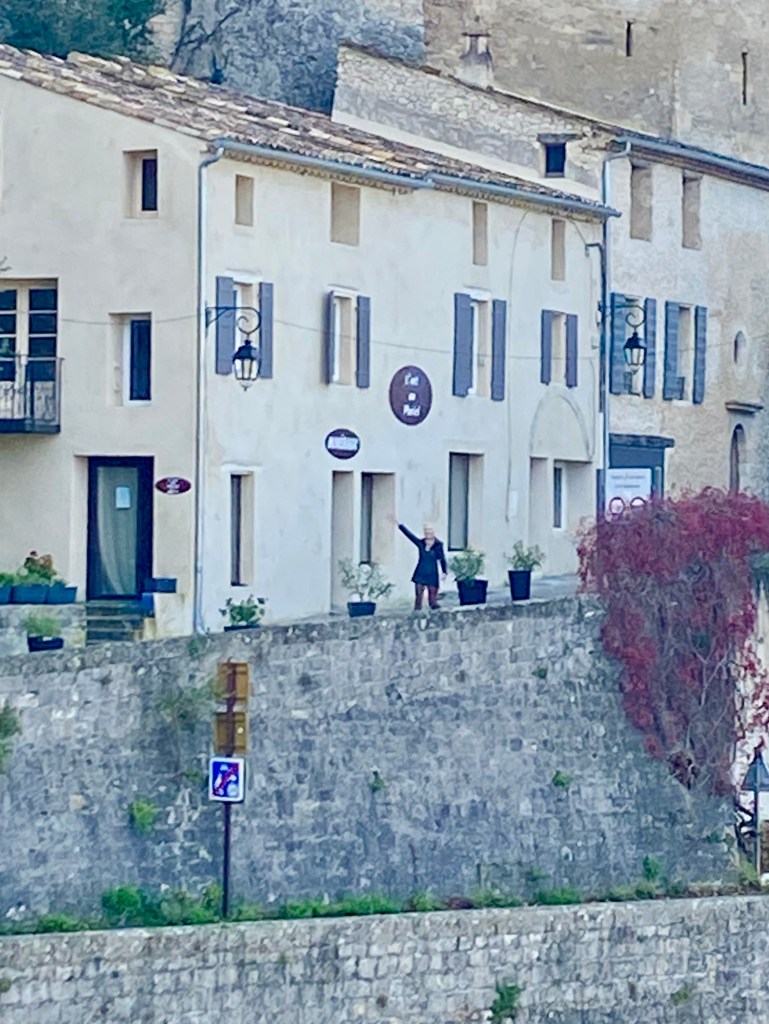
Just for something different, we went to Vaison’s weekly markets. These will be our last French markets for a long while. But hopefully not forever. I spotted our American friend as we were leaving and called “hello”, but either she didn’t hear me, or we had bored her to death last night, and not how I remembered the evening.
These were large markets – not as big as the ones we attended on Sunday, but being our last day here, there was little we could buy besides some vegetables for tonight’s dinner.


Mick bought 6 oysters for €3 for an entrée. He was very pleased he did.
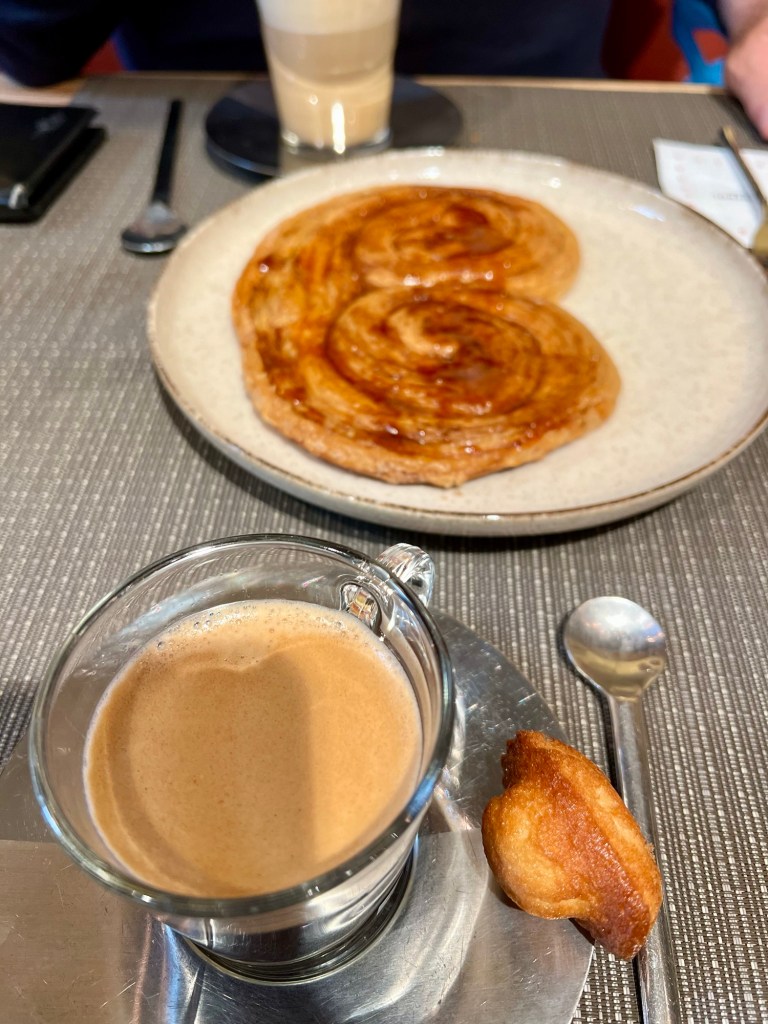
We treated ourselves to a coffee and a pastry at the shop we’d visited a few days ago for morning tea.
And we returned to the markets around lunchtime when the crowds were thicker and bought a fabulous pizza for €10 that was covered in black olives and anchovies. We were both happy.
But before lunch, I headed off to visit the Medieval Village on the hill beside us, to the left in the next photo.
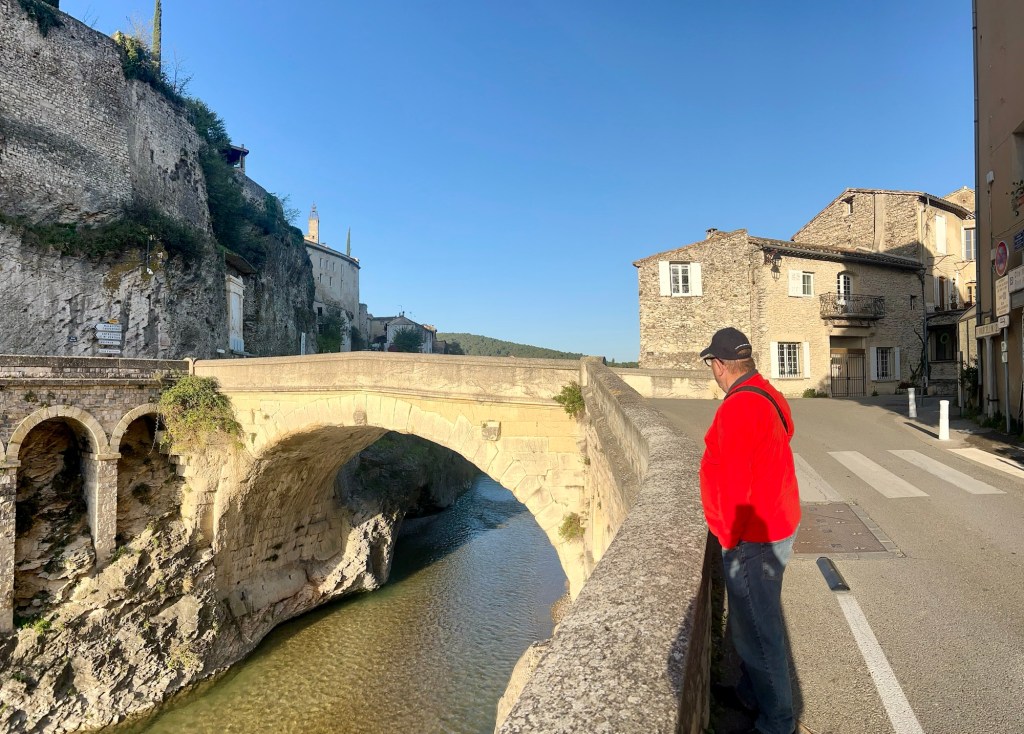
Our apartment is on the right hand side of this photo near Mick’s head.
Every afternoon we have been here there has been a large crowd of people wandering around, either heading to or returning from the village. This morning I almost had it to myself.
The village dates back to the 12 Century. After the Roman’s powers were reduced, the Counts of Toulouse would attack the area near where we are staying – on the left bank of the Ouzère. The people got sick of the attacks and headed up the hill to create a safer place for themselves, resulting in what now is known as Haut-Ville.
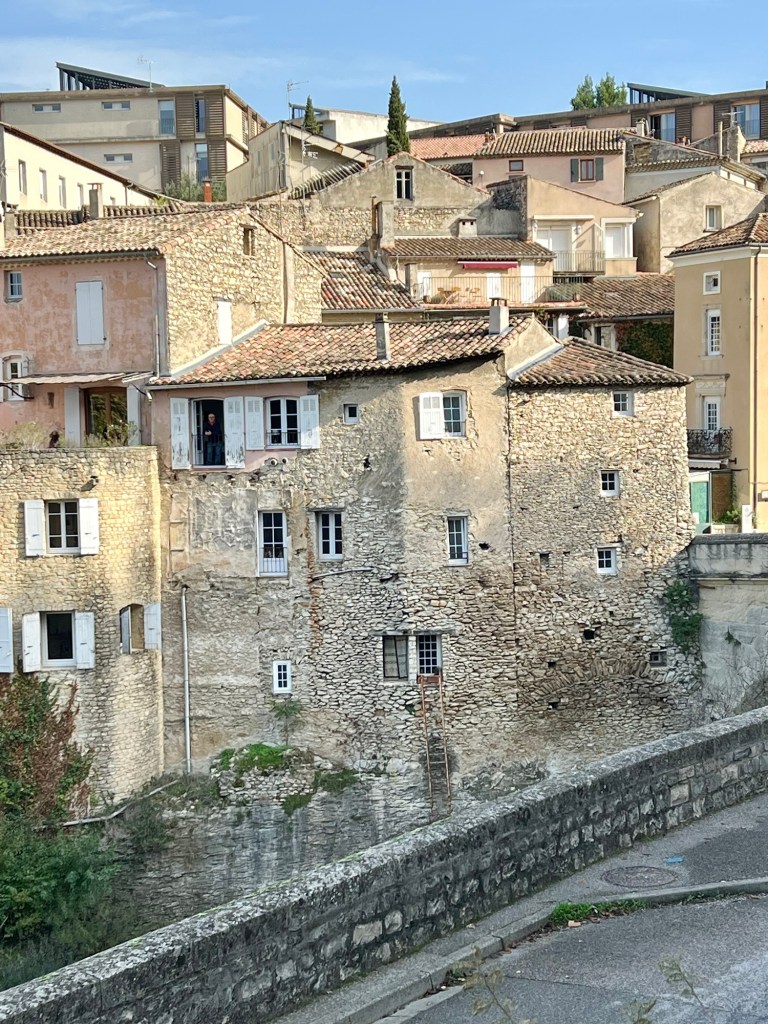
The building we’re staying in is old, but where I was going was even older. People still live here and there are restaurants and businesses as well. Although many things have just closed for their holidays.
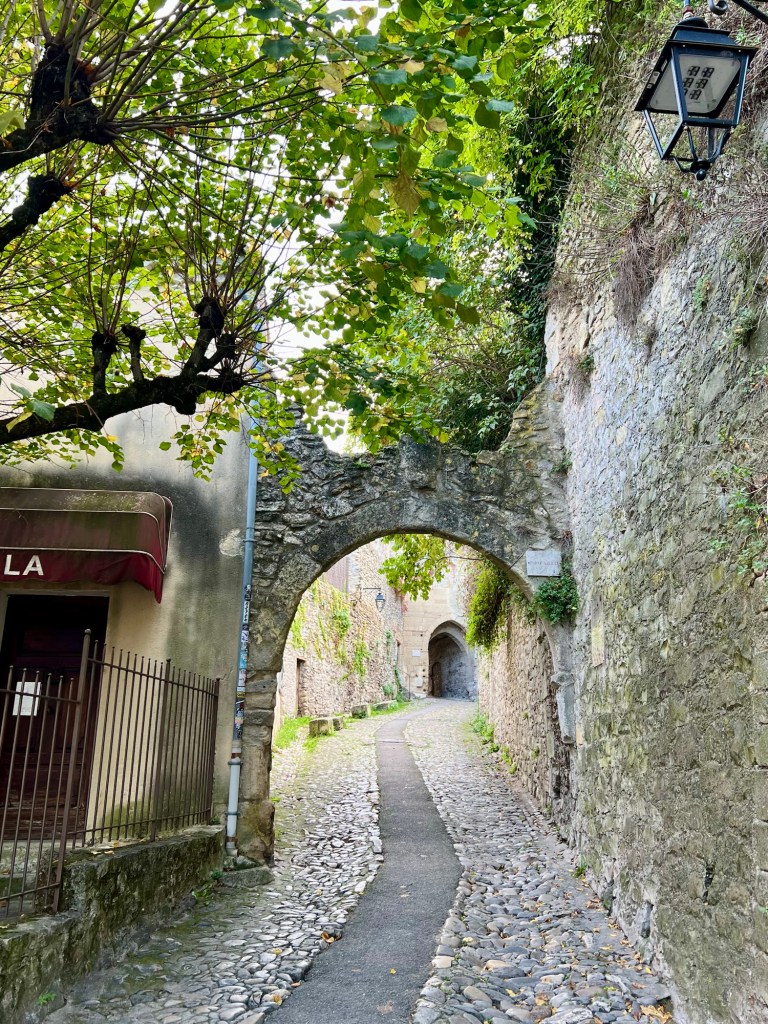
The narrow cobbled streets with their smooth centres, separated beautifully-kept stone houses.
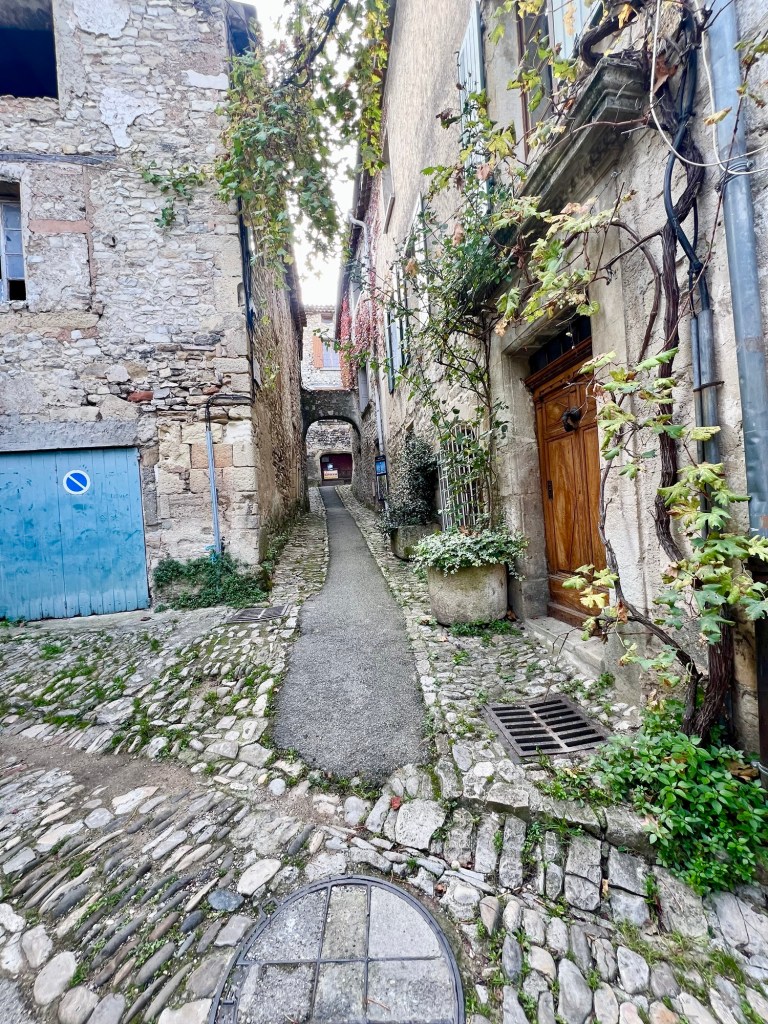
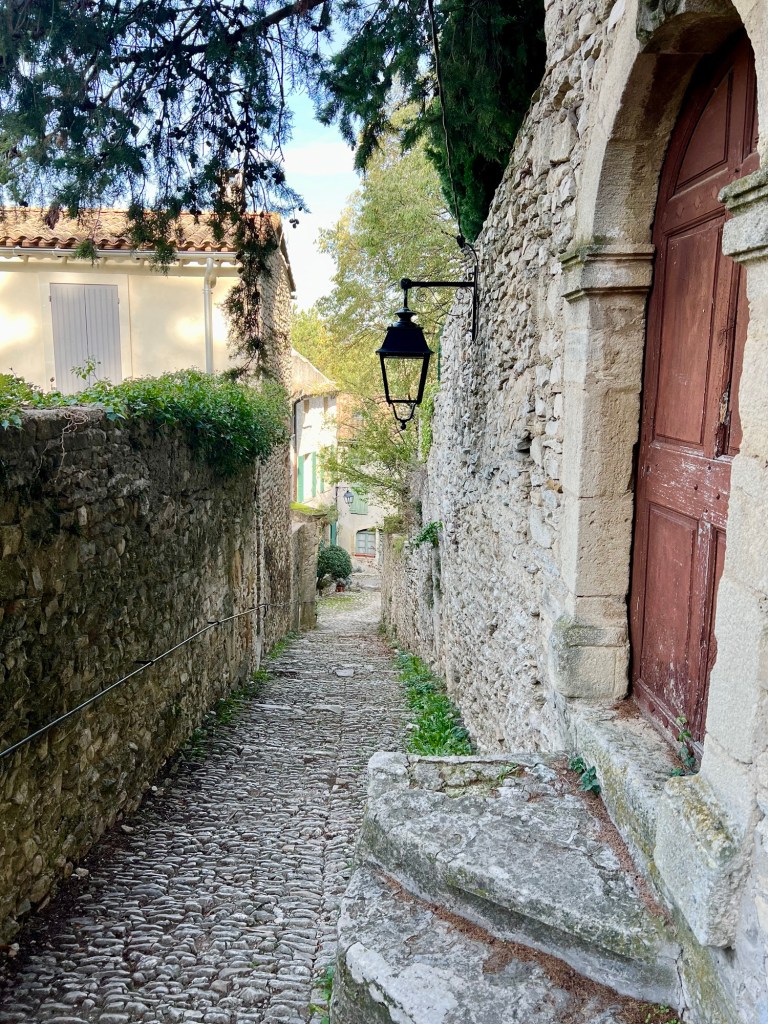
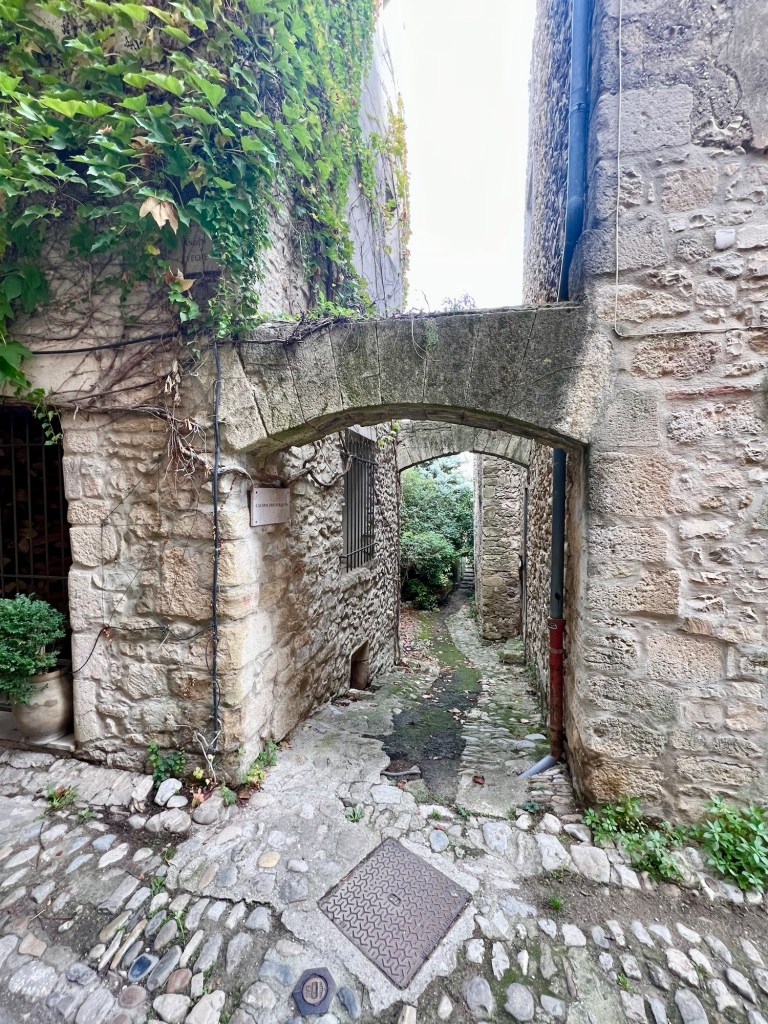

I started to climb further up the old village in search of the views and the Château Comtal.
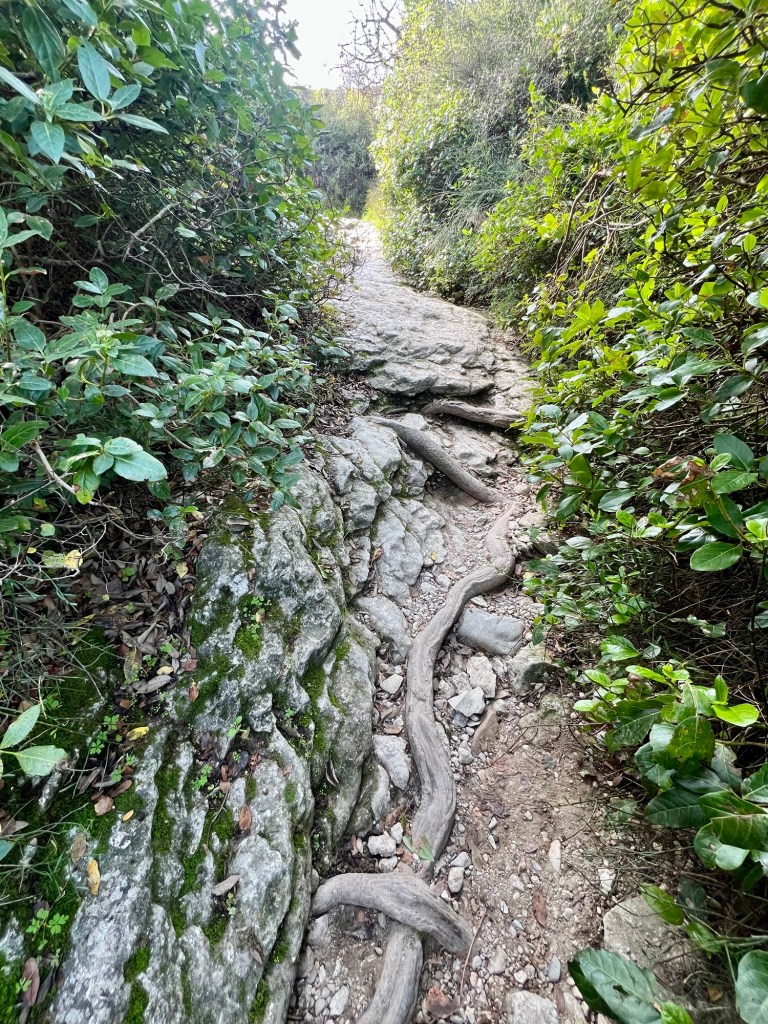
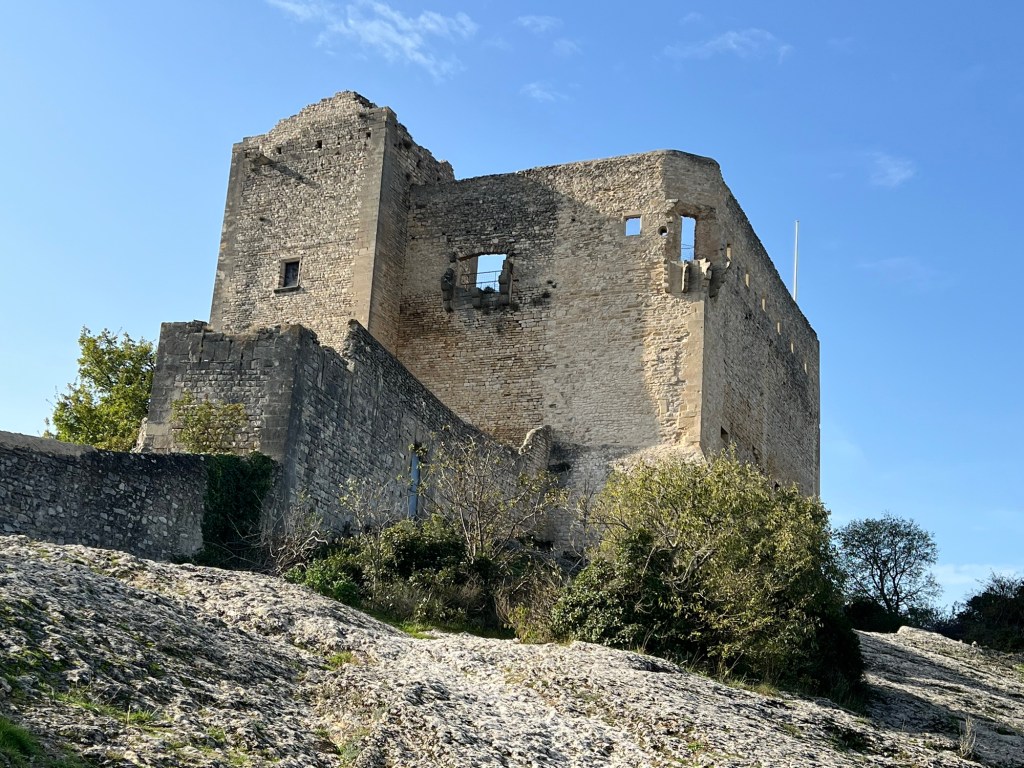
The château certainly was a prize piece of real estate – anchored into the rocky outcrops it had expansive views in all directions and strategically over the Ouvèze Valley.
It was built to assert the authority of “Raymond VI, Count of Toulouse and lord of the Comtat Venaissin” who was one of the counts who was constantly battling the bishoprics for power over this area. However, in 1274, the castle became papal property, a status it retained until 1791.
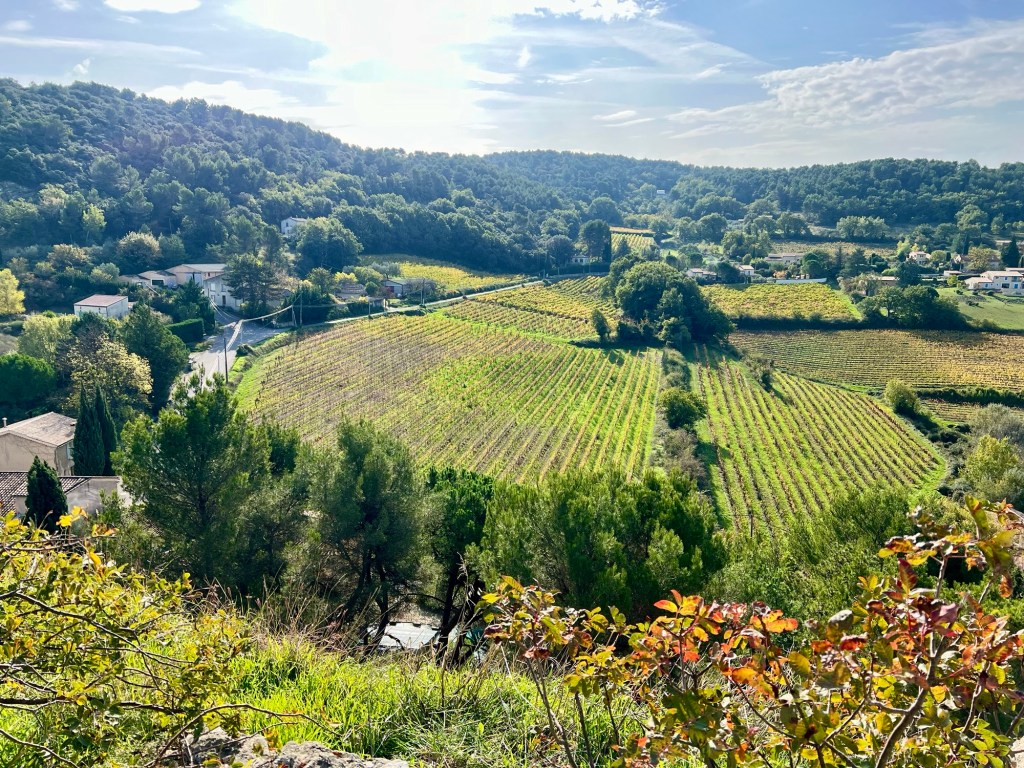
I could see the current town of Vaison on one side and vineyards in another direction.
I also visited the old church that is perched on the edge of the rocks. We got a good view of it each day from the car parking area.
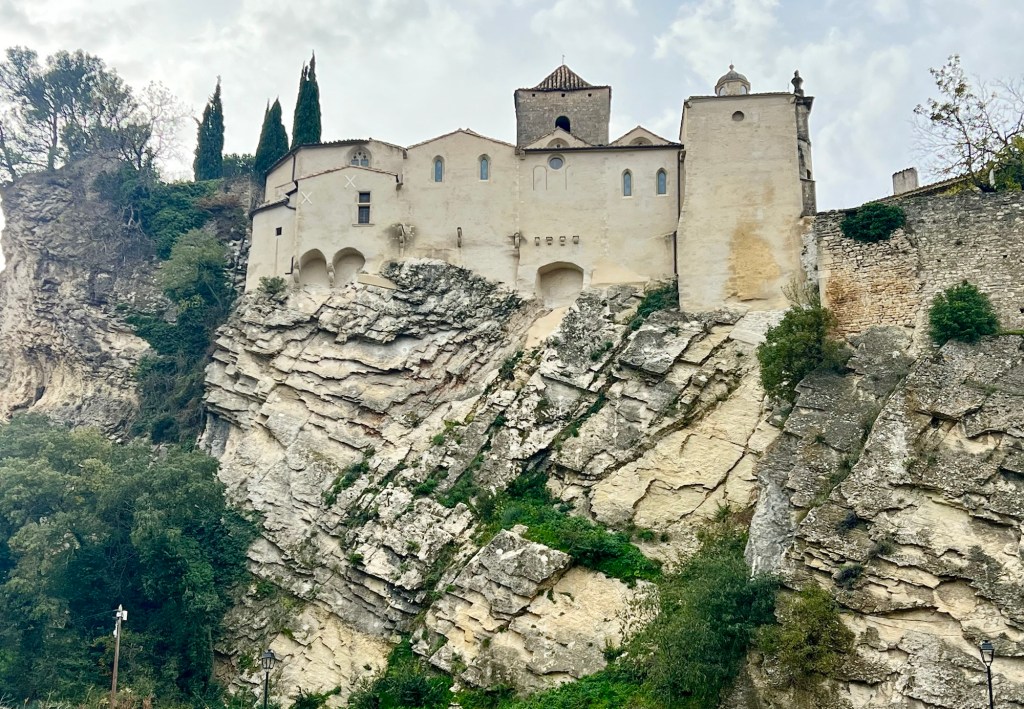
The church construction began in the mid 15th Century. Subsequent extensions brought it to the edge of the cliff as we see it now. Restoration work had been undertaken but there is still much to be done.
I read a plaque in the village on the site of the communal oven which was only discovered in 2017.
France, banal rights (“banalités”) referred to the obligation for peasants to use and pay for facilities maintained by feudal lords.
It was prohibited to grind flour or bake bread elsewhere than in a communal (“banal”) mill or oven. Only those peasants living in remote locations could have their own oven.
These ovens were owned by the counts of Toulouse originally and then the Pope’s property after 1274. So for years the poor peasants had to pay to bake their own bread.
Almost 450 years later, the local bishop gave into the poor peasants and gave the oven’s running over to them: no more fees. But it wasn’t until the French Revolution in 1793 that banal rights were ended.
No wonder the French revolted!
After lunch Mick and I headed out to taste some more wines.
We passed lots of town signs that were upside down, and wondered why. One was okay, two was a coincidence but many meant something. Mick found out it was a protest by farmers over a diesel tax and an EU agreement that meant that the market was flooded by overseas countries. Last time we were in France there were massive protests by the ‘Gilet Jaune’ (yellow vests), unhappy about Macron’s changes to the retirement age. The French know how to protest.
I’d found two different domaines slightly north of here that were open today.
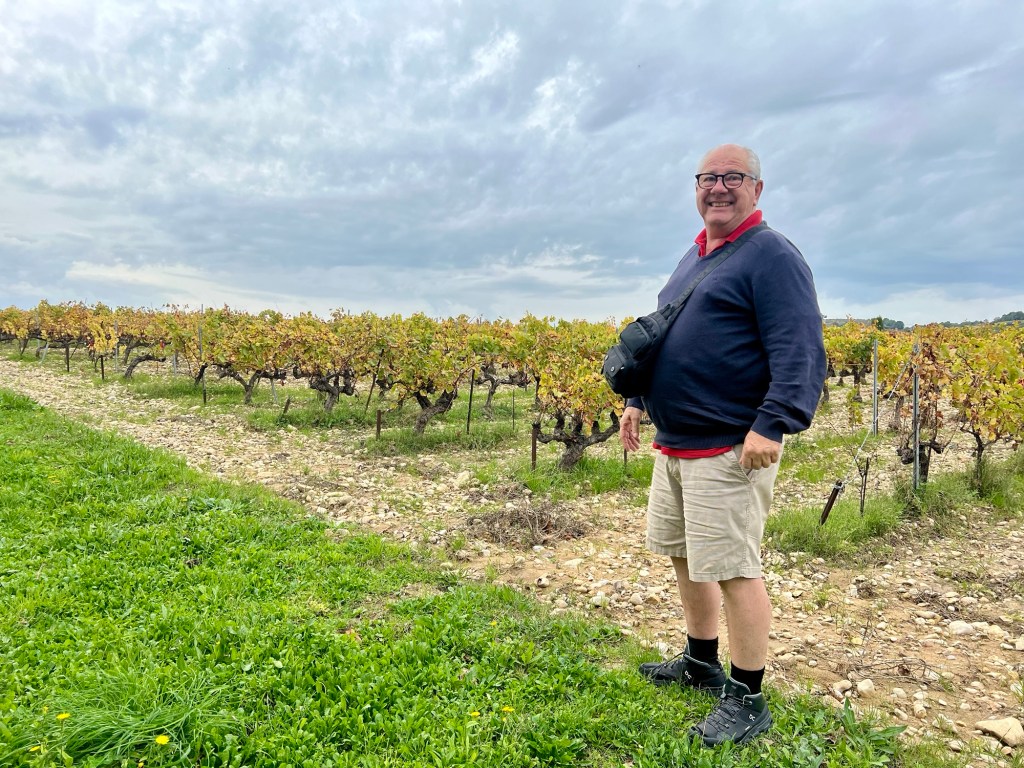
These vines were at the front door of Domaine Vallot. Here Mick tried some wines from the Vinsobres* appellation. He chose a bottle of GSM – Grenache, Syrah and Mourvèdre.
Vinsobres was previously a part of the Côtes du Rhône Villages AOC, but in 2006 it was created as a separate AOC. The wines must contain at least 50% Grenache, and 25% Syrah and / or Mourvèdre.
Then we drove through the town of Nyons to get to Domaine Rocheville. This is a fifth generation small family winery.
We were pleasantly surprised to meet both winemakers; a husband and wife team. He makes Côtes du Rhône wines while she made Châteauneuf-du-Pape from grapes grown from a vineyard in that region. Mick was able to taste a 2015, 2018 and her 2022.
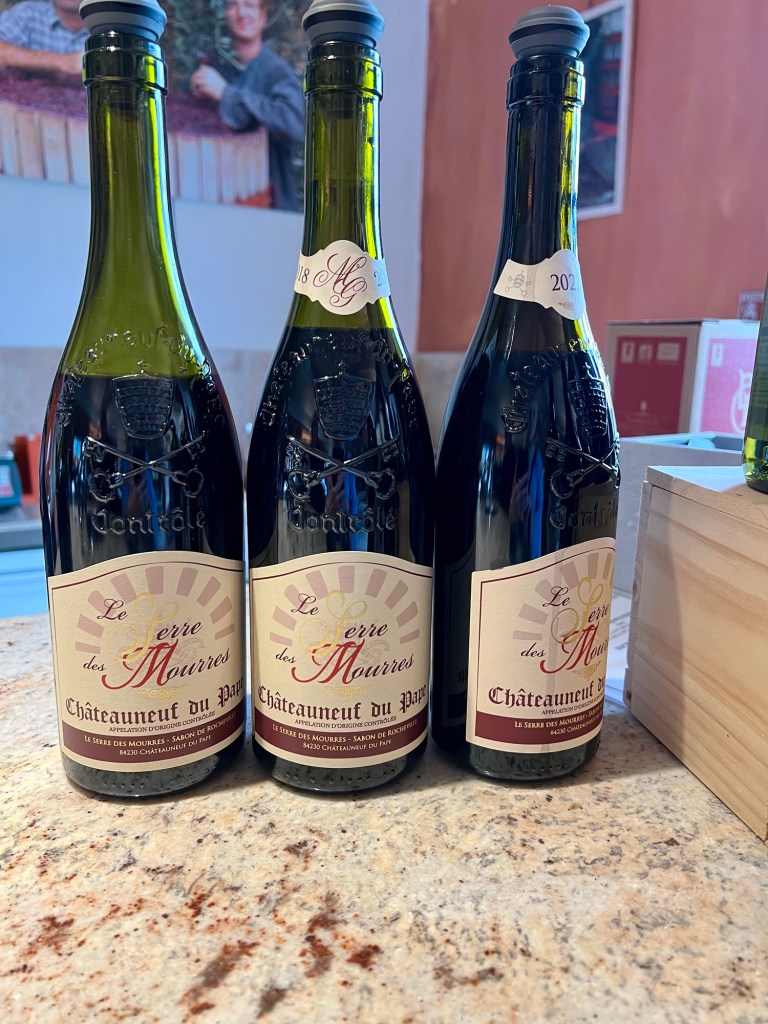
The 2018 was a different blend to any we’d tried before; 60% Mourvèdre and 40% Grenache. That got me thinking about the rules for Châteauneuf-du-Pape. I thought that Grenache had to be the majority variety.
- Alcohol content – minimum is 12.5%. However, these wines are often higher in alcohol, typically 14–15.5%.
- Adding of sugar to increase alcohol is not allowed.
- Grape varieties – no restrictions on the proportion of grape varieties that can be used. However, Grenache is the most widely planted.
- Harvesting – by hand only.
And so on.
Dinner was at home with a glass or two of the wines we had purchased today. Mick had chosen well again. We now have enough wine for our final three nights in Europe.
We have loved our stay here in Vaison and can recommend it as a base for wine tasting in the Southern Rhône.
We will spend the next three full days travelling to our next wine tasting destination. It will involve four flights.
We are either mad or ridiculously keen!!
 Jane and Mick's Holiday Adventures