We had never visited the Coonawarra Wine Region before, and during our visit there last week I worked out one of the reasons why that was.
Mick and I were only going for a quick trip; to visit our son who has just moved there to work at one of the wineries. When I looked at how to get there from Brisbane, it was almost the same distance if we flew into Melbourne or Adelaide. I opted for the latter because we have stayed at the airport hotel in Adelaide before and it is so convenient for early flights. It is literally about 30 steps out of the hotel and into the terminal.
We hired a car and headed off up through the Adelaide Hills to Penola – our destination. Our little MG3 struggled up those hills and we both thought the trip was going to be very difficult. But, once we got over the hills and onto the flatter land, the car managed fine. We were both grateful that the airconditioning was excellent.
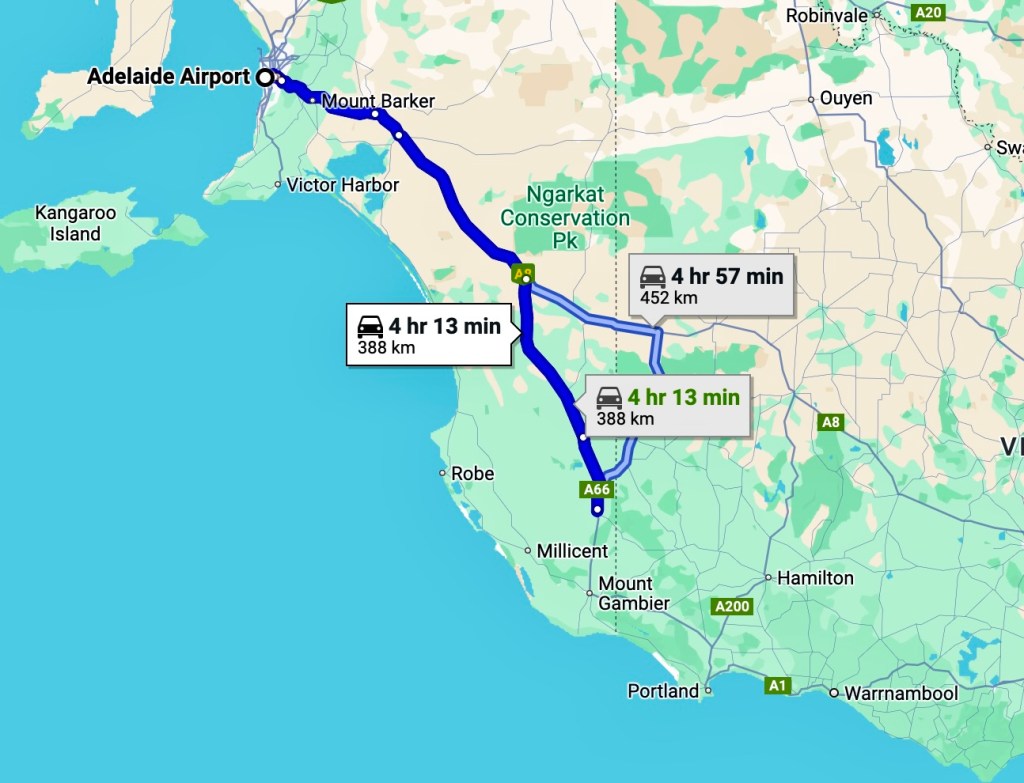
Coonawarra is a long way from a major airport
In fact, while there is a place called Coonawarra, it is tiny. If you blinked as you were driving through it, you would miss it. Coonawarra is more about the ‘region’. Specifically a narrow 20km strip of intensely rich soil known as ‘Terra Rossa’ which is found above a bed of limestone.
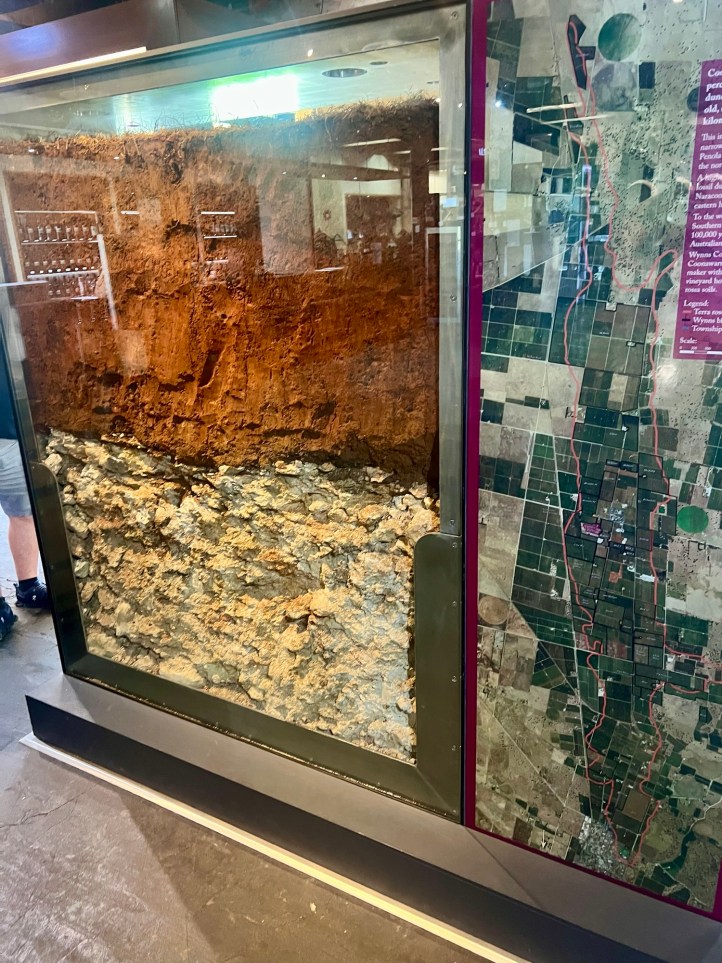
This display at Wynns Coonawarra Estate Cellar Door showed the Terra Rosa very clearly. Wynns boasts “the largest single vineyard holdings located on Terra Rossa soils”.
The soils are not the only reason that this region is able to produce some amazing wines, it is also due to the cooling breezes the area enjoys, that apparently intensify the wines’ flavours because the grapes are allowed to ripen more slowly.
Upwelling cold Antarctic water is driven to the surface close to the Limestone Coast. Prevailing winds propelled across the Southern Ocean cross the coast then travel a further 80 kilometres to meet the low, red rise that is Coonawarra.
And for the ‘trifecta’ of optimal grape-growing conditions: water is plentiful in this area thanks to a shallow limestone aquifer.
During our few days based in Penola (which is a very cute town that I will do a separate post about), Mick and I were able to visit eight of the 25+ wineries in this region. And we were able to taste not only the Cabernet Sauvignons this region is famous for, but also a few surprise varietals.
Bellwether Wines
Our son was our tour guide for our tastings, and our first stop was at Bellwether Wines as our son really admires the winemaker – Sue Bell. She does not grow any of the fruit she uses, but has developed close links with several grape growers in the area and afar who provide her with what she needs to do her magic. Some of her fruit is sourced from Tasmania, near Josef Chromy Wines’ vineyards. Sue made good connections in that area when she worked there earlier in her career. Needless to say that Mick loved her Tasmanian Riesling.
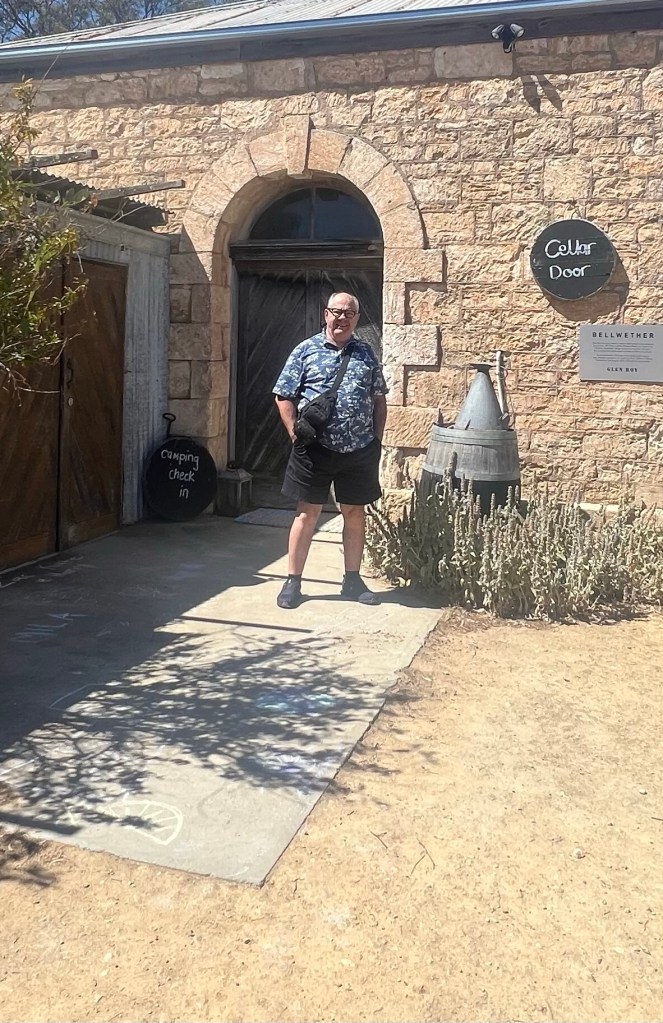
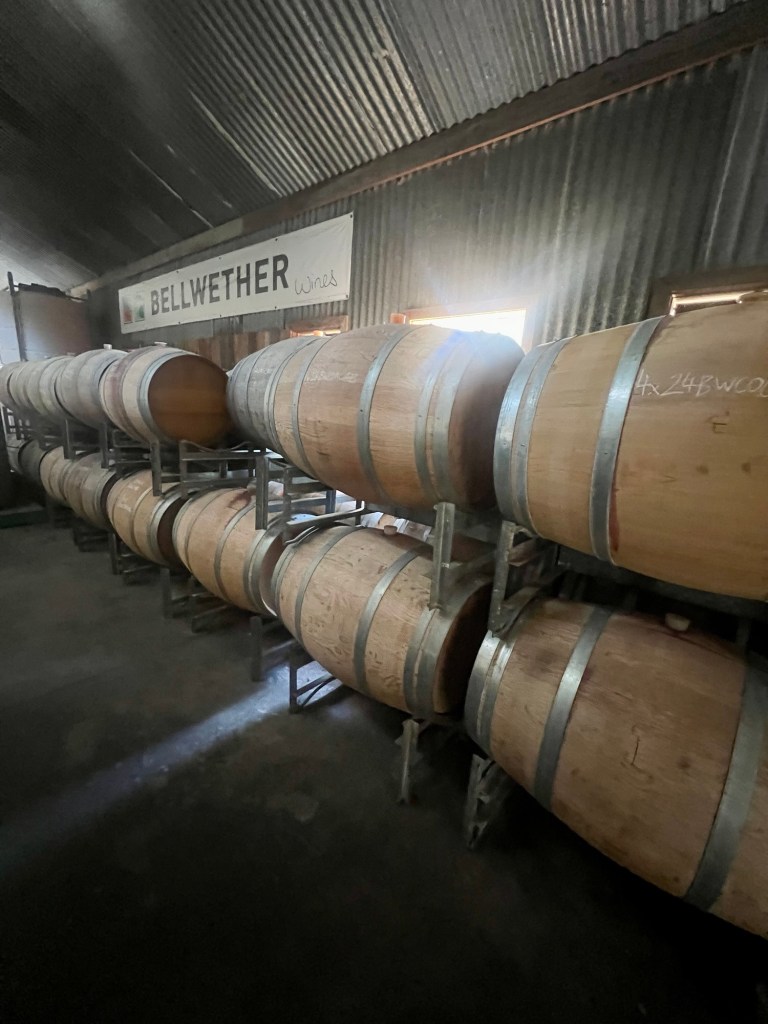
Sue makes great wines, and having her guide us through our tasting was a real treat. Her wines are different and often she has an interesting twist on some varietals and styles. Her current rosé as an example; called Rosata and made from a blend of Nero d’Avola, Barbera and Pinot Grigio, has some wonderful acidity and a very different colour, almost orange. And at $25 – it was a bargain.
Bellwether Cellar Door gets my prize for “the most quirky” cellar door we’ve ever visited. Set in a converted shearing shed, filled with old furniture and antiques where you sit to enjoy your tasting alongside the area where Sue makes her wines – it is very different from the large, commercial-style, minimalist cellar doors found in many areas.
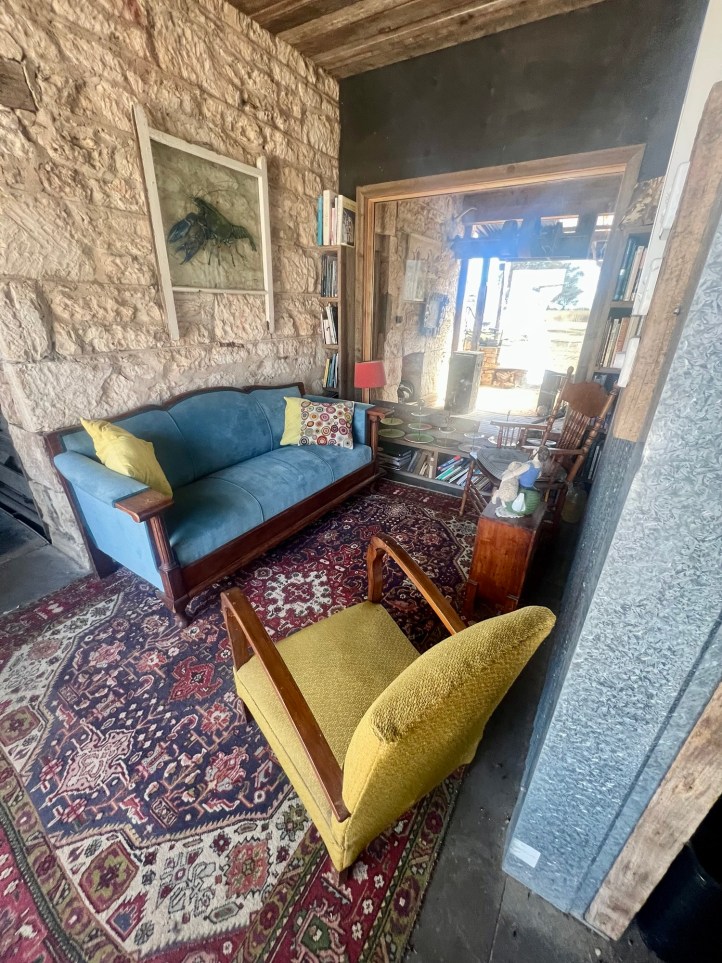
While it is ‘quirky’, I’d hate to have to clean it!
We decided to join Bellwether Wines Club so we can sample some of her future vintages and varietals, as many of her wines were ‘sold out’. Always a very good sign.
Hollick Coonawarra
Our next stop was Hollick Coonawarra, where we had just missed the lunchtime crowds. This Cellar Door boasts an excellent restaurant with amazing views over their vineyards.

Not the best photo as the curved wall made it difficult to get the name.
Never mind.
We were selective about the wines we tasted here, as we had to save ourselves for the next cellar door.
We left with a bottle of the Stock Route Shiraz Cabernet Sauvignon for $27. Mick thought it had the edginess he likes in some wines.
Patricks of Coonawarra
Our last stop on our first day of tasting was at Patrick’s of Coonawarra; a family-run business where Patrick’s son, Luke Tocaciu is the winemaker.
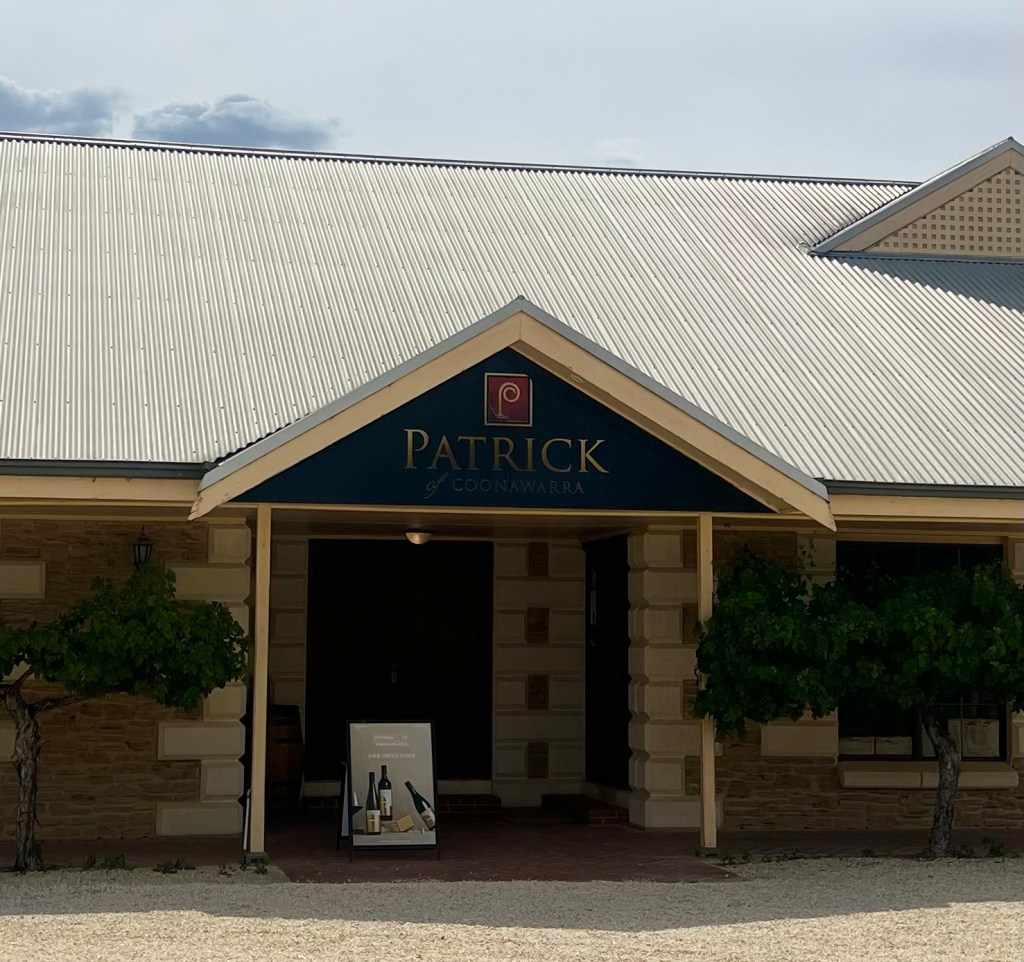

In addition to the traditional-style wines that are made here that reflect the region, Luke makes wines with a point of difference like the ones pictured here. A Méthode Eucalypt Cabernet Sauvignon for example. And yes, you can smell and (slightly) taste the gum trees.
During our tastings we learnt that winemakers here use fruit from locations nearby to Coonawarra, including Wrattonbully, which is in the area known for the World Heritage-listed Naracoorte Caves. The area has very rich and fertile soils which are capable of growing great grapes. But, of course they cannot be labelled as ‘Coonawarra’.
On our first night at home with our son, before we started visiting any wineries, we tried some wines he had been saving for our visit. So we could class this as another ‘tasting’, but to be honest, we did more than taste these ones.
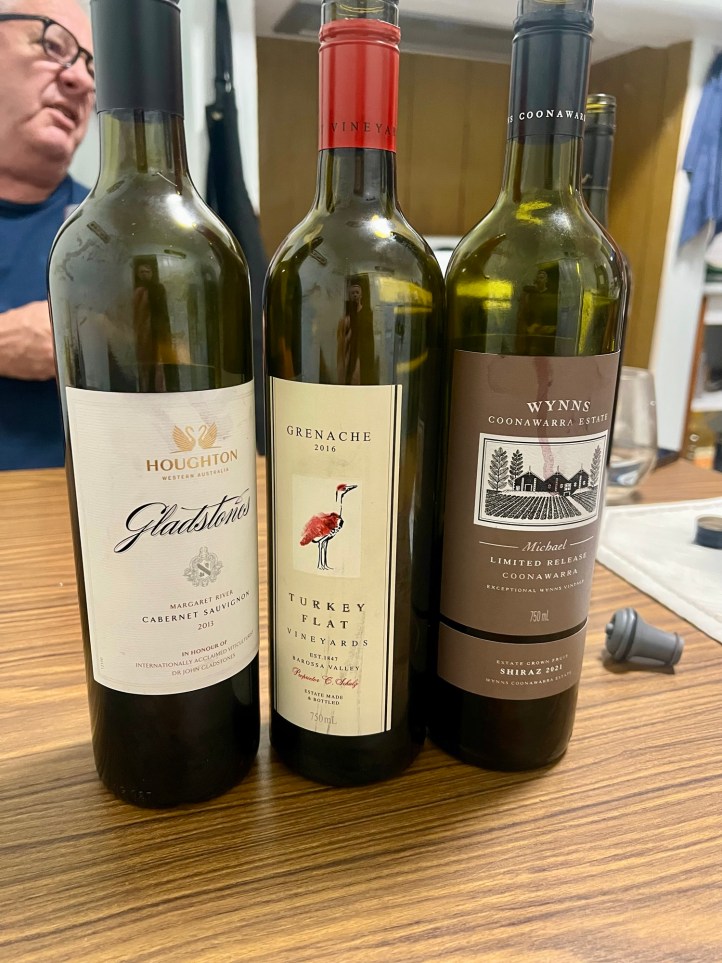
The bottle on the right was the current release of Michael from Wynns. Mick thought it might have been named after him. But not so.
Michael Shiraz is Wynns Coonawarra Estate’s best-of-vintage Shiraz. Named after David Wynn’s young son, the fruit used for this wine comes from the best vineyard sites in Coonawarra and is only made in years when the best quality fruit is available.
We sampled this against a 2013 Houghton’s Cabernet (from Margaret River) and with a Grenache from the Barossa Valley. But this was not any old Grenache. It was a 2016 Turkey Flat Grenache which was selected as the winner of the 2017 Jimmy Watson Trophy.
I had never heard of Jimmy Watson before, but our son explained that this is indeed a significant accolade.
Wynns Coonawarra Estate
On our second day we stopped into Wynns and explored their cellars.
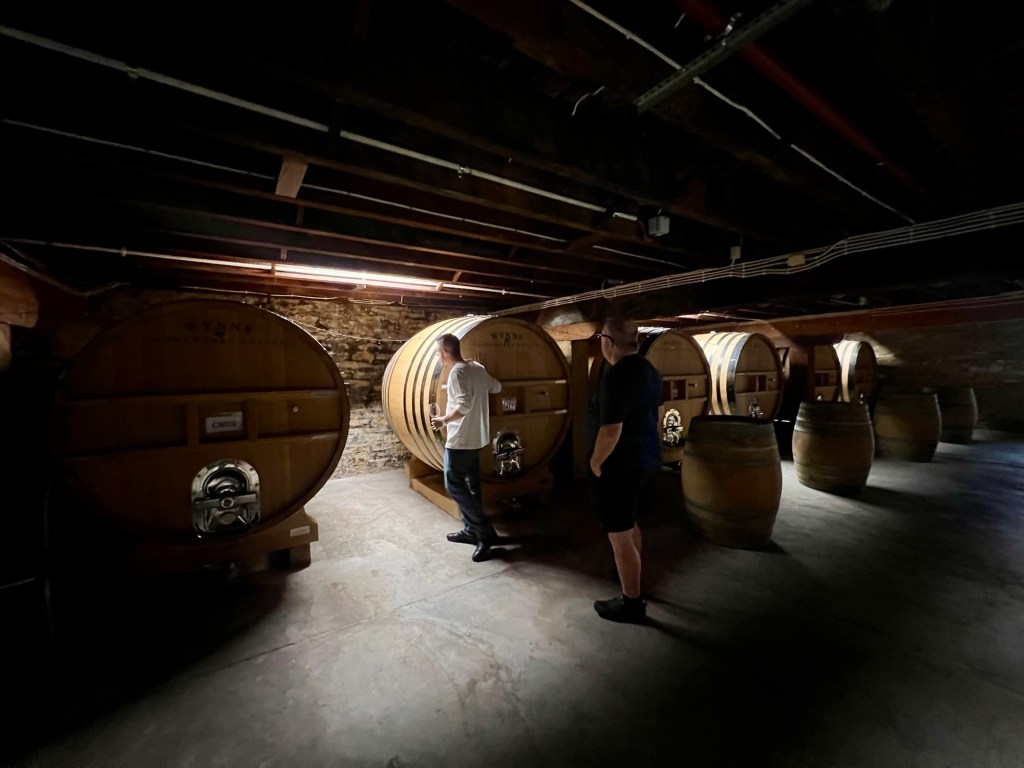

Mick left here with a bottle of the Pedro Ximenez – a classic fortified sweet wine. Not my cup of tea at all. Mick knew of this grape varietal because of the WSET course he did last year, but he’d never tasted it. The Pedro Ximenez (which is a late ripening Spanish varietal) vines were in the very front of the Wynns winery as we drove in, and were planted in the early 1900s.
We learnt quite a lot about the history of the Coonawarra Region here at Wynns because prior to it being known as Wynns when it was purchased in 1951, it was called Chateau Comaum. The original winery and vineyard was established by Scottish pioneer John Riddoch in 1891.
That helped me to understand why Wynns sells a John Riddoch Cabernet Sauvignon.
Ottelia
Next stop was Ottelia – just across the road from Wynns. It is named after the Ottelia Ovalifolia, a native waterlily that is found in the parcel of land owned and cultivated by the Innes family. It is a family-run business with father and daughter both making wines. We stopped here for a tasting and for some lunch. The cellar door and restaurant were located in a refurbished old school.
We really enjoyed our tasting here that was led by Melissa, the winemakers wife and co-owner of the business. They were great wines. We learnt that her husband John Innes hailed from Bathurst and started his winemaking career in Mudgee – areas Mick and I know very well.
Rymill
This was a fancy affair with a long tree-lined driveway leading up to the very modern winery and cellar door.
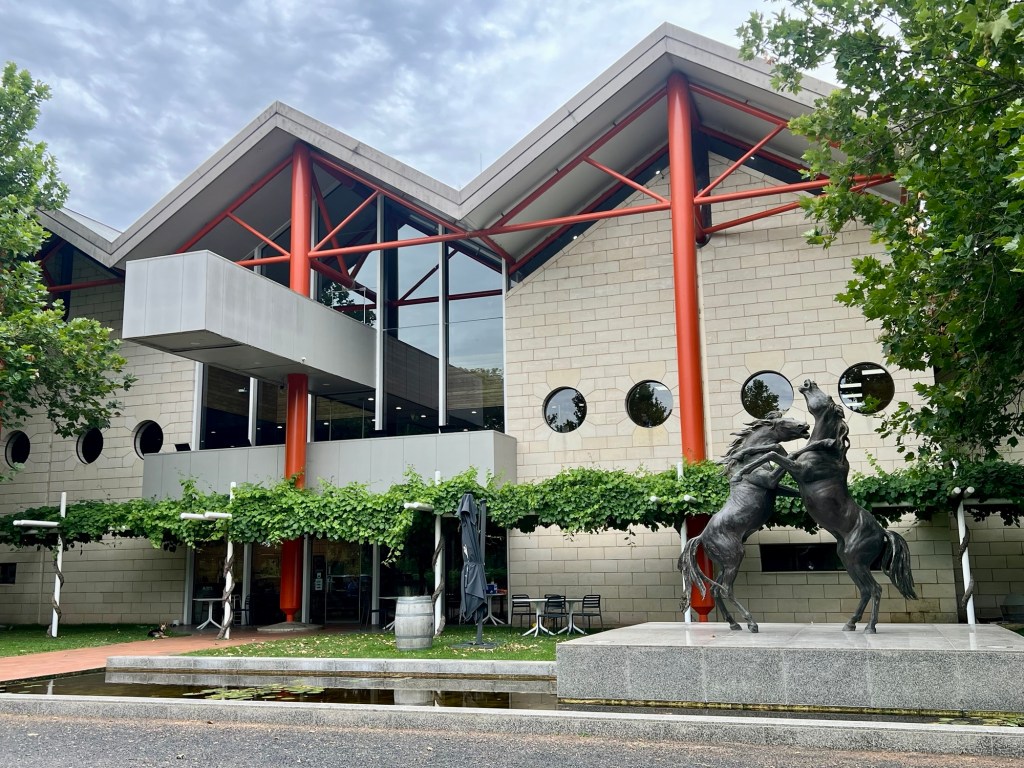
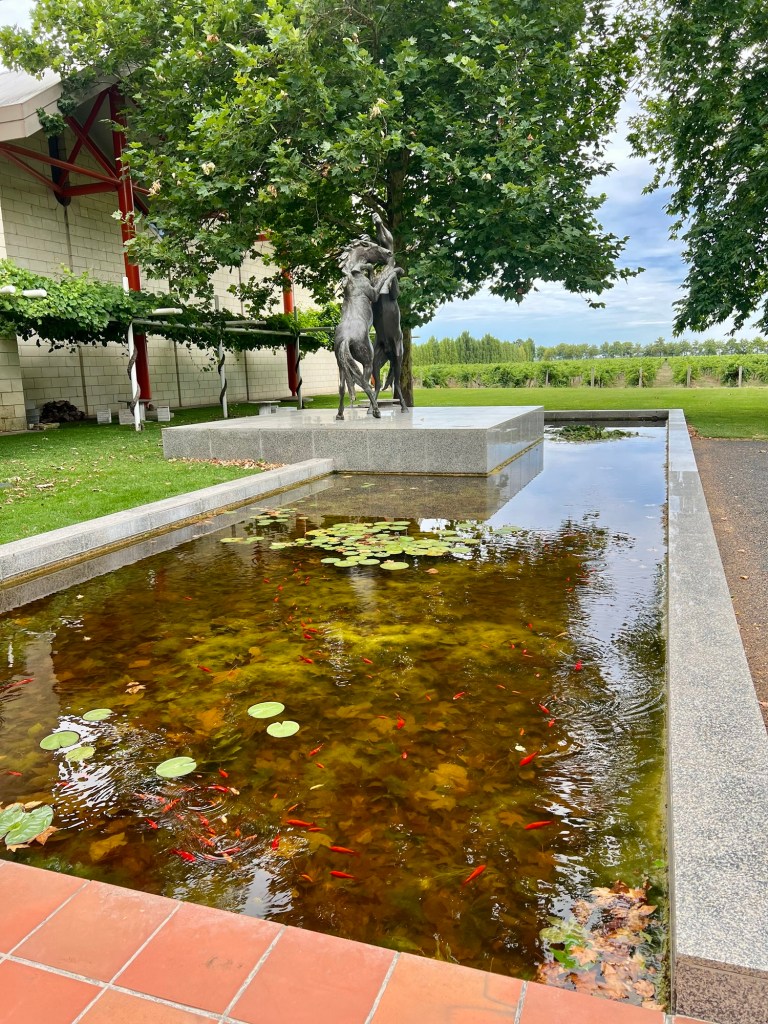
We tasted some great wines here and left with a bottle of Petit Verdot and Cabernet Franc; just for something a little different. This winery is large and has several ranges of wines, from affordable to top of the range. We have seen this label on quite a few wine lists, so it was nice to be able to visit and to ‘taste their wares’.
On our third and final day of tasting we visited only two more, as we had a trip to nearby Mount Gambier in the morning. Mick and I had not been to Mount Gambier before either, and we were very impressed.
We were also very surprised when we learnt from Google that……….
Mount Gambier is the second most populated city in South Australia with an estimated urban population of 26,878 as of 2021.
That seemed crazy to us, and on further checking we found that it may now be pipped by Gawler for that title. The capital of SA, Adelaide, has a population of around 1.25 million, and it seems then rest of its major towns are quite small.
Redman Wines
This family-run winery has a very interesting history that dates back to John Riddoch. William Redman, aged 14 years, worked for John Riddoch from 1901-1908. He bought some land and sold his first crop back to John Riddoch.
The cellar door for Redman Wines is definitely unpretentious. We debated whether it looked like a shed or an old-fashioned radio station. Either way, there was not enough room in the cellar door for more than 8-10 people.
Mick and I both loved the wines made here, and instead of buying a bottle, we ordered a case to be sent home for us to sample over time. Our tasting was hosted by Dan Redman, the fourth-generation winemaker at Redman Wines. That makes a difference. When you can talk to the winemaker about his or her wines, you get a sense of their passion as well as their skill.
Leconfield Coonawarra
Our final tasting was at this very fancy cellar door.
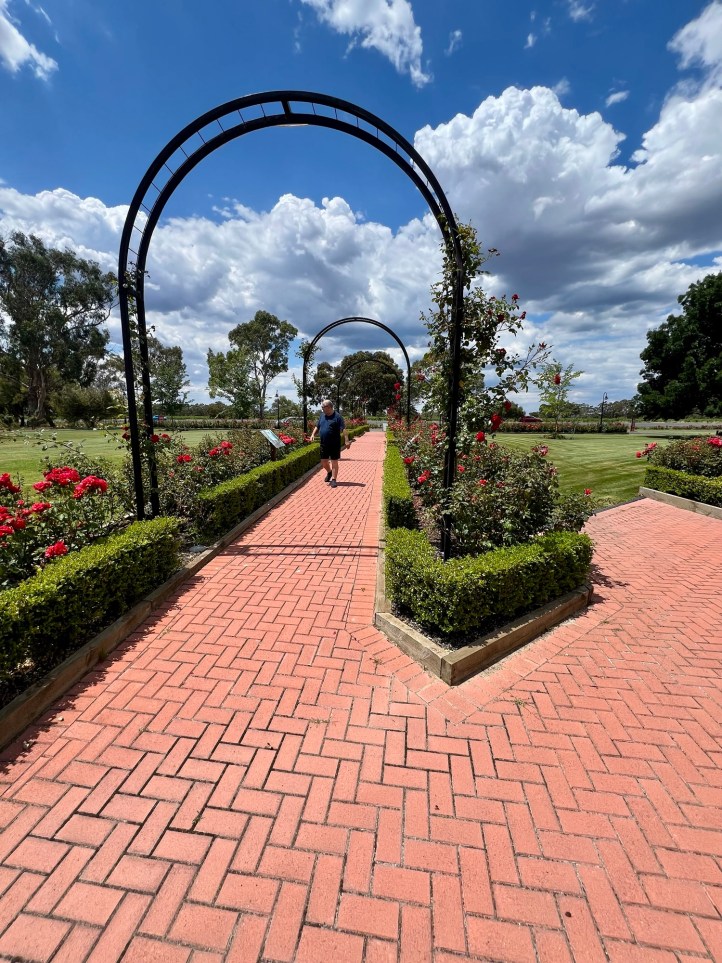
One thing we noticed about many of the vineyards in the Coonawarra was the vast plantings of roses, which were currently all in full flower. While we know the reasons behind planting roses near vineyards, it did provide a pretty picture as we travelled up and down the roads crossing the narrow strip of the Terra Rosa.
Leconfield Wines is synonymous with Richard Hamilton, who is a descendant of the very famous Australian pioneering wine-making Hamilton family. We had tasted wines from Hugh Hamilton before during our visit to McLaren Vale, and knew that Richard Hamilton also had wines in that area, but we did not know that he had this winery in the Coonawarra.
Leconfield Coonawarra is most famous for its Cabernet Sauvignon, and we tasted some of that as well as some great Merlot and Old Vines Riesling. We ordered a mixed case of wines from here for us to enjoy when we are back in Brisbane.
With our son now based in Penola for awhile, we will definitely be back for further visits and the opportunity to re-visit some of these wineries as well as dicovering some of the ones we missed.
Mick and I can highly recommend a visit to the Coonawarra Region if you have not been there before, with Penola being an excellent spot to base yourself.
More on Penola in the next post.
 Jane and Mick's Holiday Adventures