I’ll be honest. Dunedin is not the best place I’ve visited in New Zealand. And while it does have some interesting history and sites, I have ended up not being a fan at all. For different reasons, but I won’t dwell on them. I’ll try to stay positive.
This morning I walked to the Botanic Gardens, and I was pleased I did. They were quite beautiful and also very peaceful early in the morning, and I did enjoy my stroll around parts of it.

These gardens are New Zealand’s first Botanic Gardens, and were commenced in the late 1860s. The gardens occupy an area of 33 hectares, but I really only saw a very small portion of this.
I then decided to have Google Maps guide me from the Gardens to Olveston House next as Mick and I were going to visit it later in the day and I was keen to get my bearings. This is a famous home built in the early 1900s for a very wealthy family of the time.
But it was shortly after my decision to walk there that I encountered something quite unpleasant about Dunedin. Nearby to the Botanic Gardens is The University of Otago. Like the Gardens, this university was the first in New Zealand.
As I walked near the University area, I also came across student accommodation. One street I walked down quite by accident was Castle Street North. And at 8am it looked like there had been a riot there the previous night. Many of the front yards were strewn with dozens and dozens of bottles and cans, and many more had knocked over garbage and recycling bins with shattered glass all over the place. I told Mick it reminded me of the area we stayed in Cardiff when we were house sitting a few years ago. But, on steroids!
One lone garbage man and his quite small garbage truck was attempting to clean up the area. He had left his truck with its lights flashing as he picked up the rubbish by hand and collected it into a bucket. I thought – ‘Good luck, this will take you ages.’
As soon as I got back from my walk I tried to find out what I could about the area, and sure enough there were many articles in the local Otago Daily Times about Castle Street. This area is notorious for university student parties. But the mess was pretty disgraceful and by the sounds of it, something that has been occuring, and continues to occur, for quite awhile.
At this point I questioned if I had finally turned into a grumpy old lady.
Later in the morning Mick and I drove to Olveston House, rather than walk as Dunedin is famous for having very steep streets. In fact, according to The Guinness World Book of Records, Baldwin Street Dunedin is the steepest street in the world, thanks to the early planning of the city’s streets being based on a grid system, which is a very common pattern for city planners. But some of these planners were based in London and had no idea of the terrain, which apparently resulted in some steep slopes.
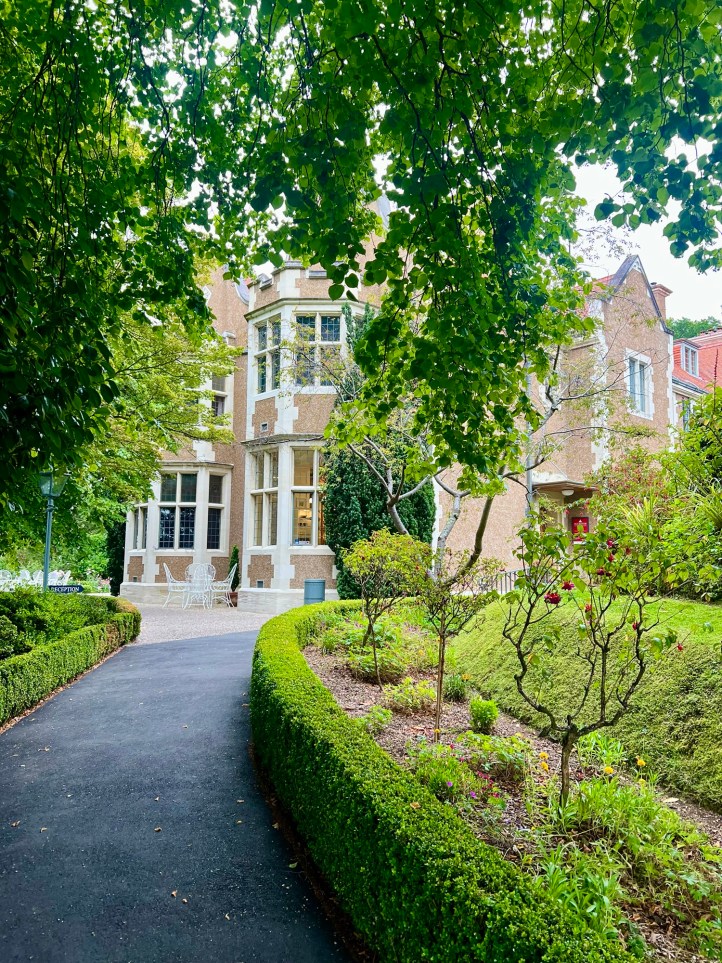
Before the one-hour tour of this house, Mick and I wandered through the gardens, which were as impressive as the Botanic Gardens, but obviously much smaller.
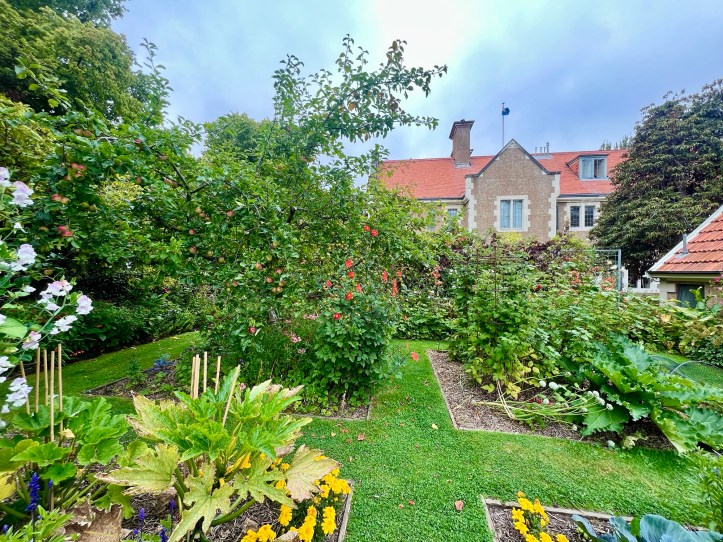
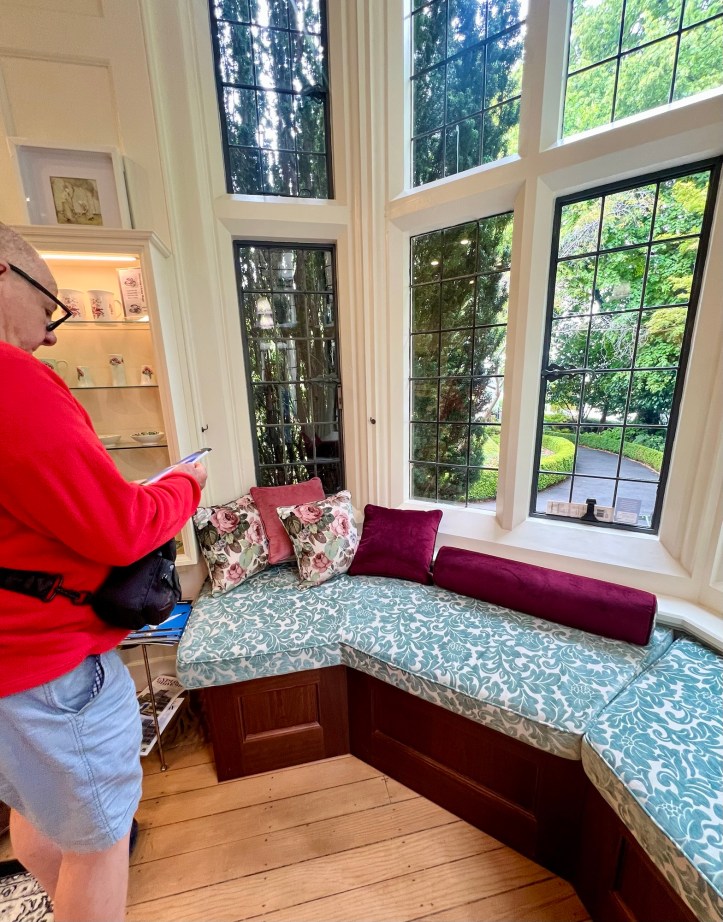
The house was donated to Dunedin City in 1966 when Miss Dorothy Theomin, the only surviving member of the family, and the daughter of the man who built the home, passed away. She left the home and all its contents, and in so doing, an amazing museum of the past.
We thoroughly enjoyed our tour of this mansion. Our guide Christine told us the history of the home and its contents, but also of Dunedin. This is when we found out that Dunedin is a “City of Firsts” in New Zealand. In addition to the Botanic Gardens and University, it also had the first public secondary girls school (1871), the first phone call in New Zealand, the first professional opera performance (1862), the first kindergarten (1889), and the first cable trams (which operated from 1881 to 1957). Just to name a few.
Now, that is impressive.
I found driving around Dunedin city centre pretty tricky, with its many one way streets and unusual intersections. It is definitely easier to negotiate this area on foot. Or by bus.
During the afternoon we caught a local bus to what is called the ‘Bus Hub’ and then walked to the Toitu Otago Settlers’ Museum.
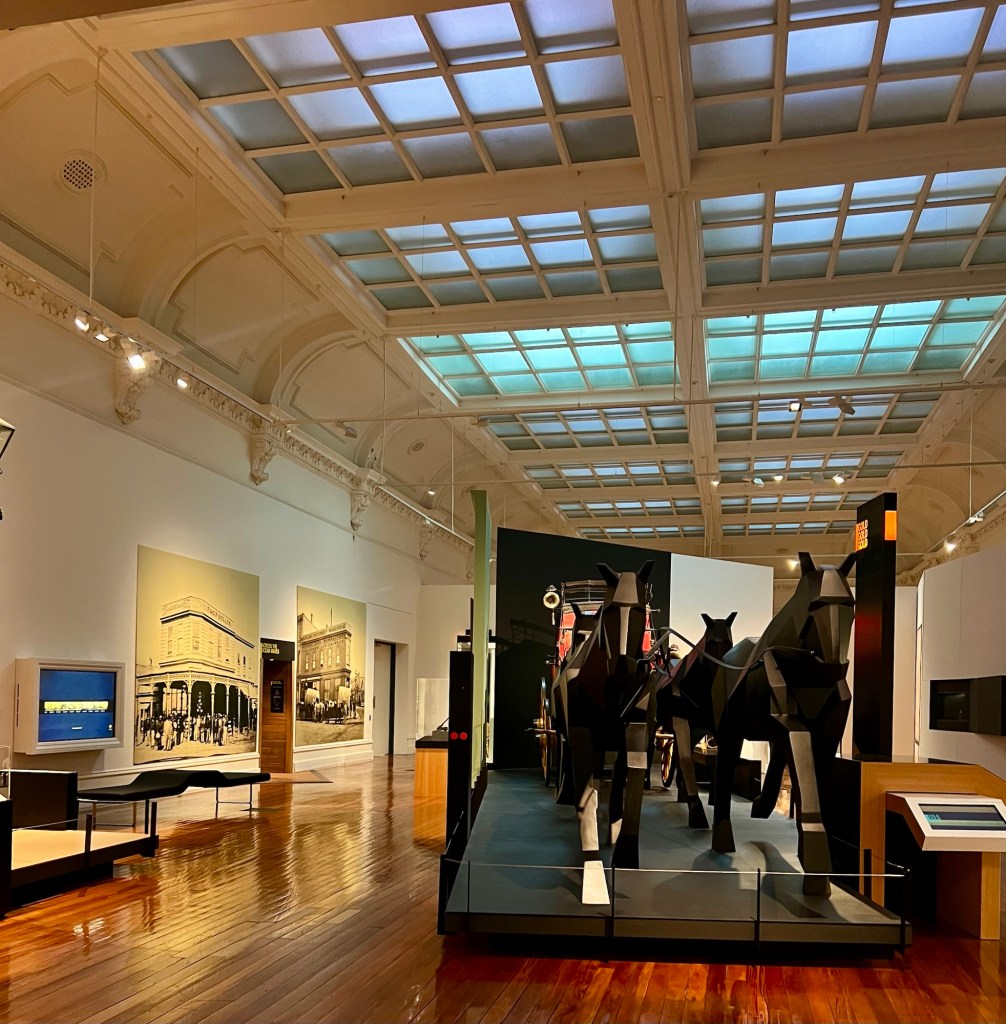

While there was some history of Maori Settlement of the region, most of the displays related to the European settlement of Dunedin. It was very comprehensive with one room filled with original photos of the settlers who came by ship over a period of about 10 years There were hundreds of portraits. In some ways – there was too much to take in.
Mick was particularly interested in the displays about the gold rush history as he had very much enjoyed reading a book by Grahame Sydney called “The Promised Land” while we were staying at the vineyard in Cromwell.
One display made mention of the use of Maori slave labour to help build the key buildings and infrastructure in Dunedin.
Despite the signing of the Treaty of Waitangi in 1840, which outlawed the taking of slaves, and made all Maori British citizens, this seemed to have been ignored 30+ years later.
During the 1870s and 1880s, members of a large Maori community (Parihaka) located near Mount Taranaki (in the North Island), conducted peaceful campaigns against the Europeans; they were unhappy with the confiscation of their lands. In 1881, armed soldiers were sent in and arrested the offenders who were then transported to Anderson Bay (on the edge of Dunedin). These prisoners were forced to do manual labour, including breaking rocks for the use in construction of the now famous Dunedin buildings.
The plight of Parihaka’s people is now considered one of the worst breaches of civil and human rights ever committed in New Zealand.
 Jane and Mick's Holiday Adventures