We have only been in Europe for just over 2 days, but we are still not used to the daylight hours. The sun rises just before 8am and sets around 8.30pm. My goal today is that we actually make it out for dinner this evening.
I left Mick on his own after breakfast and went for a wander, trying to get my bearings for our main activity today. We had a tour booked at Bodega Histórica Don Carlos.
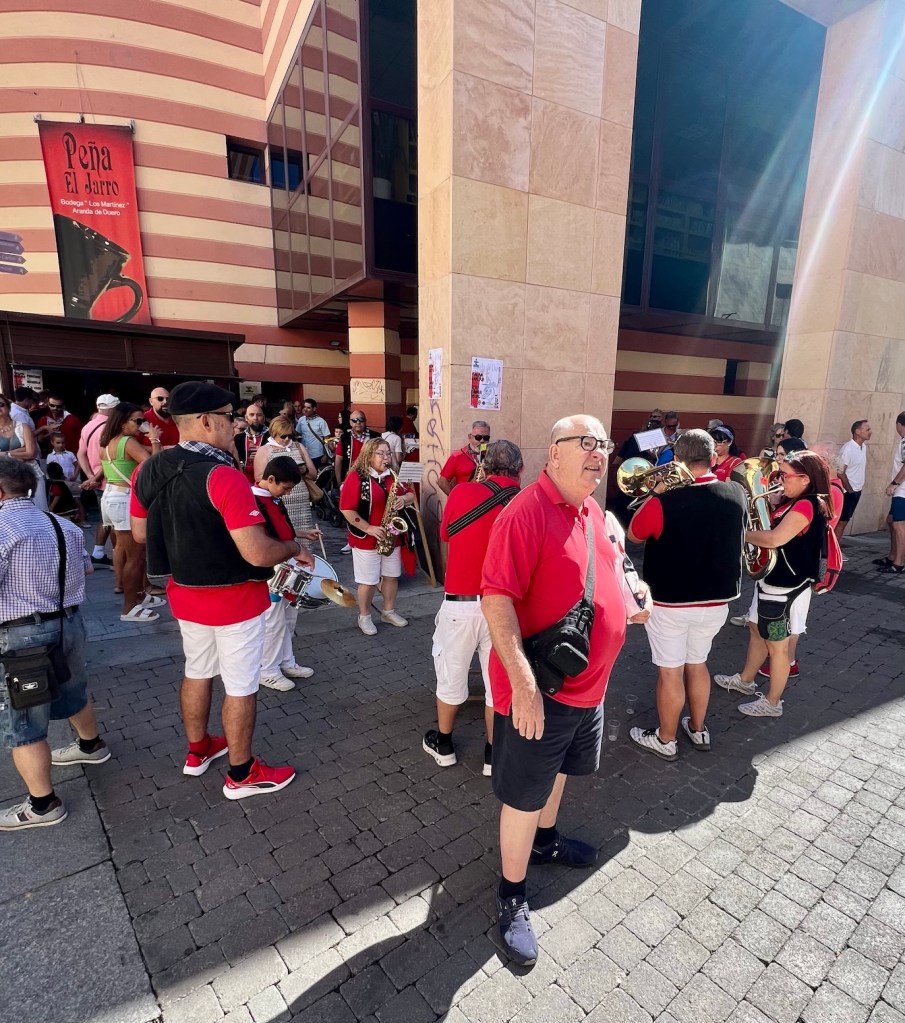
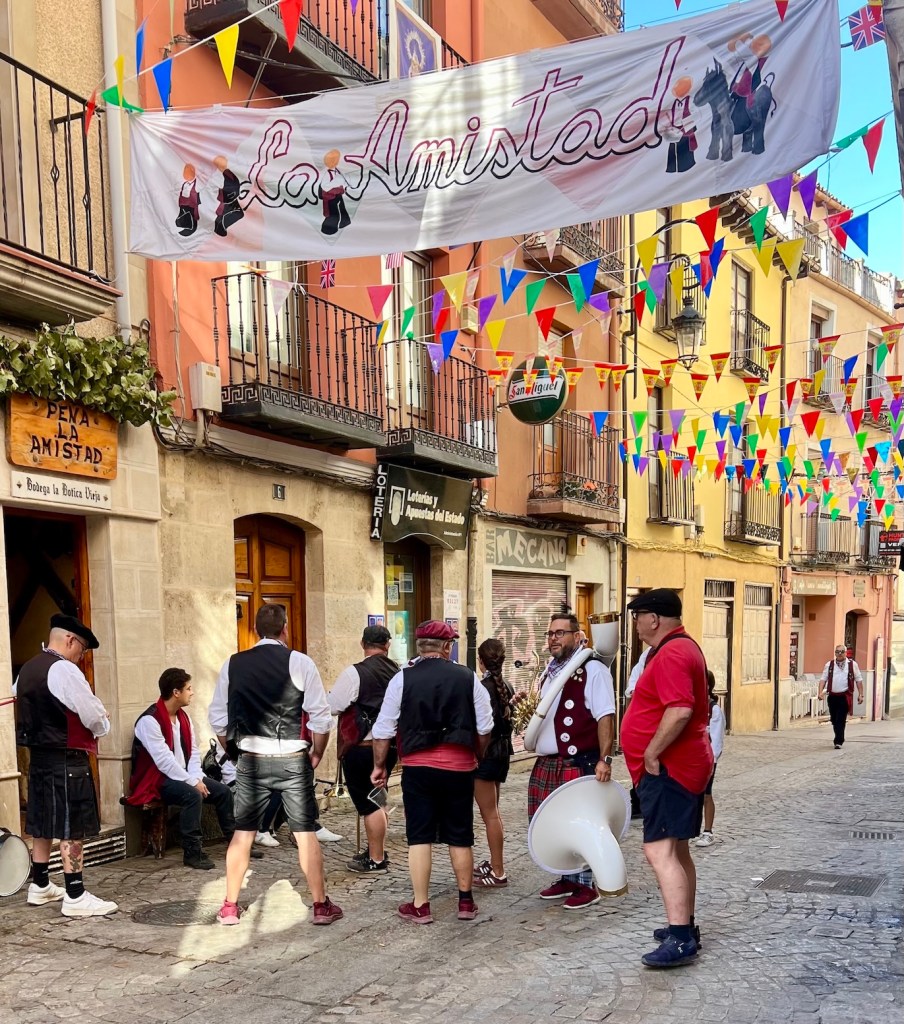
The little town was already quite busy at 9am – the streets had been swept and washed, bins had been emptied and men were building a stage in the centre of the main town square. Small groups were gathering, some with instruments, some with prams, but each group was distinct from the other because of a specific costume. We later learnt that these groups are called Peñas – a group of friends, neighbours, or families who come together to celebrate, organise events, and represent their collective spirit during fiestas. Each has its own name, colours and a meeting spot or club – often with an underground tunnel for storing their wine.
I crossed the Douro River to see what I could find in the newer part of the town.
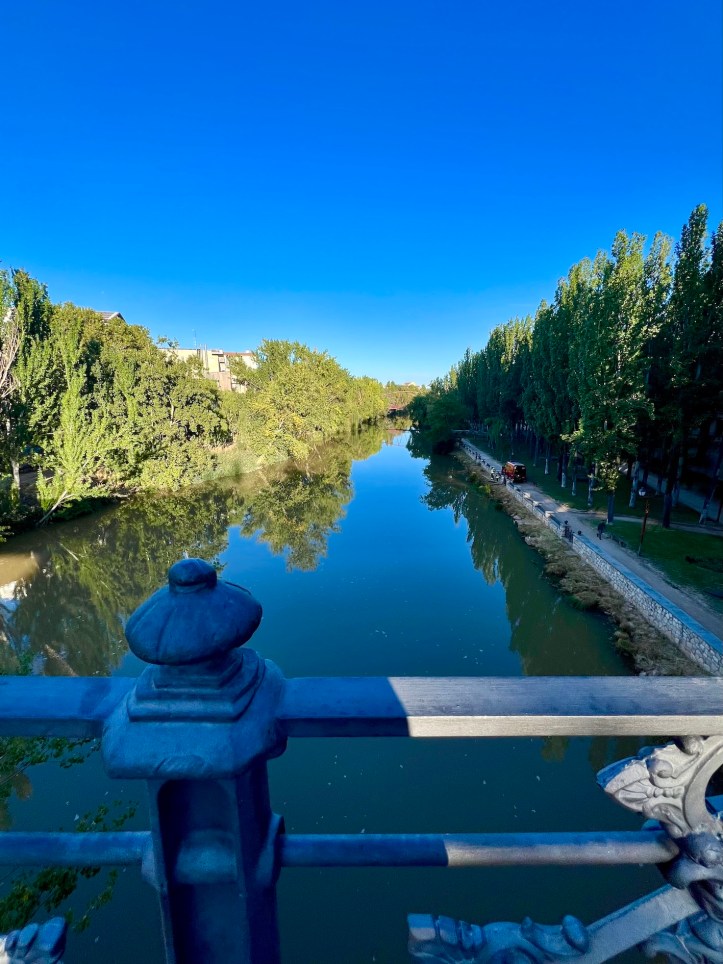
I could hear some music and decided to follow my ear. I wanted to see what was happening.
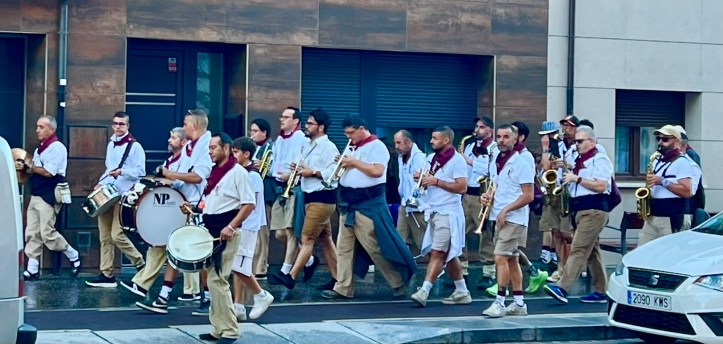
I was interested to note that the locals paid them no attention at all, but that did not seem to bother the band. I never found where they were heading as I turned around to head back to get Mick for our wine tour activity. Little did I realise at the time that I would see quite a few more of these groups during the rest of the day.
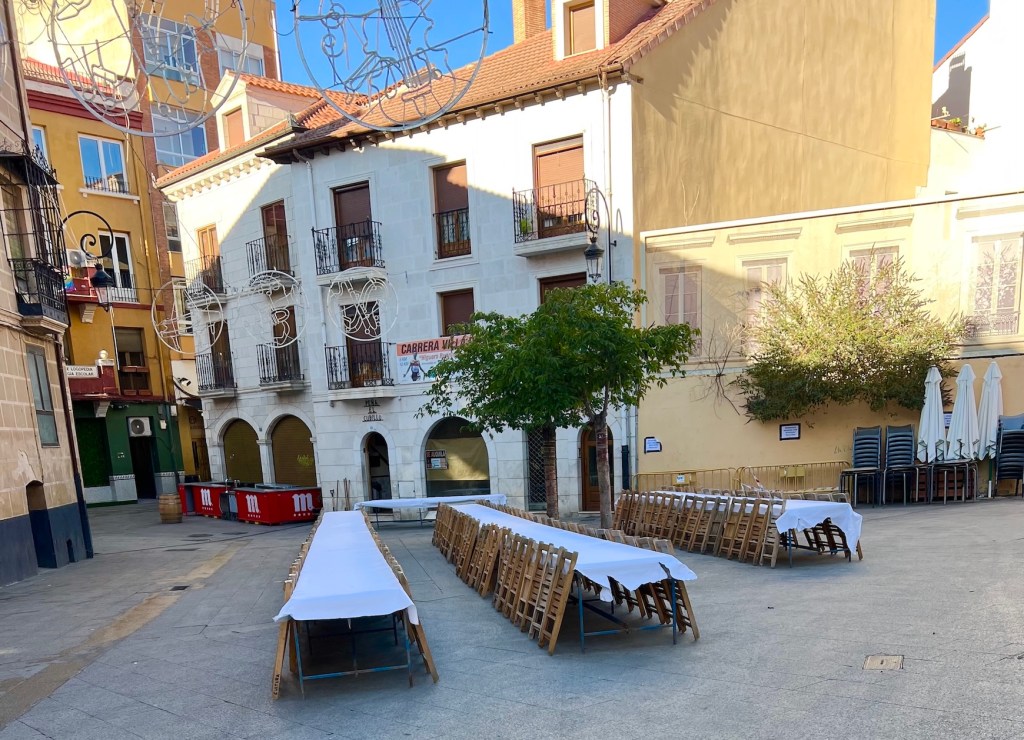
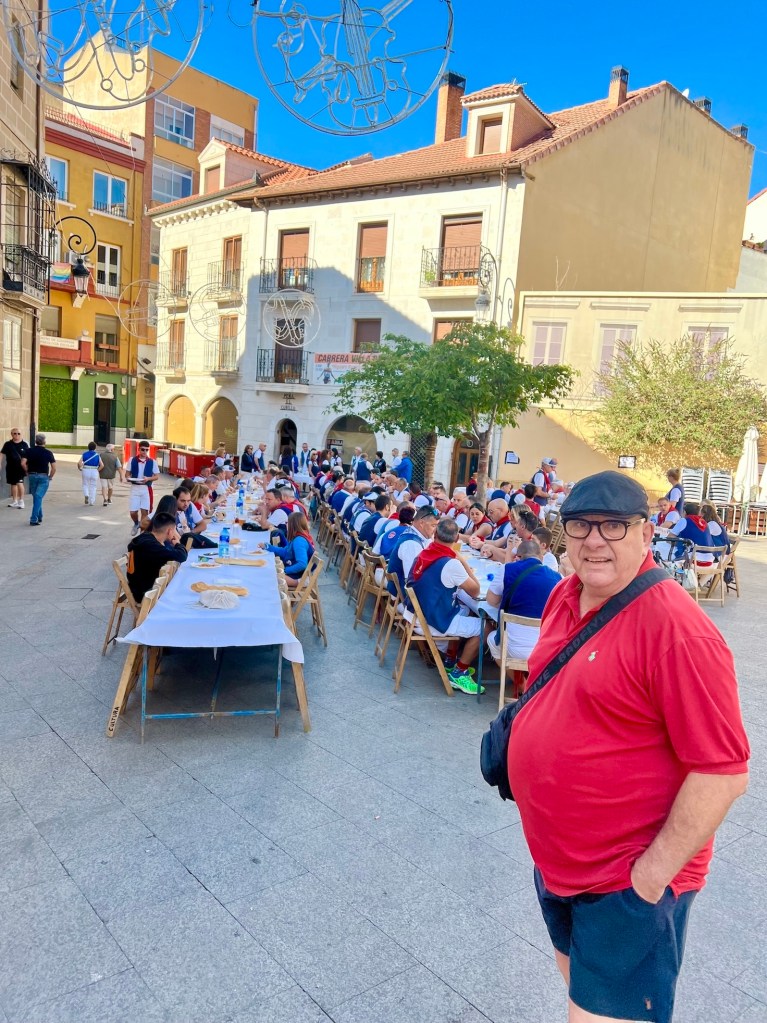
We walked past this square, where another Peña was celebrating the festival with a breakfast, on our way to the Bodega Don Carlos – which was located right in the heart of Aranda’s old town.
We were a bit worried when we arrived 15 minutes early and noticed a sign on the door saying it was closed until tomorrow, because of the festival.
We decided not to panic and instead to have a walk around the area until 11.30am, the time of our booking. Mick spotted a phone accessory shop where I bought the cable I needed for my phone for the car. Perfect.
It was obvious that there was a lot more activity due to the Festival today than yesterday.
When we returned just before 11.30am the doors to the Bodega Histórica were open, and Daniel was waiting to take us on the tour. It was just the two of us and Daniel.
The underground wine cellar dates back to the 15th century and is part of a vast network of medieval tunnels underneath Aranda, carved out specifically to store and age wine. These subterranean spaces maintain a constant temperature and humidity, making them ideal for wine preservation.
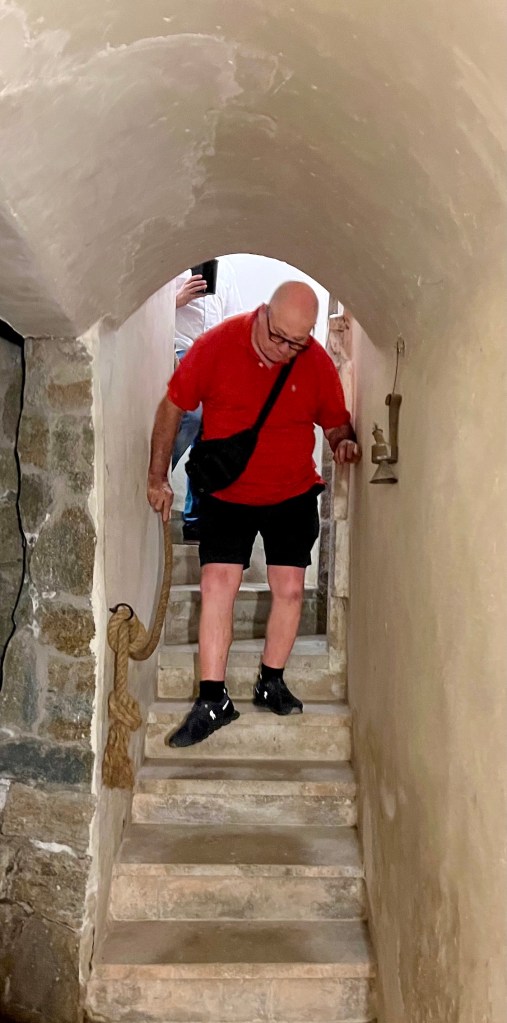
We descended 13 metres to where the temperature was at 13°C – perfect for storing the wines. It was here that we had an amazing wine tasting led by Daniel, who knew so much about the wines and the region.
We found out that Aranda de Duero has around 4 kilometres of tunnels under the city now, but once had closer to 11 kilometres. Due to lack of usage, some tunnels have collapsed and are no longer used. In fact, the one we visited is not really used as per its original design – i.e. for making wine, but more as a tourist destination and storage area for special aged bottles of wine.
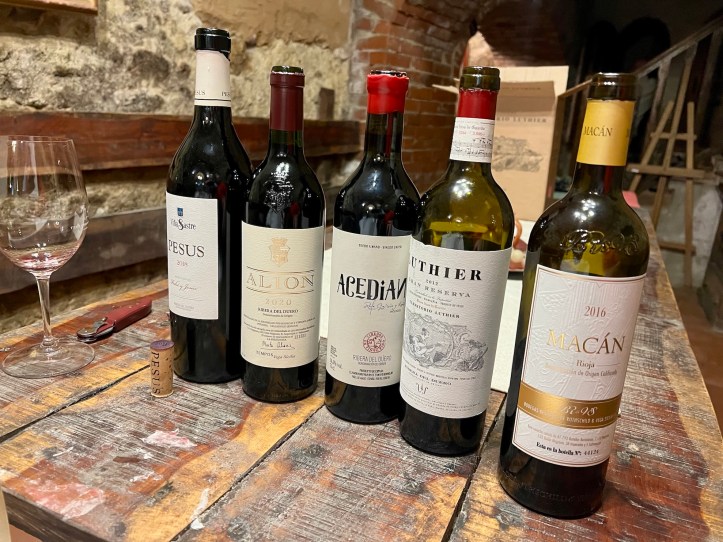
We tasted five different wines – four from Ribera del Duero and one from Rioja.
The first wine was a 2016 Rioja – called Macán, made by Spain’s most iconic winery (Vega Sicilia) and its now partner – the Rothschild Family – known for its Bordeaux.
“This partnership blends centuries of winemaking expertise from both houses, resulting in the Macán project in Rioja.”
Daniel explained that wines made in Rioja are usually more acidic than the wines from Ribera del Duero, and that the rules for Ribera are that the wines must be made with a minimum of 75% Tempranillo grapes. For Rioja, there is no such restriction, however Tempranillo is still the most common variety used.
The second wine was from a local winery Mick and I are hoping to visit tomorrow called Luthier. It was their 2012 Gran Reserva which was made from 75% Tempranillo (of course), 23% Grenache and 2% Albillo Mayor – a white grape that has only been approved for production in the region since 2019. Albillo Mayor produces wines with “fresh acidity, subtle stone fruit aromas, and often a creamy texture when aged in oak.”
Daniel told us that Luthier has started to harvest their fruit for this vintage just this week – he said he also works there, as well as at Don Carlos. He explained that previously grapes were harvested in October each year, but now with climate change, quite a bit of fruit is ready to be harvested in September.
Daniel also explained why the current festival – the ‘Virgin of the Vines’ was occuring in the first two weeks of September.
When wine was first made in Aranda (dating back to the 15th Century), the fruit was harvested and carried down to these cellars in goat skin bags to fill wooden vats where the fermentation would occur. As there was no way of storing the wines, the festival was held so that the locals could drink whatever wine was remaining in the vats, in preparation for the next harvest / vintage. We did not see a lot of wine drinking during the day, but beer was definitely a favourite.
We did taste three more great wines, but I won’t bore you with the details. Suffice it to say they were all very good, and we later found out, very expensive.
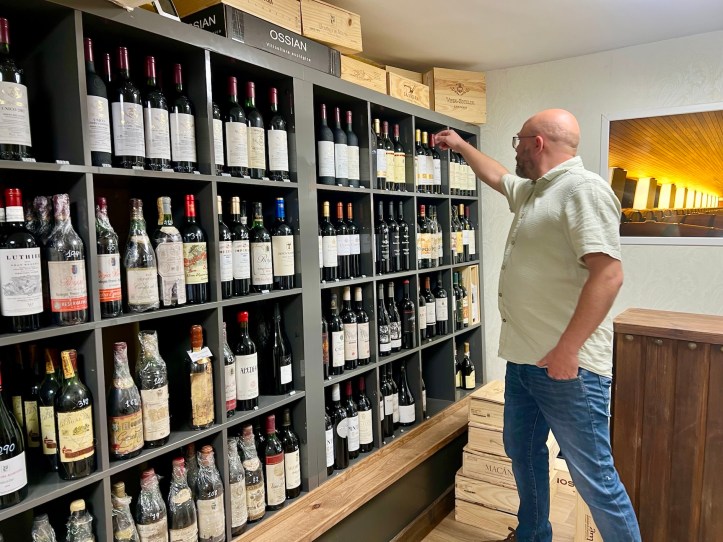
After our tasting, we returned upstairs to the ‘secret room’, where some very expensive wines are stored for sale – including all of the wines we had tasted. Some of the prices were as high as €3000 per bottle. But these were usually bought for investment and not for drinking. We were definitely not their target market.
The secret room was hidden behind a mirrored wall that slid open before a bolted door was unlocked with a code.
When we ventured outside from our tour – the festivities were in full swing.
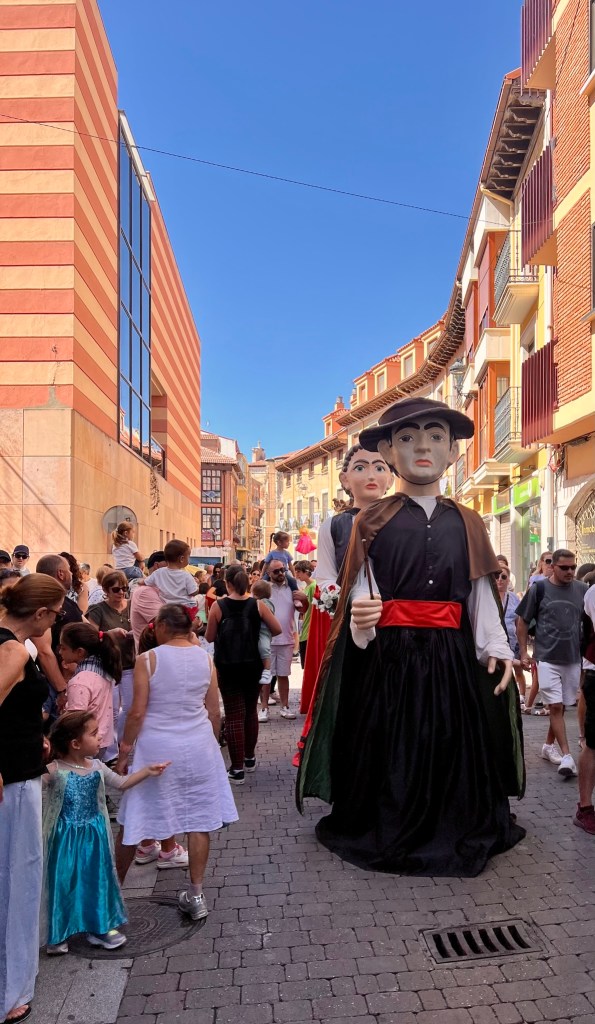
We decided to watch the musical presentation in the main square by what looked like members of the police force. The crowd loved them and showed their appreciation by clapping endlessly. Well, longer than we would in Australia.
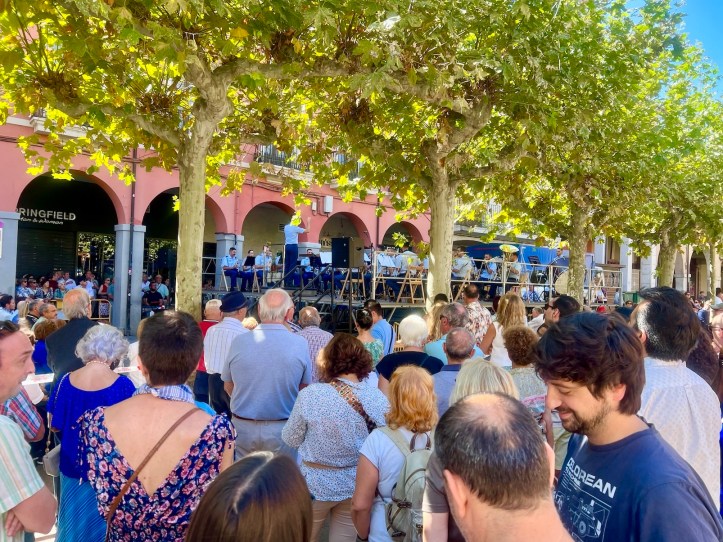
I had booked us into dinner tonight at 8.30pm to ensure that my goal for the day would be met, so we had decided a siesta might help us last until then. As we walked home we passed by several other Peñas.
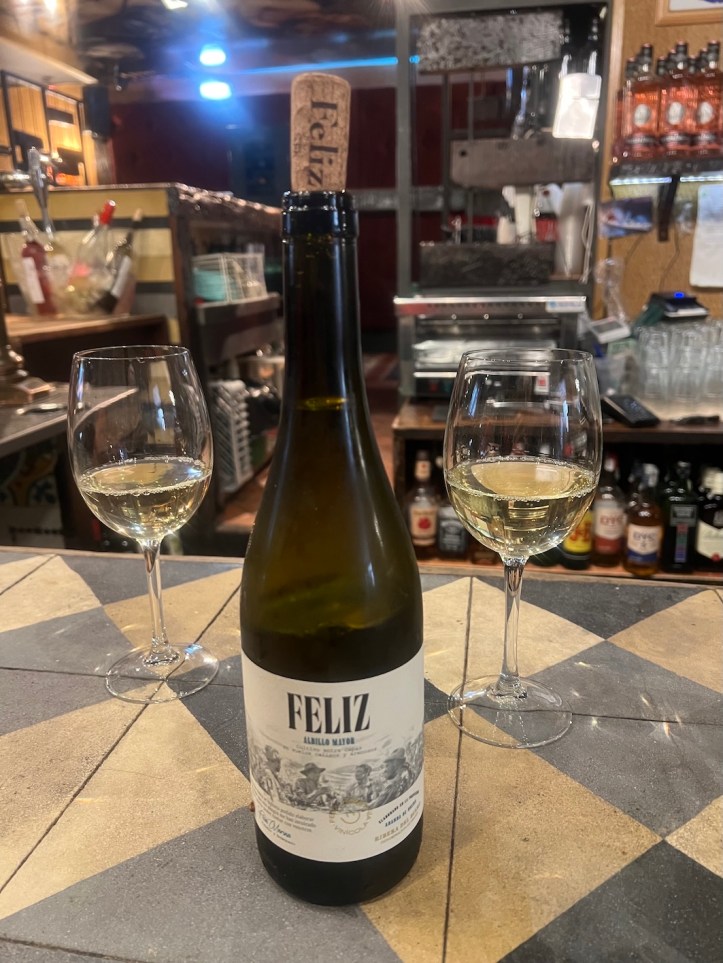
We walked past La Traviesa – the bar we had visited yesterday and decided we had to try their local white wine made from Albillo Mayor – called Feliz (which means happy in Spanish). It is one of the few wineries here that makes this wine; at €2 per glass it was not too bad.
After our little rest, we headed out for our dinner at El Lagar De Isilla, a restuarant I had read about before we left home. We had the first sitting at 8.30pm.
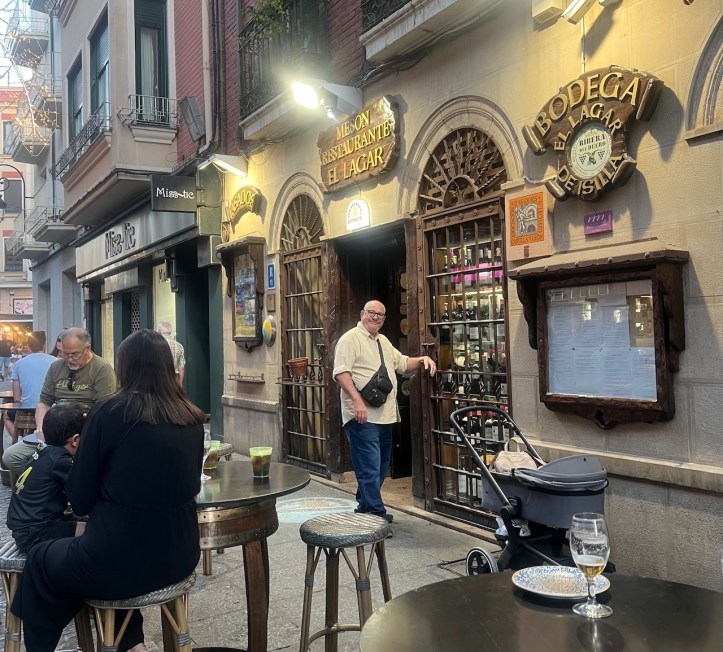
Once we entered the restaurant, we found the front bar area was very busy with people eating tapas and enjoying the atmosphere. I wondered we’re we’d fit, but there was a restaurant a little further on through the bar.
Mick wanted to be adventurous so he chose the black pudding followed by grilled lamb’s kidneys on a skewer – served with fries and a quail’s egg.
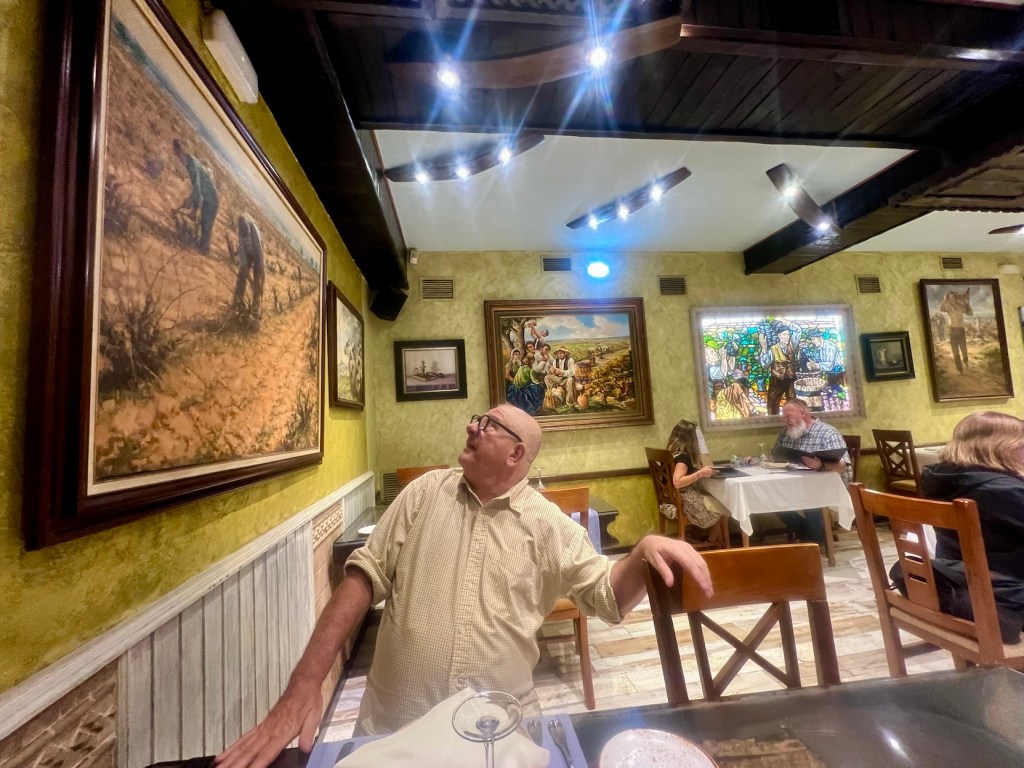

We also tried the wine made by the owners of the restaurant – and at between €2 to €3 a glass, it was extremely palatable.
As we left the restaurant we discovered the streets were now pumping with people – dancing, drinking and having fun – bunched in different groups by colours of the ‘uniform’ for each Peña.
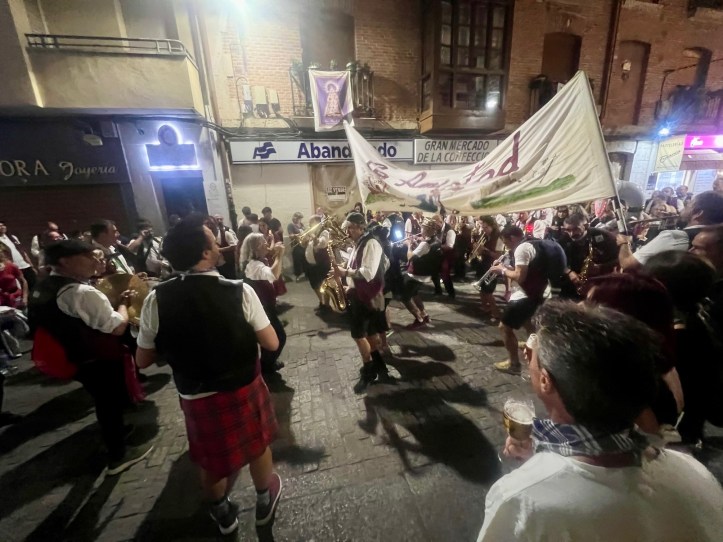
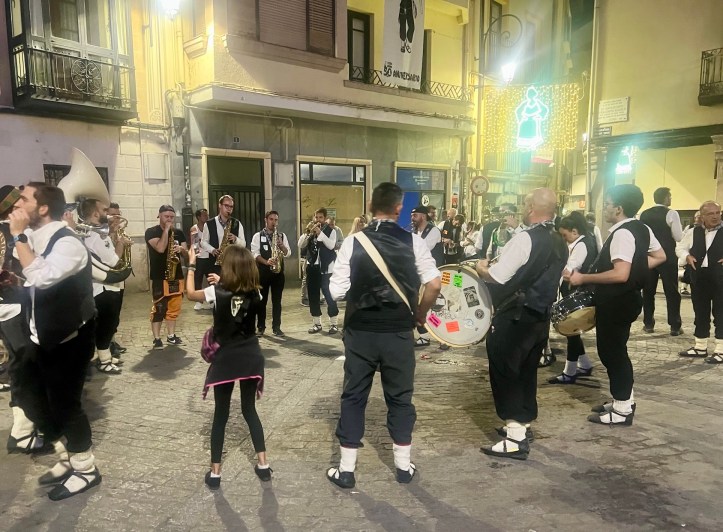
Aranda De Duero knows how to party. Each street we walked down on our way home was filled with people, and during the night we could still hear them having fun, at least until around 4am.
I think we picked the perfect time to visit this little place.
 Jane and Mick's Holiday Adventures