Today seemed more like a ‘usual’ day in Aranda – the fiesta must be drawing to a close. The locals were packing up the makeshift stages and collecting the tables and chairs to be stored somewhere out of the old town until they were needed again. And, there were no people dressed in uniforms with their bands playing, plus the shops were open for business.
So, Mick and I decided to spend the day exploring some of the town’s main attractions.
We headed for the Tourist Office and found out that the first place we had hoped to visit – the Centro de Interpretación de la Arquitectura del Vino or CRIAVIN, was closed today. Housed in an 18th-century building in the heart of town, it supposedly looks at “architectural traditions tied to winemaking in the Ribera del Duero”. Mick was really keen to see this.
Instead, the women suggested we try to find the (famous) murals of Aranda. She gave us a map and pointed us on our way, happy to see the back of us I think, and we set off.
The Ruta de los Murales features over twenty large murals scattered across several neighbourhoods, and it was Mick’s job to find them using the map we had been provided.

We found most of them, and the ones we did find were impressive. They have been created by both local and international artists, none of whom we knew.
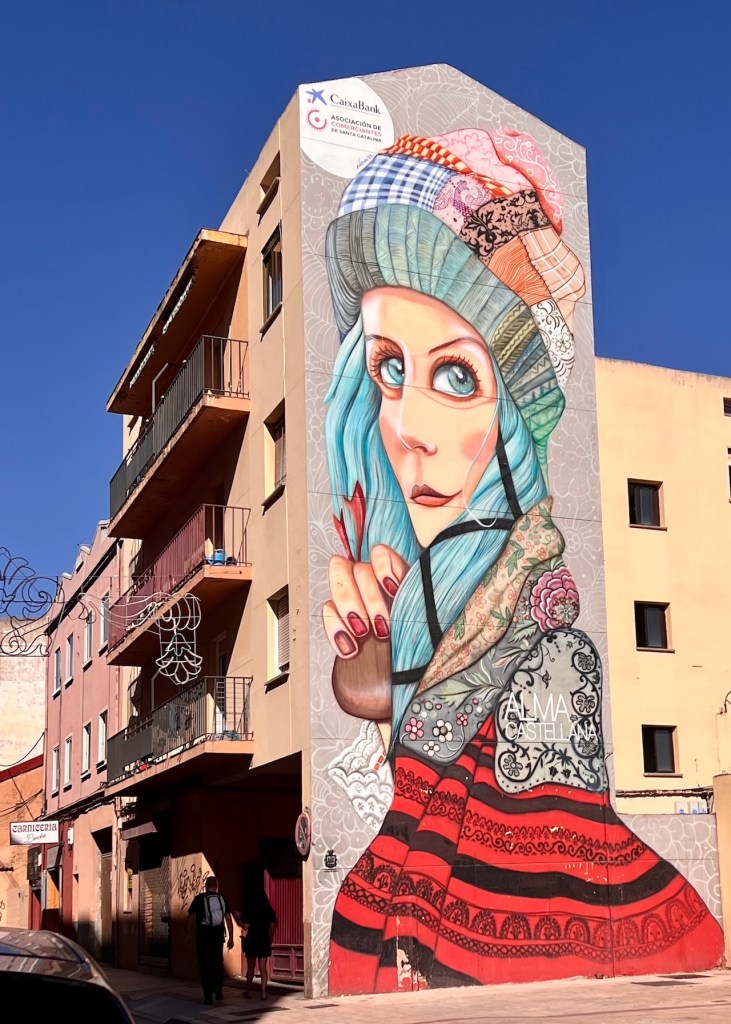
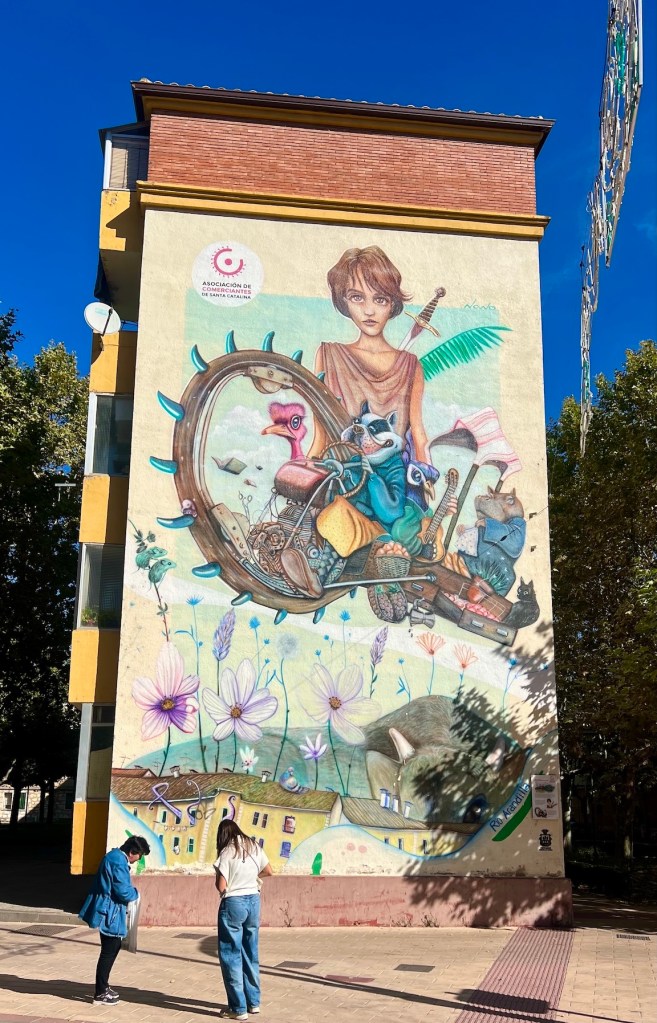
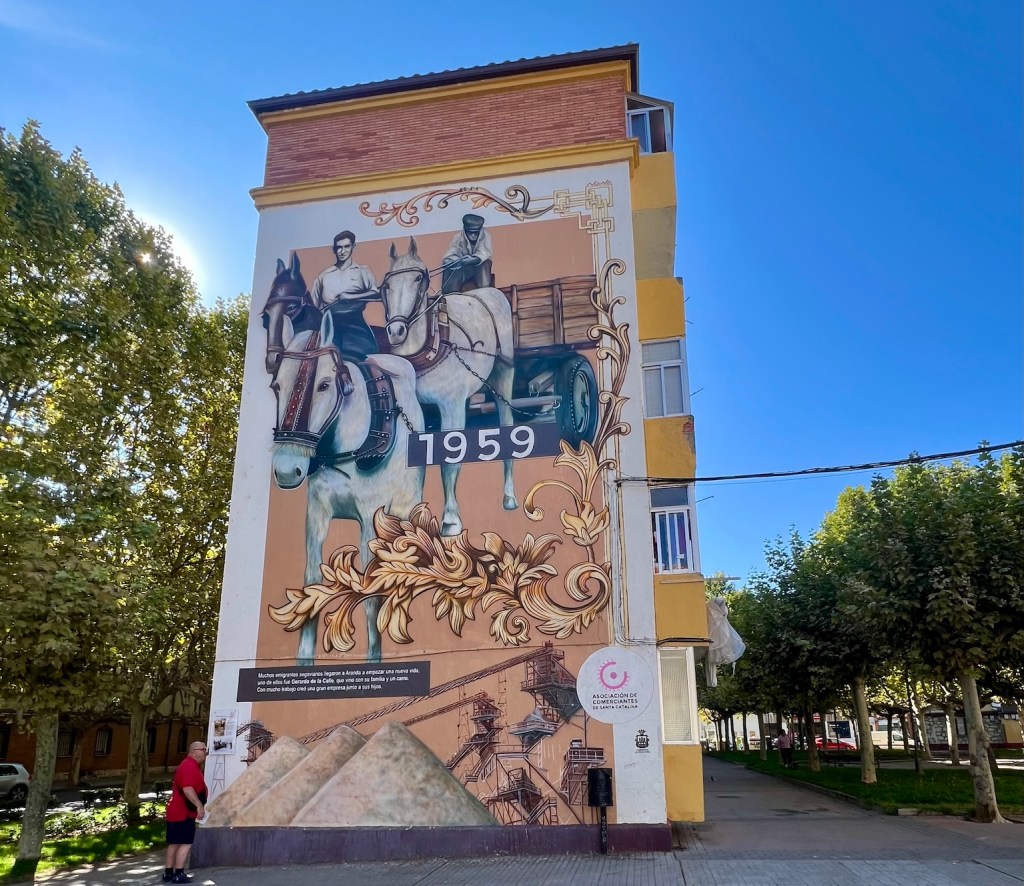
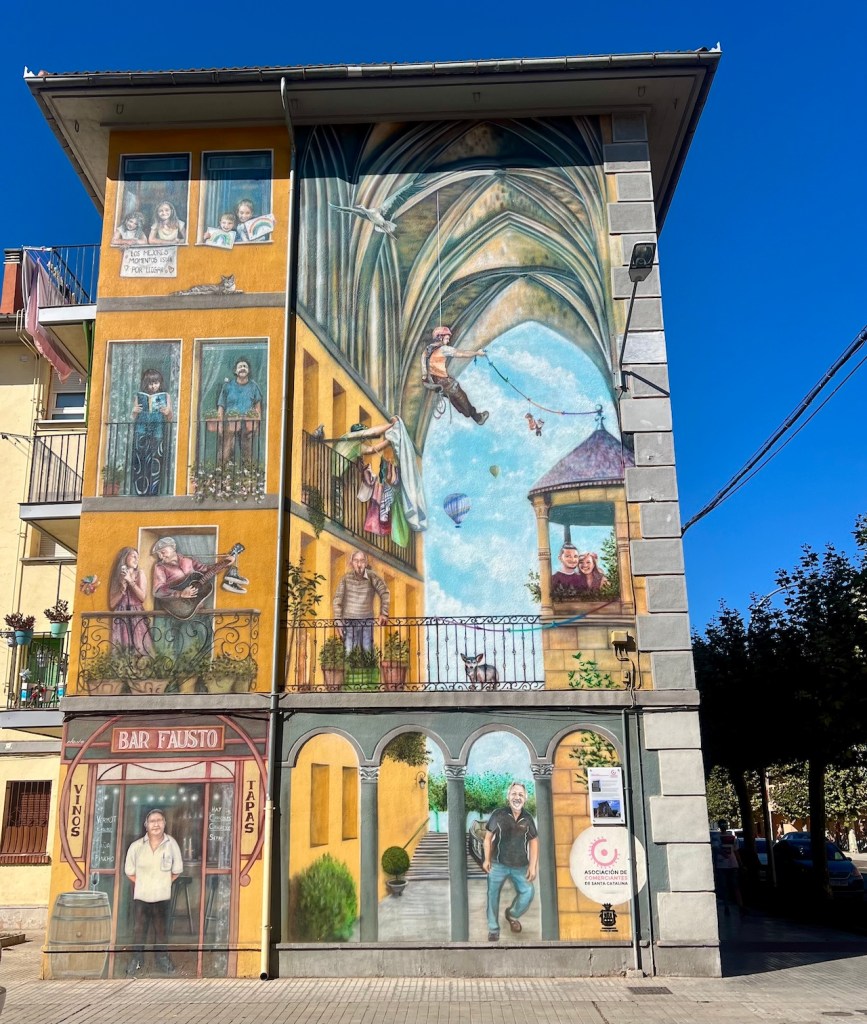
Many of the murals had plaques describing the significance of them, but were written in Spanish of course, so we just enjoyed the talent of the artists.
Mick loved this next shot with the juxtaposition of the garbage and recycling bins in the foreground.
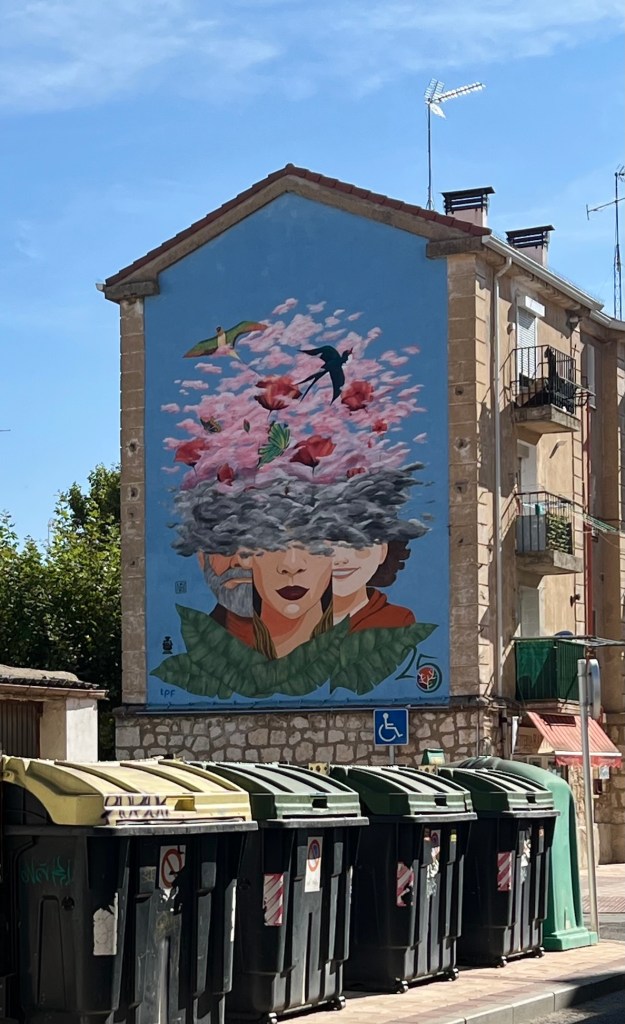
This town is serious about managing its garbage and keeping its appearance spick and span. There are frequent places where locals can recycle their rubbish according to categories for glass, paper and cardboard, containers (like plastics and cans) and finally ‘resto’ – meaning everything else. In addition, there are small garbage bins located very frequently to ensure the streets are not littered. These bins seem to be emptied daily, or perhaps that was because of the fiesta. Regardless, Aranda is a very neat and tidy town.
We managed to get quite a few steps up on this excursion, and decided we needed to reward ourselves by trying the local dish of lechazo asado (roasted lamb). Pronounced lay-chath-oh.
We returned to the same restaurant where we had dined two nights earlier – El Lagar de Isilla.
Lechazo asado it is not any type of roasted lamb, it is suckling lamb cooked in a traditional wood-fired oven.
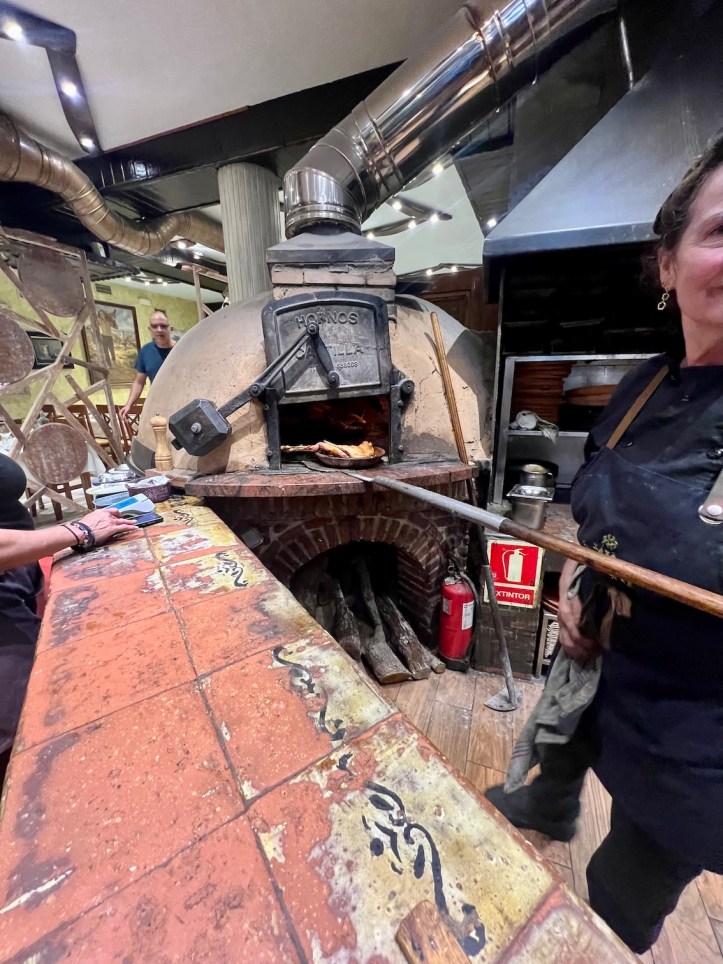
This woman was amazing. We had seen her when we came for our first dinner and she was very friendly to us then, and seemed to remember us today. She must work at least 12 hours here a day, cooking everything from chops to the baby lamb quarters, as well as roasting red peppers (capsicums) by the dozens over an open flame beside her wood-fired oven.
For any vegetarians or vegans, I suggest you stop reading now.
This dish is made from suckling lamb (cordero lechal), a lamb that is less than 35 days old and fed only on its mother’s milk. The meat is supposedly exceptionally tender – which was absolutely true. It was served in a clay dish, seasoned with water and salt, “allowing the natural richness of the lamb to shine”.
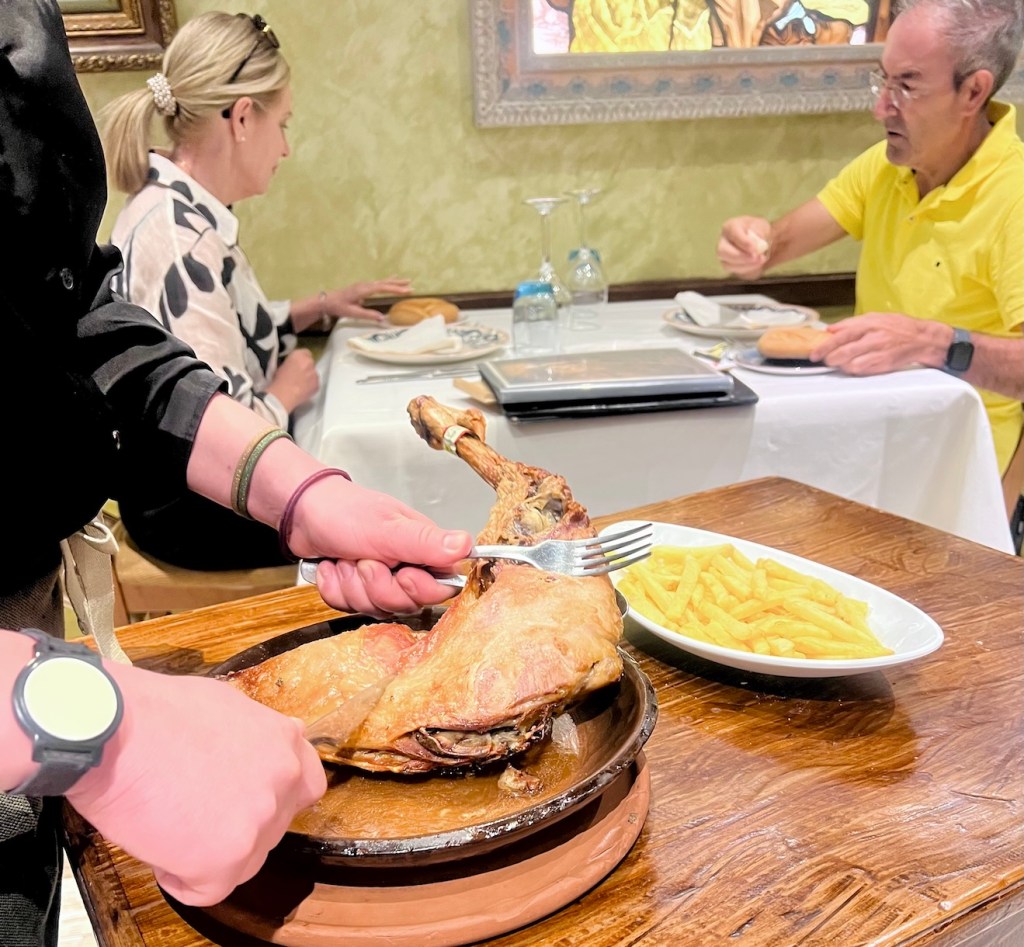

Aranda is famous for this dish and we had to try it before we leave here tomorrow.
We paired it with some wines by the glass. For Mick it was the local white wine (Albillo Mayor), and I chose a red wine made from five different varieties. The red wine was excellent, but I am not so sure about the wine Mick chose.
We took our time, and we did very well in finishing the dish.
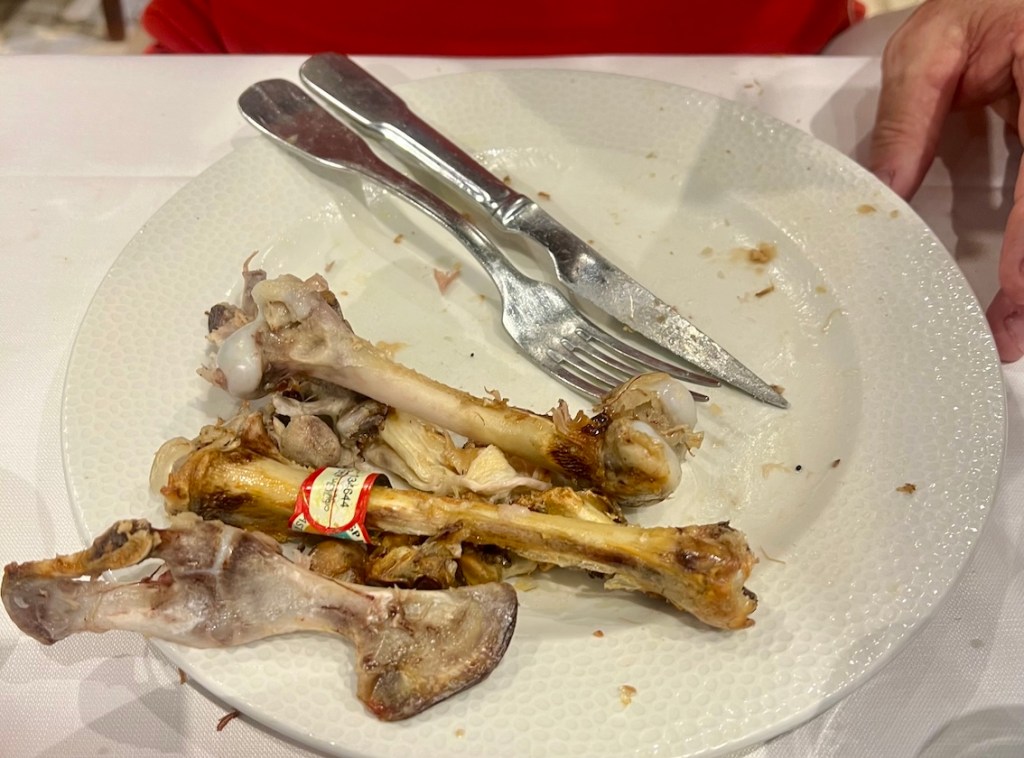
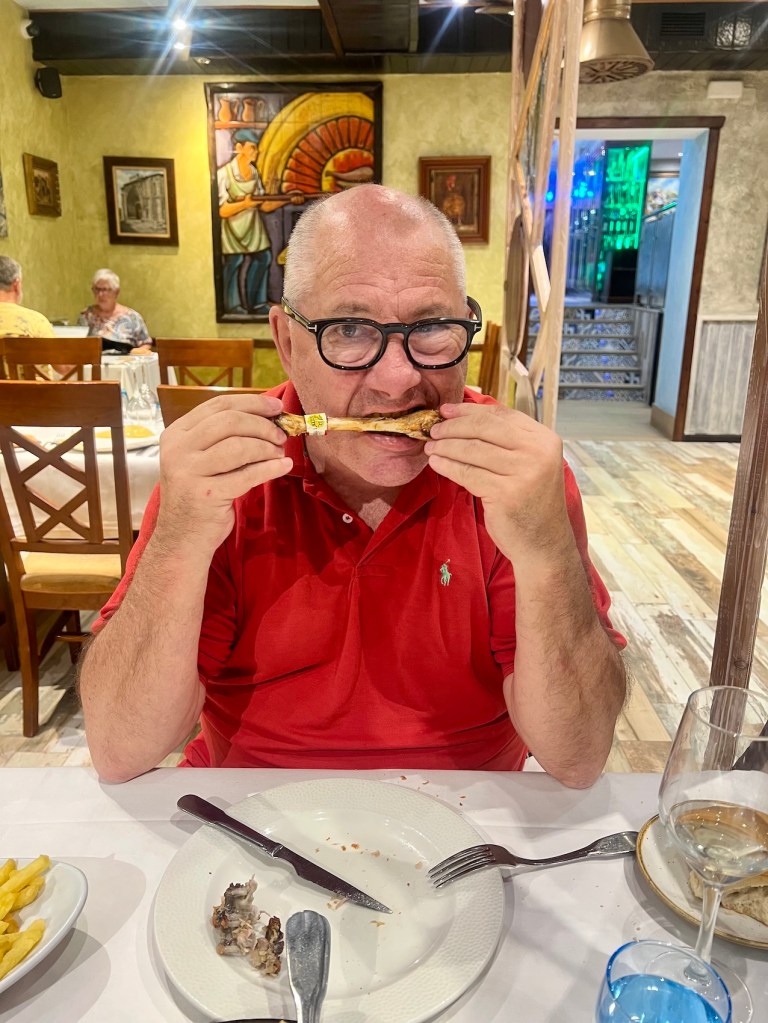
We were both so glad that we had not left Aranda without trying this dish. It was amazing.
We headed home, through now deserted streets (concluding that the festival was definitely over) to our accommodation, and had a little rest – like all the other residents of the town it seemed.
In the late afternoon, we visited the Church of Santa Maria Real. We had walked past here so many times during our short stay, but this time we ventured inside.
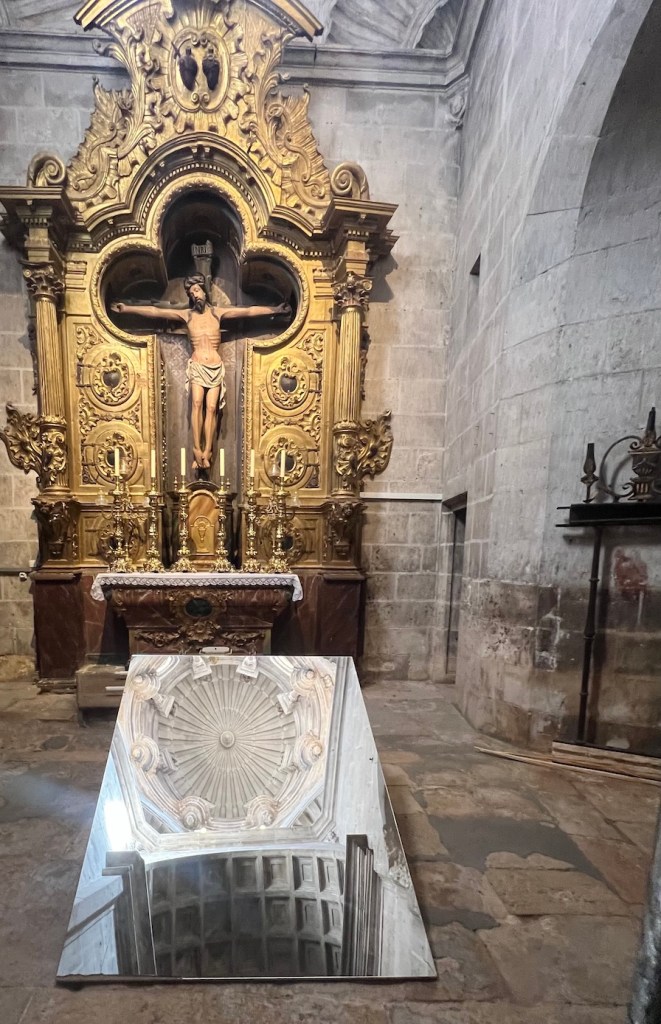
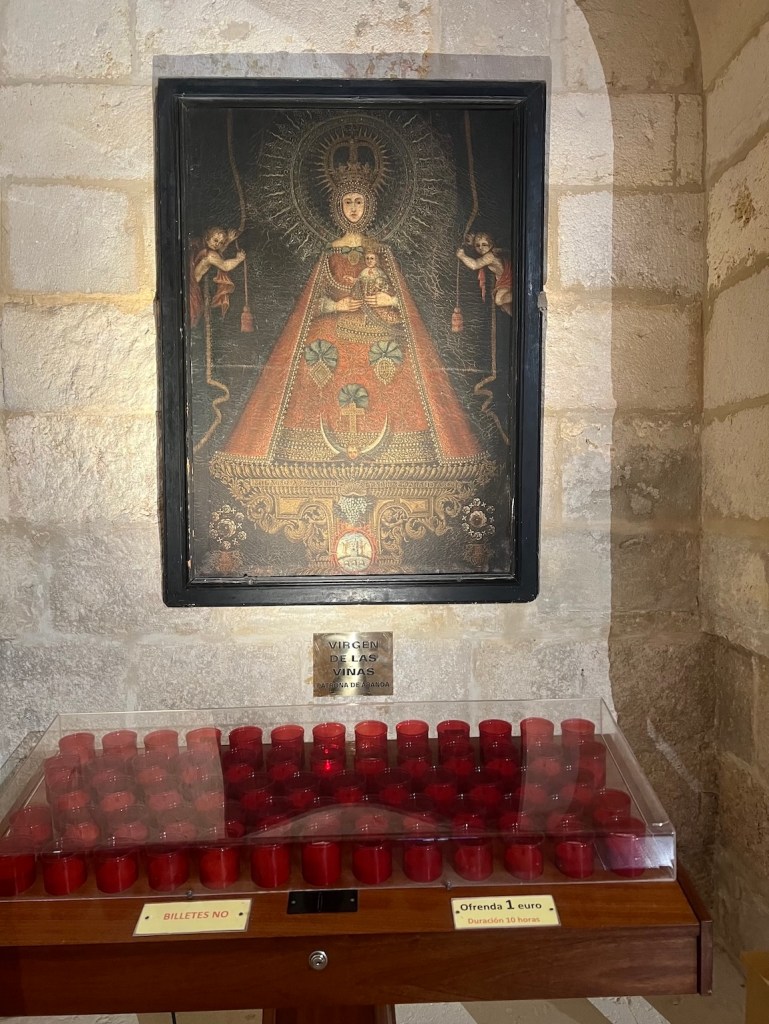
The shrine to the Virgin of the Vines (Nuestra Señora de las Viñas) is located on the outskirts of the town, but this one inside the Santa Maria Church demonstrates the importance the patron saint of Aranda has for its people.
“The tale begins in the 7th century, when the image of Santa María de Lara was hidden by locals fleeing Moorish invasions. Centuries later, a local farmhand claimed the Virgin appeared to him, revealing the buried image’s location. As proof, he presented grape clusters, miraculously ripe – out of season. The discovery led to the construction of a small shrine, which evolved into today’s shrine.”
The weather here has been perfect so far – dropping to 12°C just as the sun was coming up, and rising to 30°C around 6pm. No sign of rain so far, which is good for the grape harvest.
Tomorrow we leave the Ribera del Duero region and head north-west into the second wine region we want to explore – La Rioja. Our destination is Logroño, about two and a half hours away, on the route we have chosen (to avoid large roads and the larger city of Burgos). Having said that, Logroño is quite large – with a population of approximately 150,000.
 Jane and Mick's Holiday Adventures