With the help of an electric fan, Mick and I both had a much better night’s sleep and were ready for our program for the day.
It was less than 30 minutes drive to the winery, Marqués de Riscal, known as one of Spain’s most iconic wineries. It was founded in 1858 and is best known for pioneering Bordeaux-style winemaking in Rioja. And as I mentioned in my last post, it was awarded Best Winery in the World last year. It is more than a winery – it is also a hotel and restaurant.
We eventually found the right entrance and made it in time for the English speaking tour with Vanessa.
The first thing she was keen to show us was the Marqués de Riscal Hotel – designed by the same man who designed the Guggenheim Museum in Bilbao (where we plan to visit next week).
It is a wild looking building.
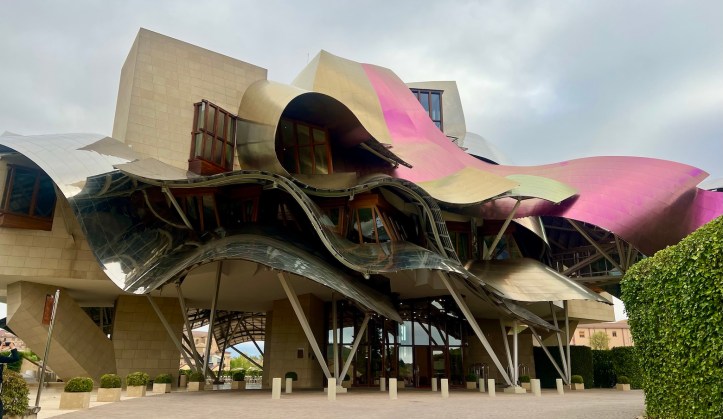
This building is owned by the winery but is run by the Marriot Hotel group. There are only 7 rooms in this part, but there is another area beside it that is less ostentatious that houses another 40+ rooms.
The gardens and the buildings here were meticulously clean. Everywhere you looked there was something beautiful to see.

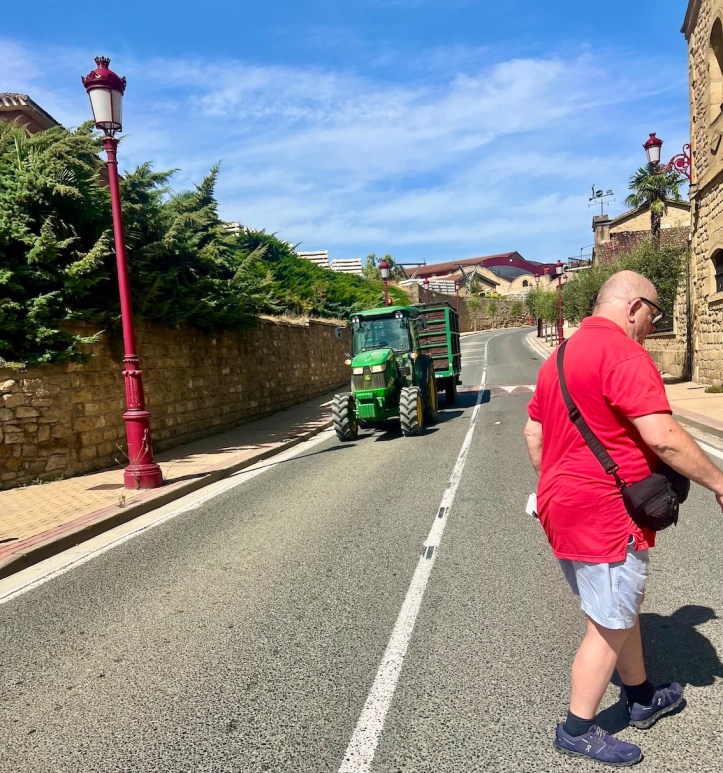
Vanessa explained that while they grow their grapes, they also buy them from locals who live between 10-20 kilometres away. The farmers bring their loads of grapes to the winery using small tractors – that can slow the traffic down on the roads around here. Not that I minded that, as it gave us a chance to enjoy the scenery of rows and rows of vineyards along the side of the road.
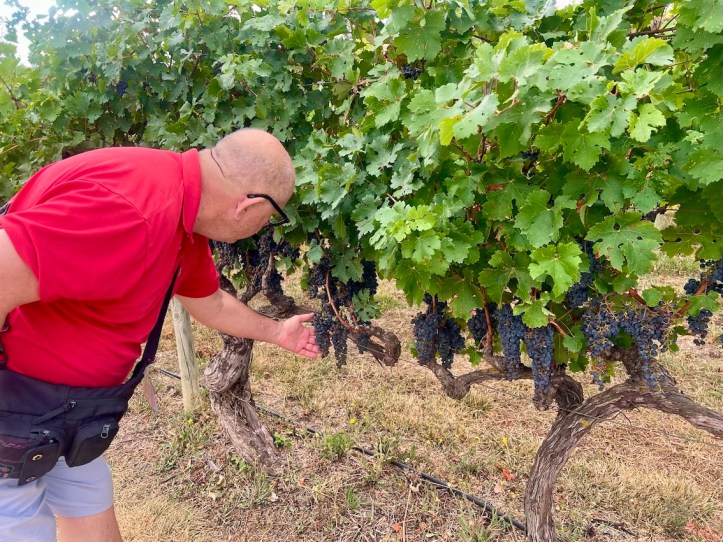
The grapes are hand harvested – the process taking around 4 weeks, but after that it is pretty high tech. The main grape is Tempranillo, but a second local grape – Graciano is also used in making the red wines. According to the rules for making wine, other varieties cannot be used UNLESS (there always seems to be an excuse……) when they can use varieties from vines that were planted before 1980 – when all the rules were made. So here at Marqués de Riscal they also add Cabernet Sauvignon to their Reserva wines.
Marqués de Riscal exports 65% of its production, although there was mention of Trump’s tariffs making things a little uncertain in the future.
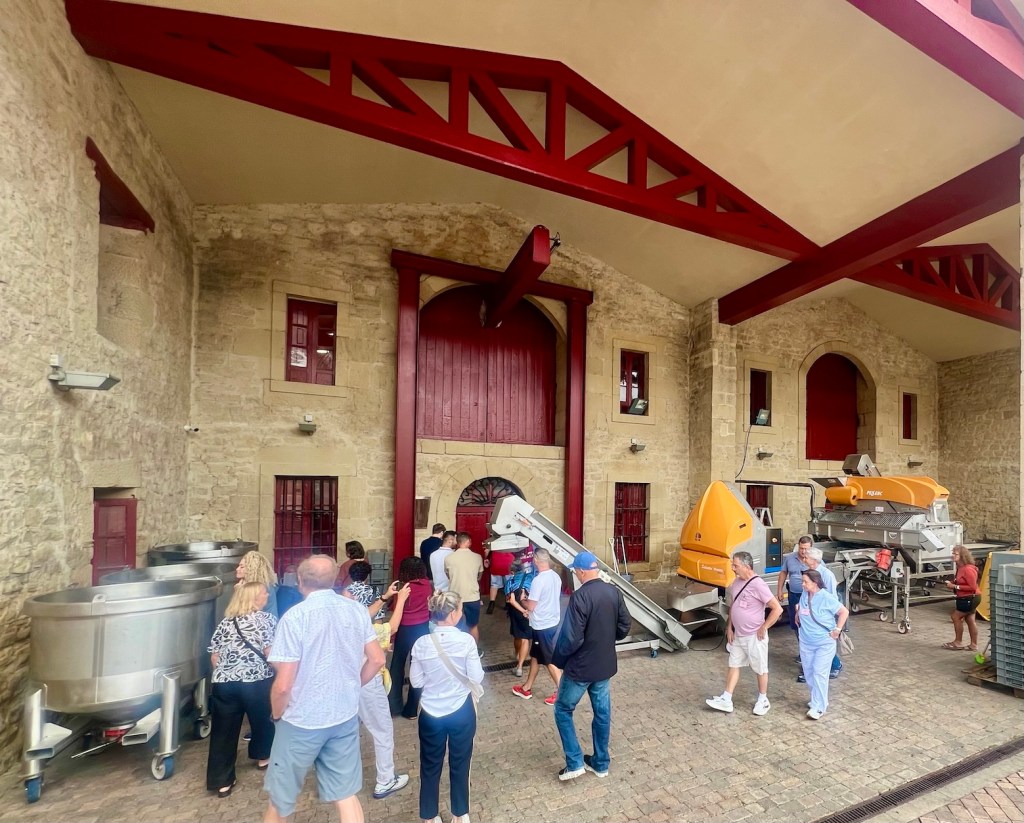
We were taken on a tour of the winery and the old cellars – two dating back to 1860.
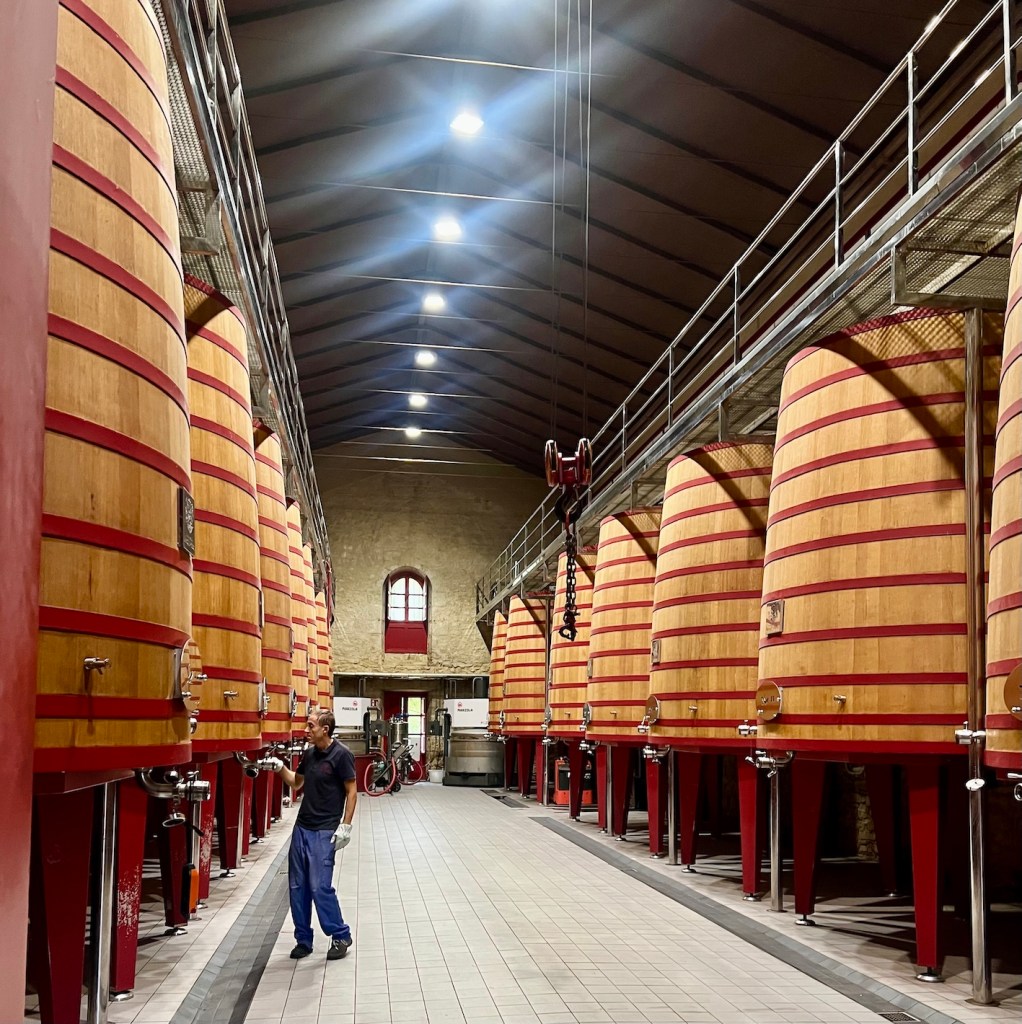
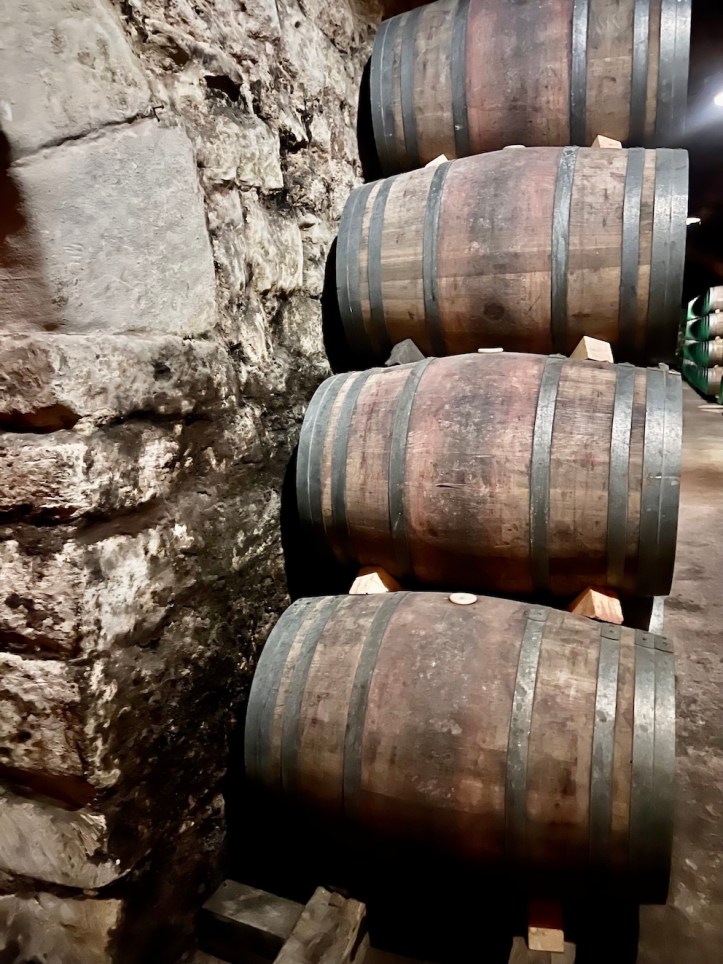
The old cellars were very cool and filled with hundreds of oak barrels. The winery has a total of 37,000 barrels – mainly French and American, but they also use Hungarian oak.
After the tour, we then had a chance to taste three wines, including their iconic Reserva which makes up 80% of its production.

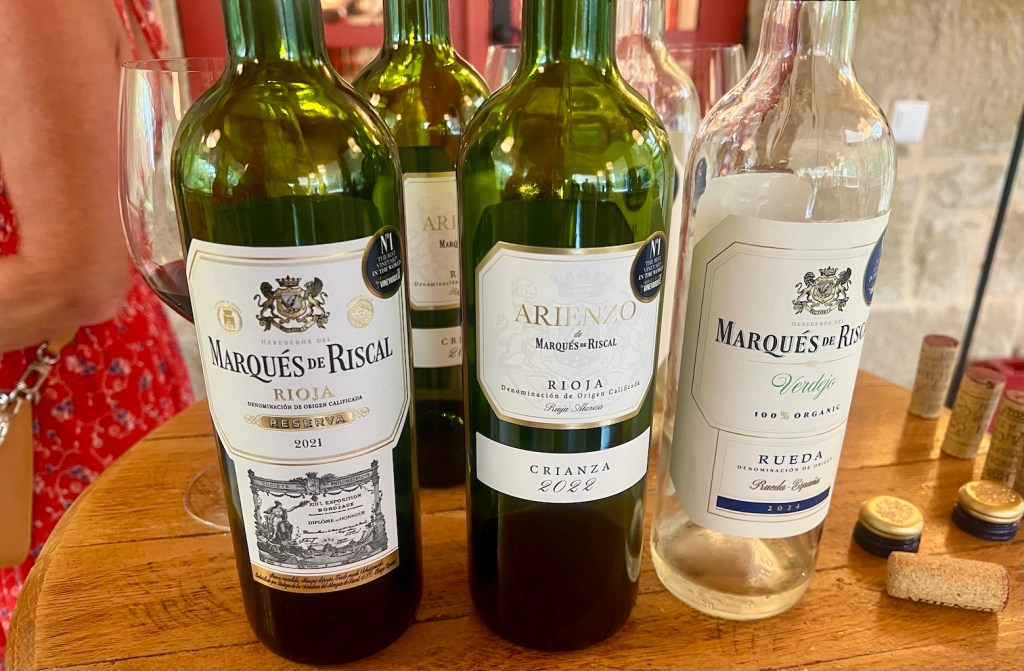
We tried a 2024 Verdejo (which I thought must be the Spanish term for Verdelho – but no!!), a 2022 Crianza, and a 2021 Reserva.
“Verdejo is mostly grown in Spain, Verdelho is a common Portuguese grape varietal, primarily grown in Madeira.”
Unfortunately, my photo doesn’t show the tops of the bottles we tried – but surprisingly, this winery uses stelvin caps (or screw top lids) for some of its white wines. Mick and I have not seen that in Europe before.
I tried all three wines, but loved the Reserva best, so I gave my other wines to Mick as I had to drive us to the next stop.
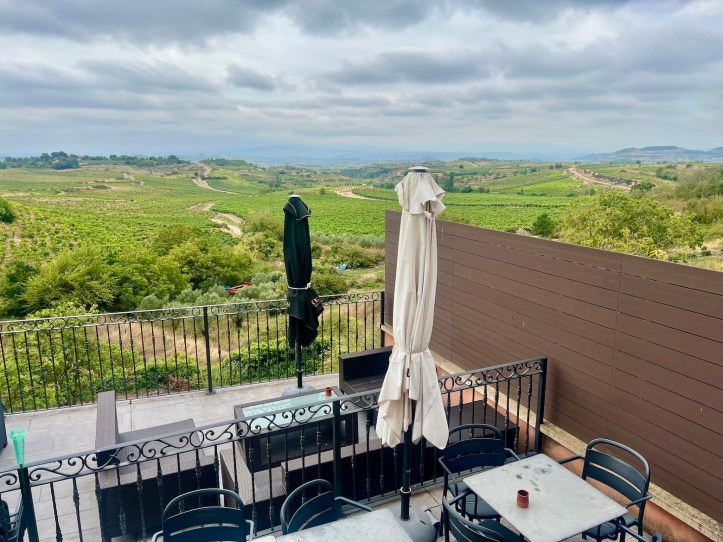
I had found a small bar called Bar Seis Kopas in Samaniego, 10 kilometres away heading towards Haro, where we stopped for a coffee and a great view.
As I drove us towards Haro, we passed lots and lots of vineyards, with most of the vines dripping with small black grapes. We also saw quite a few groups of pickers in some of the vineyards, but the roads were too small to stop to take photos.
Mick asked me as we were almost there why I had I chosen to stop in Haro for four days, so I explained to him it was because Haro is known as the wine capital of the Rioja Region – a perfectly sound reason.

We arrived a little early and were able to check into our hotel which was great. I had changed our accommodation only a few days before we left home. I was worried that the small apartment I had originally booked, located in an attic, was going to be too difficult for both of us – with steps and sloping roof. So, I booked the Hotel Plaza de la Paz – right on Haro’s main square.
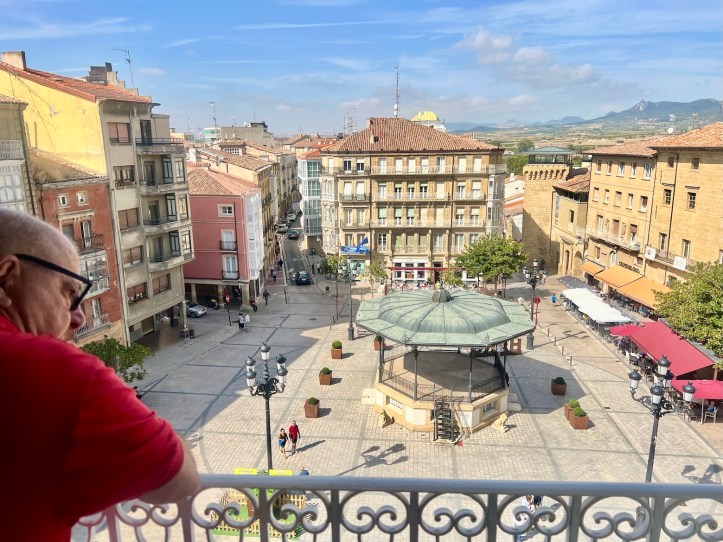
Haro is home to some of Spain’s oldest and most prestigious bodegas, some of which are only walking distances from the main part of the town. It is a much smaller town than Logroño, with fewer than 12,000 residents. I think we will enjoy our time here.
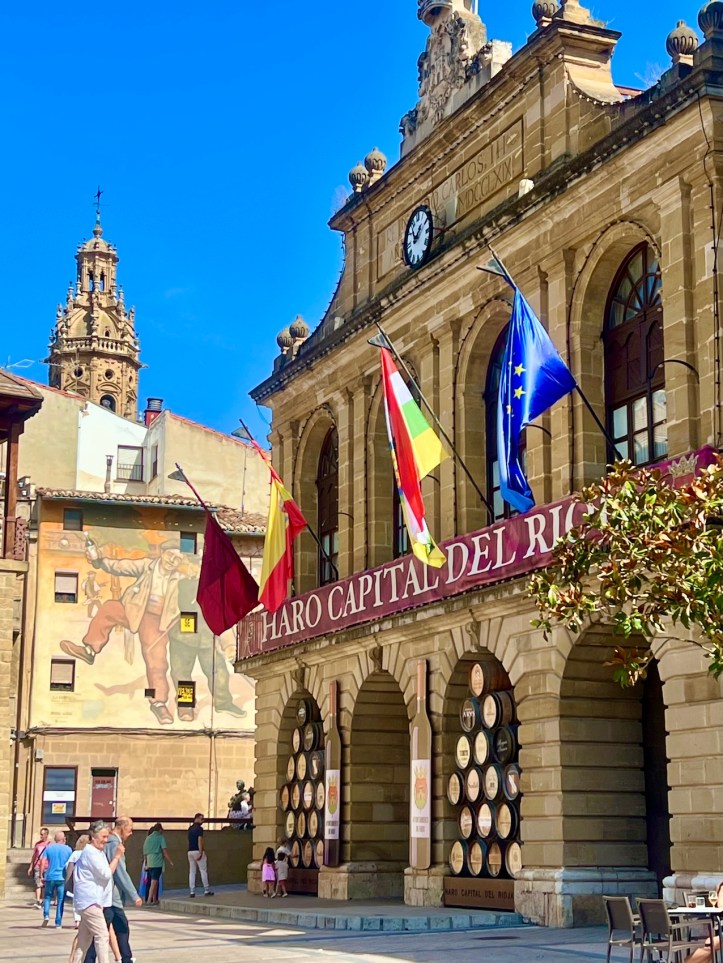
We explored some of the bars and wineries in the early afternoon, followed by a siesta in the late afternoon. While it was still not yet dark around 7pm, we headed out to find some of Haro’s famous little streets with tapas bars and fancy restaurants.
The bar we first stopped at was ‘going off’!! There was literally dancing in the streets led initially by a young group of friends but soon joined by people of all ages. It was so much fun to watch.
We found a small tapas bar after that, where Mick chose ‘cazuelita de oreja‘ with a glass of white wine made from Tempranillo.

Even I had a small taste – it was surprisingly meaty! But that was not going to do me for dinner. I was still hungry. We had earlier spotted a small pizza restaurant where my appetite was finally satiated.
A great start ot our time in Haro.
 Jane and Mick's Holiday Adventures