Today we decided to go on a (small) road trip around Haro to see some of the little villages nearby. I have tried to show on the map below where we went – which took us out of La Rioja (where Haro actually sits right on its edge – centre and left in the map) and into Basque Country. The Ebro River is the border between these two territories.

First stop was Briones – in the lower part of the map. It is where the Vivanco Museo Cultura de Vino is located, but sadly, it is closed on Mondays. I had really hoped to visit here as it is a museum that explores the heritage of winemaking in La Rioja.
Google maps led us to a parking area, up some very, very narrow streets (which were in fact two-way streets), high up into the village. Lucky for us, the traffic was not a problem.
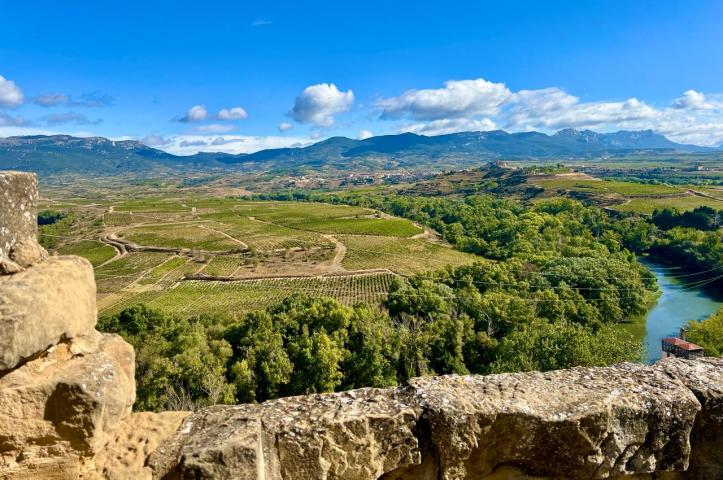
Briones has a a great view over the Ebro Valley, filled with rows of vines.
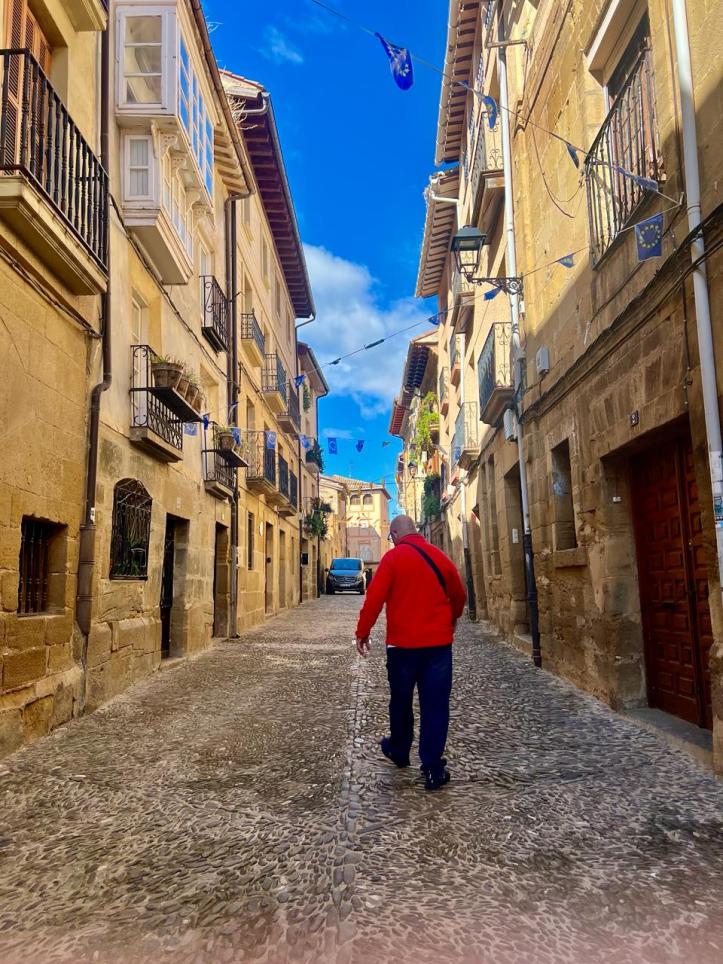
Mick and I then followed some wonderful cobblestone roads, dating back to medieval times, until we found the main square and its church.
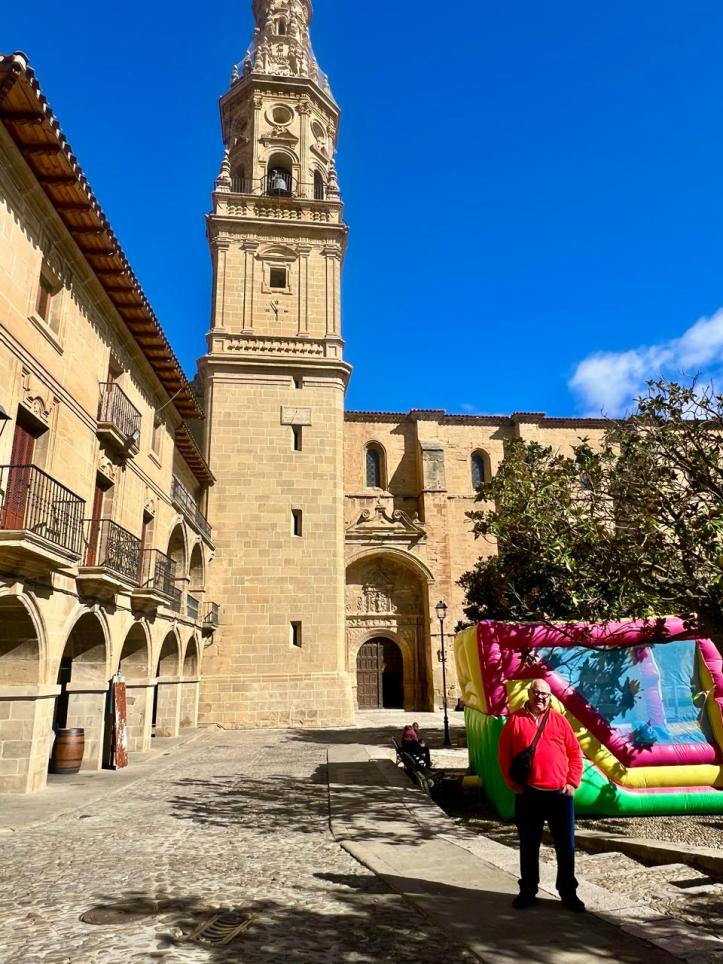
When we arrived at the plaza, we were just in time to watch some workmen inflate a number of jumping castles and displays, possibly for a fiesta in this little place.
Next stop was San Vincente de la Sonsierra.
We followed our noses towards the Plaza Mayor – hoping to find a bar open for a coffee.
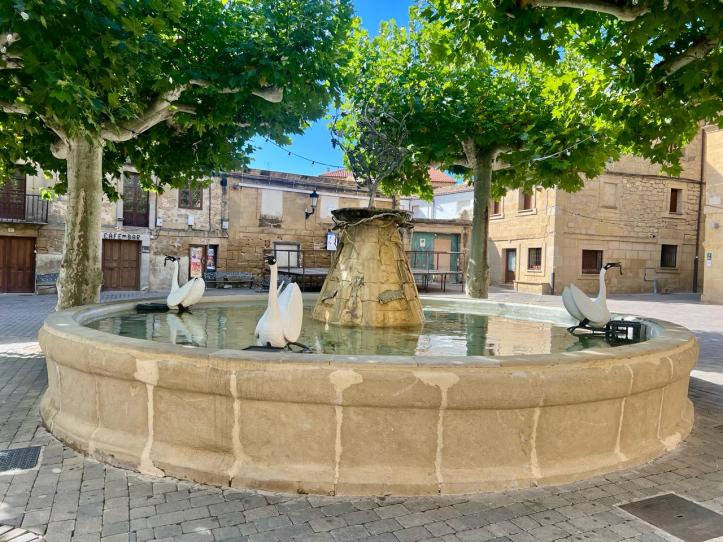
The plaza was surrounded by old stone buildings, and a sign we had not see before on this trip. It was a sign for some public toilets. I had read that Spain is not known for its public amenities and it is necessary to buy a coffee from a bar in order to use their ‘banos‘.
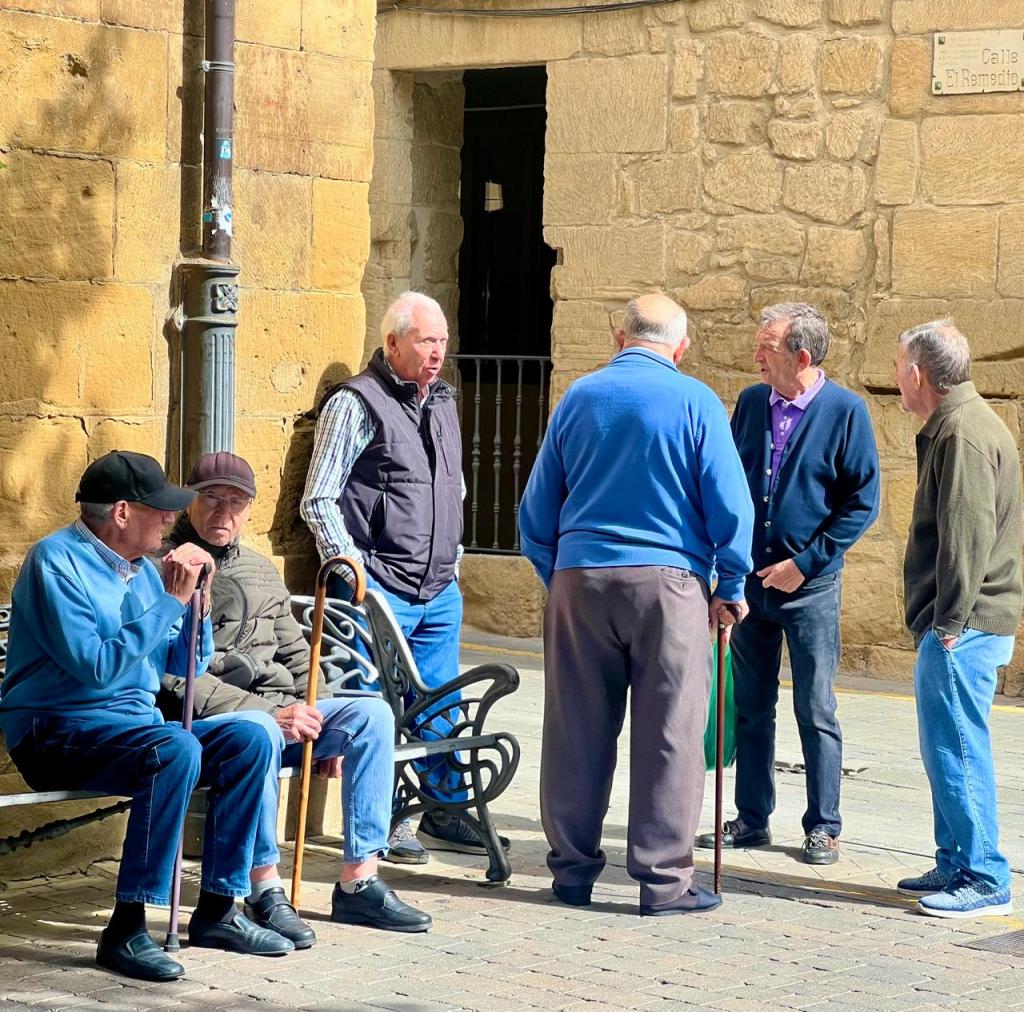
There was a small bit of sunshine in one corner, and a few of the local men were gathered catching up on the news. After our coffees, the number of men had grown, as had the space in the sun.
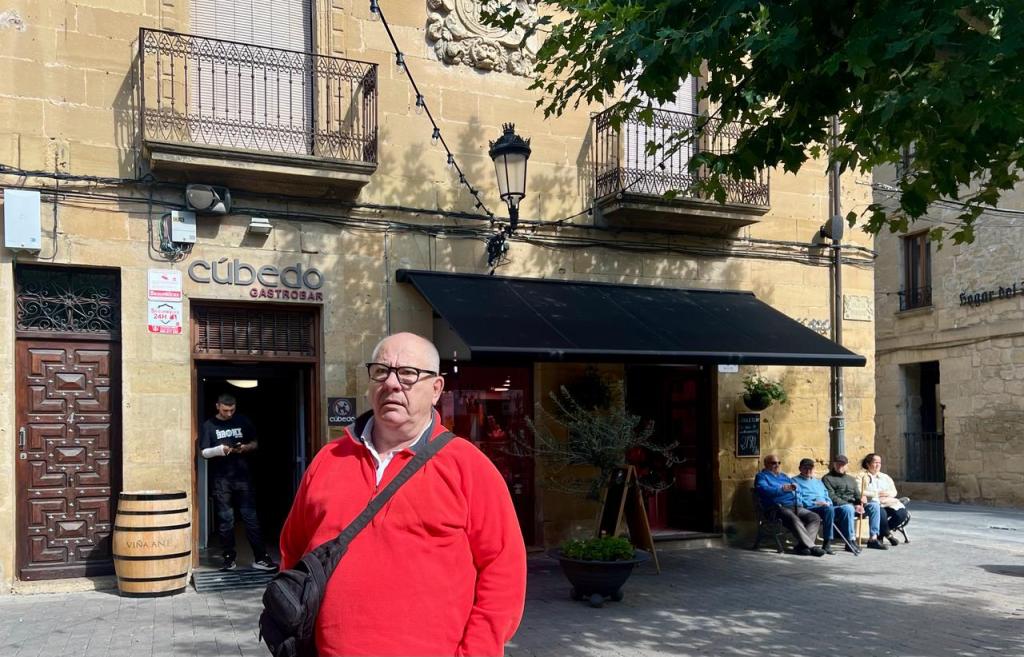
Our next stop was in Basque Country in the village of Bastida (or Labastida), where we got our first experience on this trip of the signs being written in two languages, in Spanish and Euskara (the native name for Basque speakers). I was not sure which was which. But it was here that we found a bar for some lunch. Mick was very happy with his choice of a bacon baguette.
I wandered up higher in the town towards the Plaza de la Paz where the 16th Century Church of Nuestra Señora de la Asunción took pride of place.
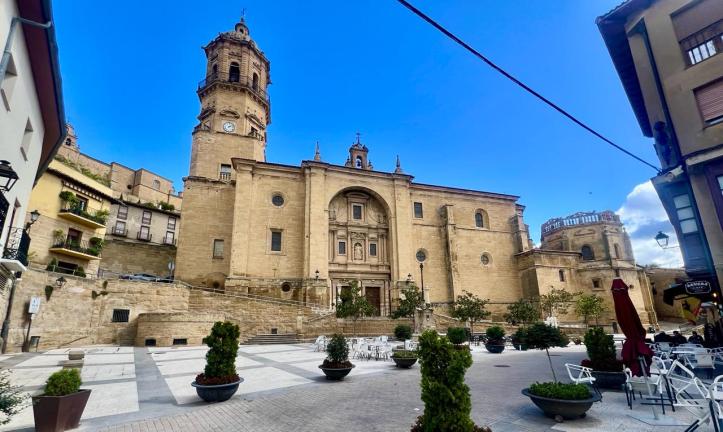
Opposite the church was the Palacio de los Solazar, complete with flags.

Once back in Haro, we had a siesta – the streets of the Capital of La Rioja were all but empty.
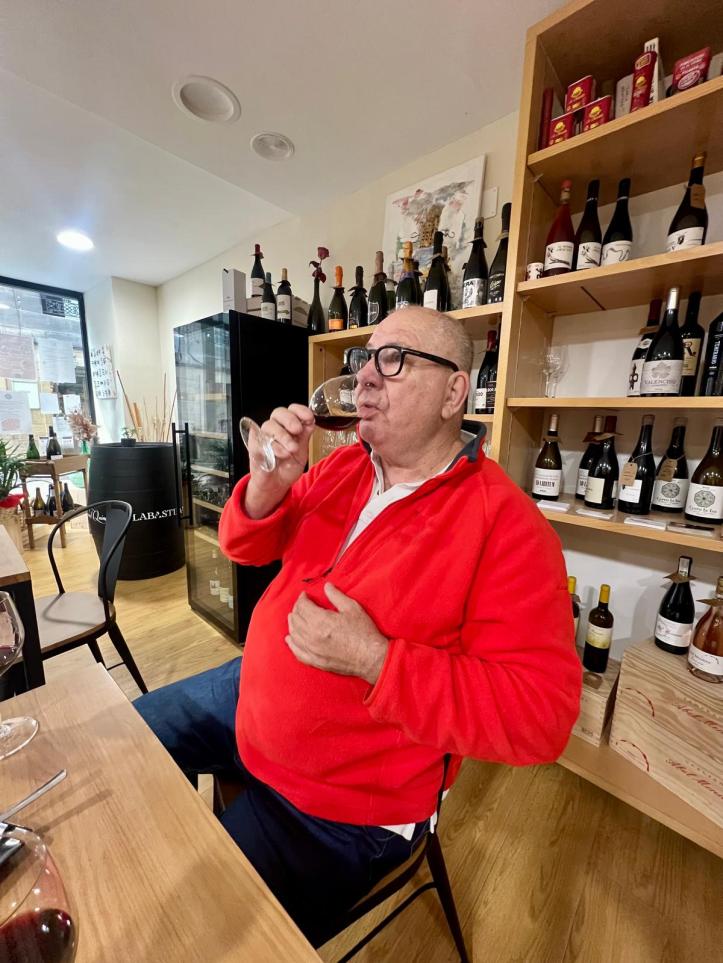
During the late afternoon, we visited a small wine bar we found yesterday, called La Abacería de la Auro, that offered wine tastings / wine flights.
Clásicos de Rioja (5 wines with a snack of sausages and empanadas) for €24 was Mick’s choice.
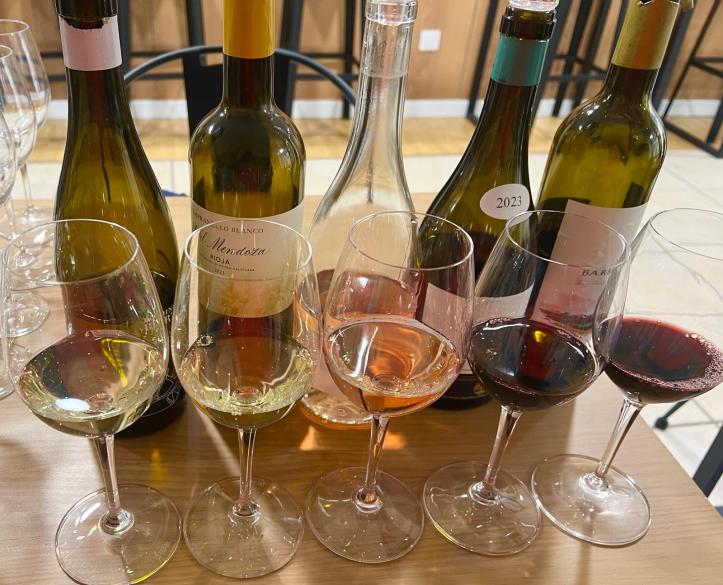
It included a white wine made from Garnacha (Grenache) Blanco, then a Tempranillo Blanco, a rosé made from Graciano, a red wine made from Maturana Tinto (we’d not heard of this before, but this grape is nearly extinct in the Rioja because it is hard to grow due to its soft skin and late-ripening). This was Mick’s favourite – labelled as a ‘Cosecha 2023’ – which means it was a 2023 vintage – it was 14.5%. His final red wine was a Merlot, and at 15% it had a kick. He thought our mothers would have loved it if they were still with us.
I decided to try the Maridaje Premium La Rioja (or a Premium Pairing) which included 5 wines from different varieties, producers, regions and featuring different winemaking styles (all reds) paired with gourmet appetizers for €34.

My first wine was a blend of Grenache and Tempranillo (50/50), then a Tempranillo (possibly with a little something else – she was not quite sure). The third wine was a 2017 Viña Cubillo – which definitely had the smell of dried ripe fruits. Finally, I had two Reserva wines – one aged in American oak and the last one aged in both American and French oak (and this was my favourite).
Our wines were accompanied by small plates of food – more than we needed – but quite deliecius. Mick’s favourite was the ceviche cod.

This passage explains the grapes that can be used to make a Rioja wine – there is no mention of percentages as in Ribera del Duero. The rules are much freer here.
“Rioja wines are primarily made from red grapes Tempranillo, Garnacha (Grenache), Graciano and Mazuelo.
White Rioja is predominantly made from the white grape Viura (Macabeo), with other varieties including Malvasía, Garnacha Blanca, and the newer Tempranillo Blanco is also permitted. “
Tomorrow is our final day in Haro and we are booked into a wine tour and tasting at La Rioja Alto.
 Jane and Mick's Holiday Adventures
loving these posts Jane. Your ‘tasting flight’ looked like five glasses to me, but then Ive always been a bit of a weak effort.
they were 5 small glasses David. xx