This morning, Mick and I headed off after breakfast for a wine tasting at 10.15am (which was quite early, but this was the only tour in English on offer today).
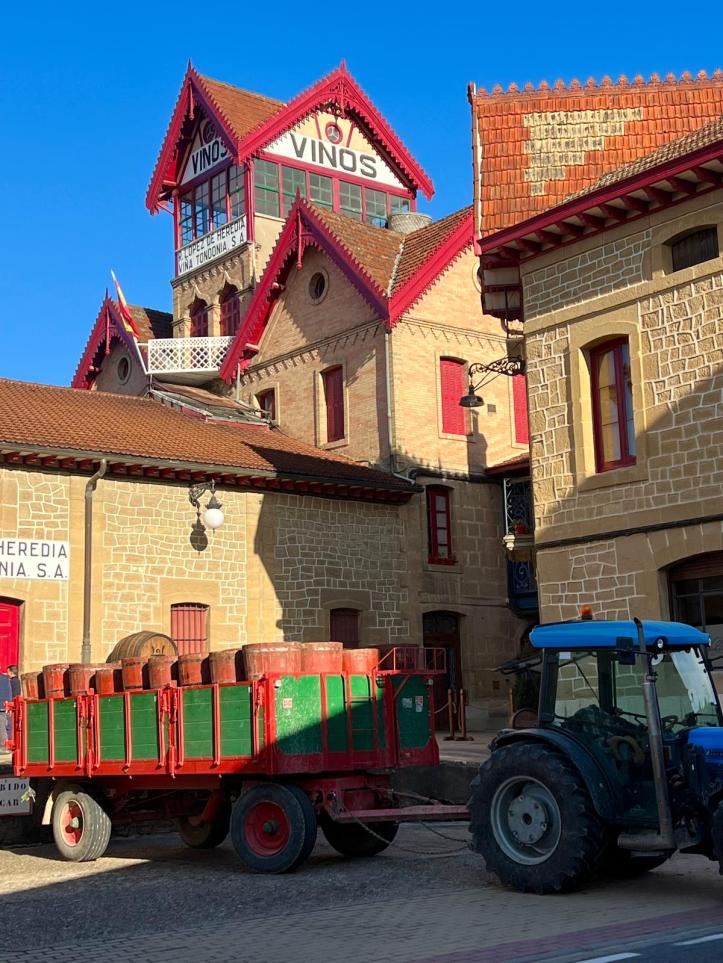
Walking to our venue we passed this winery where a tractor and its trailer, filled with old casks filled with grapes, was being unloaded. Harvest is in full swing here in La Rioja at the moment.
I had booked this tour for us at La Rioja Alto before we left Australia. The cost for the tour and tasting of four wines was €45 each, so my expectations were high. When we arrived there were about 24 other people who were waiting for the tour – many of them were German, plus some American and English. We were the only Australians.
La Rioja Alta winery is located in the Barrio de la Estación – which is a famous collection of wineries in Haro. And this is one of the main reasons we are staying here by the way. It is sometimes referred to as the “Golden Mile of Rioja”, and it was about a 10-15 minute walk from the main plaza (Plaza de la Paz) where we are staying.
We did walk down to this area on Saturday, the day we arrived, and there were too many people at most of the wineries, it was impossible to even get served. Having said that, we did stop at Tihom, where we spotted an inside seat, and tried two of their white wines.
We knew that La Rioja Alta was very famous, but that was about all we knew. Our tour was led by Maria who could speak excellent English, however when she pronounced Spanish names and terms, we were a little confused.
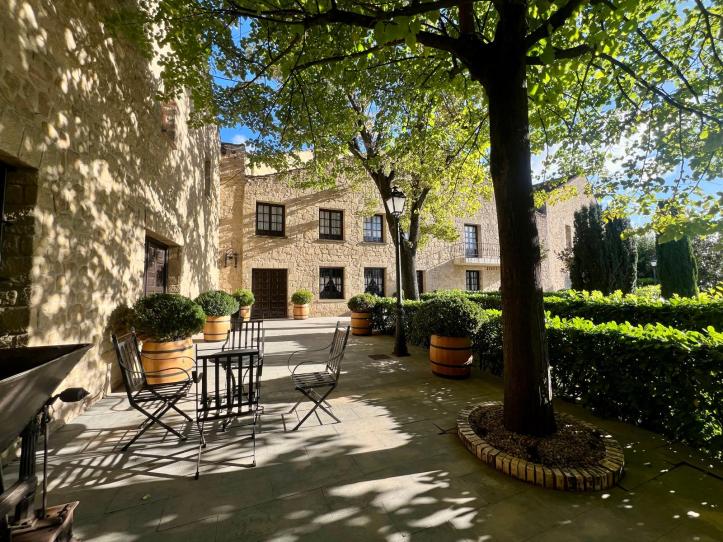
Maria told us why so many wineries, dating back well over 100 years, were located in this area.
We already knew that growing wine in this region dated back to Roman times, as it does for so many locations in Europe, and that La Rioja was well known for its wines as far back as the 19th Century. The industry here was thriving, and much of the wine was being exported to America – not at all concerned at that stage by imposed tariffs.
Back in those days, the wines were being made in underground cellars, like the ones we explored in Aranda del Duero, using large vats, and that each vintage had to be consumed before the next vintage could start. There was no such thing as ageing the wines in barrels.
That was until after 1863.
In 1863, the French vines were destroyed as a result of an infection called phylloxera.
The French had a large export market to England around this time, as well as a large local market, and needed to find some unaffected vines they could use or some large quantities of wine they could buy. So, they established large warehouses near the railway station in Haro, where they could send Spanish wine to Bordeaux via Bilbao. This location significantly lowered the transportation costs of the wine needed in France.
However, the French did give something back in return for all the wine they were buying (in addition to the money they were spending); the French winemakers taught the Spanish winemakers how to age wines using different types of oak barrels as well as different ageing techniques.
This set off a bit of a boom in Haro. Some enterprising business people established wineries near the railway station in Haro (now known as Barrio de la Estación), bought grapes from local vineyards and started making their own wines. This was around 1892. There was so much money changing hands at this time that an office of the Banco de España was established here as well.
Unfortunately in 1899, in a vineyard near Haro, phylloxera was detected. But, with the help of the French, who had had to find a solution for the vines in their own country, they were able to pass on their knowledge about using American root stock which is not susceptible to the infection, and the vines in this area recovered.
For some readers, this is way too much information, but for those of you interested in wines, like Mick and me, we find this stuff fascinating.
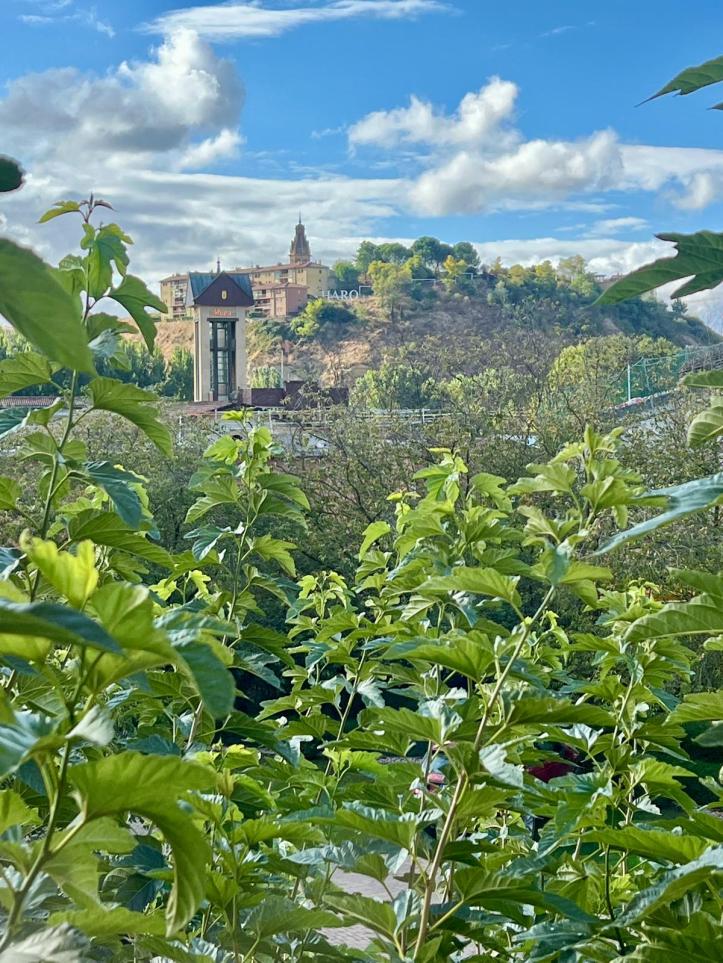
Anyway, back to the tour with Maria and the other wine lovers.
We explored some of the historical areas of the winery, including the cooperage.
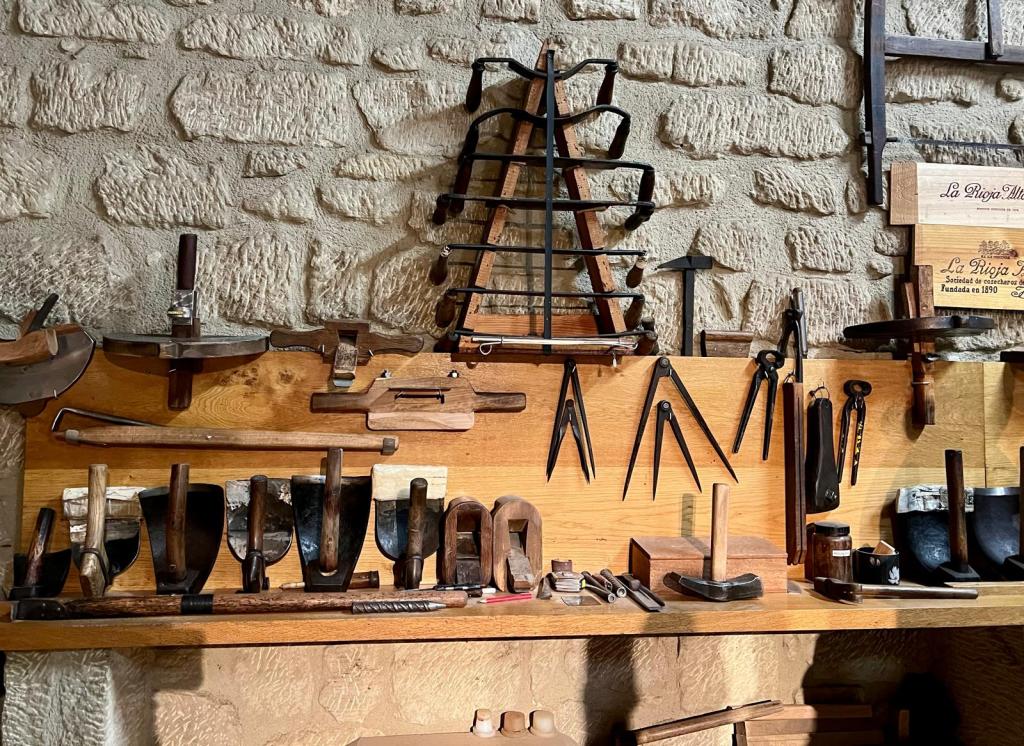

Maria explained that this winery has around 25,000 barrels, and that there is no way their single Cooper can make them all. But he does do a lot of repairs on the barrels that they use which are made from America oak, because the timber is thicker. The barrels are used for between 6 to 7 years before being sold to whiskey makers in Scotland.
Back in 1890, five families founded this winery, now known as Rioja Alta. The first Reserva wine that was made with the help of a French winemaker in that year is now one of their most famous / iconic wines, known as Gran Reserva 890 (dropping the #1 from 1890).
In 1904, a Mr Ardanza proposed a merger with this group which led to the second well known brand from here – Gran Reserva 904 (again, dropping the #1)
We learnt that Haro and another wine producing town in Spain, were the first towns to get electricity. Spain had its priorities right – clearly. Winemakers needed to be able to see what they were doing during all hours of the day and night.
The grapes are harvested by hand over a 4-5 week period and are then transported to Labastida, where we had lunch yesterday, to undergo de-stemming and sorting using optical selection, similar to what we saw at Marqés de Riscal a few days ago. The fermentation process starts there before the young wine is transported to Haro for ageing in oak.

The wines are racked by hand every 6 months (i.e the wine is transferred from one barrel to another thus leaving any sediment behind). This takes about 10 minutes per barrel (remembering they have 25,000 of them) – or just over 4000 hours. Most wineries use machinery for this process.
The above photo shows a barrel at the end of a very long line in one of the cellars we visited – “527” refers to the number of barrels in the line, and the date (5/9/25) refers to when the barrels were last racked.
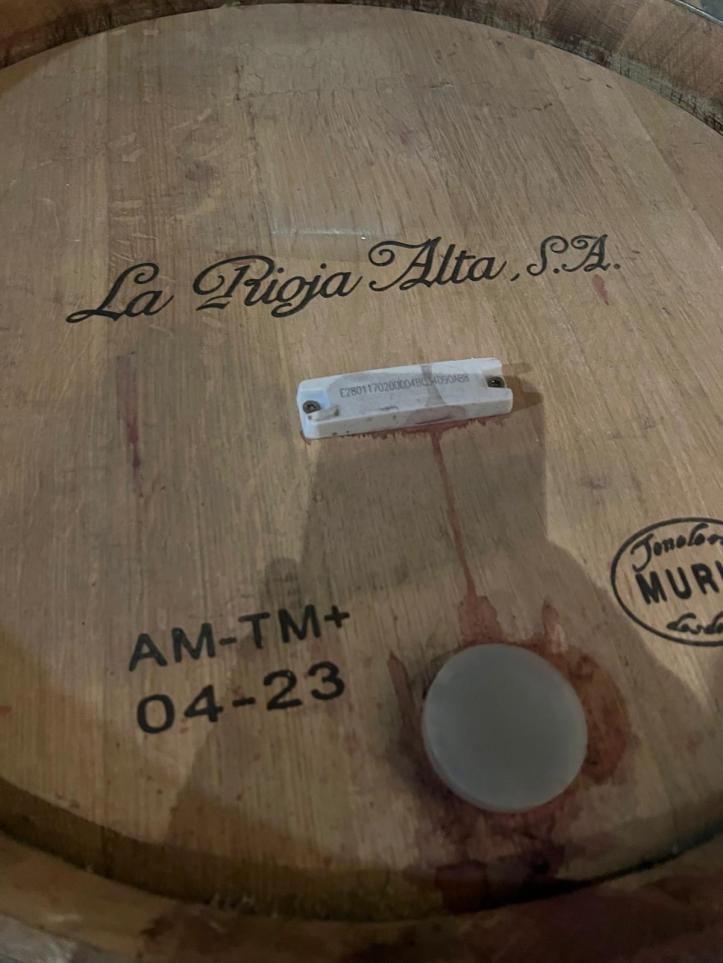
Technology has come along way, and only recently the barrels have been fitted with a plastic tab that allows the wine makers to read all about the wine in each barrel.
We walked through a number of different cellars – and this one was most impressive, with its rows and rows of neatly stacked bottles.
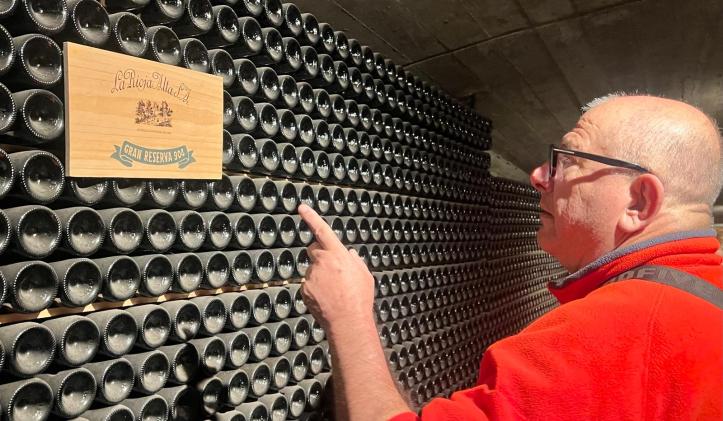
The Gran Reserva 904 is aged in barrels for 4 years, and then in bottles for 4 years – more than the minimum required for Rioja wines.
This tunnel held 80,000 (of the 150,000) of the next vintage that will be released.
We toured another cellar where we learnt that there are around 7 million bottles of wine currently ageing in this winery.
Okay – that’s enough. Now onto the tasting.
The first wine we tried was a 2020 Viña Alberdi (Crianza ) made from 100% Tempranillo. (The lowest level of wines made at this winery). Always progress to the best!!
The second wine was Viña Ardanza Reserva 2019 made from 80% Tempranillo grapes grown from around Haro and 20% Grenache from another sub region in Rioja. Grenache is a sweeter grape and therefore softens the wine.
The third wine was Viña Arana Gran Reserva 2017 made from 95% Tempranillo and 5% Graciano. Maria told us that all Gran Reservas have between 5-10% Graciano.
The final wine, the best of the best, was a 1997 Gran Reserva 904 made from 90% Tempranillo and 10% Graciano. Originally the vintage was not thought to be too great and the winemakers were considering throwing this batch away, but they left it a year or two and when they tried it again they realised it was a ‘star’.
After our big morning which took us well past lunch we decided a small rest was in order. We seem to be getting used to this Spanish routine.
Tomorrow we head north to Bilbao.
I’m a little anxious about the trip as we need to return the hire car to a location we’ve not been to before, by 11am, filled with petrol. So, another early start for us. Which also means, an earlier night tonight.
 Jane and Mick's Holiday Adventures