A two-hour walking tour of the old city streets was the first item on today’s agenda. Mick and I have spent the last two days exploring many of the seven streets of Casco Viejo without knowing anything about the history, so this tour filled in a lot of gaps for us.
We found out that on 26th August 1983 the city of Bilbao suffered a huge flood as a result of torrential rains and high tides. Water levels in the old town reached 3 metres and many of the buildings and businesses were severely impacted. Thirty-four people died as a result, and one of them was Madriles.
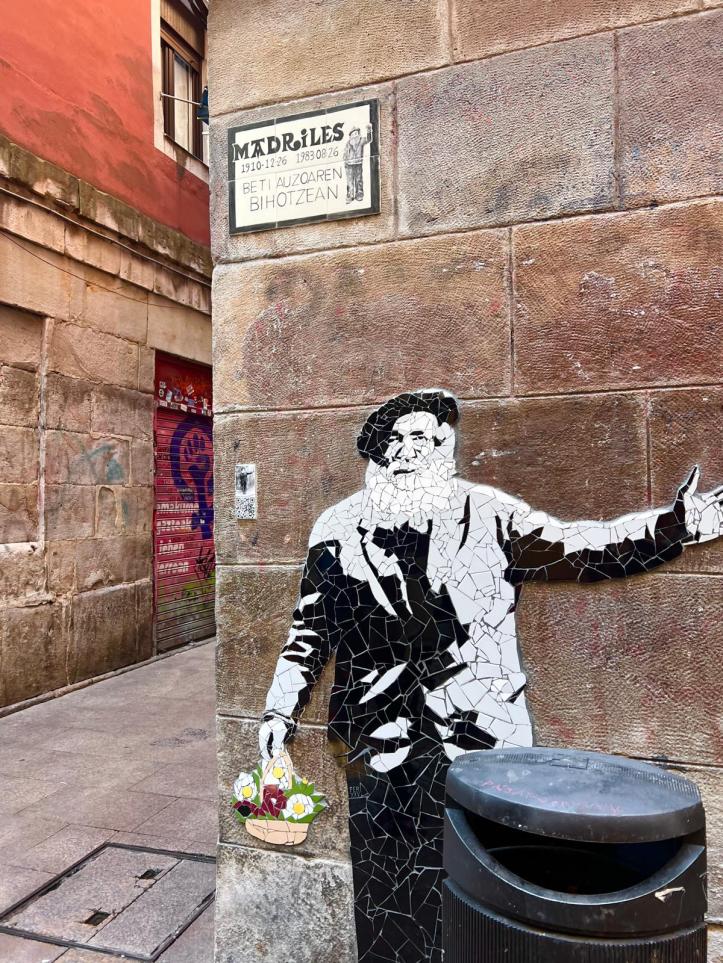
We learnt that he was a much-loved man, originally from Madrid, who collected cardboard and papers and sold them so he could buy food. He was one of the homeless in the old town.
Quite a few of the places the tour guide took us to we had visited previously, but we had not understood where they fitted into the history of old Bilbao.
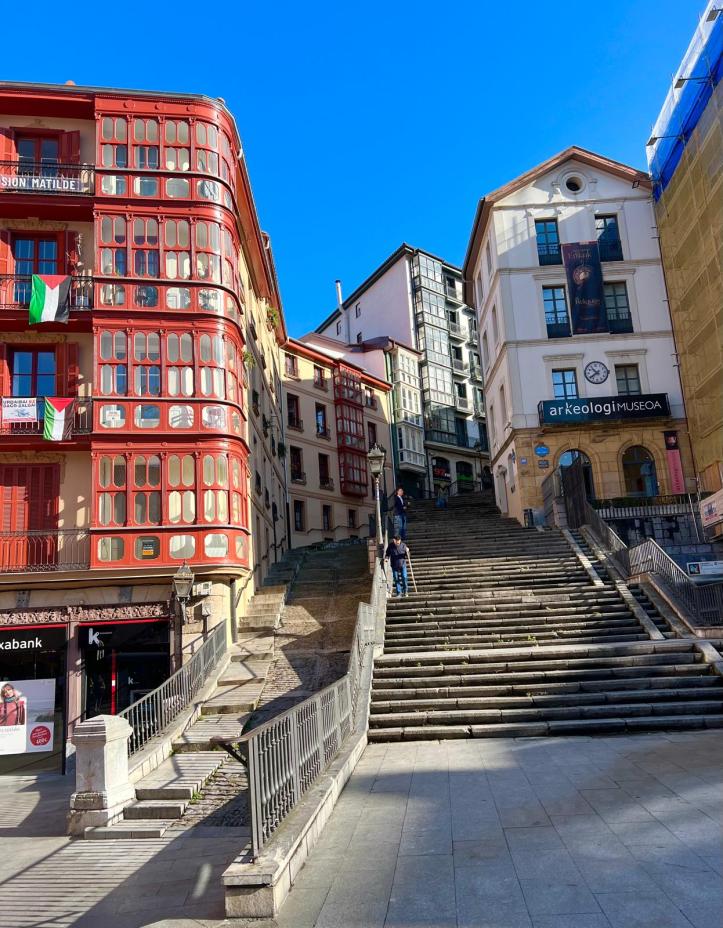

The Cathedral dates back to the 14th century, although newer additions have been added over the centuries. We learnt that it is the oldest building in the city, and that it serves as a key stop on the Northern Route of the Camino de Santiago. We also spotted one of the ‘shells’ used to mark the camino in the plaza in the previous photo.
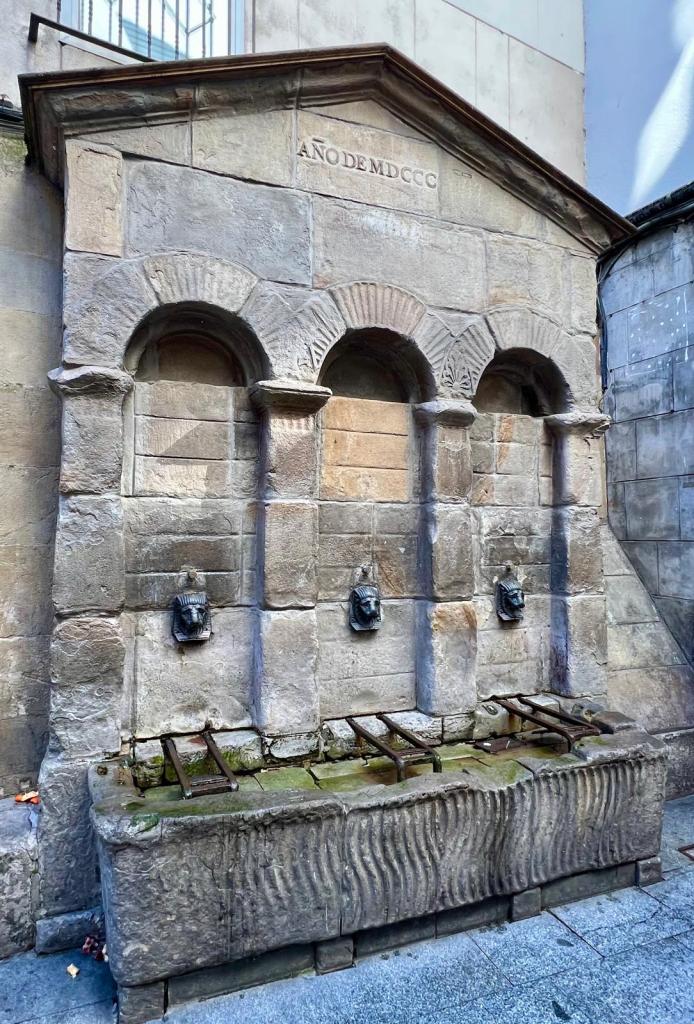
This fountain was built in 1800 originally to wash the animals before they went to the markets. Our guide told us that it was also used to wash the mud off the hooves of horses before they entered the town. But, I am not so sure a horse would cooperate for that activity.
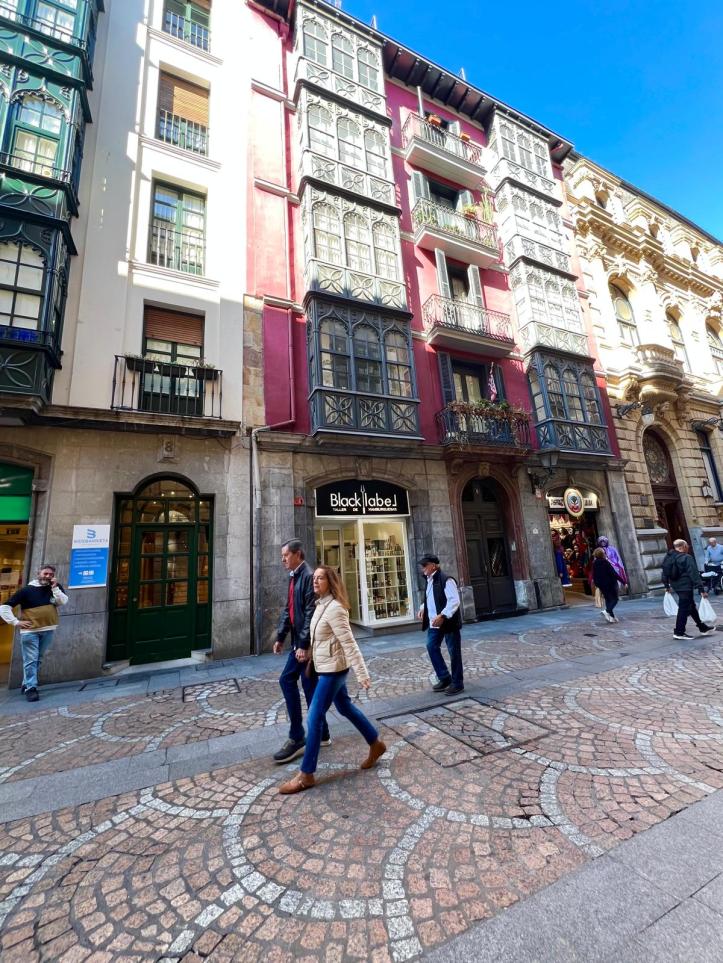
One of the best things gained from the walking tour were some tips regarding restaurants and cafe bars to visit, and also some information about the typical delicacies of this region.
I found out why I am struggling reading the signs and menus here, even when there are two versions of the information. The Basque language (Euskara) has little to no resemblance to Spanish. Our guide explained that about 45% of the population speaks Euskara and that it is now mandatorily taught in schools.
The language had been suppressed under the dictatorship of Franco (between 1939-1975). People who spoke in Euskara were often persecuted, which resulted in a decline in its use. As you could imagine.
Our tour guide took us to Plaza Nueva, where we have been several times already (for a drink and some pintxos) but had not noticed Euskaltzaindia (the Royal Academy of the Basque Language). It is not a school – but a regulatory body for the Basque language.
It was in 1978, after Franco’s death, that the Spanish Constitution granted “co-official status” to Euskara.
The tour was definitely useful and our guide was keen to answer any questions we asked, but Mick and I had another appointment – we had tickets to the Guggenheim Museum at 1.30pm.
Bilbao was in industrial decline in the early 1990s, and the Basque Government was looking for ways to revitalise the city. So in 1991 it approached the Solomon R. Guggenheim Foundation to build a museum in Bilbao, with the hope that this would stimulate the economy.
The museum is built on a previous industrial area and was paid for by the Basque Government. The Guggenheim Foundation did not pay any money towards its construction but ” contributed its brand, curatorial expertise, and access to its global art collection.”
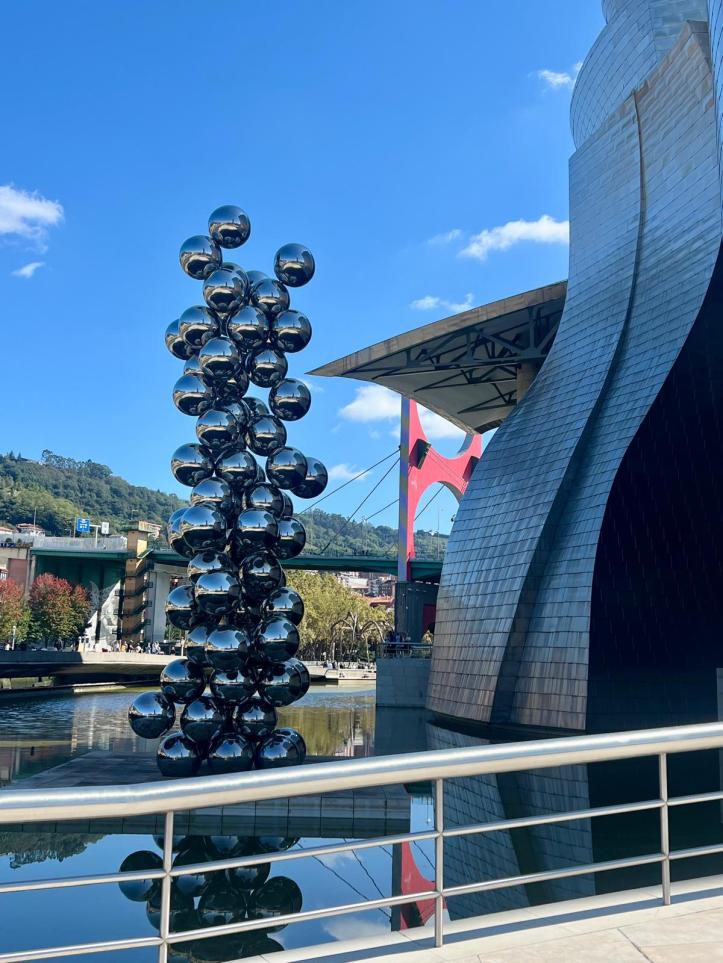
Mick and I were super impressed by the building from the moment we entered the ‘space’. The scale of the building and its display areas were impressive, but at first, Mick and I were a little surprised by the exhibits. Surprised might not be the right word – but we felt out of our depth, uncomfortable even.
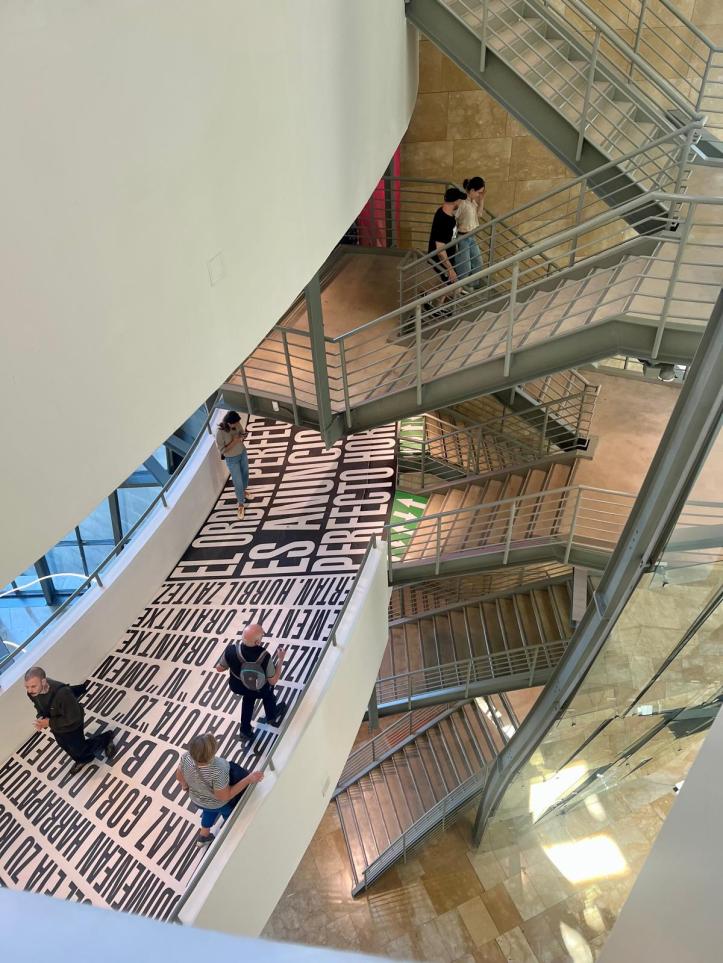
We did find some exhibition halls with displays we could appreciate. Many of the displays were digitally produced and would have taken hours to construct. They were very provocative in terms of their messages, and the more we looked, the more we appreciated the talent and the messages. Some though, made us feel giddy and dizzy, and it was not only becasue of our age – some had warning labels stating that it may cause giddiness.
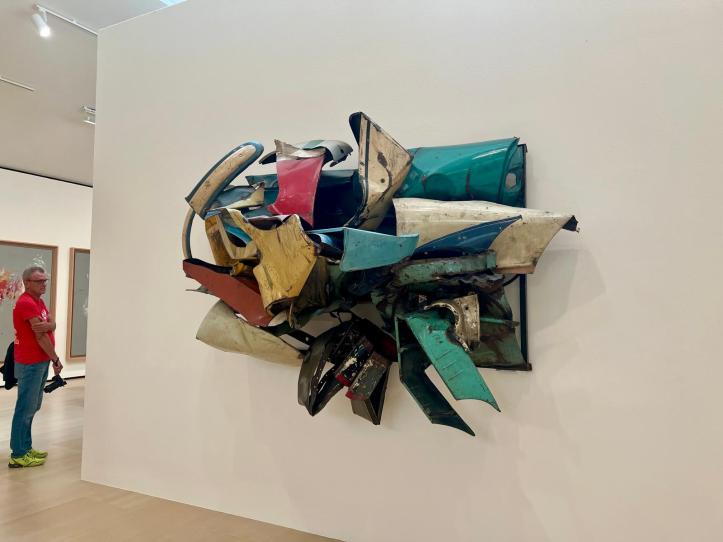
This artwork was made from old car parts and was a straightforward piece.

This one had a different meaning that I still don’t think we got.

Take a close look at a small part of this artwork which was made from used labels from corks, wine bottle tops and wine labels. The piece was massive and would have taken many hours to compile, but even longer to collect all the items used. It did have a deep message regarding climate change, among other things, as reported on the small display label.
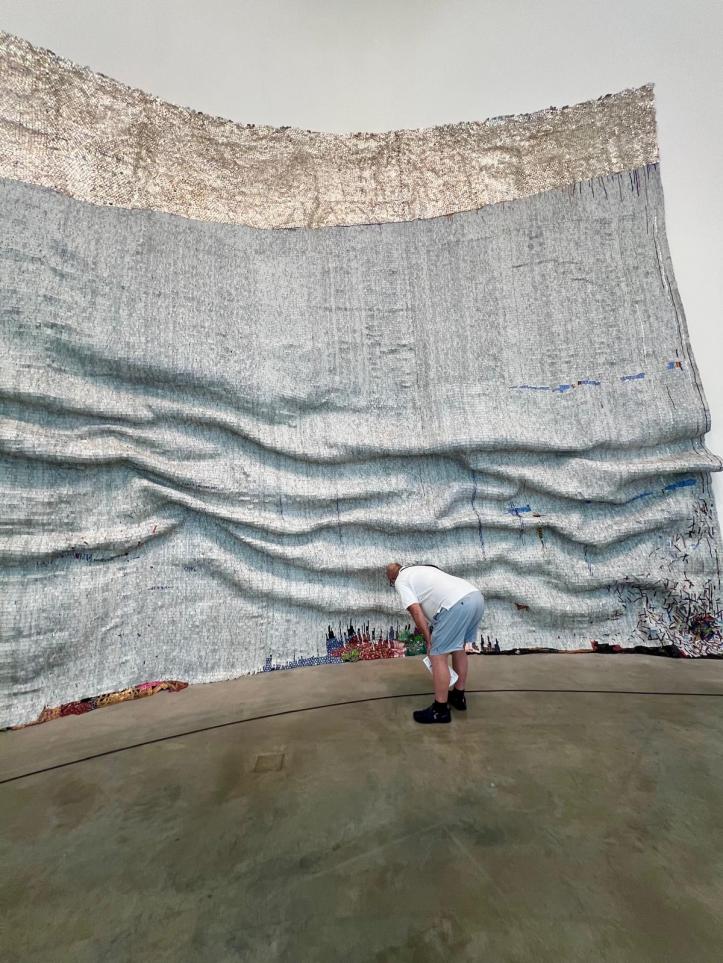
Mick is helping to show the size of the artwork. There was more that I could not get into this photo.
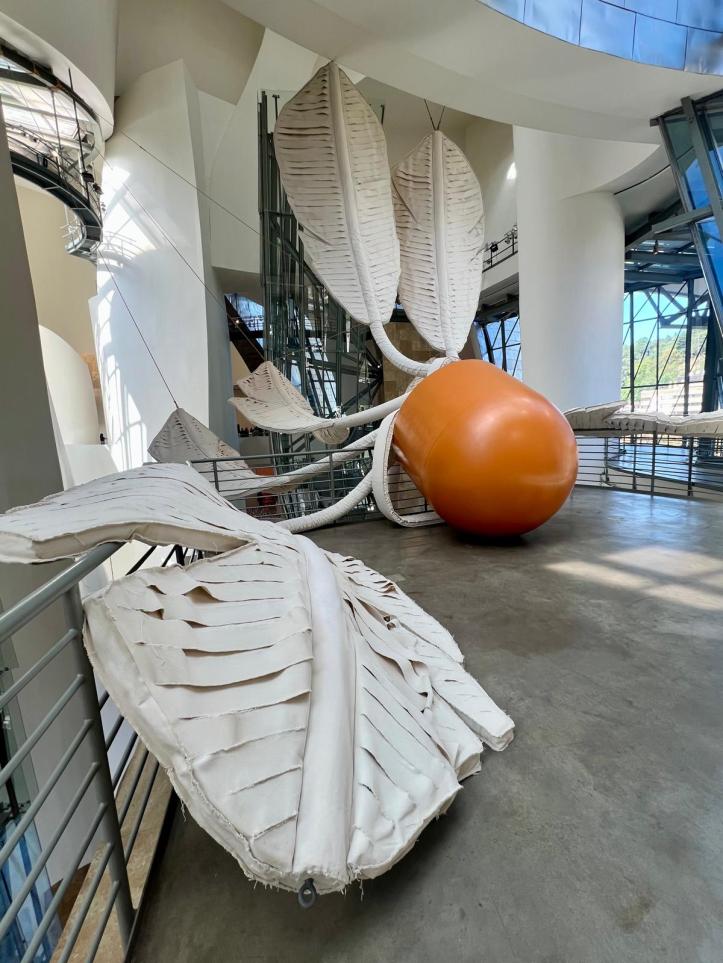
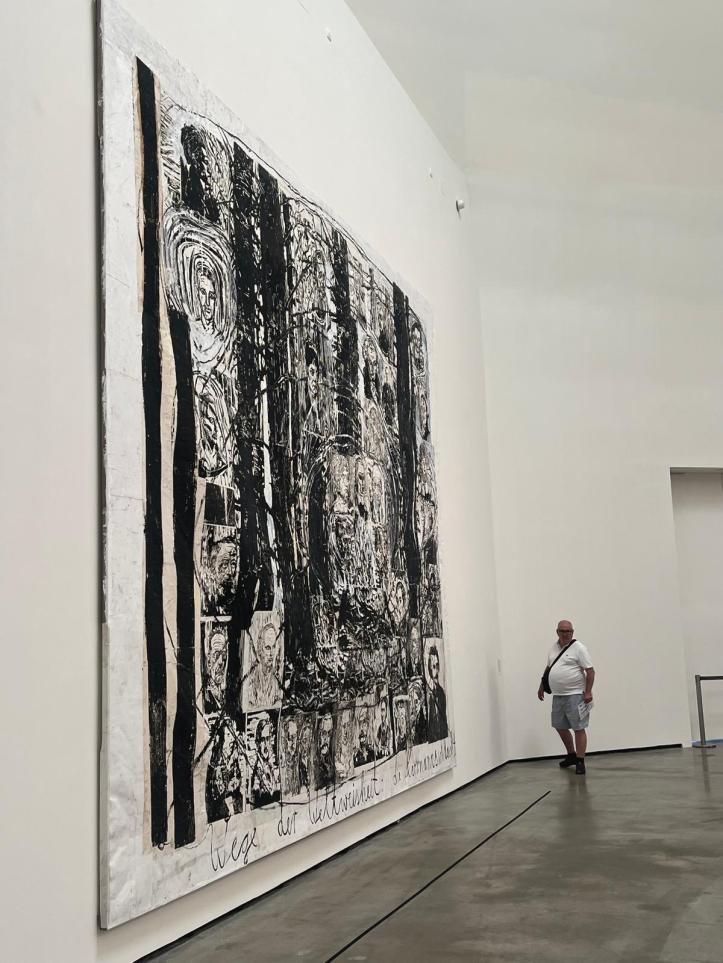
We were pleasantly surprised that there were not too many visitors while we were there. We had heard that yesterday the line up took hours to get in. I had bought our tickets online for €9 each (half price because we are seniors), and that allowed us to get straight in.
After a late lunch and our now-regular siesta, we headed out into the Casco Viejo to join the crowds gathering for the start to the weekend. We headed to one of the restaurants we heard about on our tour – the Café Rio-Oja for some traditional seafood dishes.
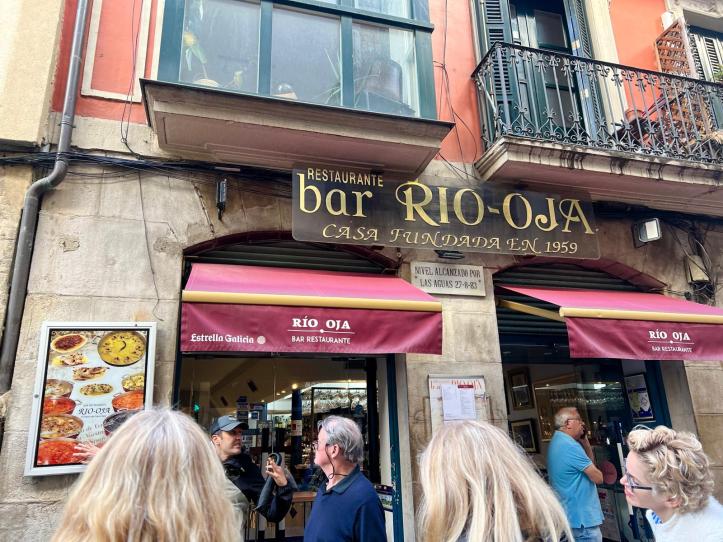
We were lucky to get a table here around 7.30pm. I think it was too early for most locals.
The glasses of wine were excellent (the restaurant actually had a wine list by the glass (like in La Rioja) – the best we’d had since we’d arrived in Bilbao. I chose the paella (for €7) and Mick had to try the rabbit (Conejo) for €8.50. It was the best rabbit he’d ever eaten. Even better than the dishes he’d tried in France or made himself. That was a big surprise.

While people were waiting for a table, and there were lots of them by the time we were almost finished, a group of men gathered outside that looked familiar to us – not personally, but by their outfit. We’d seen similar groups in Germany before. We assumed they were Zimmerman.
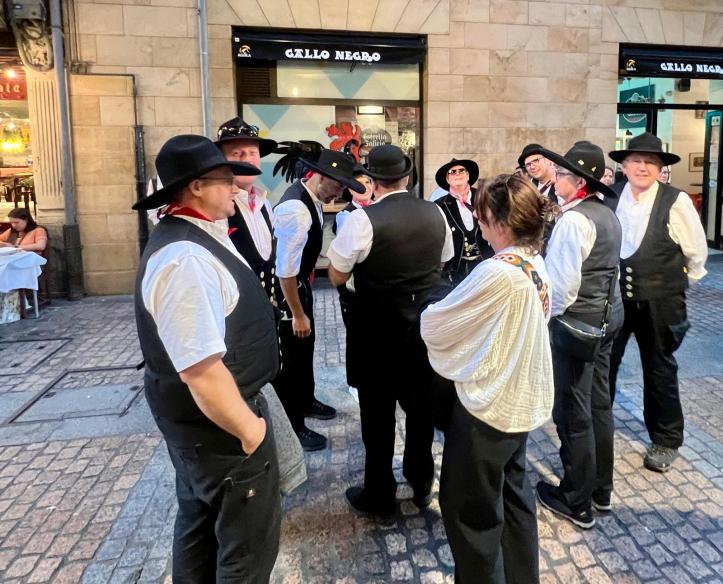
They obviously had a booking as they filed past us heading towards the back dining area. They too had heard how good the food was here.
 Jane and Mick's Holiday Adventures