We had a slightly less strenuous day today, but still we got to see a lot more of Porto.
I had booked us a two-hour tour, but before we started that we stopped for a coffee at a very busy little bar and then took a walk down towards the Douro River in a different direction to yesterday.
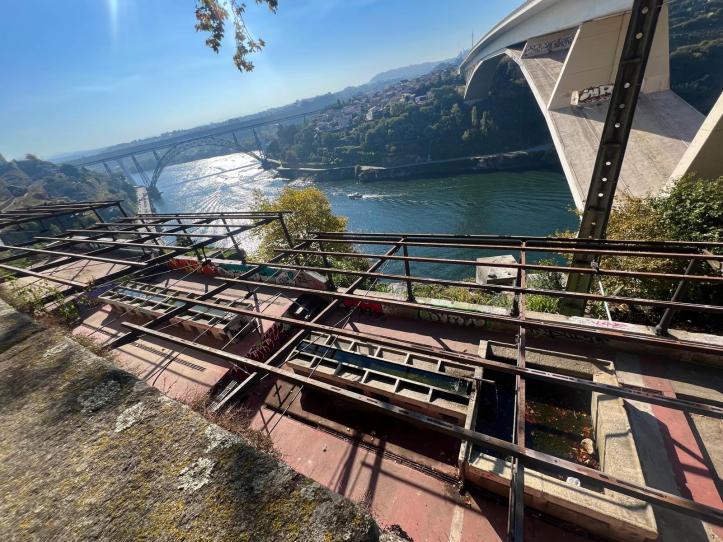
They were public wash basins (or tanques). This would have been a communal space for the women to wash clothes by hand. This configuration would have meant that several women could be washing clothes at the same time. It would have been back-breaking work and highlights how tough things were before the luxuries we enjoy today.
A few metres away was this statue that caught my eye.
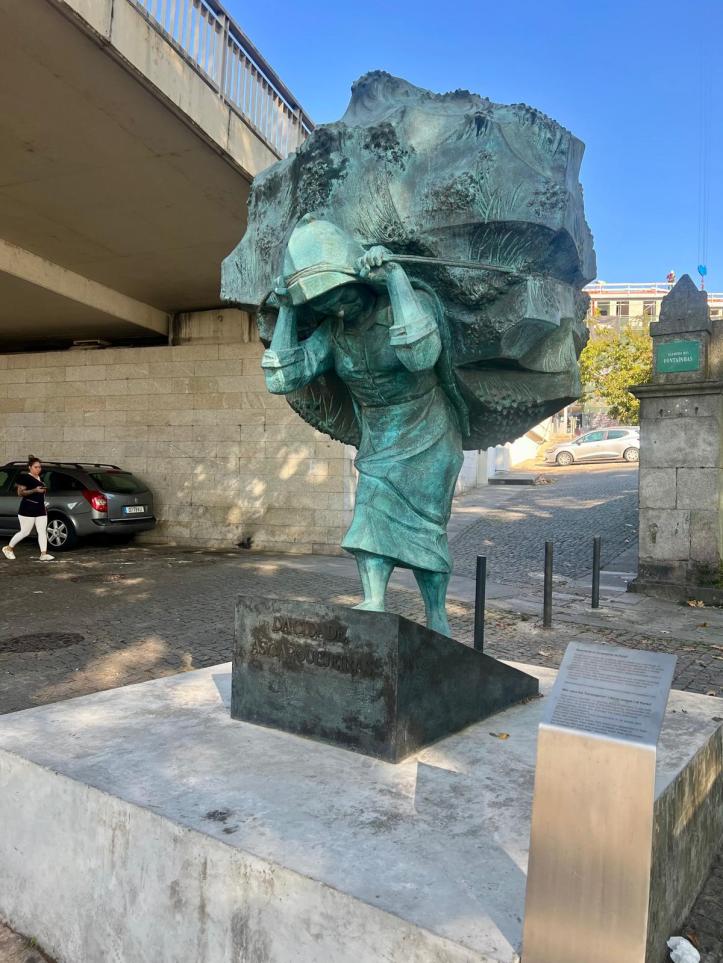
The plaque beside the statue explained that this statue depicted one woman carrying 40-60kg of Gorse (carqueja) – which is a shrub. Hence the women were called Carquejeiras.
These (iron) women had to walk down the steep streets to the river in order for the gorse to be transported into the city via the rabelo boats.
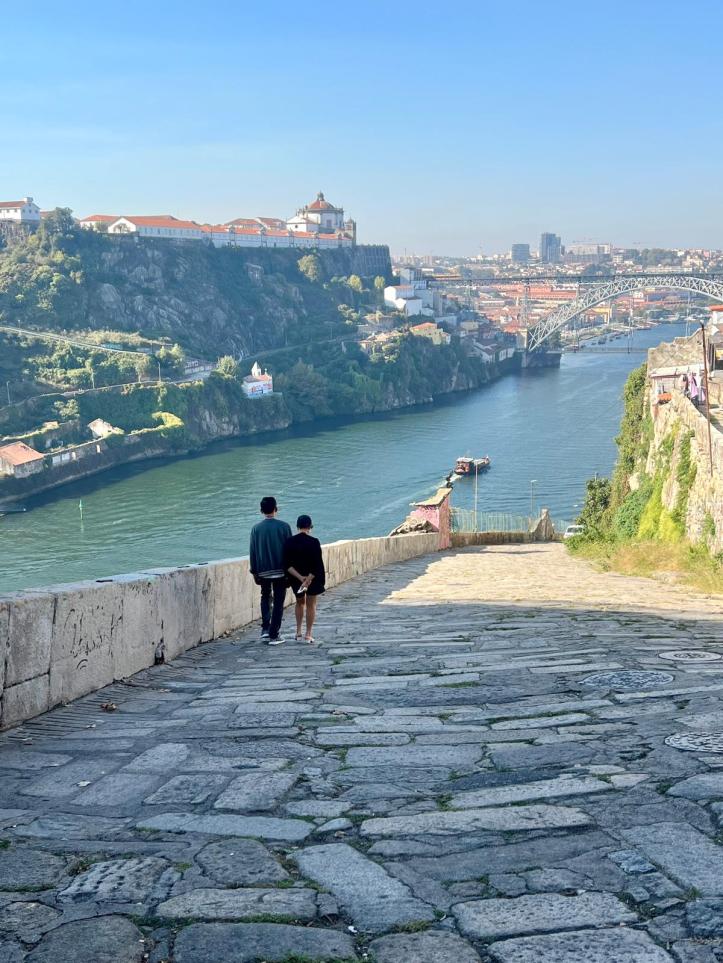
Gorse was / is a great fuel source; it ignites easily and burns with high heat, making it ideal for cooking and heating.
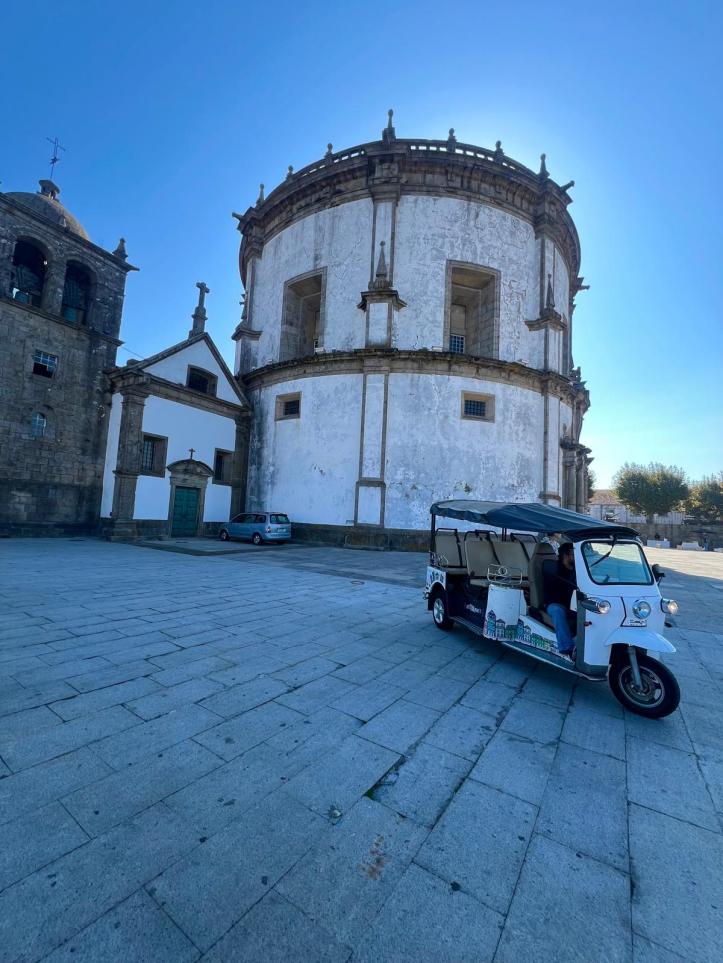
This church is located on the Gaia side. It was originally built as a monastry and is a rarity in terms of architect – being circular. Our guide told us that the architect who designed it was very religious and he did not want to have any corners where the devil might be able to hide.
From here we got a great view of the Douro River.
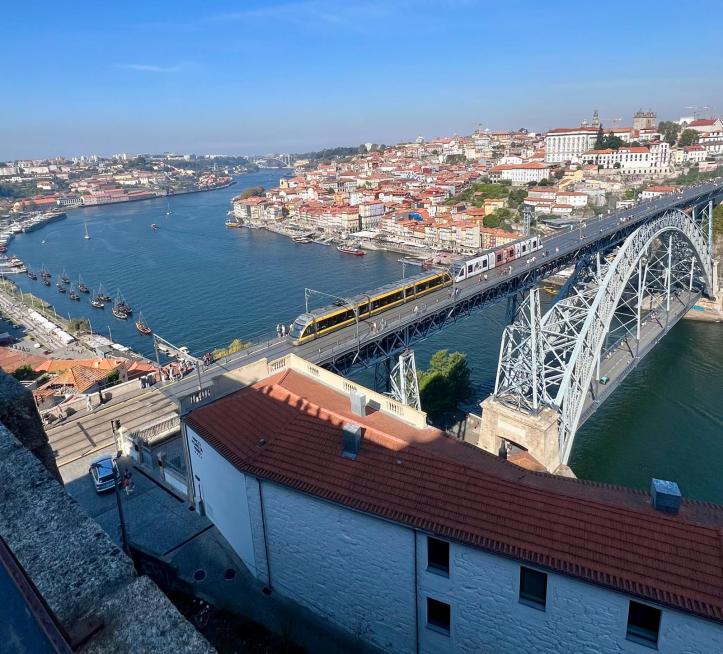
We were surprised to learn that Gaia is larger than Porto by population, but Gaia does include some outlying suburbs that obviously have quite a few people living there.
The next stop was São Bento Station. Our guide told us that it was built on the site of the Convent of São Bento da Avé Maria, a Benedictine monastery founded in 1518.
The monastery was demolished in 1892 to make way for the railway station that the government hoped would connect Porto to the rest of Portugal.
Mind you, the officials would have liked to have started building the station many years before that, but it could not be demolished while any of the nuns were still alive. And one was, for almost 60 years after religious orders were banned in Portugal (in 1834) as part of sweeping reforms following the Portuguese Civil War (1828-1834).
Existing religious monasteries could not be demolished or converted into schools, hospitals or military facilities while any member of the religious order was still alive. There is no record of what the name of this nun was, but she sure did hold out for quite awhile, including many years on her own, and despite inducements offered to have her move out.
We hopped out here to look at the inside of the train station – famous for the beautiful tiled walls in the main entrance hall. Mnay of the frescos were covered in a plastic to protect them from the nearby subway construction.
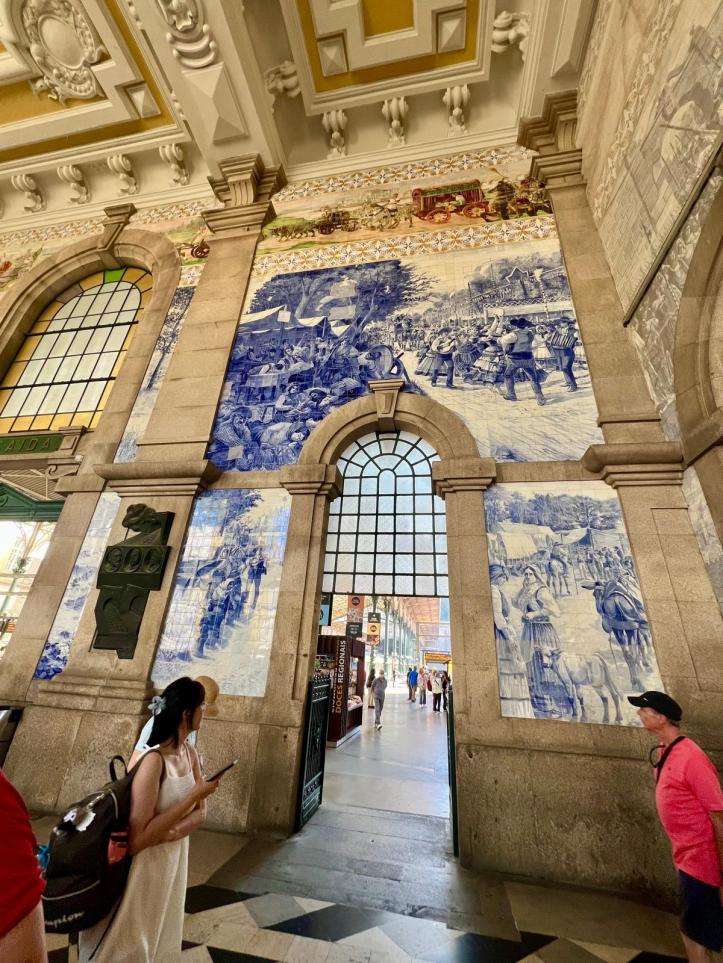
The (over 20,000) tiles were painted by Jorge Colaço, a master of the azulejo tradition, between 1905 and 1916. They depict Portugues history and rural life.
These tiles are considered as one of Portugal’s iconic art treasures.
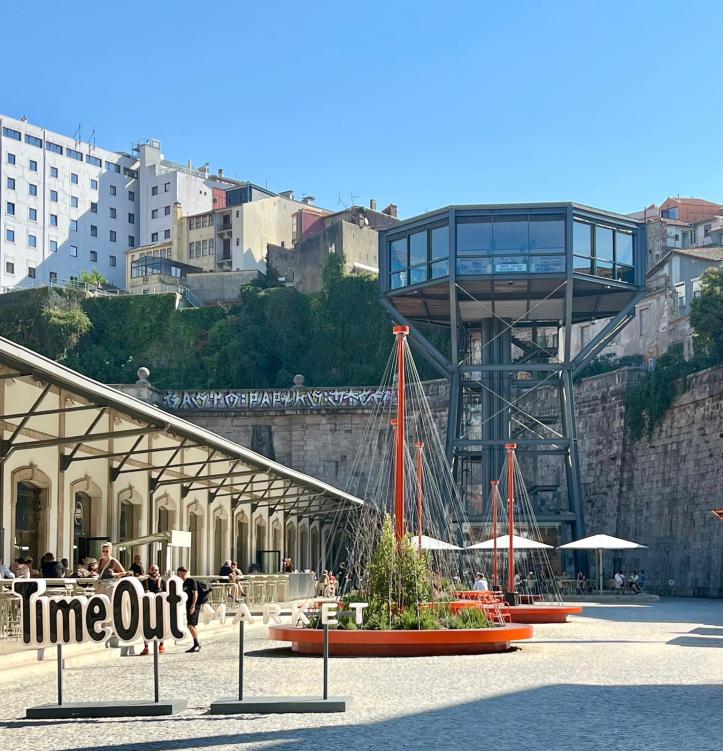
Part of the original São Bento Station has been renovated into an entertainment and dining area called Time Out. It did not have the same feel as the Mercado do Bolhão, which has another advantage for us, as it is a lot closer than here. In the background you can see a very modern structure, designed to blend the old with the new and representing the old water towers that used to be present in railway stations. It houses a restaurant.

Our Tuk Tuk ride took us through places we would not have been able to reach on our own and allowed us to spot some interesting features of the city. The buildings have to be constructed to cope with the steep streets.
We followed the Douro River, past all the six bridges, learnt that a 7th is under construction, and came to where the river met the Atlantic Ocean. We felt the temperature drop significantly due to the sea breeze. And our guide explained that the water temperature here is quite cold, only around 16°C, which would be way too cold for me.
I really wanted to take a ride on the old tram, like the ones in Lisbon, but as close as we got was to just see several of them on our drive.
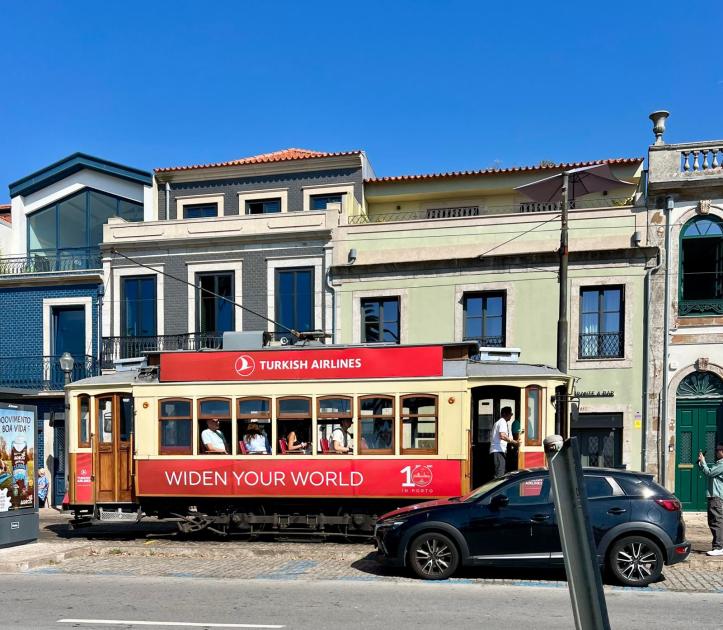
Maybe there is still some time for us to do that.
Once we’d finished our tour, we headed off in search of some lunch. We had spotted a plaza where there were a lot of options for food, so we made our way there.
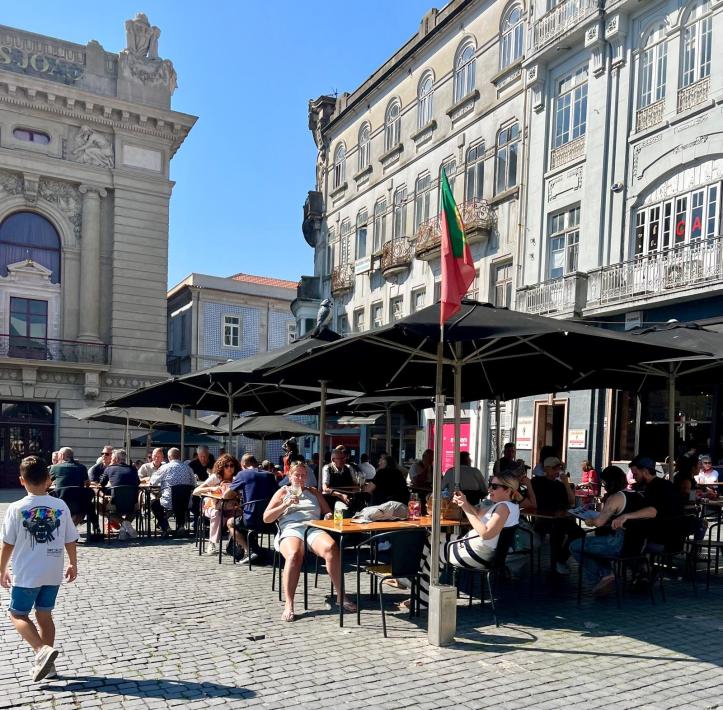
Our guide asked us if we’d tried the famous sandwich (Francesinha), and pointed out the best place to have one – made famous by Jamie Oliver. The two Americans who were with us on the tour had tried one the previous day, like us, but they both loved it.
Once seated at a table in the square I noticed that we were in front of the Santiago Café – famous for the Francesinha.
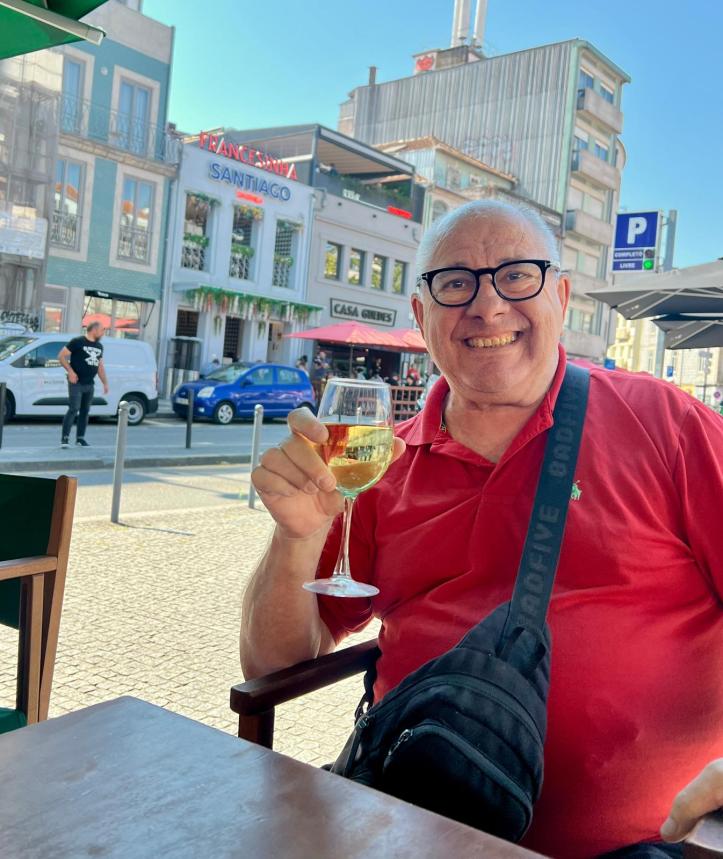
Had we gone to the wrong place yesterday? Who knows? But our guide said they have three locations and that they are all good. Anyway, there was no line up here today.
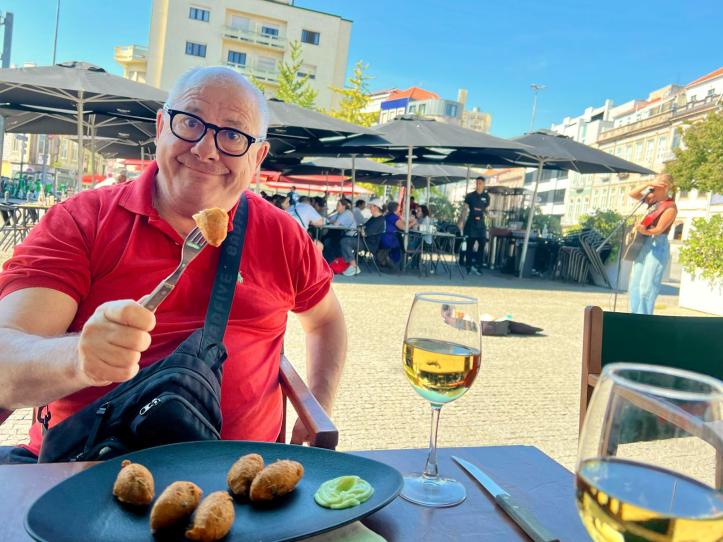
We were entertained by a talented singer who accompanied herself on her guitar, and who stood there for all the time we were there without a hat or any shade. All her songs were sung in English. We’d learnt earlier that learning English is mandatory in Portuguese schools, from Year 1 our Guide told us. It does make it easy for tourists like us.
Mick cooked us fish again for dinner tonight after we visited some nearby bars for some pre-dinner drinks and snacks. We have an early start tomorrow as we’re booked on a full day tour of the Douro Valley.
 Jane and Mick's Holiday Adventures