Our tour was not set to commence until 2.30pm, but as it was quite a walk away, we headed off much earlier to slowly walk through the historic centre of Porto and to cross the river. The streets were busier today than on any of the other days here so far. It was a Saturday, and probably filled with more tourists and some locals here for the weekend.
We wandered down the busiest of the pedestrian streets, called Rua de Santa Catarina, lined with historic cafés, international shops, and local boutiques. We were looking for a coffee and found a great little place, with no line up. Bonus. That was not true a few hundred metres further on, in front of the Café Majestic. It’s one of the city’s most famous cafés – with beautiful and ornate decorations, including chandeliers. Lots of people wanted to get in there.
We came across some more markets which distracted us for awhile, and then we decided we should follow Google maps towards our destination. There were a few steps listed in the directions, but Mick thought he was up to it.
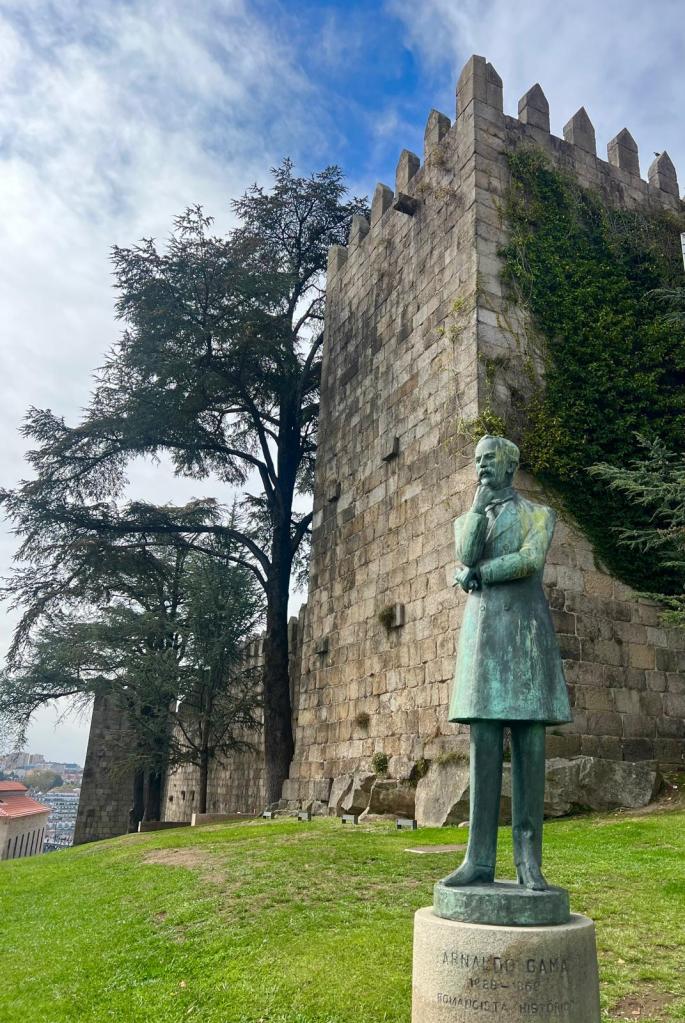
Not that we’d heard of this guy before, but his statue was in front of the old city walls, originally built in the 14th Century and renovated in the 1920s. We were still in the high part of the city and needed to head down to river.
We were right at the Funicular dos Guindais station, which many people were using to get them to the river side, but Mick and I thought we could walk it.
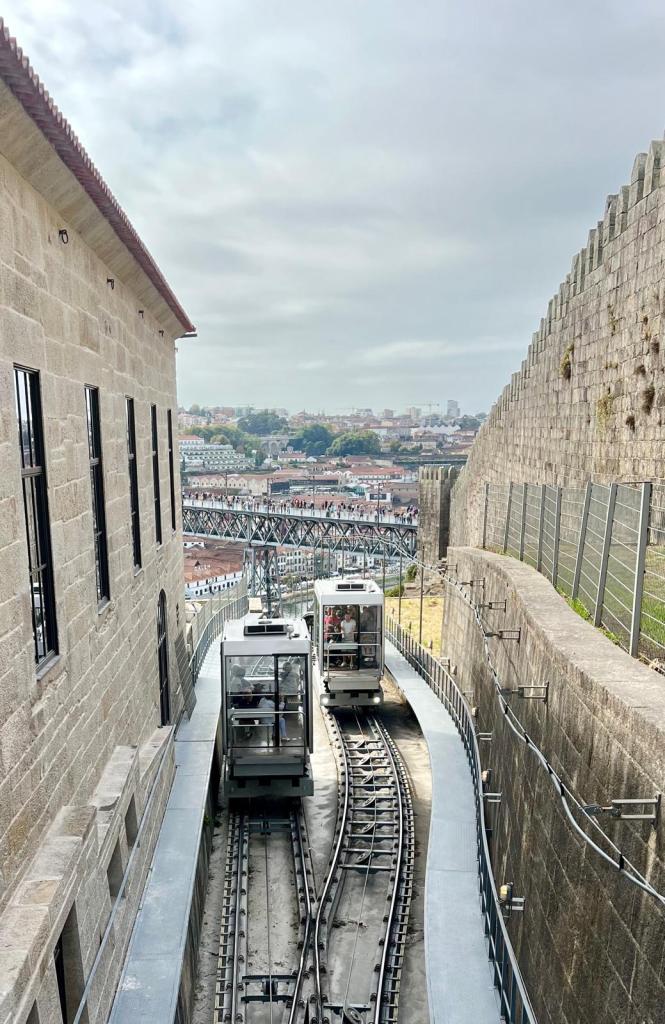
This funicular was originally built in the 19th century, and it joins the areas of Batalha (where we were) to Ribeira (where we wanted to be).
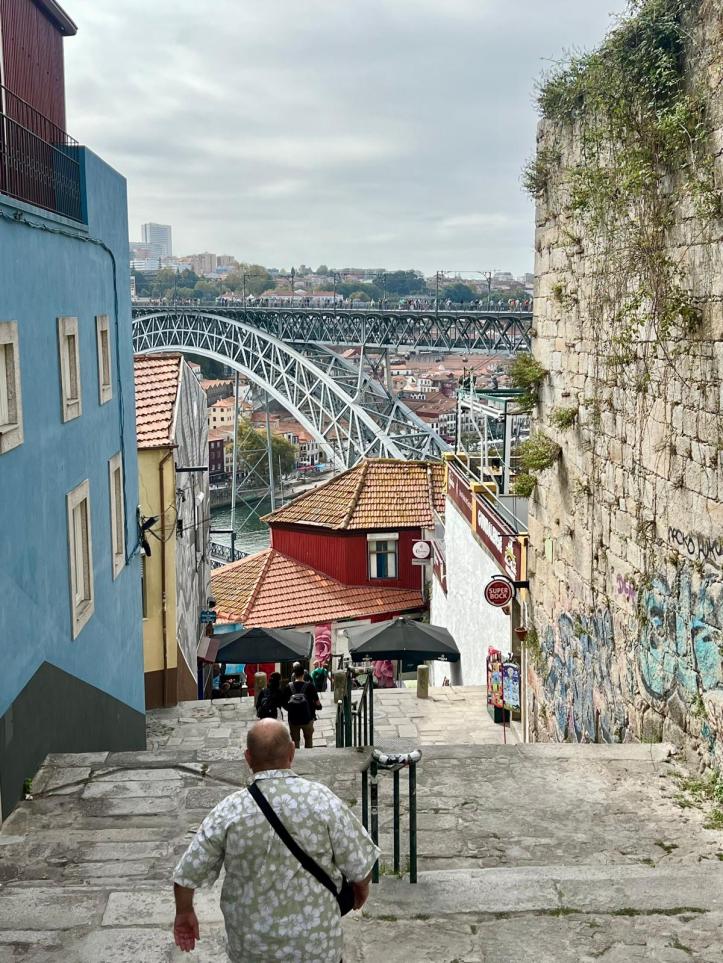
There were certainly more than 70 steps to the be descended here, and most of them were quite deep. Thankfully there was a hand rail.
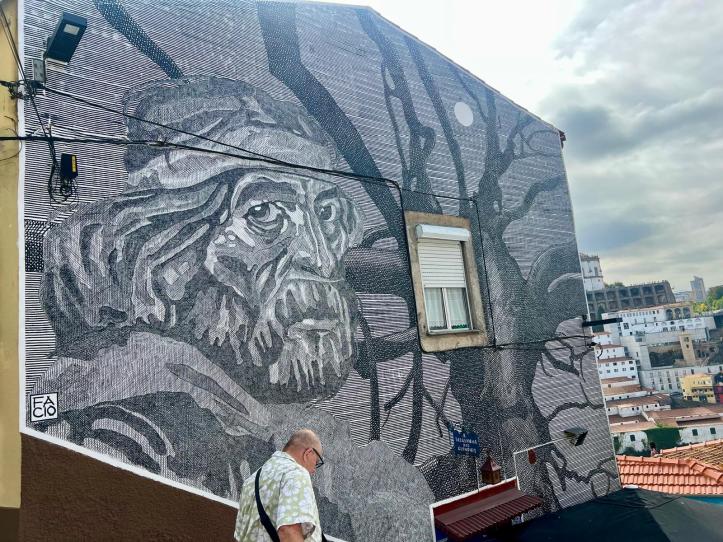
But there were distractions along the way.
As Mick started to think about how hard this was on his knees, he lifted his spirits after seeing this elderly woman coming the other way while holding her walking stick.
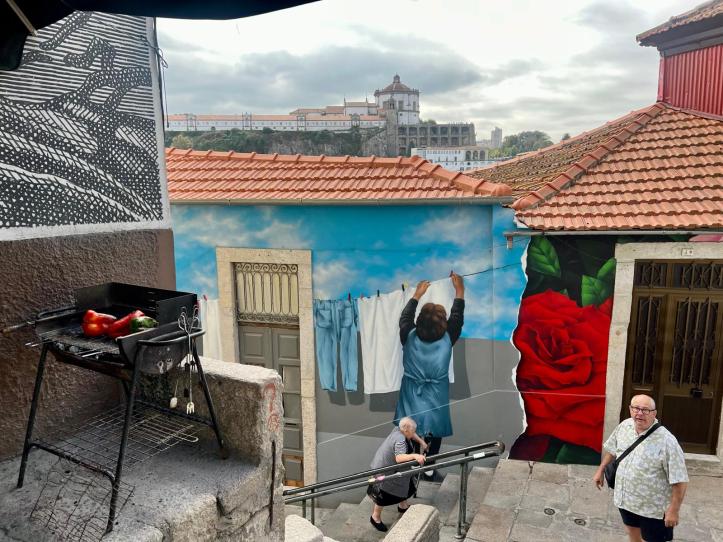
We had just passed a restaurant where a man was roasting capsicums over coals. They smelt amazing. But we did not stop, as we were only halfway down.
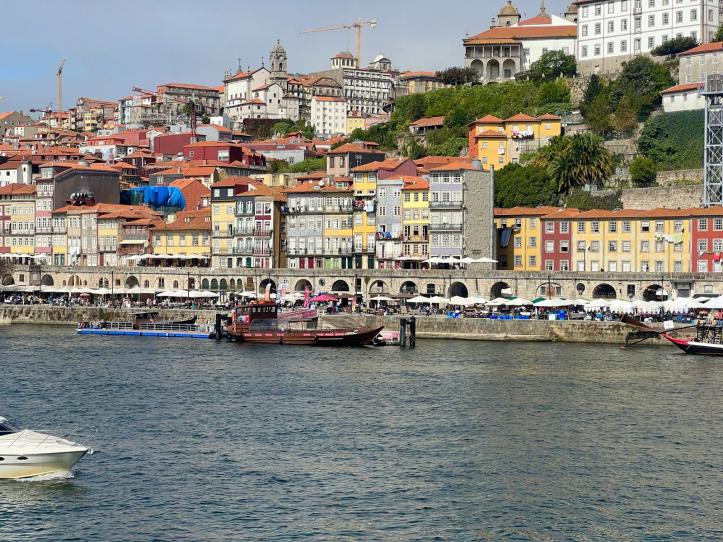
We were very lucky to find a table at a restaurant, only inside seating, which we don’t mind as there is no smoking.
Mick chose a local dish called Alheira made from traditiional game sausage with Portuguese local bread porridge and turnip greens.
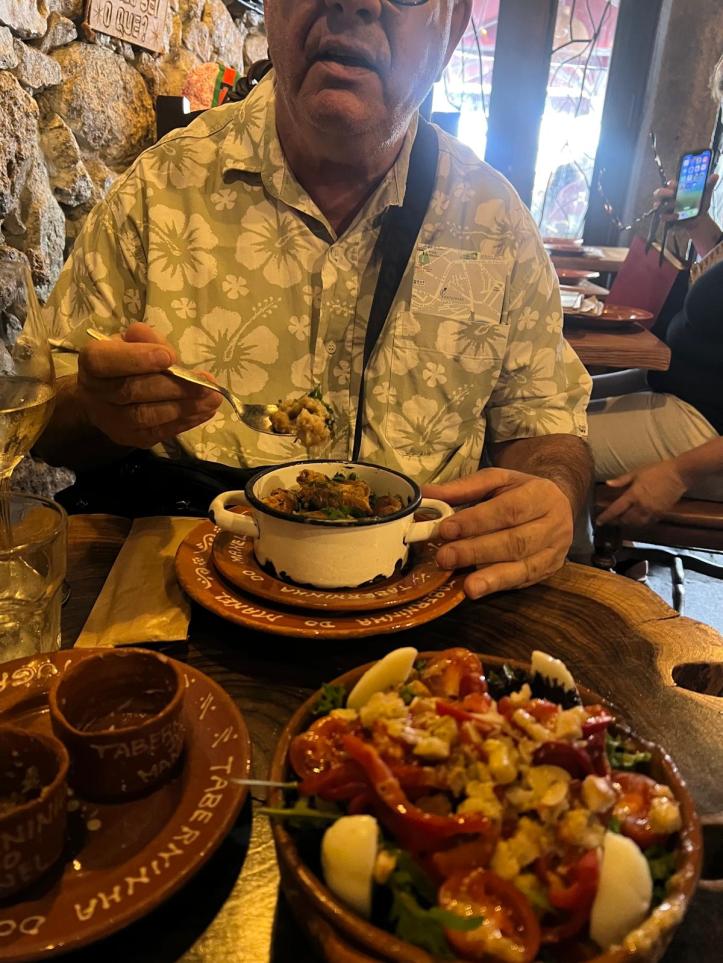
We both enjoyed a glass of white wine and while Mick enjoyed his meal, he said he did not ever want to try it again.
We had timed it well as it was almost time for our tour. We were met by our guide (David) and ten other participants.
He told us that the name ‘Port’ should have nothing to do with the city of Porto.
All port in the world is made from grapes grown in the Douro Valley – we had never heard that before. The grapes are crushed and after a short period of time, mixed with (raw) alcohol (currently bought from France and Spain and some other countries) to stop the fermentation of the grapes. This mixture is then transported to Vila Nova de Gaia, on the opposite side of the river from Porto, and where we were tasting the wines, for placing in barrels and for ageing.
The reason for the mis-naming of the product as Port, without any mention of the Douro Valley, is because the aged wine had to go through the customs office on the other side of the river (in Porto) and was therefore stamped with ‘Porto’. Most of this port wine was on its way to England, and many of the major port producers with cellars in Vila Nova de Gaia, were funded by English investors.
Our first stop was the cellar of Kopke Group.
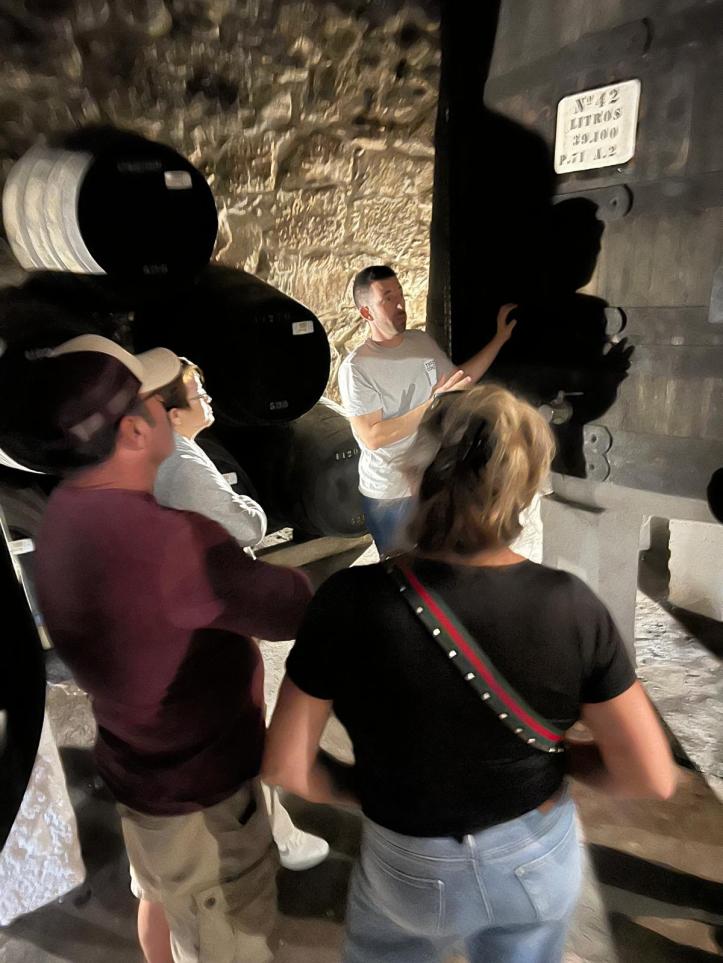
The Kopke Group includes other well-known port producers including Burmester, Cálem and Barros – plus several more.
The cellar door we visited also stocked lots of white, red and rosé wines for sale – so not only ports.
We learnt the difference between white port, ruby port and vintage port, and their different classifications. Plus we learnt that there is a new category – Rosé Port.
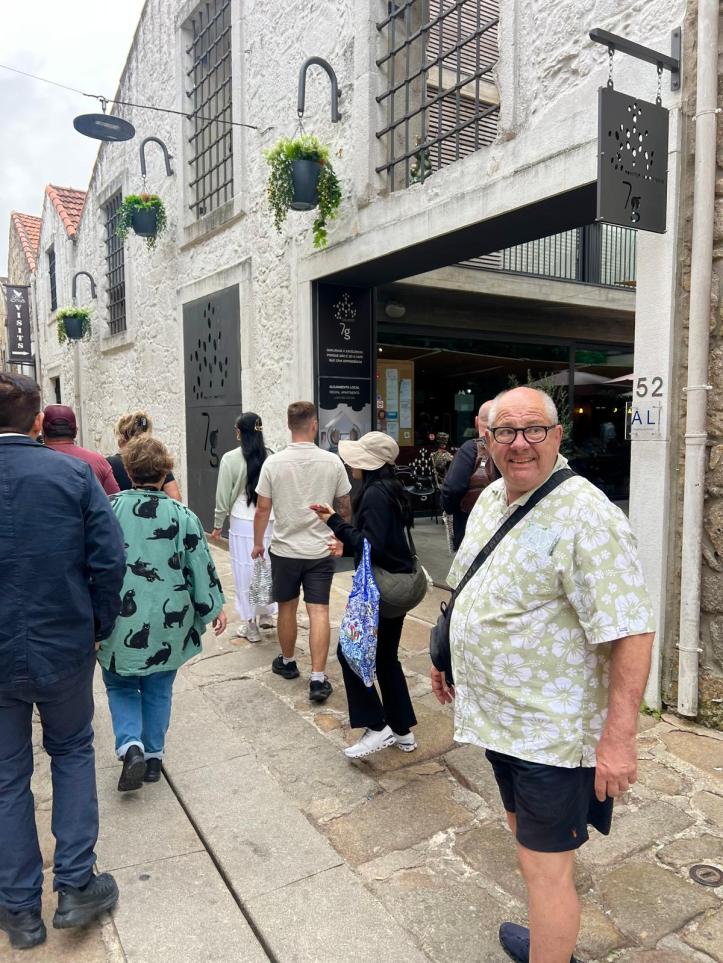
We did try a Rosé Port here at our second stop at Quevedo, and it was only Mick who liked this one!! It is apparently very nice in a cocktail with tonic water.
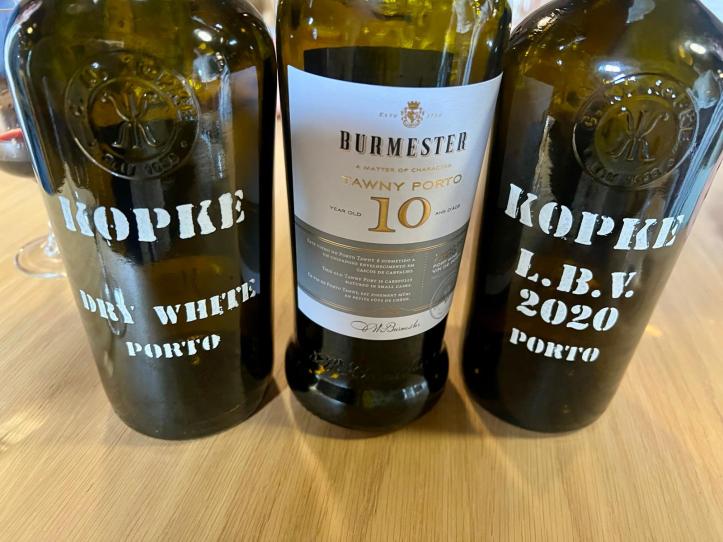
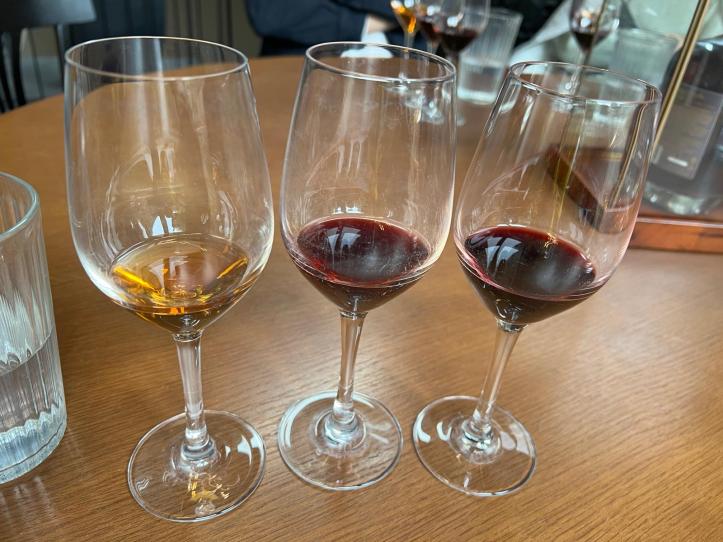
The white port (€10) was served chilled. We were surprised we tasted the tawny port next (at €18 per bottle), and for me this was my favourite of the three we tried here. The ruby port labelled 2020 LBV ( Late Bottled Vintage—a style of Port wine that offers the richness of vintage Port with more accessibility and less aging). Some of these wines are filtered, as this one was, and others are unfiltered which must be listed on the label. LBV Port is ready to drink now, but you can safely store it, unopened, for many more years. Once this bottle is open, it should be consumed within 2 to 4 weeks.
Our final visit was to a smaller producer called Vasques de Carvalho, and also and old producer that still has a barrel of port dating back to 1880, which is used in small amounts in certain bottles.
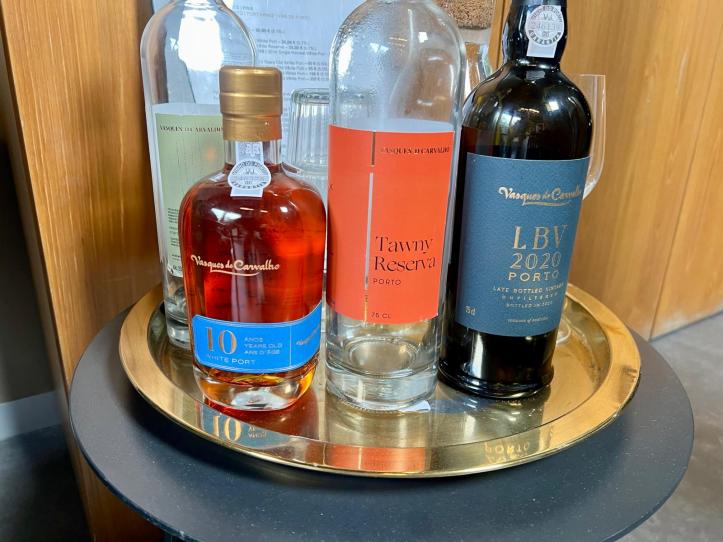
The aged white port was my favourite of the day, followed by the Tawny Reserva here (at €30) – it was so smooth. The bottle in the photo had been emptied for our tasting. My least favourite was the final LBV 2020 which was unfiltered. I thought it smelt musty – but no one else did, and it was actually very popular amongst the rest of the group .
We really did learn a lot on our tour, and David peppered the tastings and explanation about making port wine with some very fun facts which I’ll include to finish my post for today.
The Portuguese developed / invented tempura, and during the mid 16th Century shared the recipe with the Japanese when traders and Jesuit missionaries visited Japan. Tempura in Portuguese likely came from the Latin tempora – meaning the religious period when meat was avoided. The Portuguese would batter fish and vegetables in a light batter and deep fry it during this period.
The reason there are so many egg-yolk-related dishes in Portugal, including the pastel de nata, dates back to the 15th Century as well. During this period, egg whites were used to starch religious habits, used also for mixing colours for paints and for clarifying wine. This left a surplus of egg yolks. The nuns did not want to waste them so they turned them into sweet desserts known as doces conventuais—conventual sweets. The sugar was obtained from Madeira which Portugal had colonised in 1420. Each convent or region added local ingredients—like almonds, cinnamon, or citrus—creating distinct recipes tied to place and tradition. Also, as we saw in Amarante yesterday, some have their own unique shape that stands their dessert apart from others.
The third and final piece of information that David gave us I could not confirm, but he pointed out that the word for thank you in Portuguese is very different to the words used in similar languages like Italian and Spanish ( grazie / gracias ). In Portugues you say obrigado if you are a man and obrigada if you are a woman. This word is much closer to the Japanese word for thank you – arigatõ. He said that the Portugues adopted their word from the Japanese, but Google doesn’t back that one up.
And finally, David explained why most Portuguese do not like Port wine. And that is because most of them have never tried a good one. The ones they drink on special occasions including at Christmas have been purchased from the supermarkets for a few euros.
 Jane and Mick's Holiday Adventures