Included with our accommodation is a fresh breakfast that is delivered daily to our front door by the owner, Maria. Right on 8.30am as planned, our buzzer rang, and in came Maria carrying a plate of toast – each topped with tomatoes, baby mozzarella, and rocket in one hand, and a basket filled with goodies in her other hand.
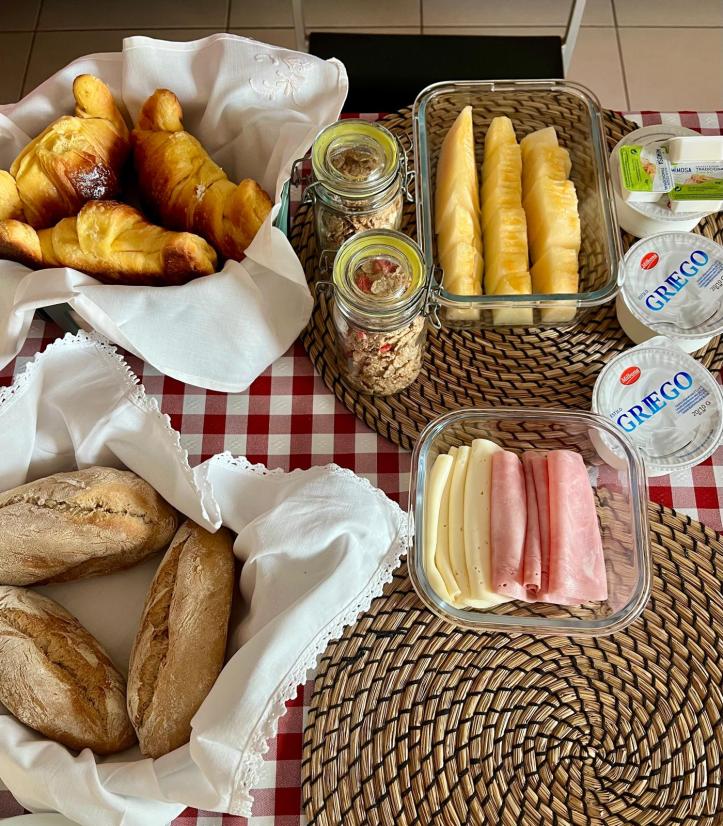
There was no way we could eat all of that – but what we did eat, we enjoyed. I left Maria a little note, with Google Translate’s help, saying thank you but it was a bit too much.
First on our list of things to find today was the Railway Station, as Suzanne will catch a train back to Porto on Thursday from here on her own, as we will be in a different location. Our host’s nephew had told us that we must visit the wine bars and restaurants that have been set up in part of the converted railway station, and it certainly looked promising – we thought we’d come back later in the day for a glass of wine.
The next place I had wanted to find is where Mick and I will spend our last 2 nights here, before we head back to Spain – Quinta do Marrocos. I had booked this so we could enjoy the experience of staying at a winery / estate (quinta) and I had read that the owner César, was a real character. His family has owner the estate for generations but he took over in 1979.
I had also read reviews about the accommodation that mentioned the difficult driveway, so I was prepared.
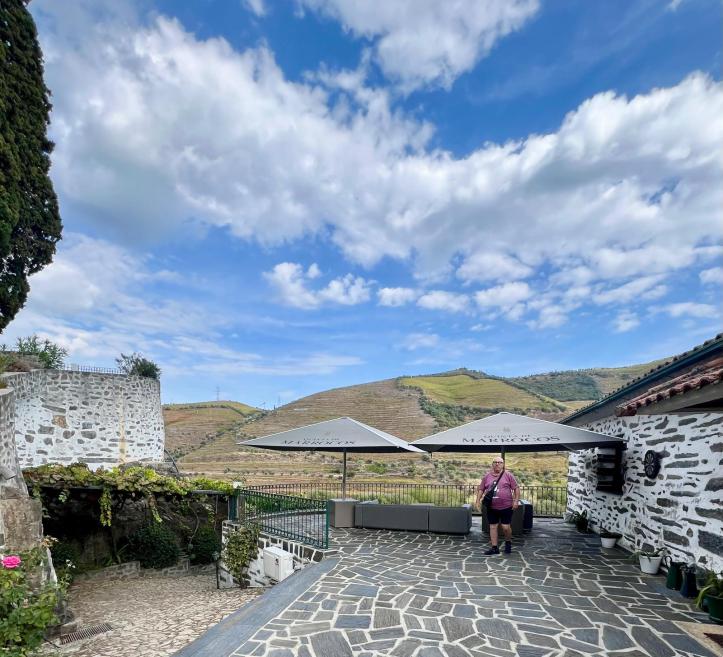
Driving up the very cobbly road and finding a park, and then climbing quite a few ramps and steps to get to where the buildings were made us realise that when we do come back to stay, we will be leaving our bags in the car and only using our backpacks. But we’re excited about it.
The three of us then headed off towards Vila Real, avoiding the toll roads, and arriving at our destination – Mateus Palace – just before 12.00pm. I had thought I’d booked a tour but when we arrived we were helped by the man at the ticket office to purchase the correct activity. We wanted to see the gardens and the Chapel, and of course, taste some wine.
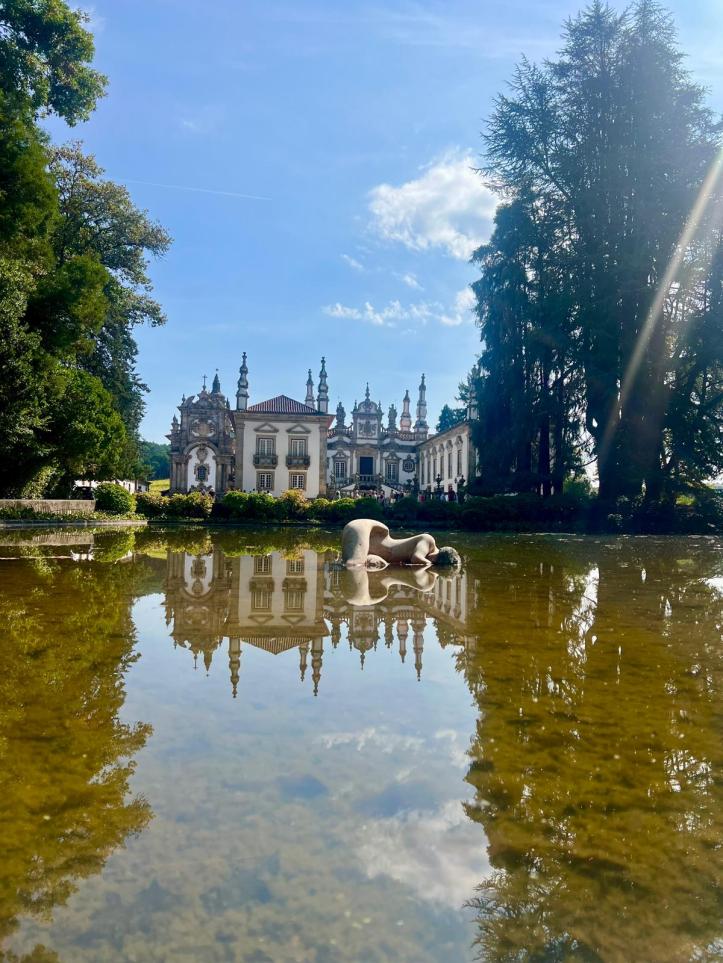
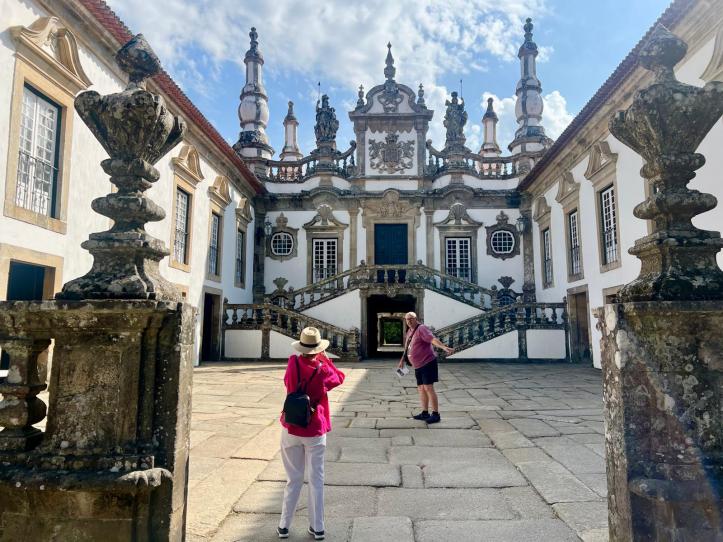
Designed in the 18th century, the palace blends “architectural grandeur with poetic symmetry”, and it certainly was impressive. Obviously this was once a noble’s residence, and now it is a national monument.
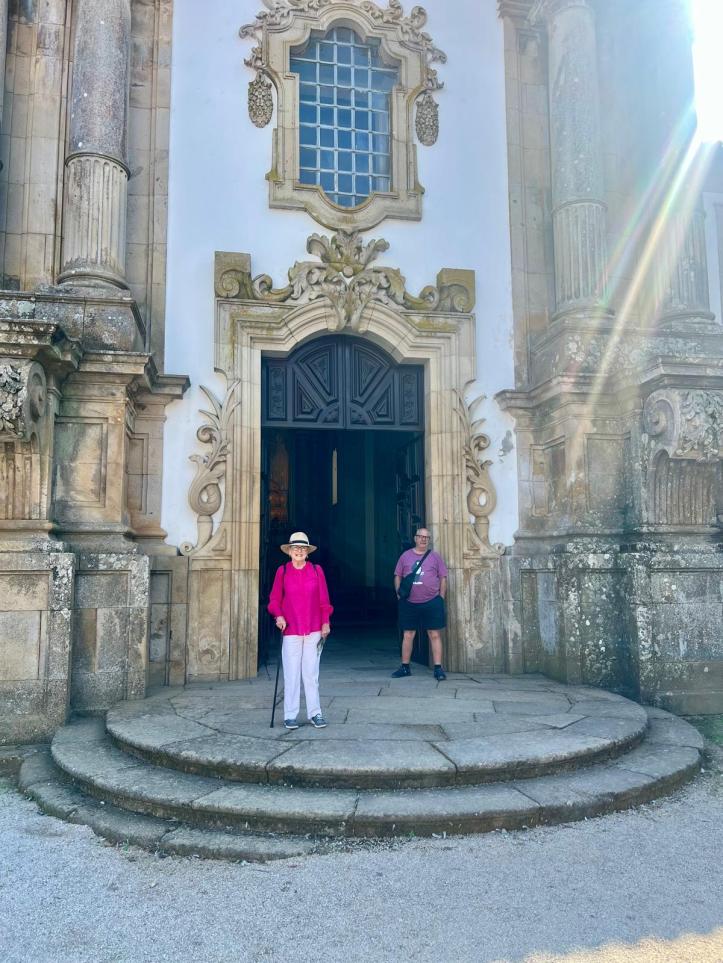
Some of the original owners of the Palace are reportedly buried under the arches of this Chapel.
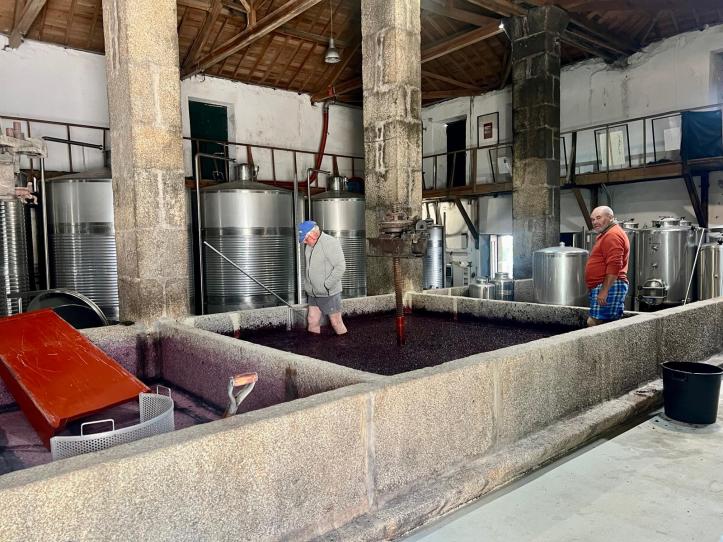
Just as we were leaving, another visitor told us that we should poke our head into the neighbouring shed as grapes were being crushed.
We then headed out to find the perfectly manicured gardens, with rows and rows of hedges, through the main courtyard of the Palace. Mick was pointing to where we had to come to come back to for the wine tastings.
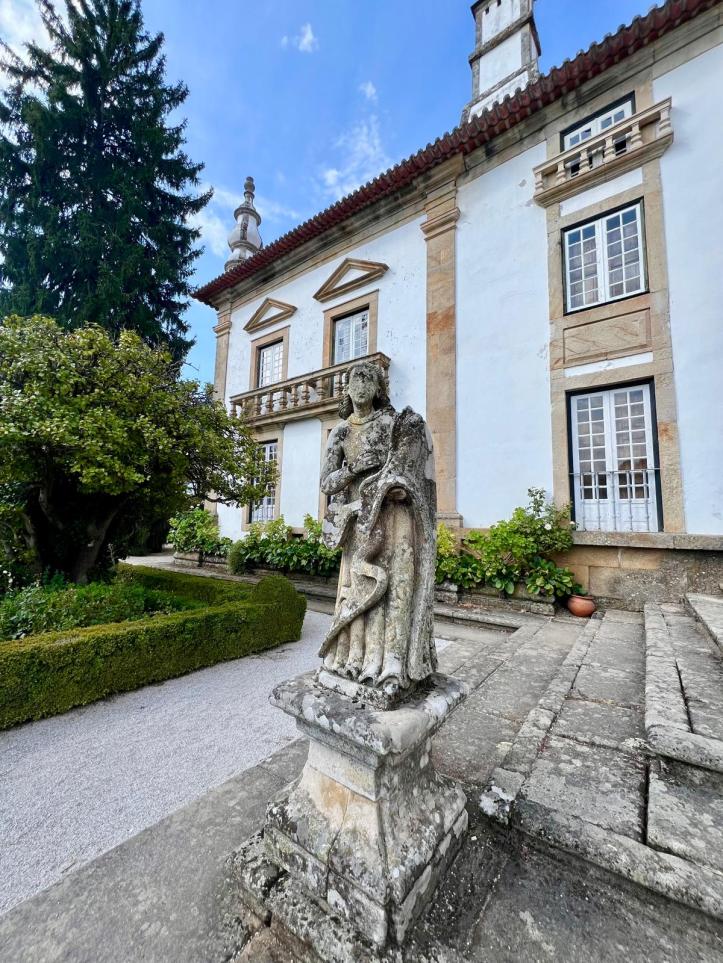
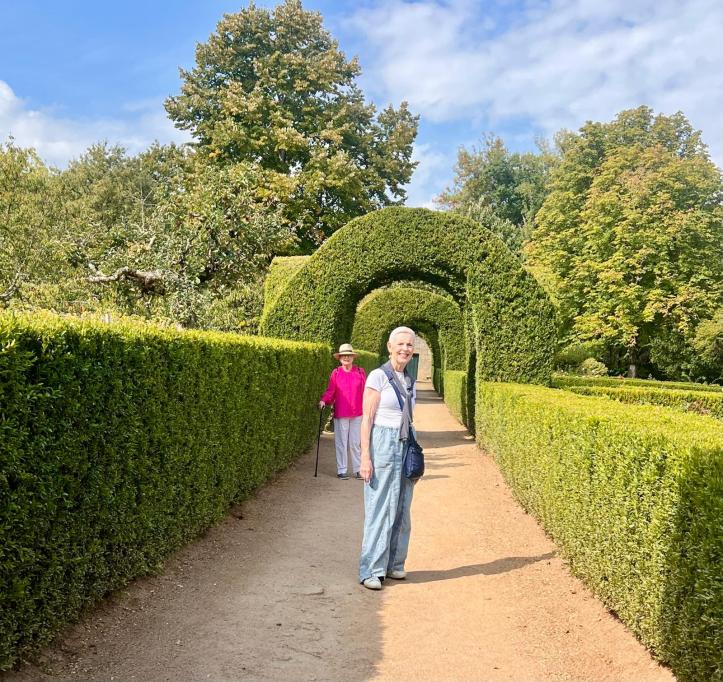
There was so much to see in the gardens, every corner had a pond, a water feature or a statue.
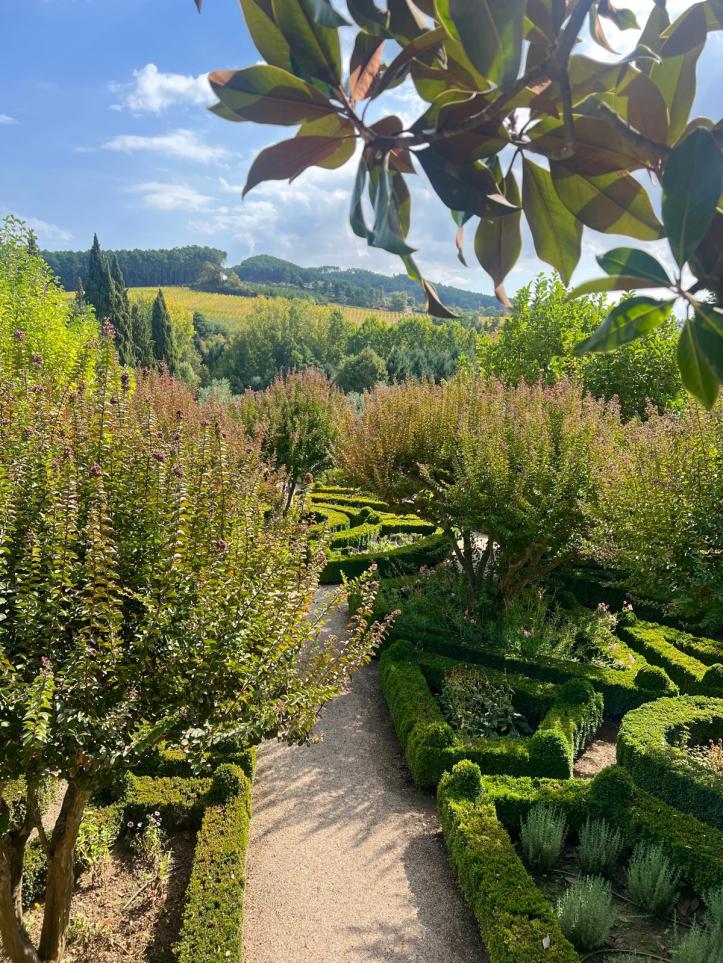
There were rows of small hedges and larger sculpted hedges that formed arches along the walkways.
By now, it was time to taste some wines. So we headed to the place Mick had found earlier and while they were waiting to be served I spotted an interesting display.
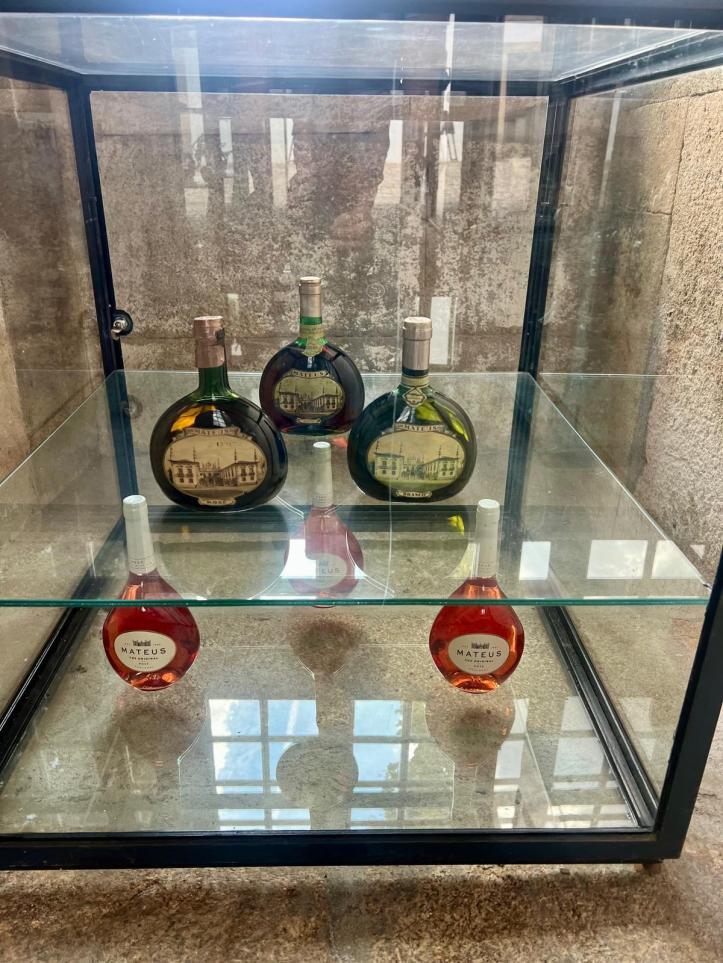
I had expected that the wine on offer to taste would be Mateus rosés, but how wrong was I?
The young man who led the tour explained that Mateus has nothing to do with the Mateus Palace, and it hasn’t for a long time. He told us that the Mateus Rosé is produced by a Portuguese wine company called Sogrape, and while they still use an image of the Mateus Palace on their labels, these images are getting smaller as the royalty costs are very high. Our sommelier today did not think much of Mateus Rosé, and he actually said that when visitors come and say how much they enjoy wines and that Mateus Rosé is their favourite – that he and the other staff secretly roll their eyes while thinking that these people know nothing about wine.
Despite that, there were some bottles of the new Mateus Rosé for sale in the shop.
I did not have a tasting, but Suzanne and Mick chose the same option – The House Wines for €10 each.
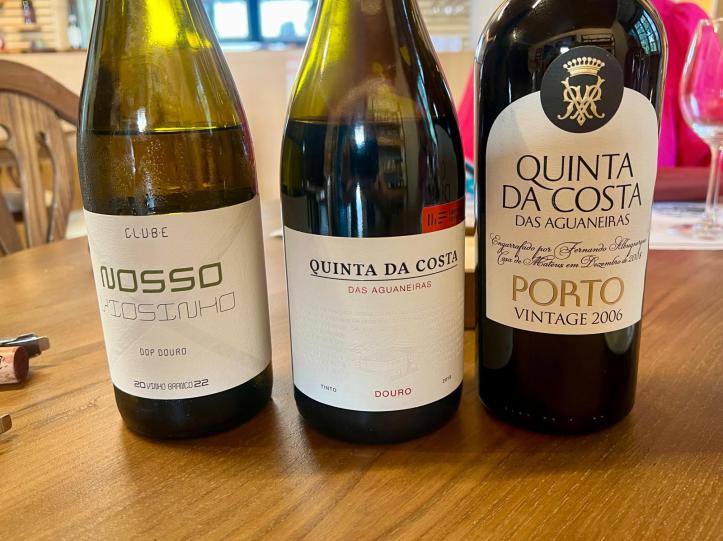
These labels are owned by the current owners of the Mateus Palace and Mateus Palace Foundation. The first was a 2022 white wine made from Viosinho grapes (100%). Traditionally used in white port wine, it is now being used in dry white blends. It can be difficult to grow as it is sensitive to heat and drought – therefore it is low yielding.
Both Suzanne and Mick loved this wine.
The second one was a red wine made from Touriga Nacional – Portugal’s flagship red grape – and a field blend of other red grape varieties. These field blends are common in Portugal as different types of grapes were planted together many years ago, even red with white, although newer vines are now planted as single varieties.
Finally they had a Vintage Port – 2006. And again, they really enjoyed it.
Served with their tasting were small biscuits covered in the finest cinnamon – and I really enjoyed those!!!!

After a great experience at the Palace, we headed into the town of Vila Real to find somewhere for lunch. There was a very large square surrounded by cafés and restaurants, not too far from the Cathedral, so we headed in that direction after Suzanne helped us work out the parking meters. This fountain was a feature of the square where we had lunch.
Ready for a little rest now, we headed home on the toll road, which is so much easier when driving a manual car, before heading back to the Railway Station for a glass of wine.
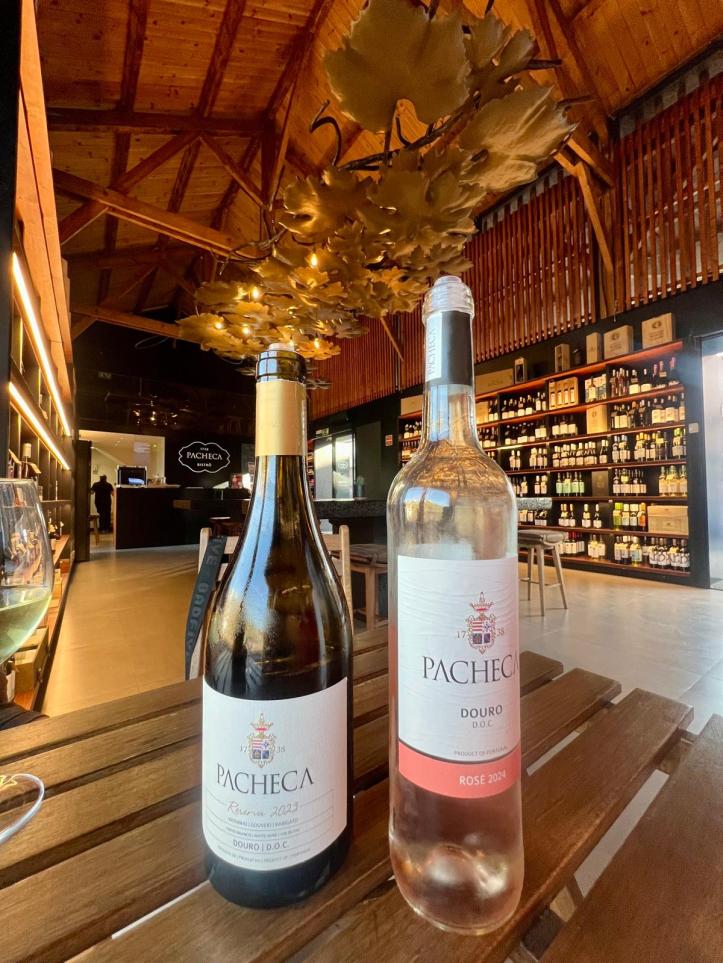
DInner at home again tonight – salmon and some vegetables, plus a glass of wine. It has been wonderful staying here, and also sharing it with my sister.
 Jane and Mick's Holiday Adventures