We started our day with a free walking tour – our new favourite way of seeing cities: up close and personal and you pay what you want.

It was threatening rain, so Mick and I dressed appropriately. This was our meeting point. Literally 60m from our apartment.
Can you spot Mick?
Agata was our tour guide: a young woman with a degree in languages and a masters in the history of Poland.
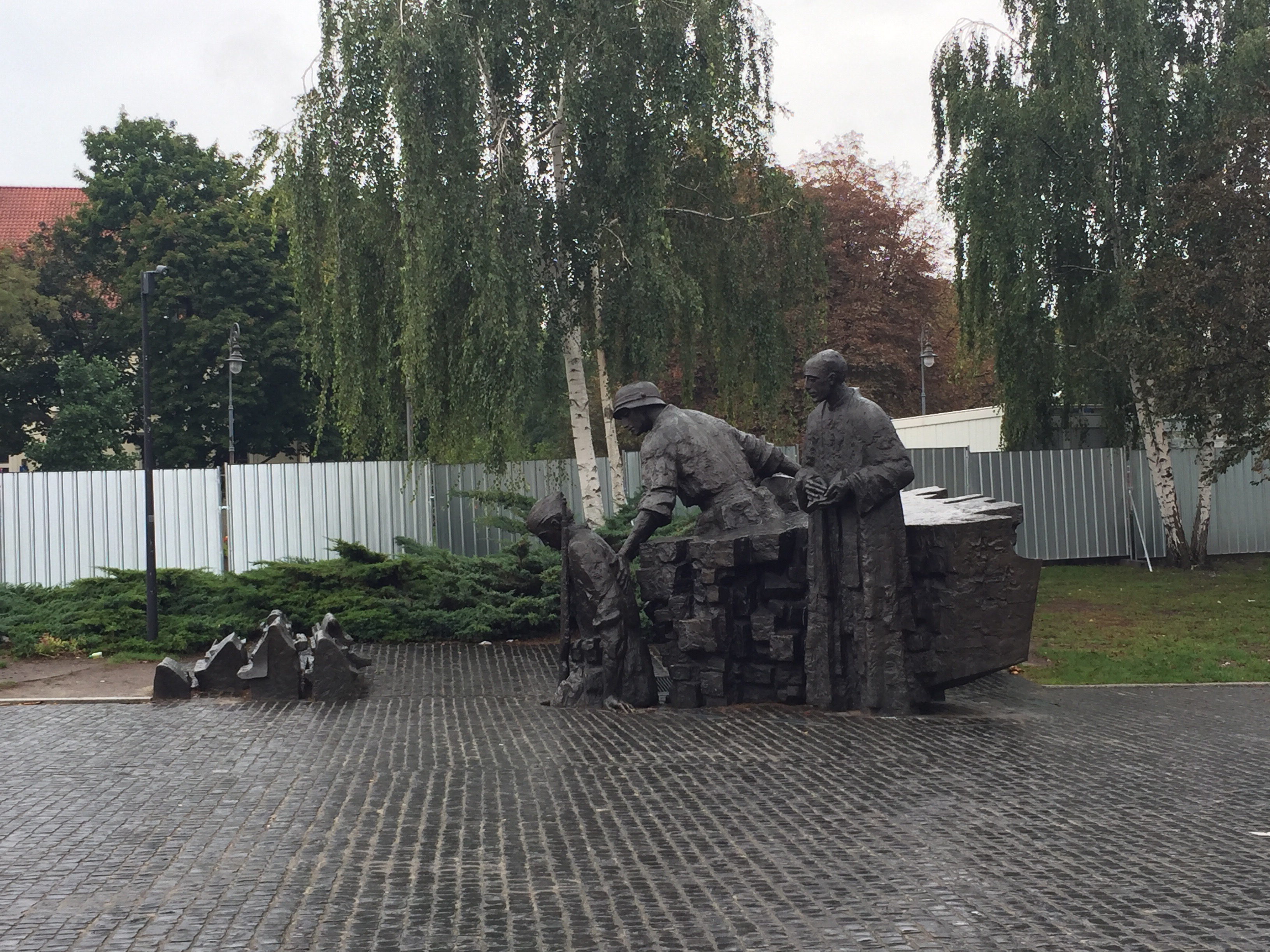
We were taken to some significant memorial sites in the city. This one relates to the Warsaw Uprising.
Agata told us how Warsaw Old Town was almost totally destroyed in WWII – 94% of it anyway. What we see now is a total rebuild of old Warsaw; much of it based on paintings by an Italian artist. UNESCO has recognised the great job they did. It does look and feel old, but in reality is only a bit older than me.
But, I look and feel old too.

I learnt more of the Warsaw uprising in the afternoon when I went on a second tour.

This Jewish man led us on a tour of the Jewish history of Warsaw. He was amazing, but the story he told was terrible.
450,000 Jews from Warsaw were murdered or died here between 1941-1943; 300,00 of them were exterminated at the nearby camp of Treblinka.
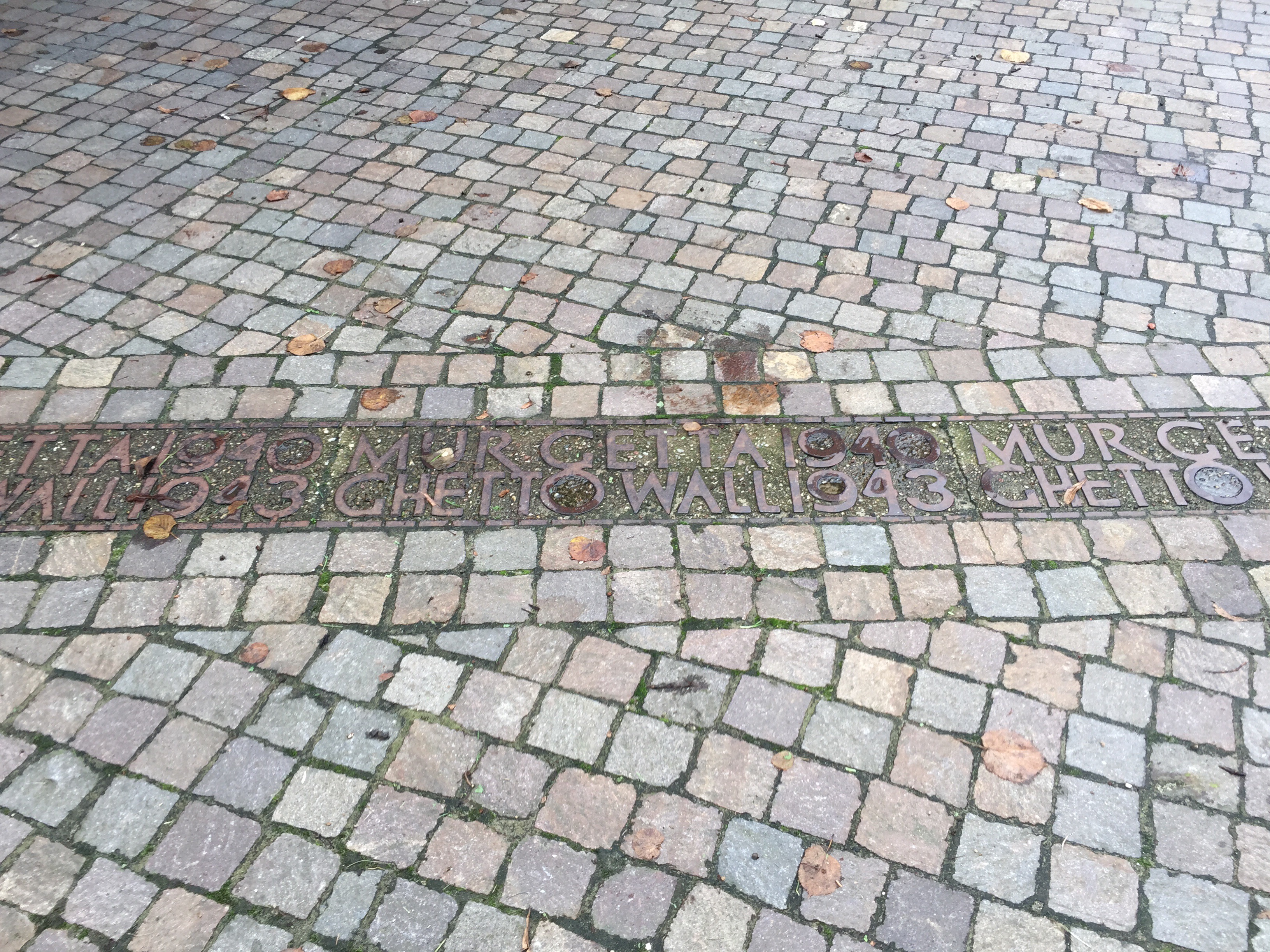
These stones mark out a boundary of the ghetto wall, that was constructed under the Nazi regime.
Poland is where the Jews led an uprising against the Germans after the Germans entered the Warsaw ghetto and started shooting unarmed Jews.
The Jews held the Germans at bay for weeks, but eventually they were overpowered and more than 100 Jews committed mass suicide at 18 Mila Street.
Mick and I had both read Leon Uris’ book called Mila 18, but today I got to understand it a bit better.
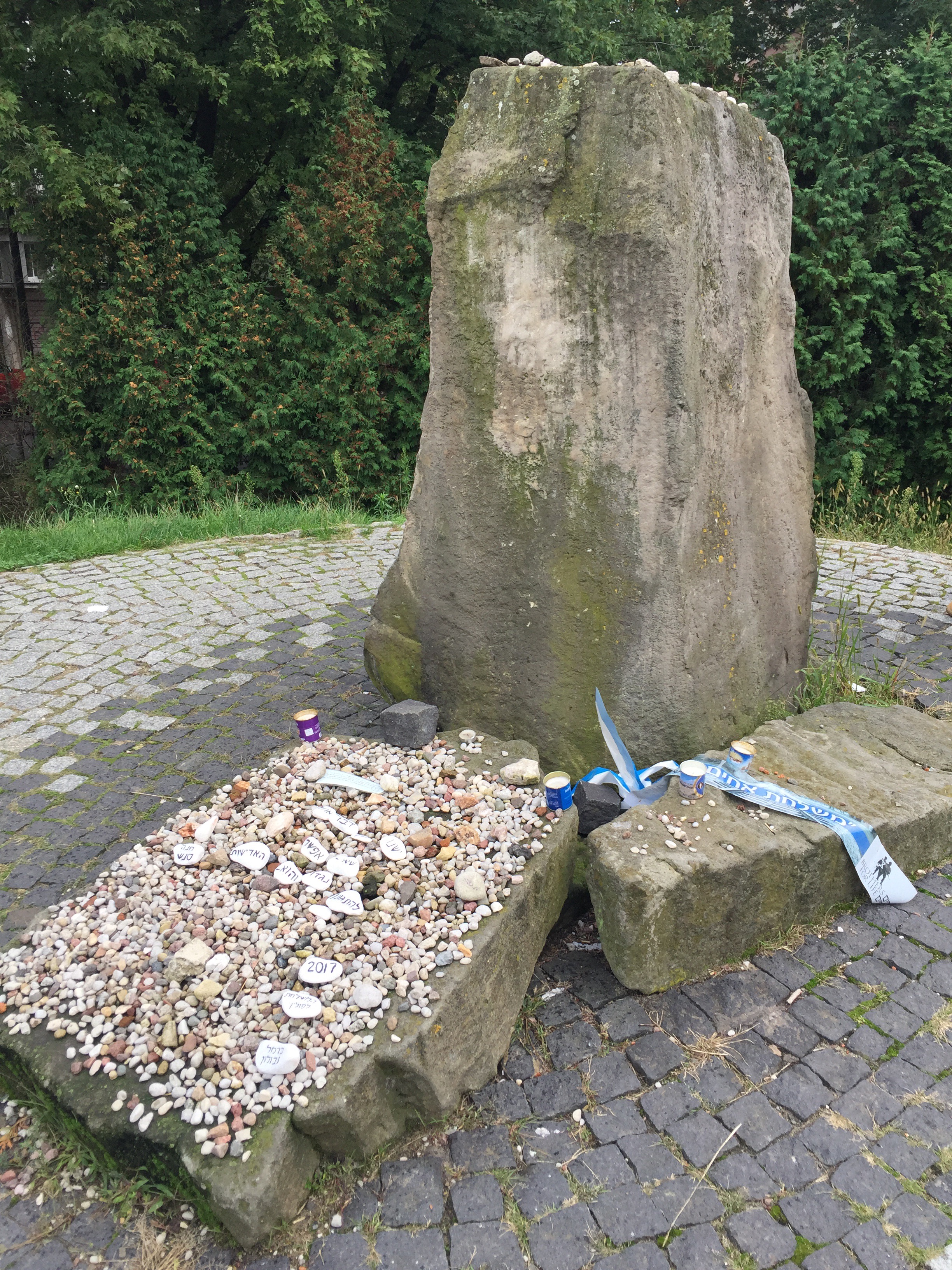
This is the monument at Mila 18.
The stones are a way for Jews to honour the dead: flowers die, candles eventually go out, but stones do not breakdown. We’ve seen lots of monuments where people have laid similar stones.
Our minds are bursting with what we’ve seen and heard today. There are about 1500 Jews in Warsaw today, and about 8000 in Poland.
This evening we visited an out-of-the-way Polish restaurant recommended to us by our tour guides.
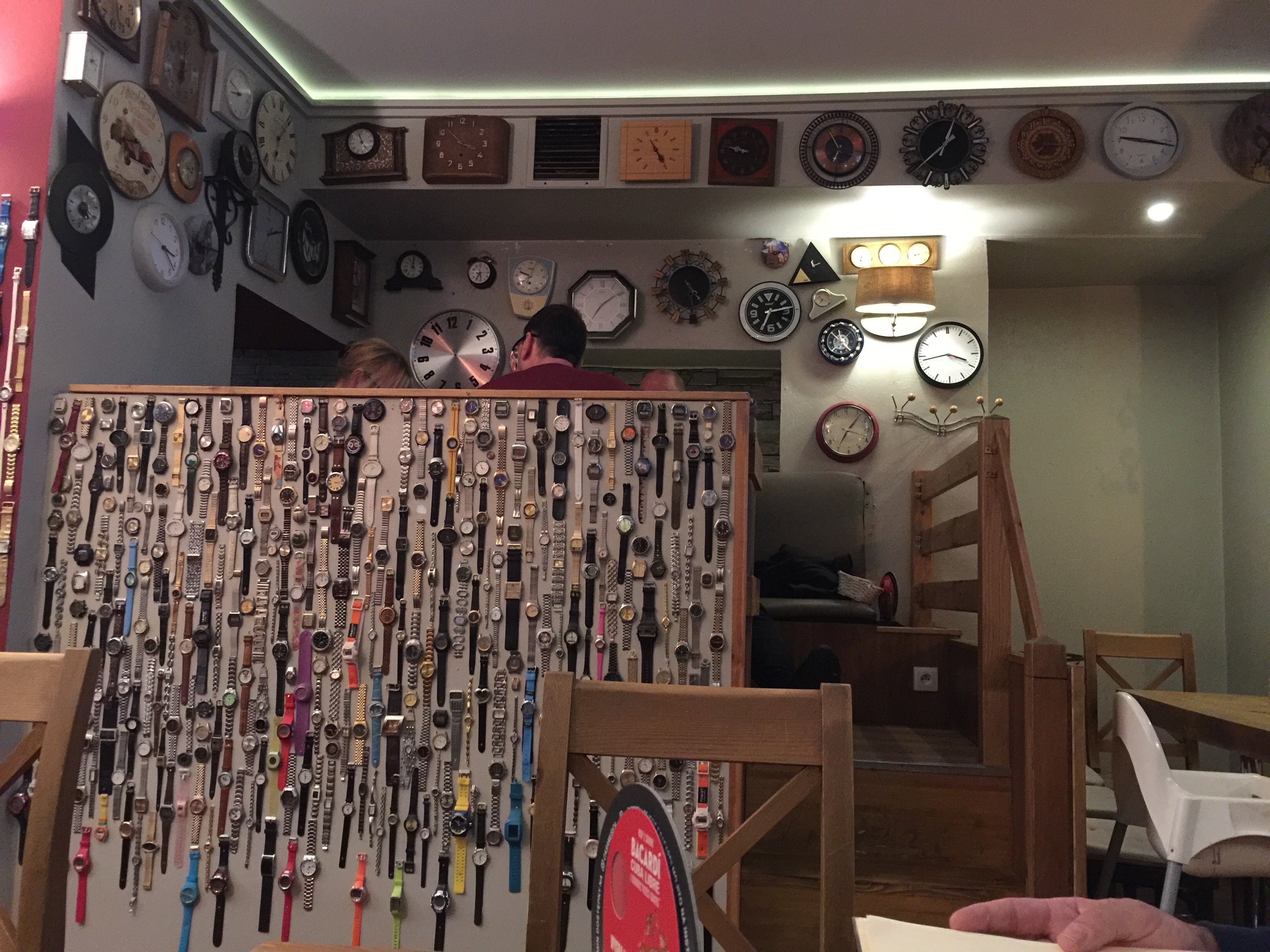
Those are watches on the wall, and lots of clocks too.
The only other table of people there were Australians.
The meal was great.
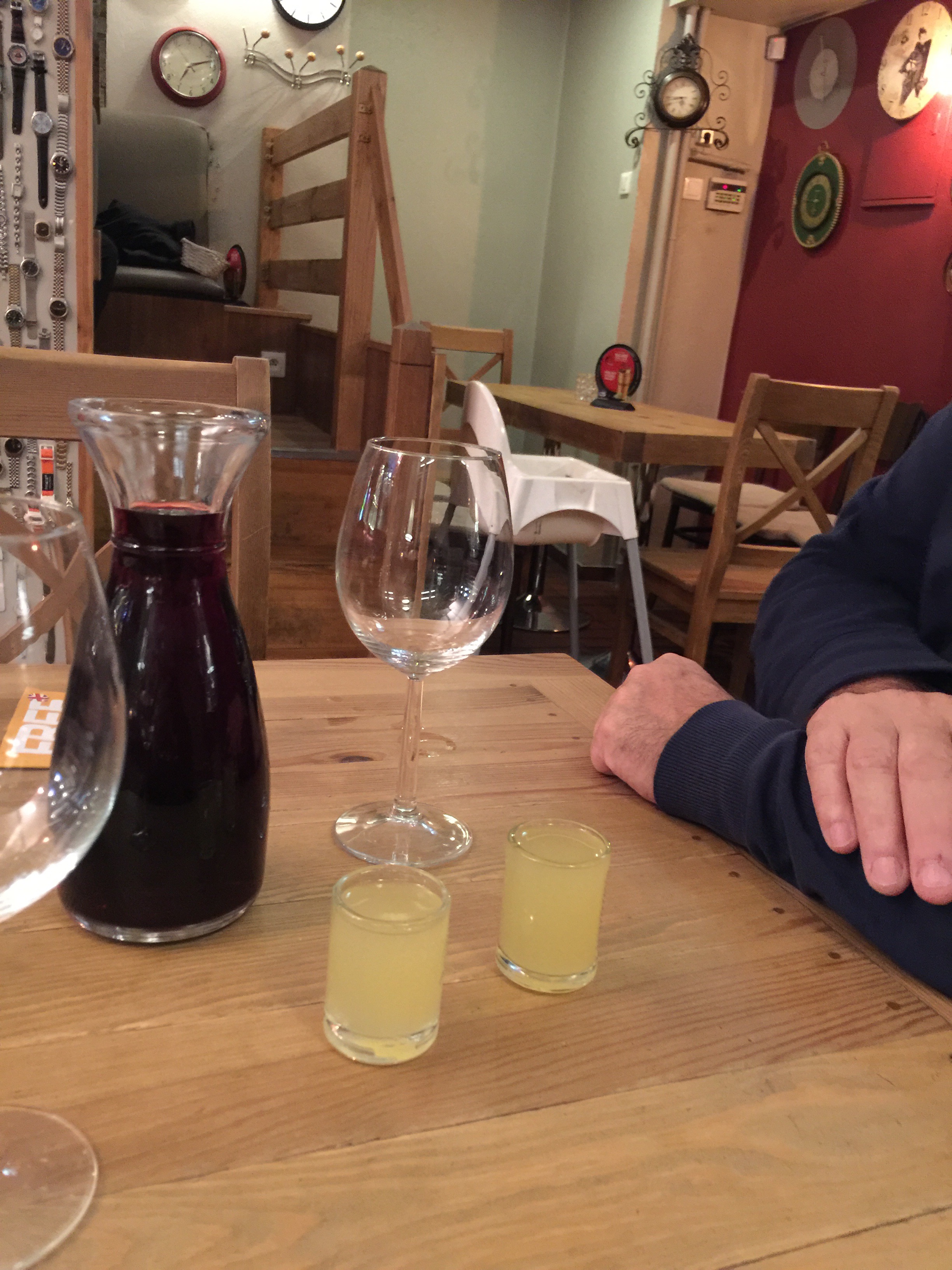
We received a free gift of homemade lemon vodka. Delicious.
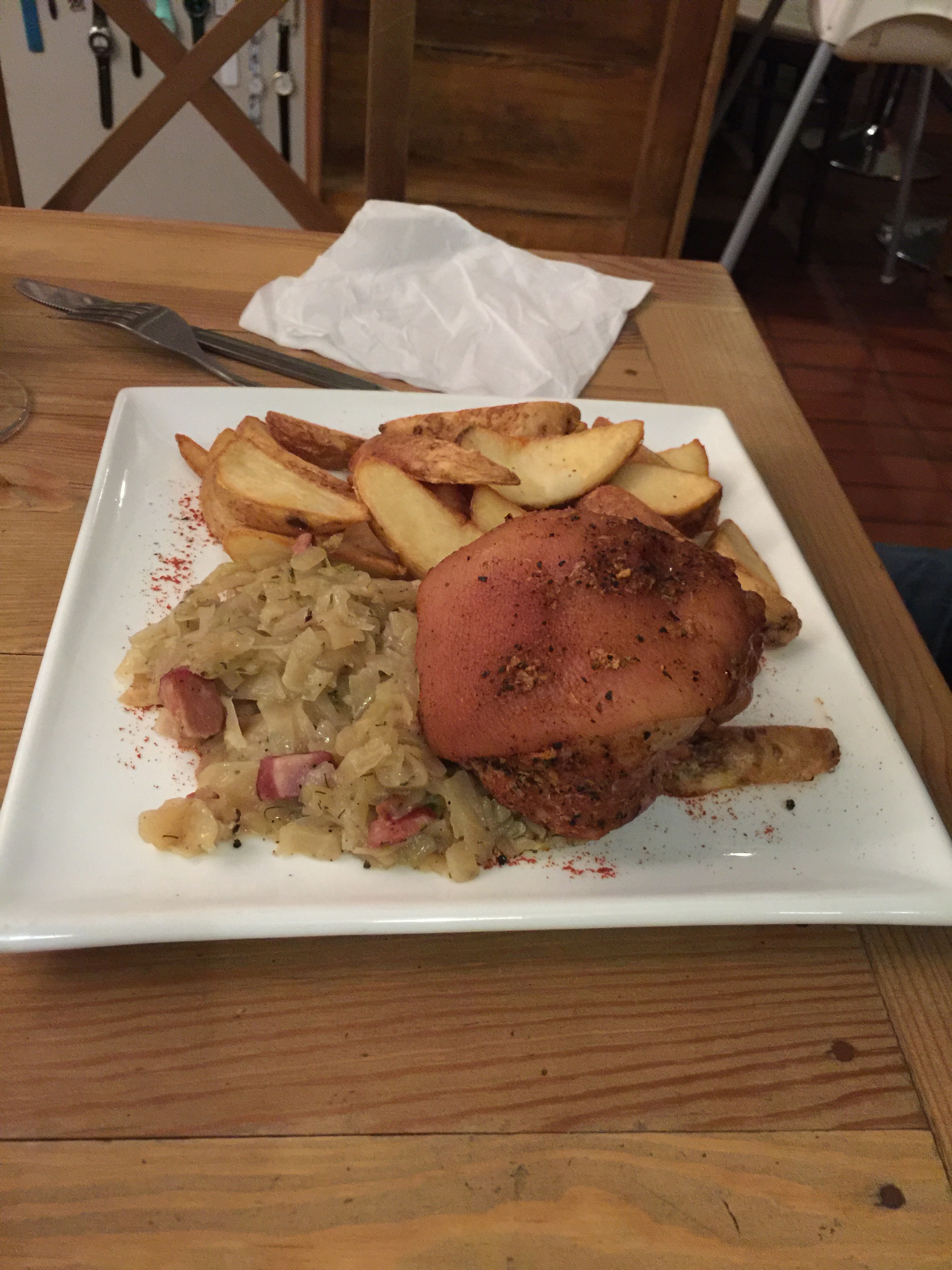
Mick ordered pork knuckle and I had the onion soup.
A big day, but most enjoyable.
We have one full day to go and are looking forward to a Chopin concert.
 Jane and Mick's Holiday Adventures
Dear Jane and Mick,
I love waking up to your blog and what you have been up to and eaten!!! Jane I did not
realise you were vegetarian and Mick is obviously not!
When in Italy I book walking tours in Milan and two in Rome and loved them. They were
all locals, usually history students, spoke very good English and included places that
you would not find yourself. The best fig gelato in Milan!!!
The tours in Warsaw would have been wonderful, such sad history that unfortunately has
now replaced Jews with other minorities with wars today. We really don’t learn from
history and I remember Br Moylan telling us that was the point if studying it.
My first job in pharmacy was with a very orthodox Jewish man. I worked Jewish holidays
and he did the Cristian ones. He employed an old man that in my opinion as a smart 21 yr old
really was much too old, to slow and I did not understand why he bothered. One day he
was making a cream and got it on his shirt and had to roll his sleeve up and I saw his
number on his arm. He was 16 when taken from the Warsaw ghetto, separated from his family,
never saw them again and sent to Auchwitz. He went to Israel but moved to Sydney as
people in Israel wanted to talk about the war all the time and they were heros but could not
leave it behind. He married a woman he met when liberated.
I learned a lot the 3 years I worked there, about the real war, how hard it is to be a good
Jew, life and myself, not quite the smart young thing I thought I was. His wife had major
Psych problems but they had one daughter after being told his wife would not be able to
as she was starved etc in the concentration camp. I also met a lot of WW11 Jewish survivors
who came to the hospice for care and their memories returned to many as they again
faced death. Very very sad lives.
You both look like you are having a great time, very interesting places and historic
areas.
Love to you both and thanks for sharing.
Bel xxx
Sent from my iPad