It has been a long weekend in England with a bank holiday today, Monday 27th. That meant there were no buses, and an ideal time to explore Bourn further.
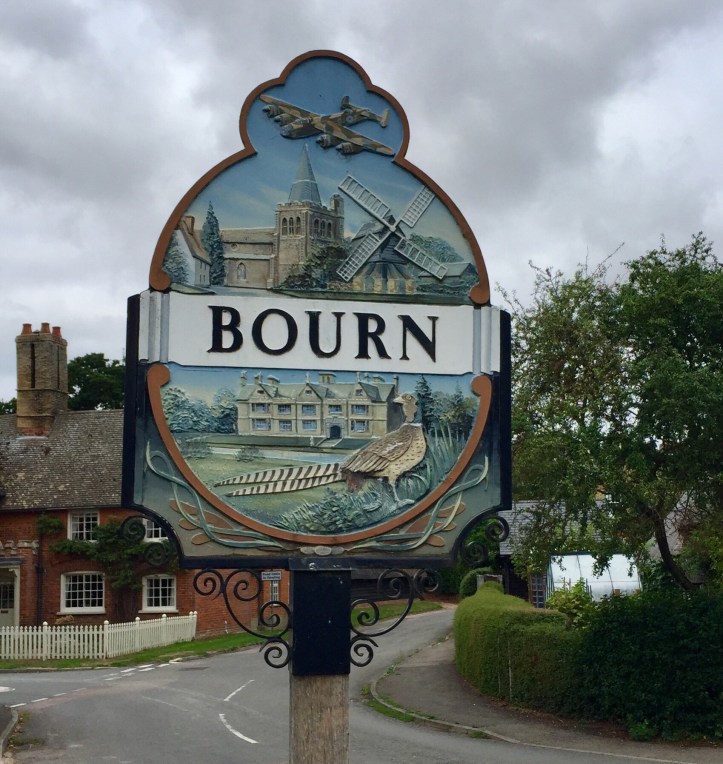
You remember I mentioned about the sign with various images depicting important things about the village?
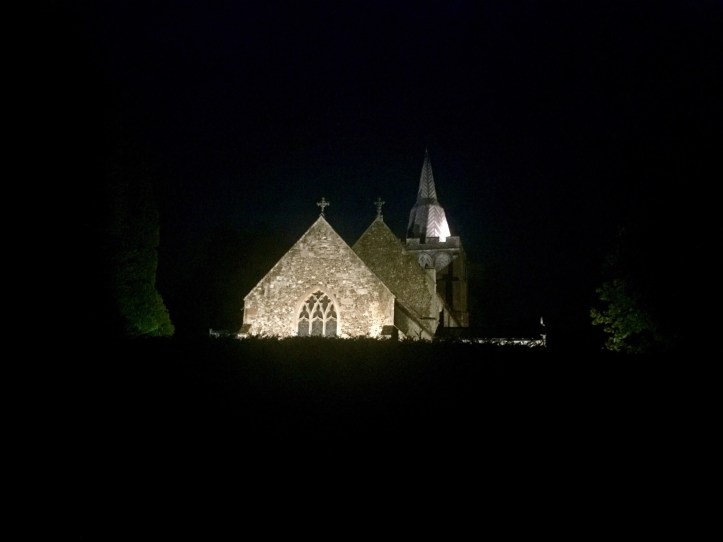
In the top half of the sign you’ll see the post mill, that we visited last weekend, and the church spire, which is next door to where we are staying. I took this photo last night when we were taking the dogs out just before bedtime.
On the lower half there is a pheasant, I’m unsure why, but the other image is of a big building, called Bourn Hall.
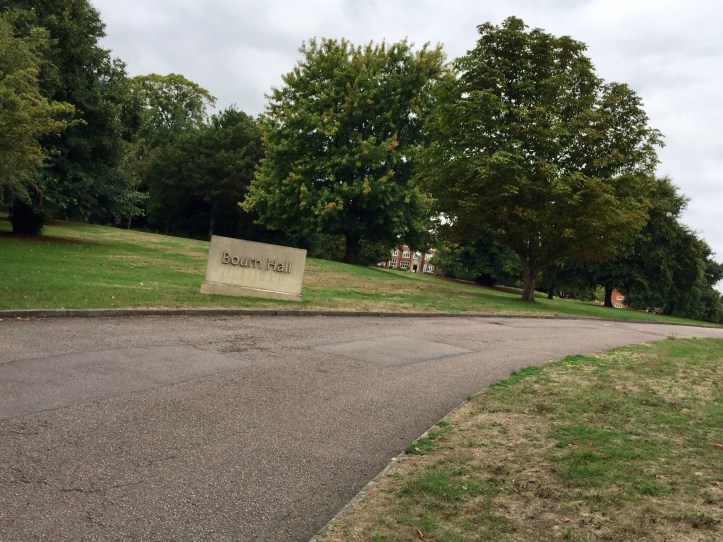
This place is very close to us as well, as it is next to the church on the other side.
We walked around here the other day and actually caused a security scare. We noticed the boom gate at the front, but also noticed that it was possible for pedestrians to walk past the gate. There was a sign for a public footpath as soon as we came past the boom gate, but we felt sure the driveway would lead us to the dog walking area we use each morning. So we pressed on.
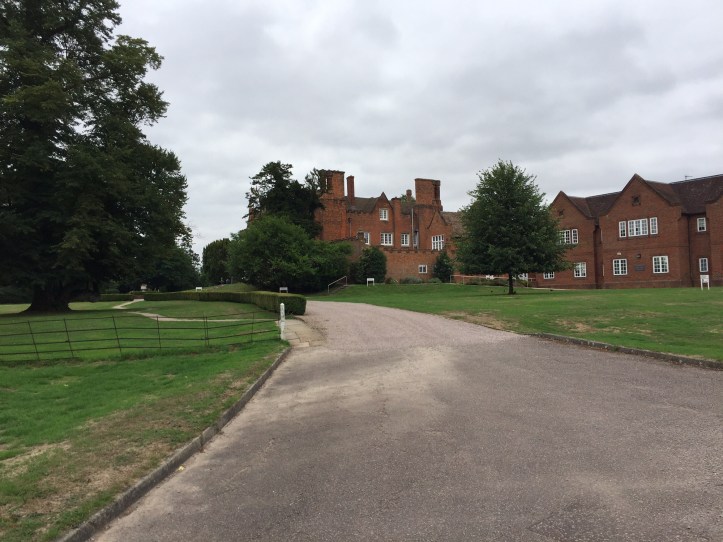
It was after hours, and we got up quite close, still searching for a public footpath. Just as Mick and I both realised we were in the wrong place, this was confirmed for us by a security guard who had spotted us on the CCTV. He was pretty quick to tell us to be on our way, as it was private property.
Our Aussie accents and our innate ability to ‘act dumb’, meant he headed back inside the building as we walked back down the long sweeping driveway.
The place was massive and has a wonderful history, including being the site where the Sheriff of Cambridgeshire (not Nottingham of Robin Hood fame) built his (wooden) castle shortly after the Norman Conquest.
The wooden castle was burnt down in the peasants’ revolt and this building emerged much later.
In 1980, the building was bought by Patrick Steptoe and Robert Edwards.
Do those name ring a bell?
What about Louise Brown?
Louise Brown is the first IVF baby, born in 1978 as a result of the work by Patrick Steptoe and Robert Edwards, as well as Jean Purdy. And yes, that work was carried out at Bourn Hall – it is clinic for infertility treatment.
Natalie Brown, Louise’s sister, was born four years later conceived the same way, and by that time, she was the 40th IVF baby, called test tube babies back then.
Wow – that’s pretty impressive for this little village.
On a totally different point of interest for us, was a recent visit to Manor Farm. It is near that massive barn I spoke of last week. There are lots of cute animals here and parents bring their children here to get up close to farm animals.
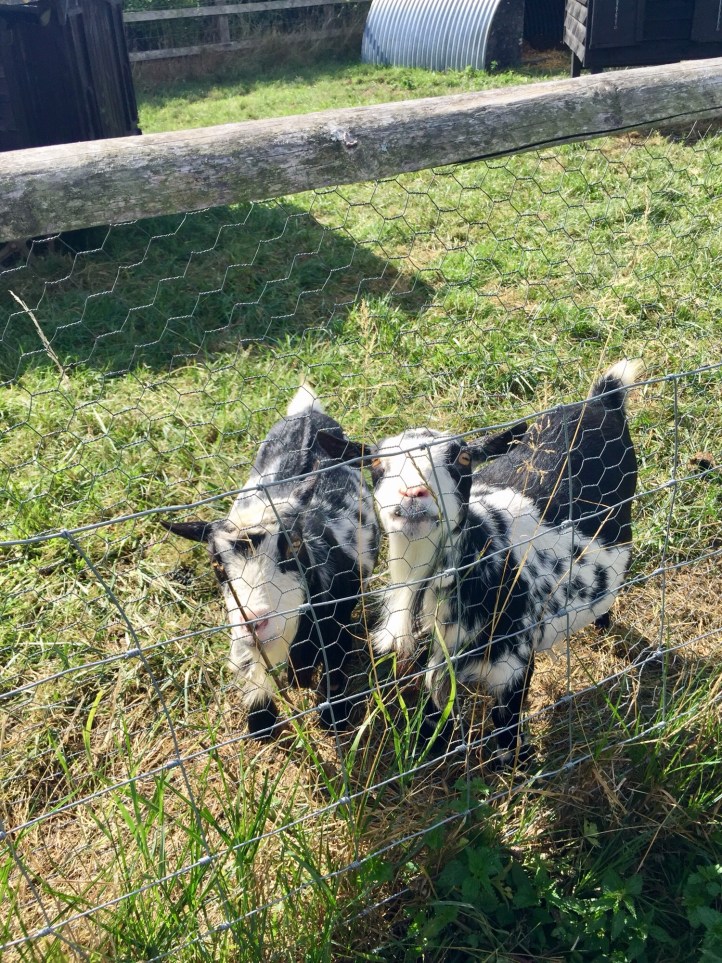
Like these very fat sheep with crazy-looking eyes.
But, we wanted to see this animal.
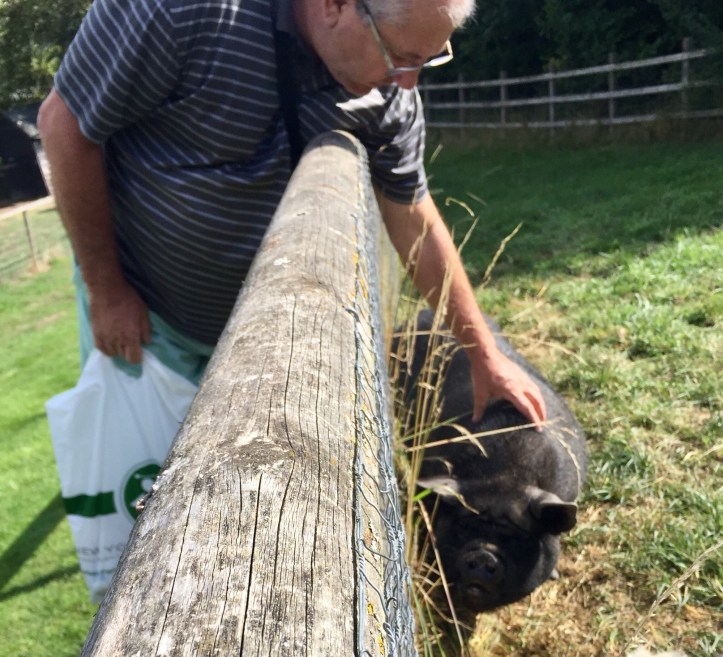
Oh, how grateful we were that she was living happily at this little farm.
Why you might ask????
Because she used to be a pet of the household we are sitting for now, and I’m just not sure Mick and I would have been up to caring for her.
We all enjoyed a few extra walks over the long weekend. This is my favourite part of our morning walk.

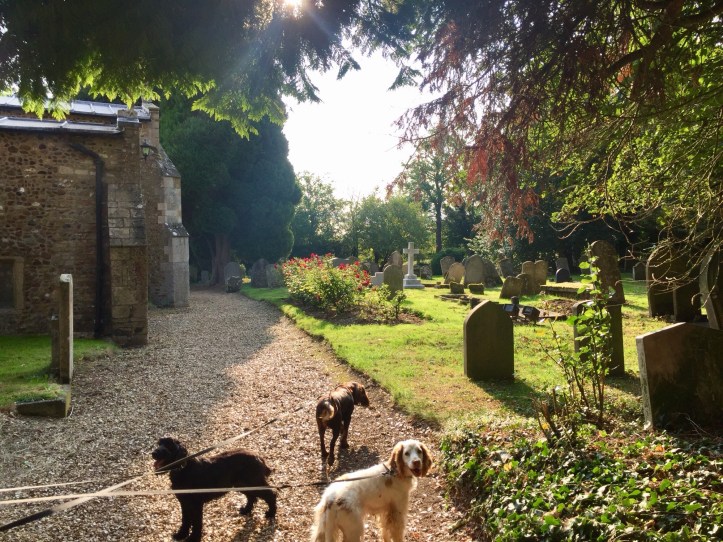
And this next shot is as we walk back through the church yard with its cemetery filling the area surrounding the church. Some of these graves date back to the early 1800s.
 Jane and Mick's Holiday Adventures
Thank you for sharing another lovely post related to your current house-sitting job. I love the tree-lined section of your morning walk — like a green cathedral! I savor these glimpses you give us into Britain and British history.
Glad you’re enjoying it. We feel pretty lucky to be here.