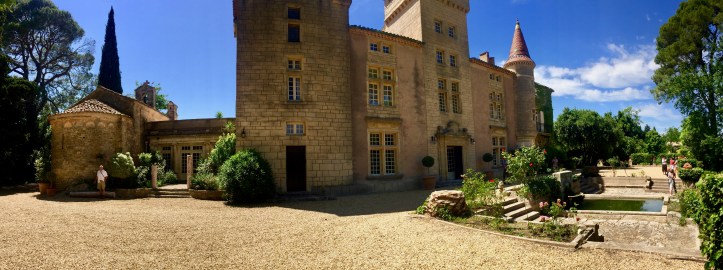
 Spot Mick in this pan shot on the left in front of the 9th Century chapel.
People actually rent this château. The 15th Century Renaissance style castle has been significantly renovated – and it can sleep up to 14 in 9 bedrooms. We walked through it as part of the tour and wine tasting. It is beautifully decorated in ultra modern, and very expensive furniture. We were told that they were expecting very important guests on Friday, but they were sworn to secrecy and could not tell us who. Mick and I think it is Barack Obama and his family, as they are currently on holidays in the South of France. But, we will never know, unless some newspaper finds out and reports it. I tried to go online to check how much a place like this costs per night. I came to a dead end and would have had to contact the owners directly to make enquiries, which I decided against. However, I found a similar one that was advertised at $4500 AUD per night. Divided by 14 it might not be too bad!!
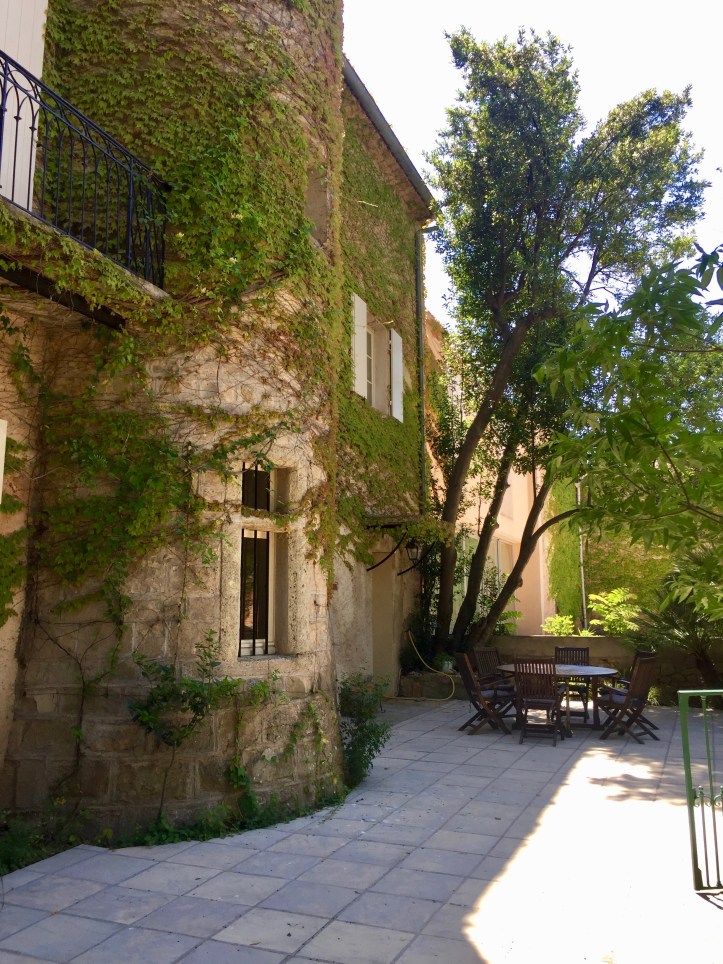 Everywhere you looked it was stunning. There was a pool as well we were told, but did not see, obviously discreet for the holiday makers. And, the gardens were artistically manicured. The park surrounding the château was 3 hectares in size.


But we were there to taste the famous wine from this vineyard, which was just a short stroll from the château to the cellars across this courtyard.
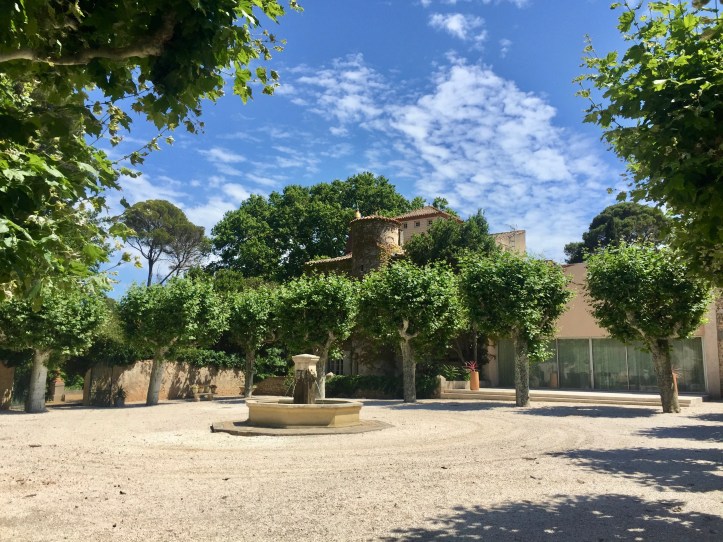 The full name of the winery is Château Saint Martin de la Garrigue. We were told that garrigue is the name for the type of scrubland that grows in this part of France. The estate has 60 hectares of vineyards comprising nine red and eight white varieties – some varieties Mick and I had not heard of before – for example Cinsault and Piquepoul.
 We were taken on a tour of the cellars and shown the vats where the fermentation takes place – different techniques for different wines.
Winemaking all through France is very much regimented. If a wine grower wants to produce wine considered to be the best, AOP (Appellation d’Origine Protégée) previously AOC (d’Origine Contrôlée), then he or she must follow a very strict set of regulations. Click on that link if you are interested. Each region has different rules, giving the region the distinction from others, and hopefully a marketing edge.
The Longuedoc Region, where we are at the moment, is the largest wine growing region in France. Previously its wine was considered of low quality, mostly table wine. But in the past forty years, wine growers have changed the focus from quantity to quality, and hence the AOC labelling is very important.
I was interested in this old set of scales that was used back when quantity was the go!! A buyer weighed his or her purchase.
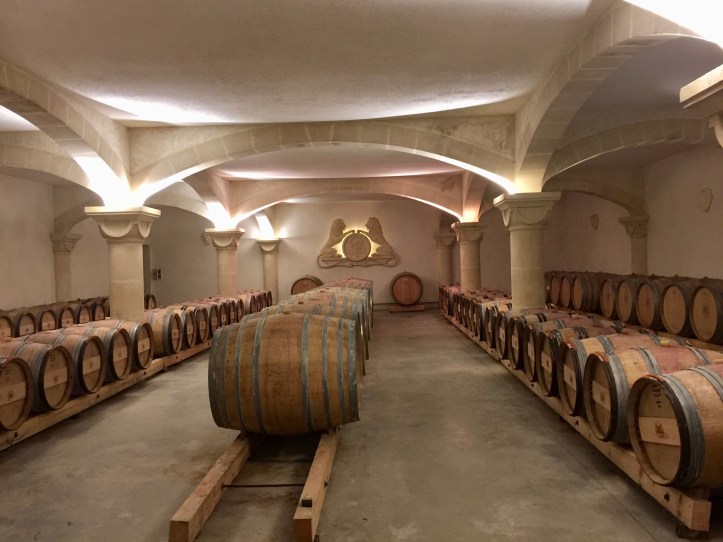
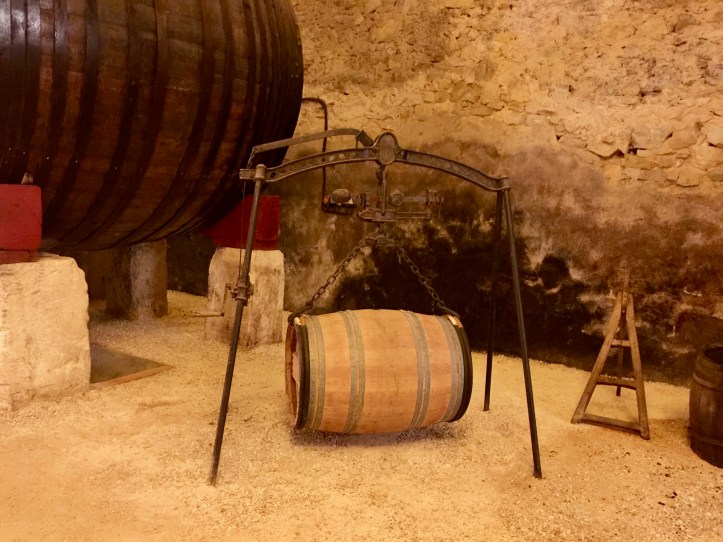 And finally, we were shown where some of the wines are stored in these oak barrels.
 Eventually we did get to try some wine – and we only bought one bottle of their bubbles because it was made using methode traditionale and we had never tried it before. It was called Vin Mousseux Blanc and it was not a certified AOP wine as it was made outside the guidelines.
We opened it last night and there is still half a bottle left. And that says it all really.
 Jane and Mick's Holiday Adventures
It could be Bono also? He’s there at the moment as well!