
Our destination for today – our last day in France – was Le Havre, as we are to catch the ferry to Portsmouth at 10.00pm.
Although we were very close to Lisieux at our last house sit, we never visited it, so today we decided we would drive through it and stop for morning tea.
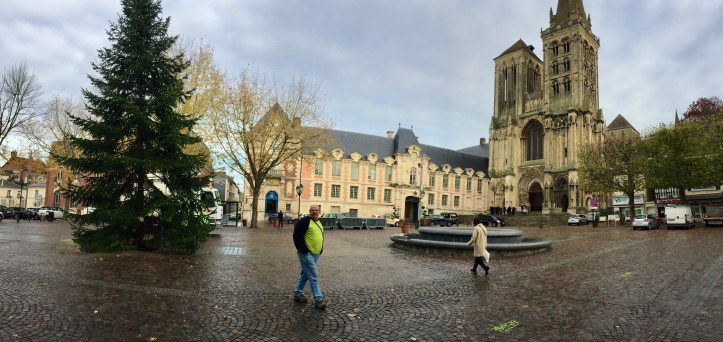
The city is famous because of Saint Thérèse – who was a Carmelite nun in Lisieux in the late 19th Century. Pope Pius X called her “the greatest saint of modern times.”
This is a photo of Mick in the square in front of the main church where a funeral was just concluding. You can also spot the huge Christmas tree being erected by the local council workers. More evidence of the trouble each town, city and small village goes to in order to celebrate Christmas.
The centre of the town was mostly new buildings, again because of bombing by Allied Forces during WWII. In a two day period over 6th and 7th June 1944, 800 people were killed and two thirds of the town was destroyed. Mick and I visited the church and there was a photo there of that time showing total destruction all around, but somehow the church was untouched.
After morning tea, we headed off to our next stop – Honfleur. We had been told by the owners of our last house sit, that we must stop in Honfleur, as it is very interesting. And, we were not disappointed. It was gorgeous.
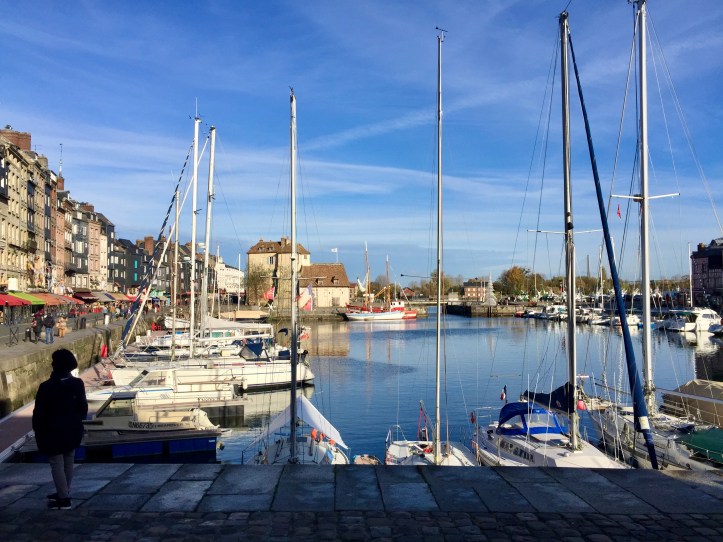
Honfleur is especially known for its old port, that has been used as a subject for many painters, including Monet. Mick and I saw lots of small studios of contemporary artists during our walk around the town.


Mick saw a fisherman unloading empty trays from this building which is right near the Lieutenance’s bridge, which opens up daily to let ships into the harbour.
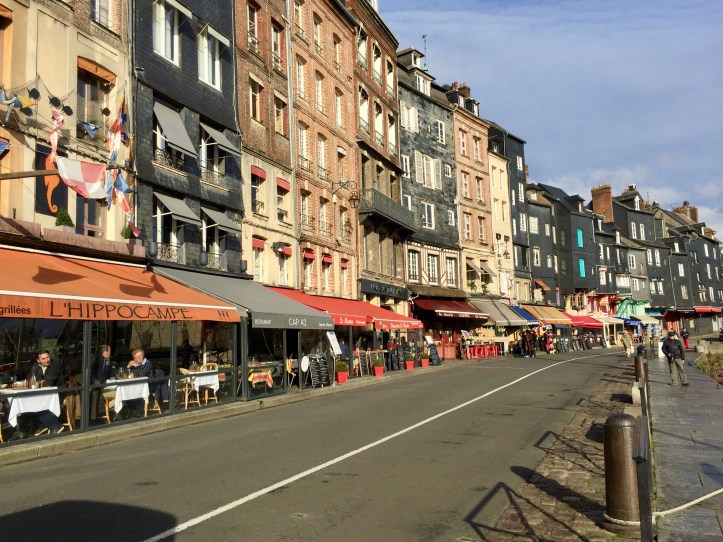
There were lots of restaurants for us to choose from. Sadly the one I had researhced the day before was closed, so after a stroll we selected one. But it was the wrong choice. We were served by a grumpy waitress and the food was very ordinary. I left no ‘pourboire‘ (a tip – meaning for a drink) for our waitress.
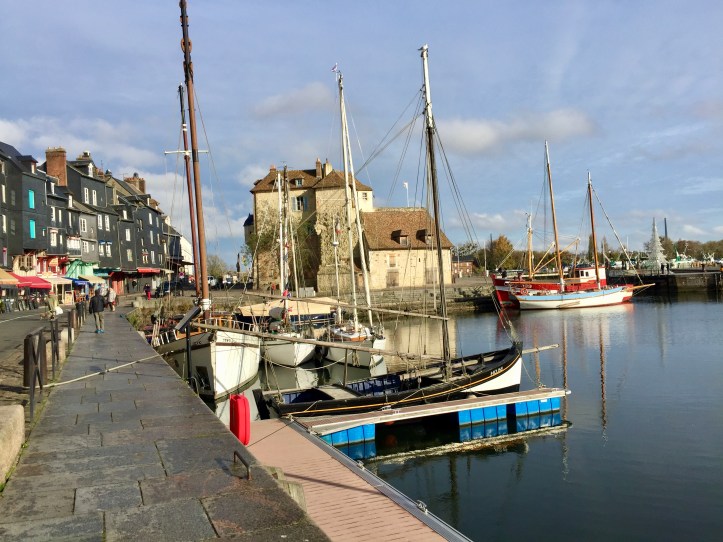
We had driven through quite a lot of rain earlier in the day, but the sun was shining in this part of France. I was pleased about that because it should mean our ferry crossing later tonight should be smooth.
Honfleur is still used as a port, but it is not as important as it once was.
After 1608, Honfleur thrived on trade with Canada, the West Indies, the African coasts and the Azores. As a result, the town became one of the five principal ports for the slave trade in France.
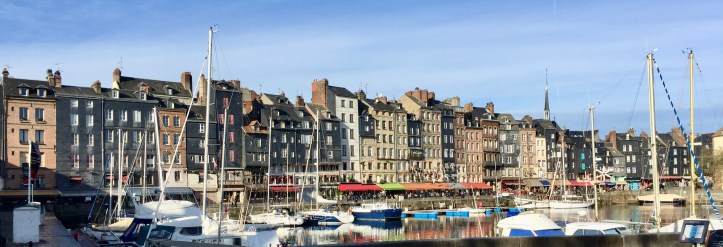
Honfleur comprised lots of old buildings indicating it was not damaged in WWII. I read later that the town was liberated by the British, Belgium and Canadian armies on 25th August 1944 without any fighting.
Mick and I decided we should make our way to Le Havre to familiar ourselves with where we had to return our hire car and where we were to catch our Brittany Ferry.
We were very glad we were getting there a little early – this was by far the busiest and most complicated network of roads we had been on. Maybe ever. We had to pay a toll of €5.40 to cross this bridge.
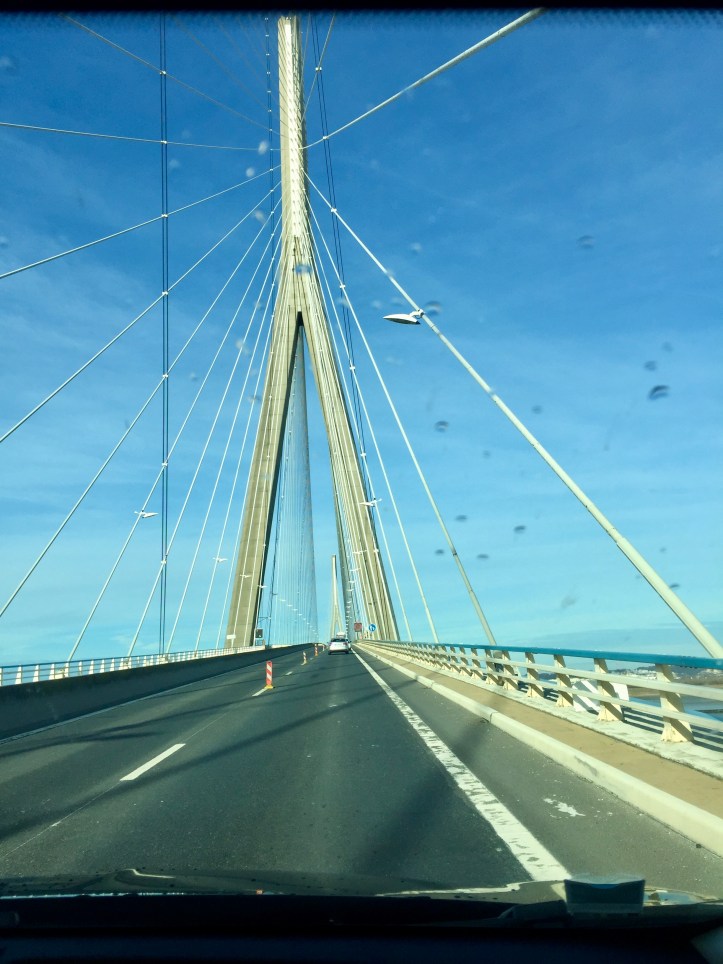
This cabled bridge crosses the Seine River, and is just over 2km in length. It was quite spectacular. But Mick was pretty edgy about the traffic though. It was a relief when we safely returned the hire car and found a bar to spend an hour or two before we could board our ferry.
We have had an amazing experience in France. It is hard to believe it has come to an end. Thank you to those of you who have been following our adventures.
Now we are off for some more in the UK!
 Jane and Mick's Holiday Adventures
Jane what a wonderful holiday you & Michael have had , been following you most of the way
Merry Christmas to you both & hope to catch up next year
Love Mary & Graham
💕💕🌲🌲
Thanks Mary – best wishes to you and Graham as well, and thank you for following our adventures. xx