As our time at this pet-less house sit draws to an end, this post will be a composite of different sites and locations in Bristol that Mick and I have seen and enjoyed. We have both concluded that Bristol is a great city. There is so much to see within walking distance. And while Mick and I did catch a few buses, and the ferry a few times, most of our explorations took place on foot.
In a previous post I mentioned that the weather had been mostly wet. However, a few days had periods of bright sunshine that encouraged others to enjoy what was on offer.
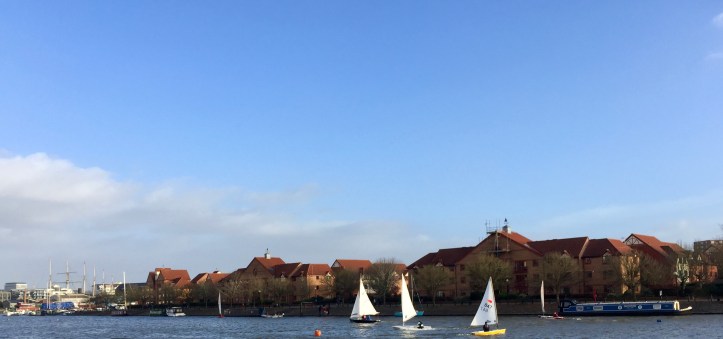 We really enjoyed walking alongside the water – this is not the Avon River in these two photos, but what is referred to as the Floating Harbour. Back in the early 19th Century, engineers worked out how to impound the tidal river so visiting ships could stay afloat. This ensured Bristol become a very busy commercial port until 1975 when it was closed and is now used for leisure, commerce and residential developments.
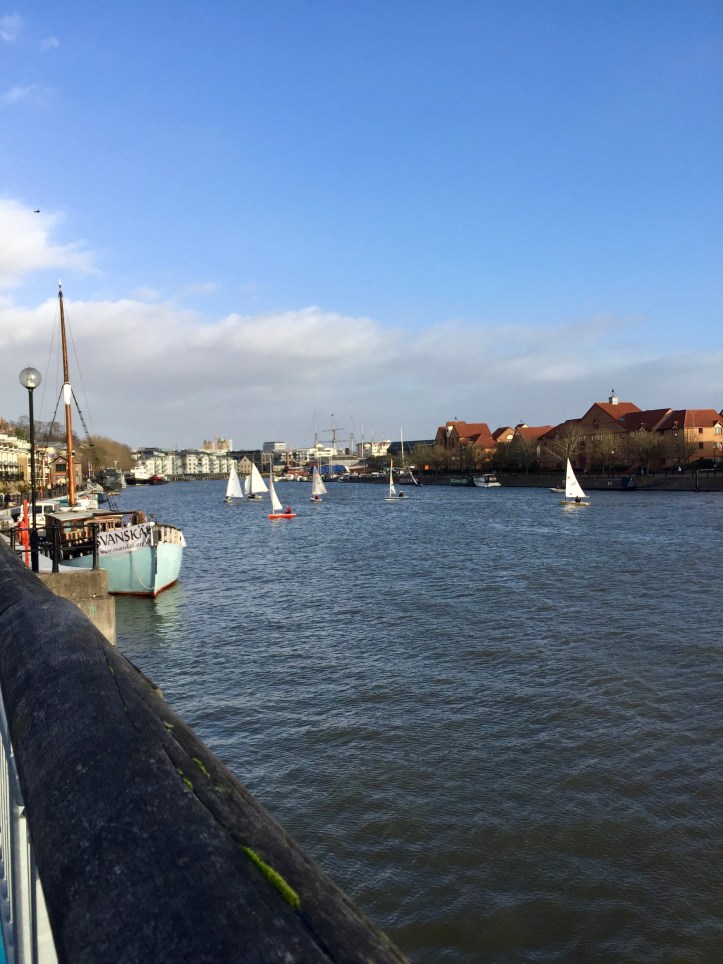 On days like this one, it is easy to see why.
Other walks took us through beautiful parklands. The colours always amazed us, as they are such a contrast to what we are used to, having spent the bulk of our lives in central New South Wales.
Mick loves to spot a squirrel. Is it a red squirrel or a grey squirrel? Sadly, the native red squirrels are now well and truely outnumbered by the imported grey squirrels (140,000 to 2.5 million). So, this one is definitely a grey squirrel.
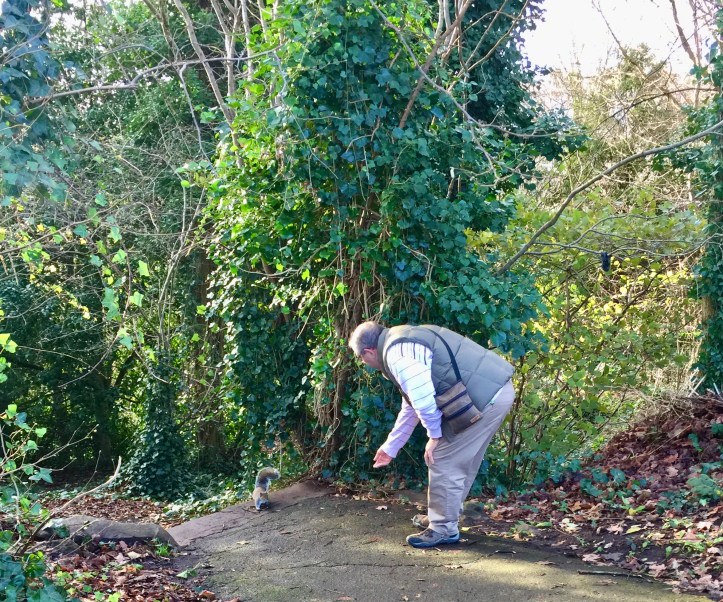 And, pretty tame. Mick was able to get up quite close to this one.
While it is winter, and it has been a little damp, the weather has been extremely mild for this time of the year.
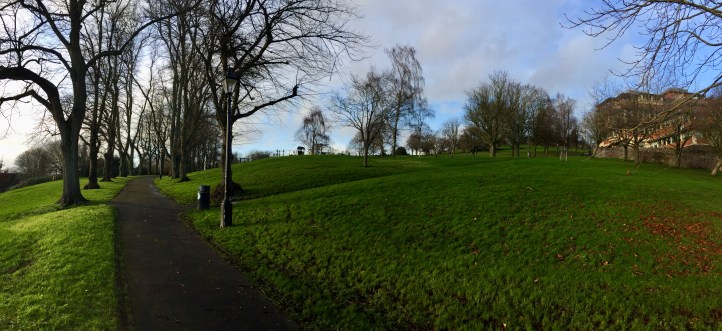 This area is known as Brandon Hill Park. It is touted as possibly the oldest municipal open space in the country. From here, a crowd of 30,000 watched the launch of SS Great Britain on 7 July 1843. It was also a popular site for protests, and in 1880, 20,000 unemployed workers gathered at the top the hill to protest their situation. The day we visited there were no protesters in sight. In fact, there was only one other (young) couple beside us.
A walk in a different direction from our house sit took us to the famous Clifton Suspension Bridge. The more I read about the history of this bridge, the more intriguing it became.
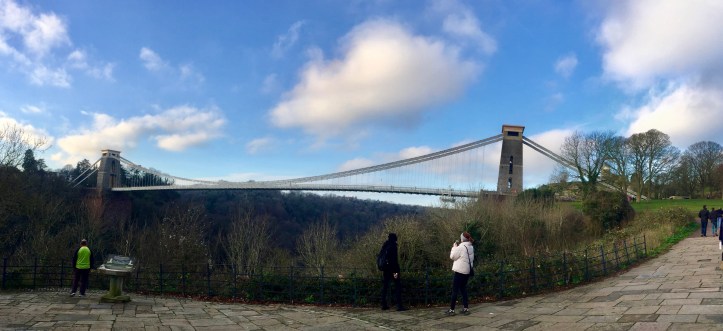
The design is attributed to I.K. Brunel, and often it is referred to as Brunel’s Bridge. But, the final design and construction was completed by William Henry Barlow and John Hawkshaw. It was commenced in 1830 and not officially opened until five years after Brunel’s death in 1864. Bad luck, major riots and lack of money contributed to the 30+ years it took to build.


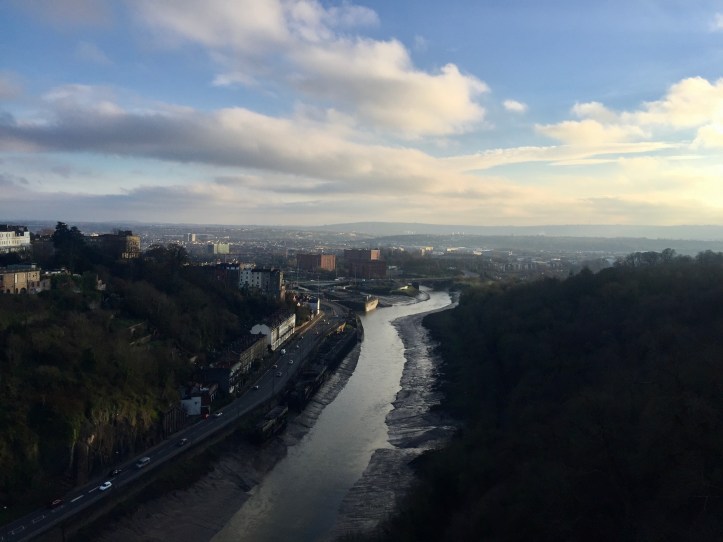
The bridge spans the Avon Gorge and the Avon River and is just over 400m in length, with the distance between the spans measuring just under 214m. Pedestrians are able to walk across the bridge, which Mick and I did from Clifton to Leigh Woods. Once across, we visited the Information Centre which had loads of information about the bridge’s interesting history.
Cars crossing the bridge must pay a toll of £1. All monies raised go towards the maintenance of the bridge. I read that it costs £1,500,000 per year for the maintenance.
It was a spectacular view from the bridge.
One of the major institutions Mick and I noticed in a few different locations around the city was Bristol University. It is organised into six academic faculties composed of multiple schools and departments.
Once I found that out, it explained why there were so many different buildings each claiming to be Bristol University.
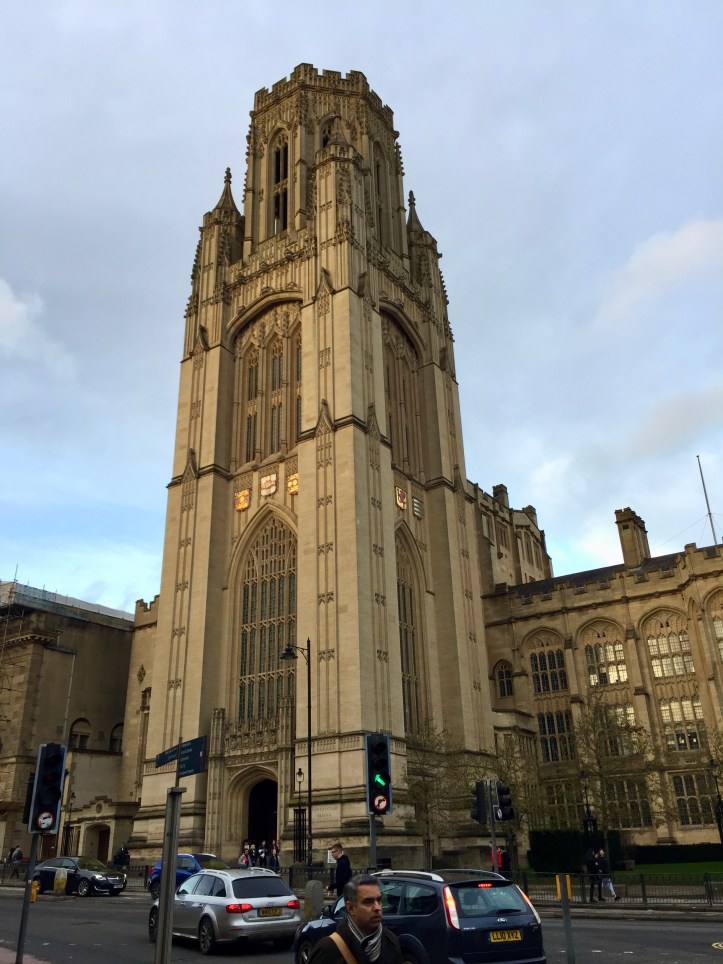
This building looks like a church, but if you look closely you will see coats of arms above the large arch windows.
This is the Wills Memorial Building built as a memorial to Henry Overton Wills III by his sons George and Henry Wills. Henry Overton Wills III was the first Chancellor of the University and donated £100,000 to the university.
Do the names ring a bell?
What about W.D. & H.O. Wells?
Yes, this family made their money from tobacco and cigarette production. Interestingly, both W.D. & H.O Wells were non-smokers. (Did they know something way back then?)
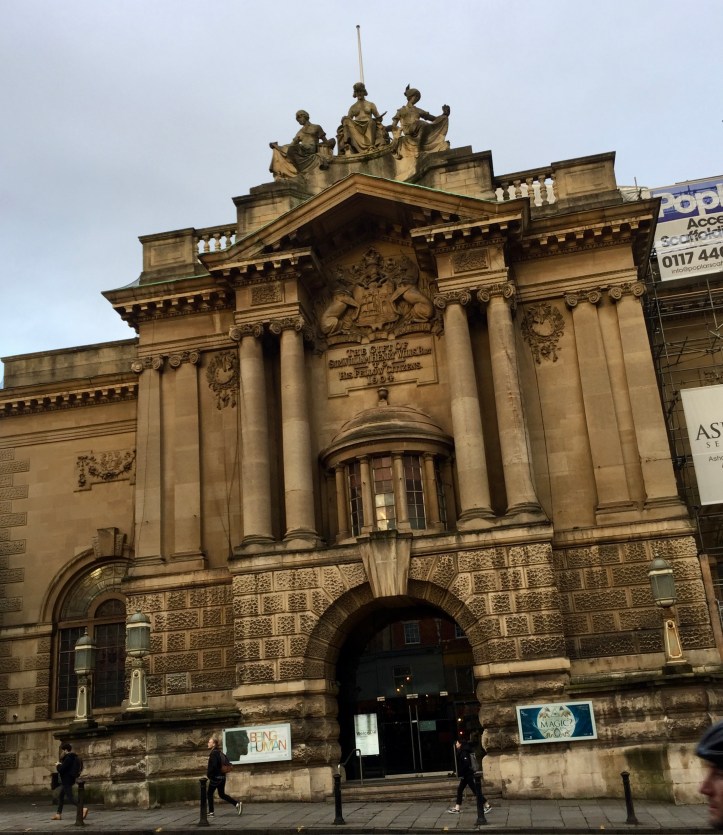
This building adjoins the one in the previous photo. And together they are thought to be the centrepiece of Bristol University. Currently it houses the School of Law and the Department of Earth Sciences, as well as several libraries.
A bit further up Queen’s Road, closer to where we were staying in Clifton, we came across this building, known as Victoria Rooms.
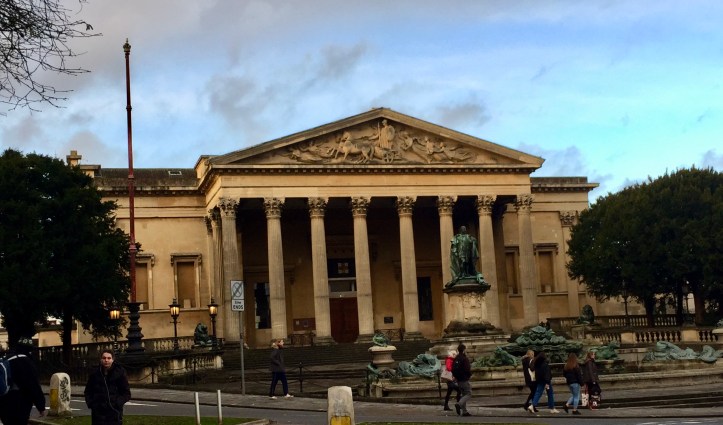 This building houses the University of Bristol’s music department. It was constructed in Greek revival style, and named in honour of Queen Victoria, who had acceded to the throne just before this building was finished. It houses a large auditorium, recital rooms and recording studio.
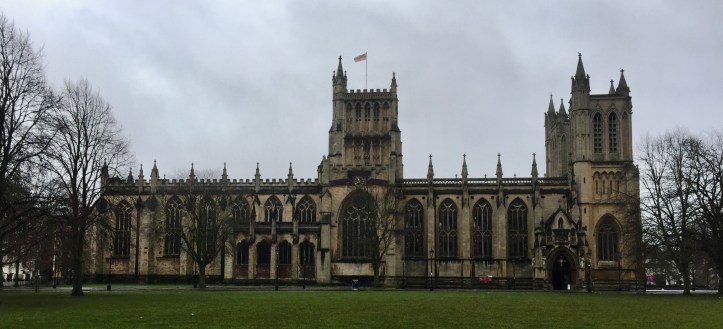 This is Bristol Cathedral, located on College Green. It is most (recently) famous for being the church where in 1994, the ordination of the first 32 women as Church of England priests took place.
About another 5 minutes walk closer to the city, up this mostly pedestrian street is Saint Nicholas Markets. We visited this spot on several occasions. The undercover market had lots of permanent store holders selling crafts and clothing, but what was brilliant were the food stalls. The smells were amazing, and at lunch times, the queues for food as some stands were extremely long. It was easy to spot the favourites.
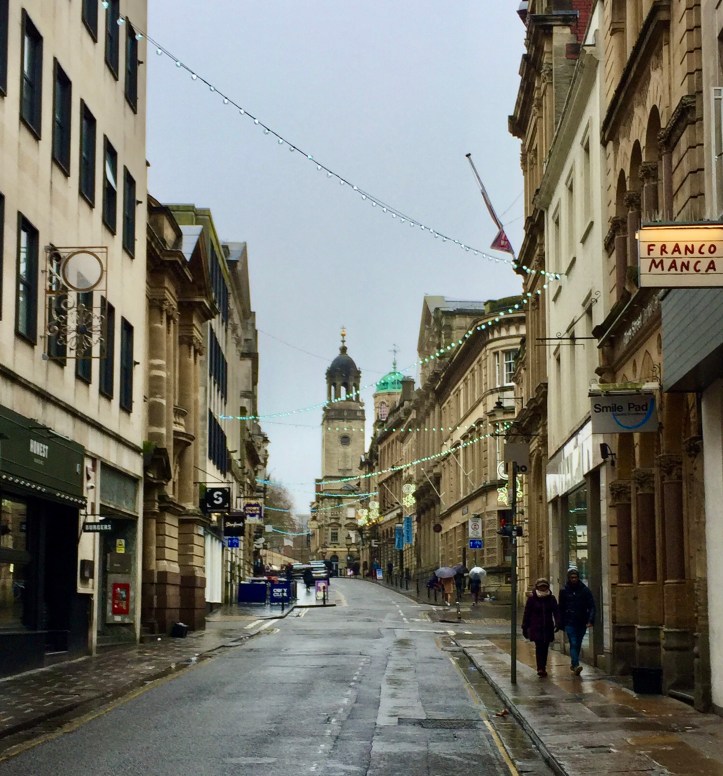
While Mick and I are still coming to terms with the differences between France and the UK, from country living to city living, Mick and I agreed that Bristol is now one of our favourite UK cities.
 Jane and Mick's Holiday Adventures
Happy New Year 🥳
Thank you for your postings.
Big Hug
We are blessed.
Bertha
On Wed, Jan 1, 2020 at 1:05 AM Jane and Michael’s Holiday Adventures wrote:
> janecav posted: “As our time at this pet-less house sit draws to an end, > this post will be a composite of different sites and locations in Bristol > that Mick and I have seen and enjoyed. We have both concluded that Bristol > is a great city. There is so much to see within wa” >