The fully-restored 16th Century farmhouse we are staying in at the moment has one of these – an AGA. We have used these before in other house sits, most recently when we spent six weeks in a French farmhouse in the Auvergne. But this one is different.
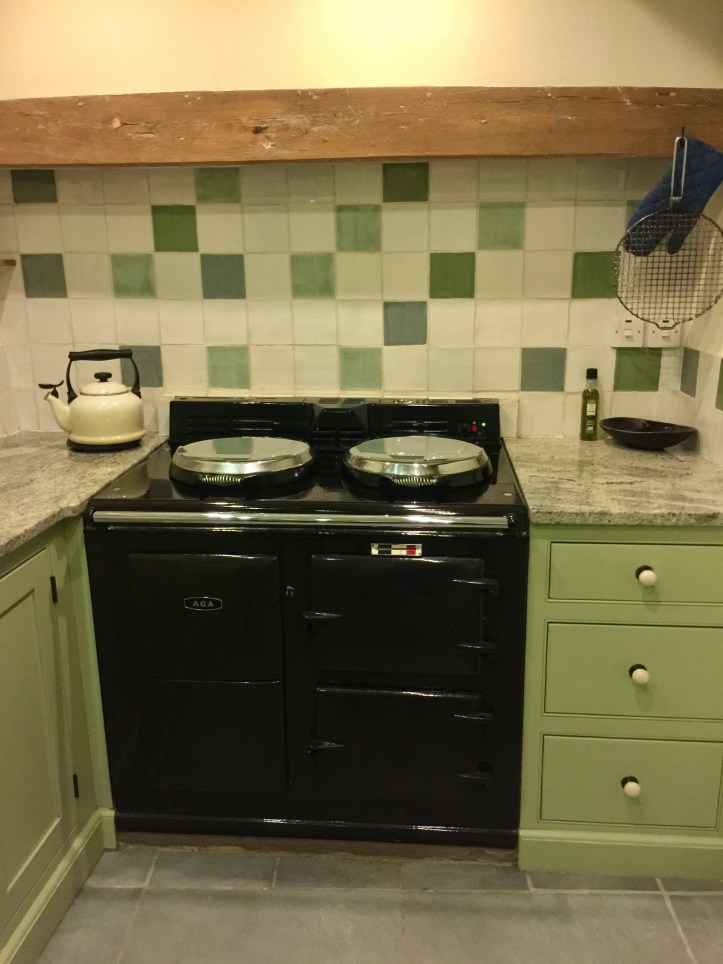 It is an electric off-peak AGA, and less than twelve years old.
AGA stands for Aktiebolaget Gas Accumulator, the name of a Swedish company that invented a system of safe storage for the acetylene gas used in lighthouses. The Aga is known for its longevity, with many cookers still operating after more than 50 years.
This AGA’s heat storage blocks take a full charge of heat overnight, when power prices are cheaper, and then disperses the heat during the day.
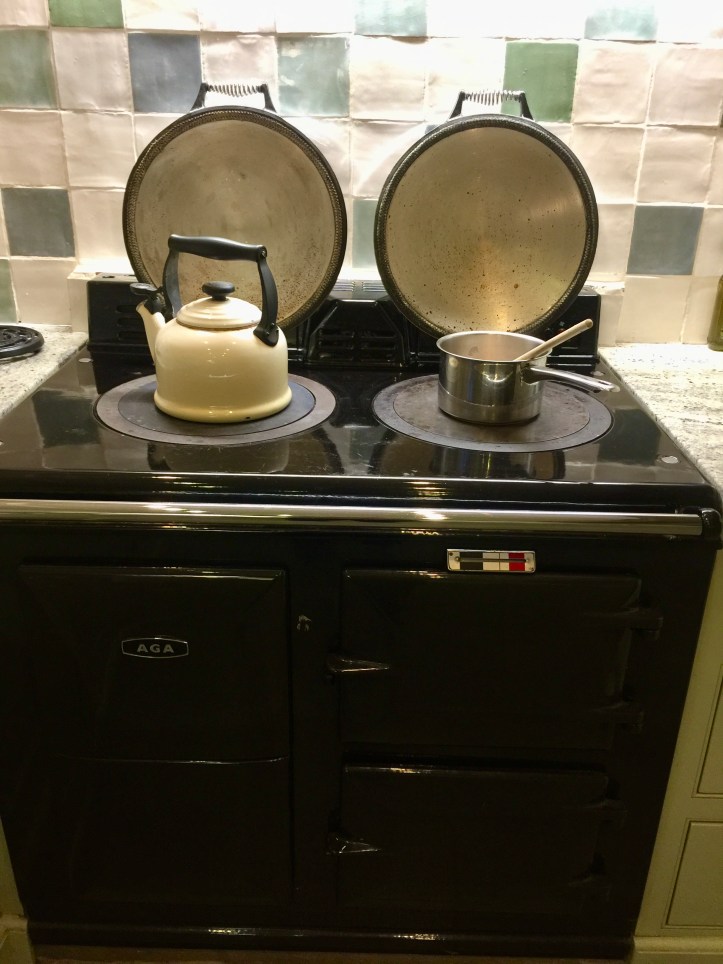
The temperature of the oven and hot plates is controlled by a small fan which circulates air over the heat storage blocks. The fan is usually not needed in the morning as the heat blocks are ‘fully charged’. The afternoon and evening temperature of the oven is around 150 degrees C, and the owners explained that if we needed a hotter oven we should turn the boost on about an hour before we wanted to cook. That should bring the temperature up to 180 degrees C.
The AGA hot plates are used for boiling the kettle and for cooking toast.


We have enjoyed experimenting by cooking different slow-cooked meals in the oven, as well doing some baking. Special mention must go to the fish pie where Mick made the pastry from scratch (but not the puff pastry topping) and I made the filling.


It was delicious.
I even made some scones, but have decided not to make any more as they disappeared way too quickly.


The AGA is a treat to use, but both of us are very pleased we are not paying the energy bill.
 Jane and Mick's Holiday Adventures