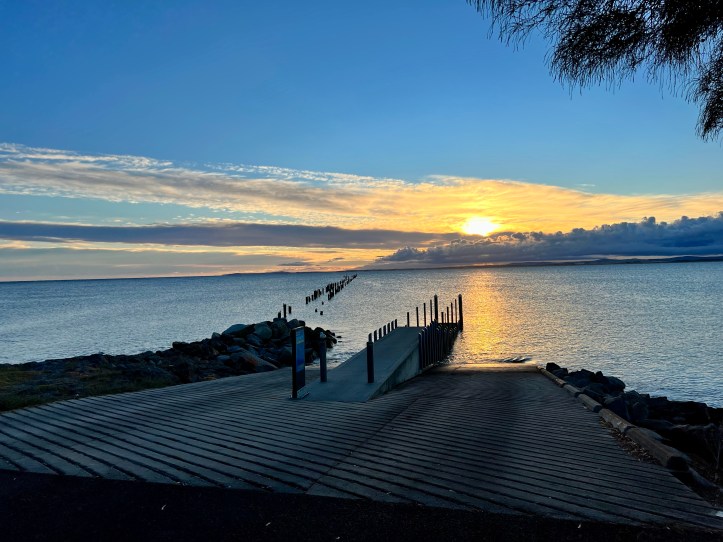
This morning was one of the best we’ve had for over a week. The sun started poking its head out early, and it stayed out for the whole day.
Our excursion this morning took us west to George Town and Low Head.
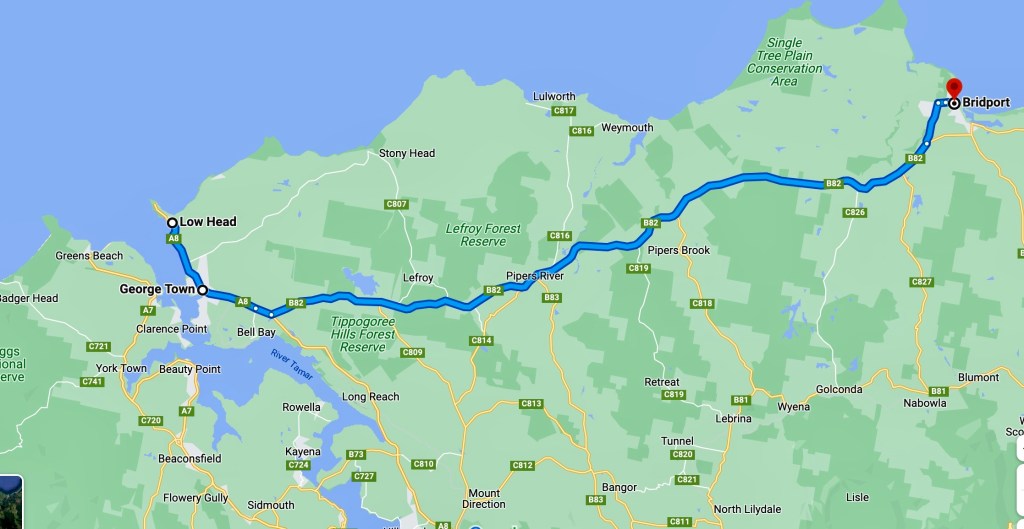
And from Low Head, we could look across the water to Green Beach, where we had been less than two weeks ago. The place where the Tamar River meets Bass Strait.
We had done no research about either of these places before we left, and we ended up learning quite a bit. First thing we spotted were these massive carvings at a place called East Beach.
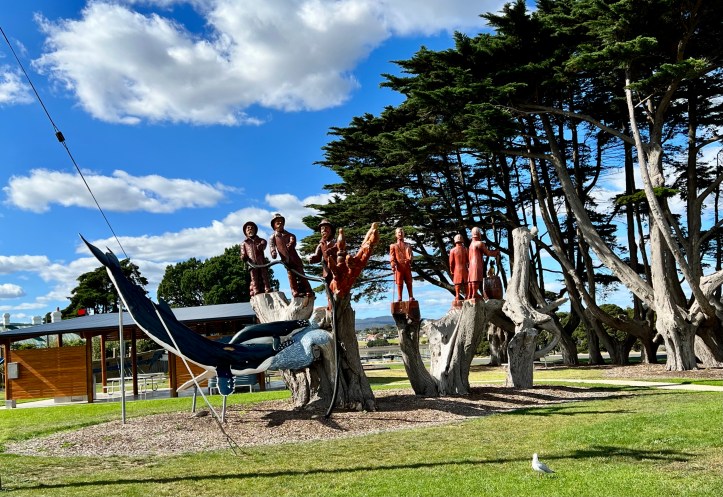
These chain-saw carvings were commissioned almost 10 years ago to make use of old macrocarpa trees, that were past their use-by-date. Macrocapa trees are not indigenous to Tasmania, they come from California, and were widely used as wind breaks. Looking at the size of them you can see why.
I could spot a sea captain, sailors, dolphins, and eagles on the left-hand side of the top image.
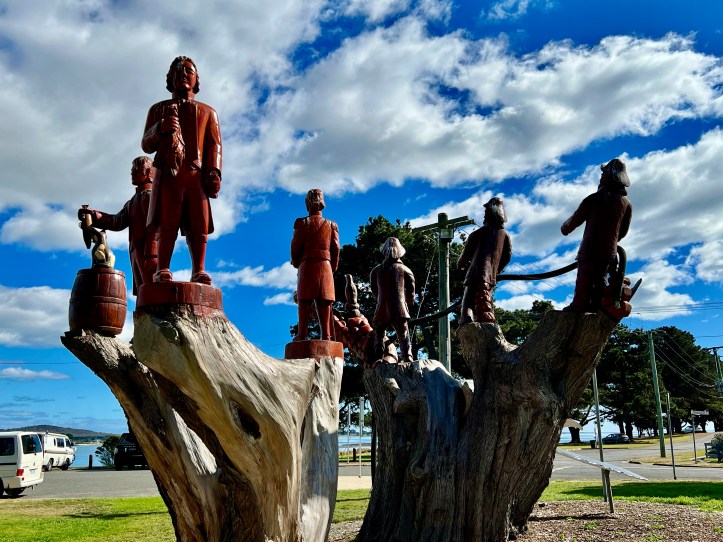
And I read that in these figures were representations of Bass (with some gum leaves) and Flinders (feeding his cat Trim).
We spotted 3 different lighthouses on our short drive from George Town to Low Head. That indicated to us that this side of the Tamar River access from Bass Strait must be difficult.

The section of water (at the mouth of the Tamar and Bass Strait) here was named Port Dalrymple by Matthew Flinders in 1798 when he came through it. Apparently he was very lucky as the wind blew him to the eastern side of the river and in so doing, missed a shallow reef.
Ten years later, in 1808, a ship (called the Hebe) was coming from India filled with goods heading for Sydney, and following Flinders’ charts from his visit in 1798. Unfortunately, the Hebe did not get the right wind and ended up being wrecked on the shoal – now known as Hebe Reef.
Other shipwrecks include the Eden Holme in 1906, and in more recent times, in 1995, the Iron Baron. The latter spilling fuel oil into the ocean and river mouth. It was eventually dragged off the reef and scuttled in the Southern Ocean off Tasmania.
The small grey shed on the right side of my photo is where the fog horn is still located. Installed in 1929 because of the dangers associated with heavy sea and river fogs, it would blast out three large sounds to warn the approaching ships. It was decommissioned in 1973 when new technologies replaced the need for it. In 2000, a couple of locals decided to get it back up and running, and now each Sunday at midday, the fog horn blasts out the three large sounds.
Nearby, there was an old settlement, known as Pilot Station. It is the oldest and active pilot station in Australia, dating back to 1805. Some of the original buildings have been re-purposed as holiday accommodation and a cafe.
After lunch in George Town at the local bakery, we headed back east and stopped at Delamere for a wine tasting.
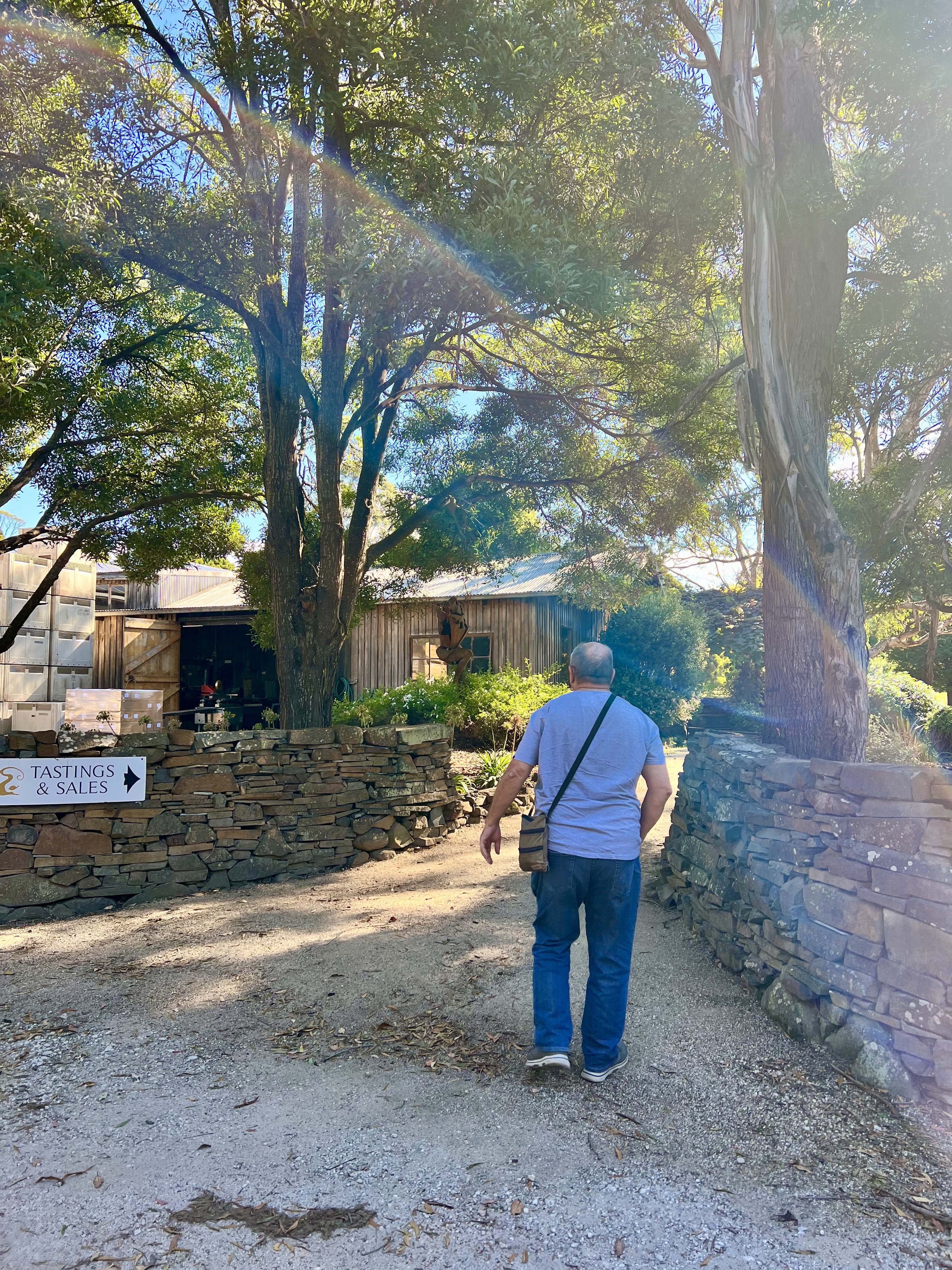
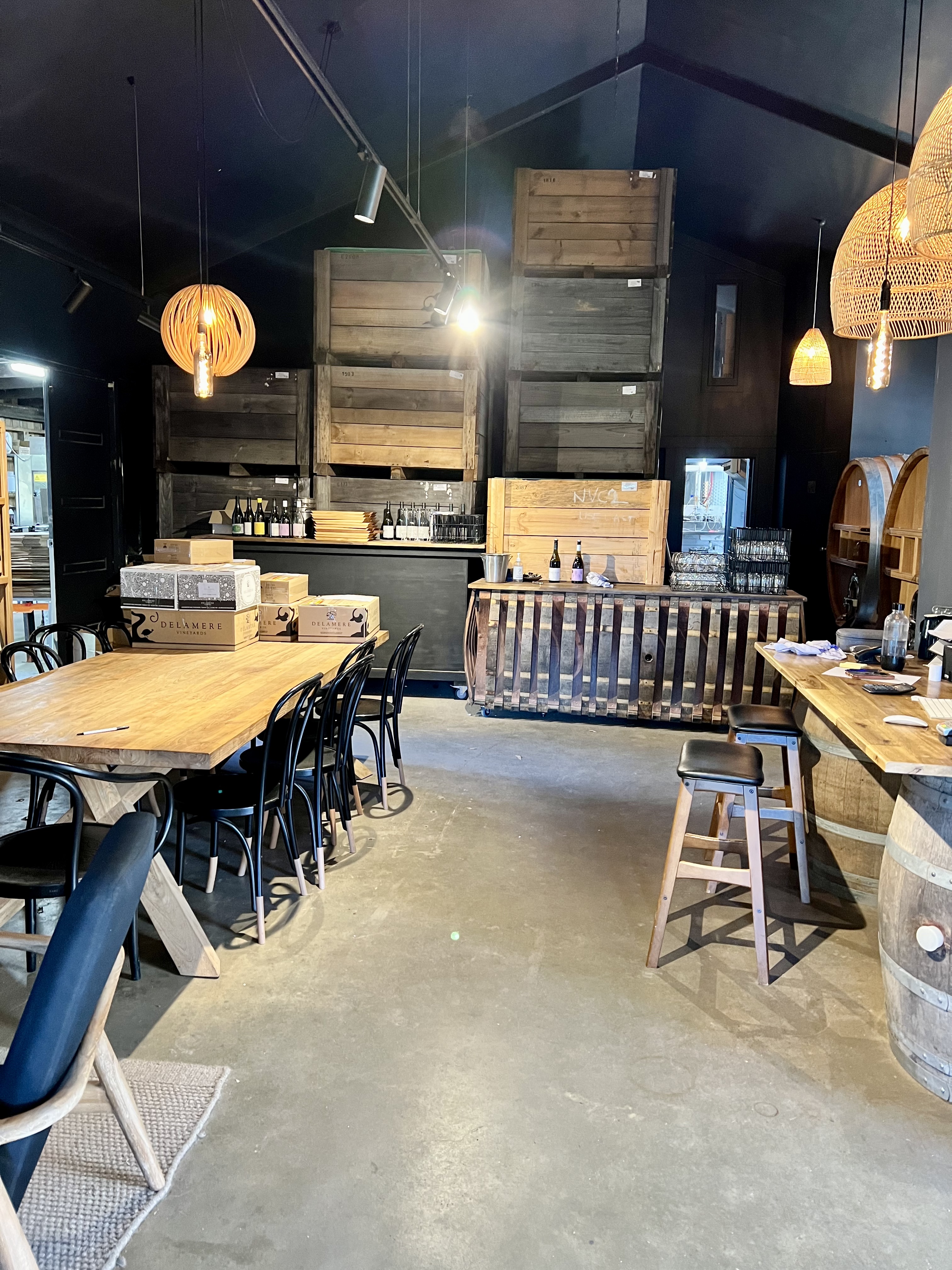
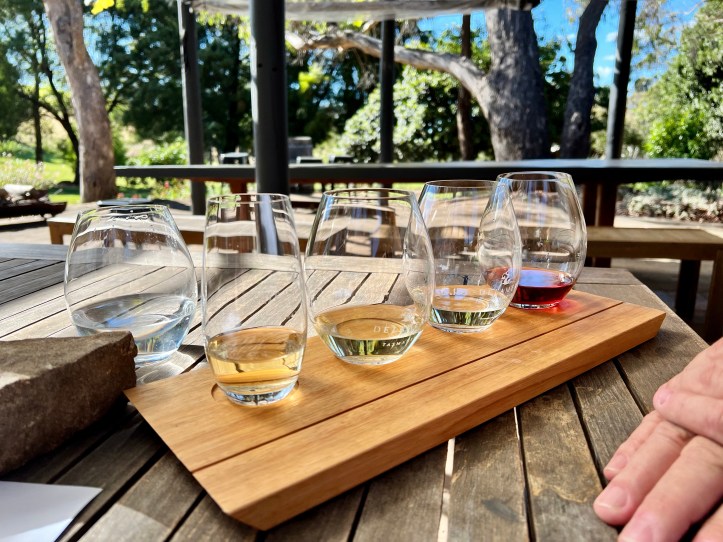
Here Mick tasted four wines (for $20). His favourite being the Museum Release Vintage Cuvee 2009 (at $150 a bottle). Of course!!
We got to speak with the winemaker (whose name we learnt at the next winery, was Shane). He knew a lot about many of the wineries in Tasmania and was keen to know where we had been and what we thought of all the others.
We left here empty handed (as we were trying hard not to buy anything else before our up coming flight home).
Literally, 300m along the road was our second and last winery stop. And I do mean the very last stop for this trip. It made the twenty-second winery cellar door tasting on this holiday.

We both tasted here at Sinapius, sitting under the outside verandah watching workers picking the last of the season’s grapes.
There were 6 wines to taste (for $15 each). The first white was a blend of 6 grapes (including Pinot Blanc and Chardonnay Musqué), which we both enjoyed very much. In fact, we really liked all the wines from here where the grapes are grown in closely planted rows. The grapes are hand picked and no finings or filtration takes place.
We did not have to pay for the tasting, as we selected a box of 6 wines to be mailed home to us (with free postage). So, we look forward to trying them in a few weeks times.
We head to Launceston tomorrow for our final night in Tasmania.
 Jane and Mick's Holiday Adventures
What was the name of the last one?
SInapius. Good pick up. Have updated my post. oops