Well how lucky were we? We only needed our umbrellas and ponchos in the last half hour as we made our way back to our hotel around 6.00pm, after a very full day. I was pleased to learn that the Japanese weather forecasts are not so accurate – 49mm of rain turned out to be just 8mm.
There were 20 of us in the tour group, led by Kumiko, and we went to some places that we would not have planned to, but as they were included in the tour, we did. But, once back in our hotel, we were pleased that we did.
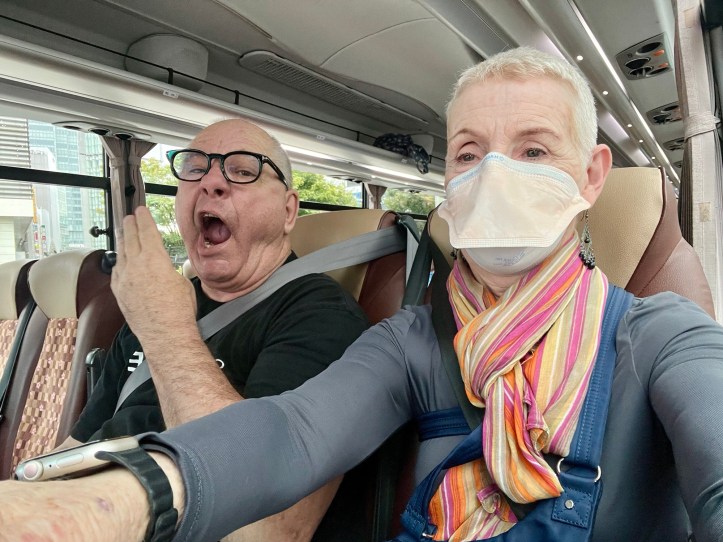
Mick teased me at the start of the tour, pretending that he did not want to be part of the full-day’s program.
We were seated in the front row, behind the driver, and had an excellent view. I think it had something to do with the fact that I had booked the trip 4 months ago!
First stop was the Imperial Palace, the main residence of the Emperor of Japan, his wife and their daughter. I was a little disappointed to find out that all we would see were two bridges and a couple of guards, standing very still outside a gate house.
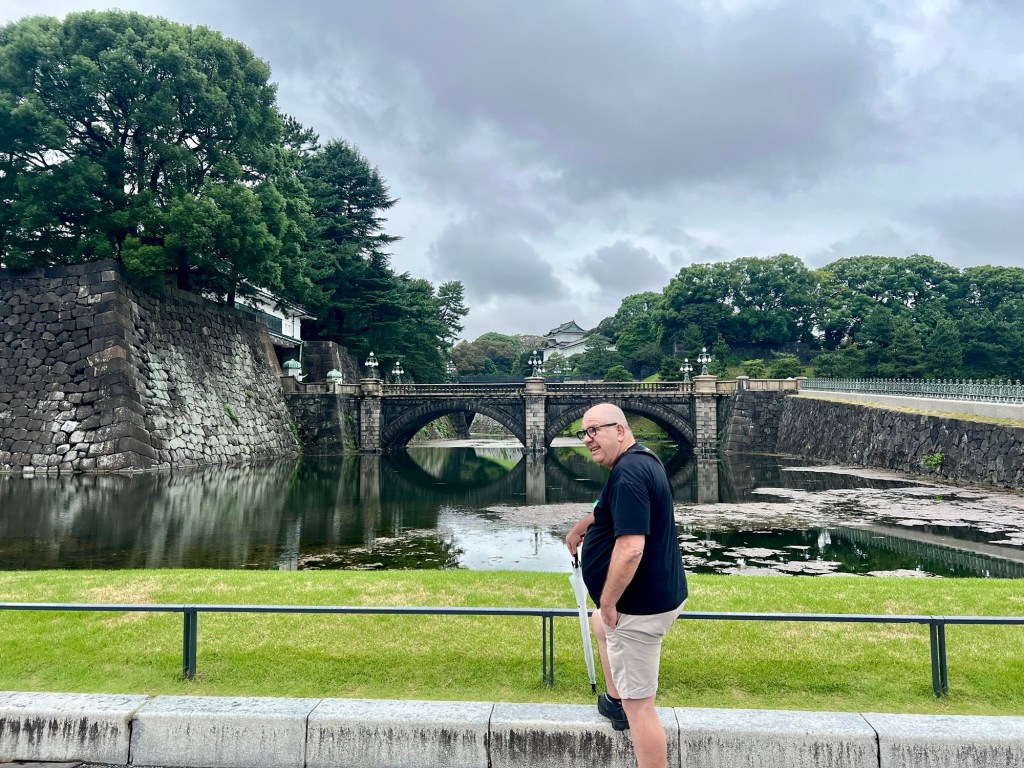
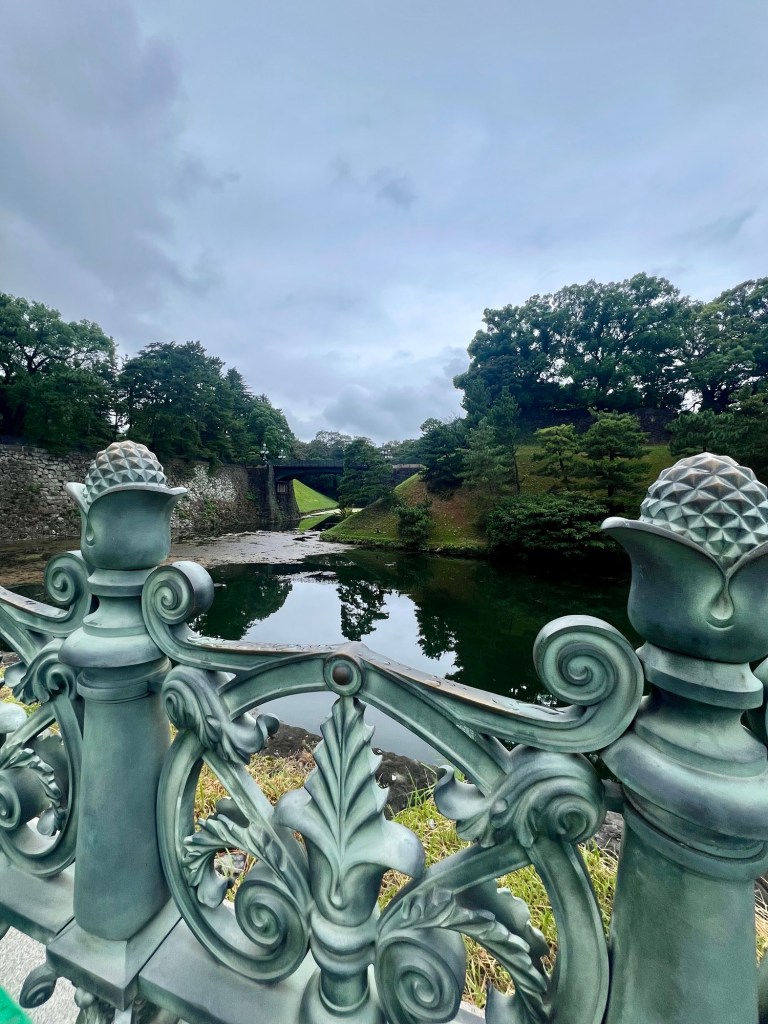
But things did improve, as we got to see some things that do not happen every day.
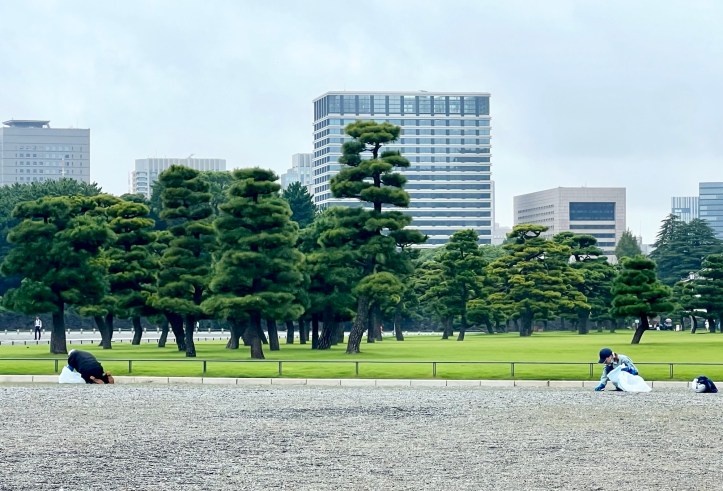
Firstly, there were four people (two pictured here) on their hands and knees weeding the huge pebble-stoned entrance to the gates. The back drop, of the immaculately-pruned, black pine trees and rich green grass with the high rise buildings of Tokyo’s CBD, set it off and contrasted the bloody sublime to the ridiculous. Unsure if I am allowed to say that??
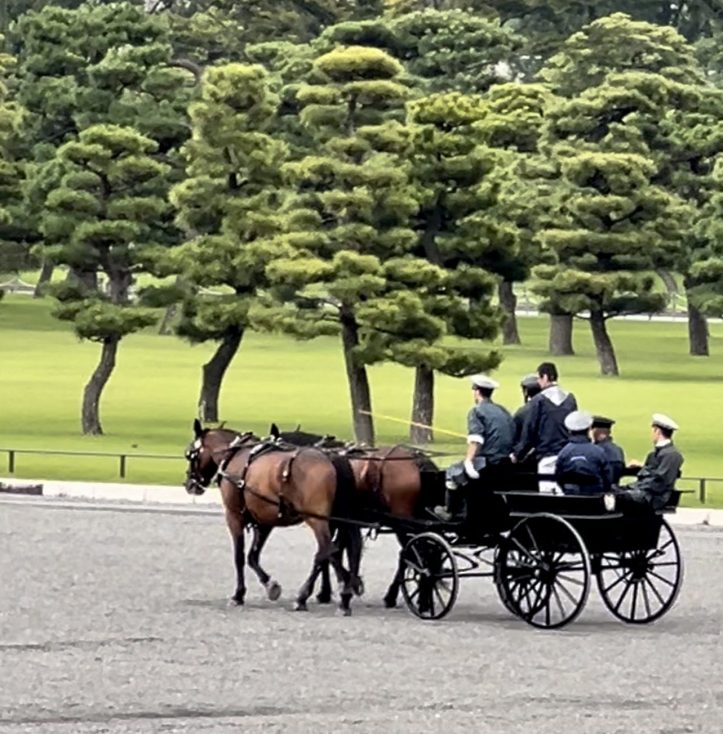
And then, a horse-drawn carriage appeared with soldiers practising a routine for Imperial ceremonies. Kumiko thought I was so lucky to see that.
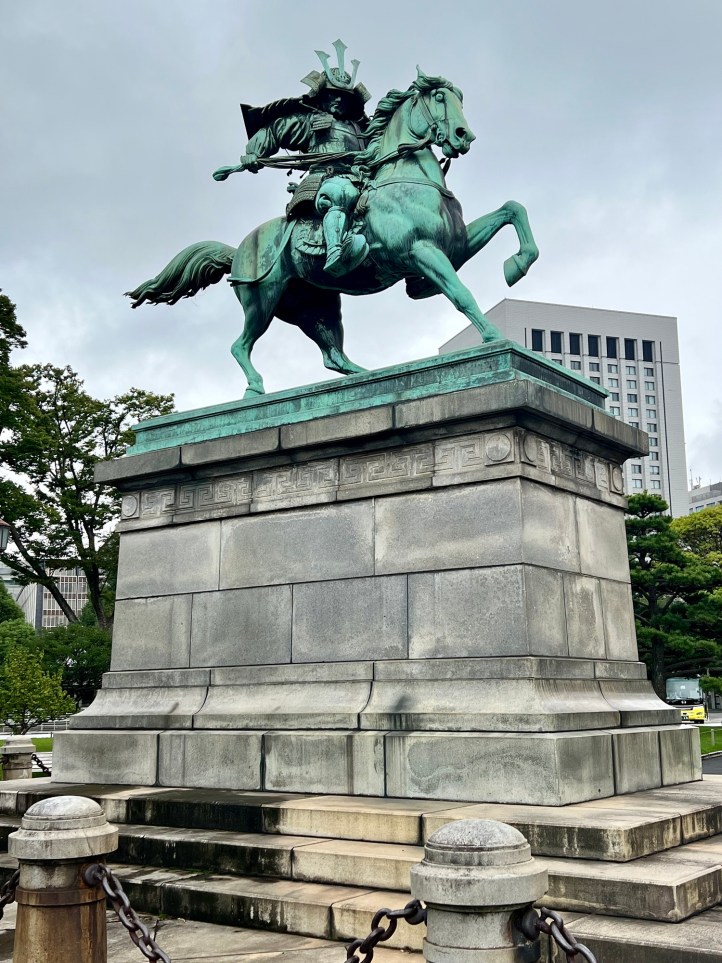
Walking back to the bus after the visit to the Palace gates, we passed the statue of the warrior, Kusinoki Massashige, who…
“was a famous military commander who was fiercely loyal to the Emperor of Japan and fought for him in the Genkō War around 1330. It is well-known as one of Tokyo’s three major bronze statues.”
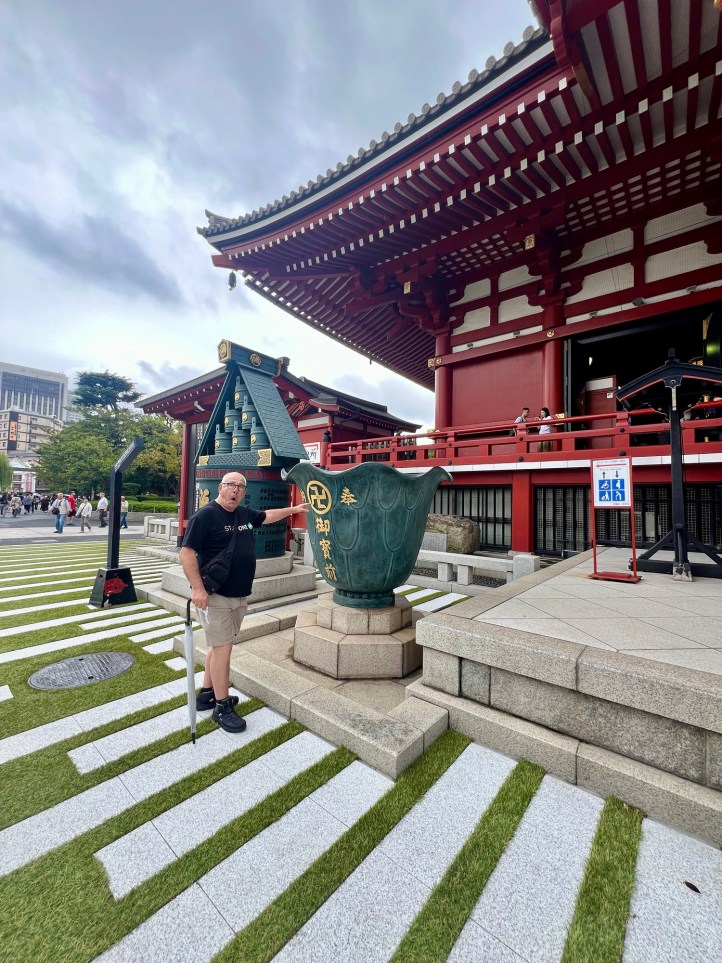
Next stop was Asakusa Kammon Temple, which is the oldest temple in Tokyo, and embodies the mercy of all the Buddhas. More than 30 million people visit this temple each year, and today there were thousands of people there.
It was interesting to watch people pay for a lucky-dip ‘fortune ticket’, buy sticks of incense for 200 Yen (or $2AUD), and then bow and pray for their wish to come true.
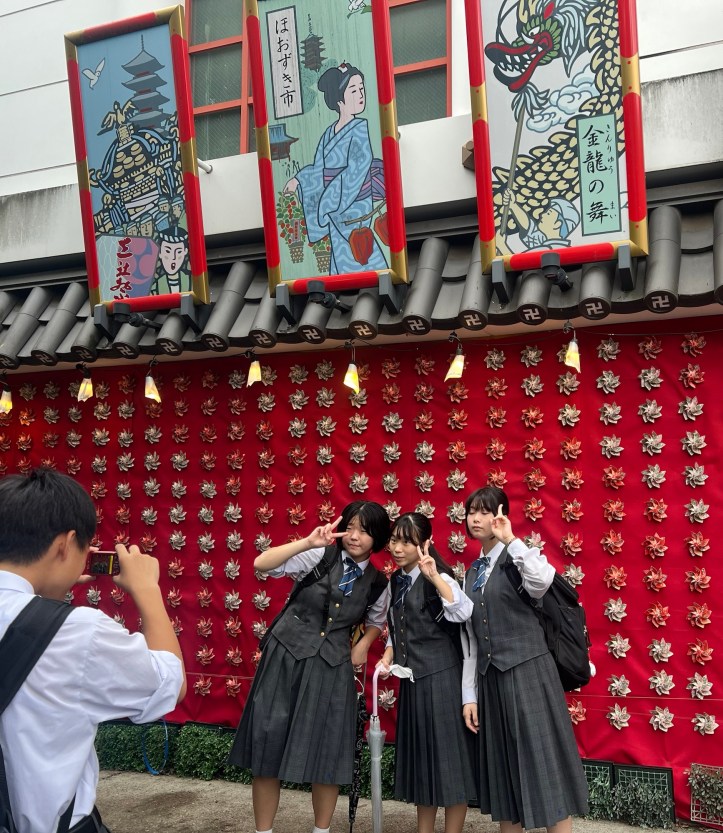
Kumiko, did tell us about the history of Buddhism and Shintoism in Japan, and that now the majority of Japanese do not follow a religion or belief, although they do like to celebrate feasts like Christmas. They are very easy-going she said. But they also obviously like to visit and pray at Buddhist temples.
Mick and I were more interested in finding a cup of coffee at this time of the morning, which we did, and paid the equivalent of almost $30AUD for a coffee and a piece of cake each. (Cash Only the sign read). But that did come with a warm face washer and glasses of iced water. We were happy.
The next activity, and the one Mick was not looking forward to, was the Matcha Tea Ceremony. He excelled!
Kumiko kept telling us that this was not a traditional tea ceremony experience, rather, it was a “casual” tea ceremony. That got me giggling as her accent made it sound like a “casual-ty.”
After watching a short video about Matcha, we then had to remove our shoes before entering the tea room. This was not an easy feat for the majority of the tour group, but we all managed under Kumiko’s watchful eye. When someone put a shoeless foot down on the wrong side of the step (that marked the line between inside and outside) she became very agitated and scolded them.
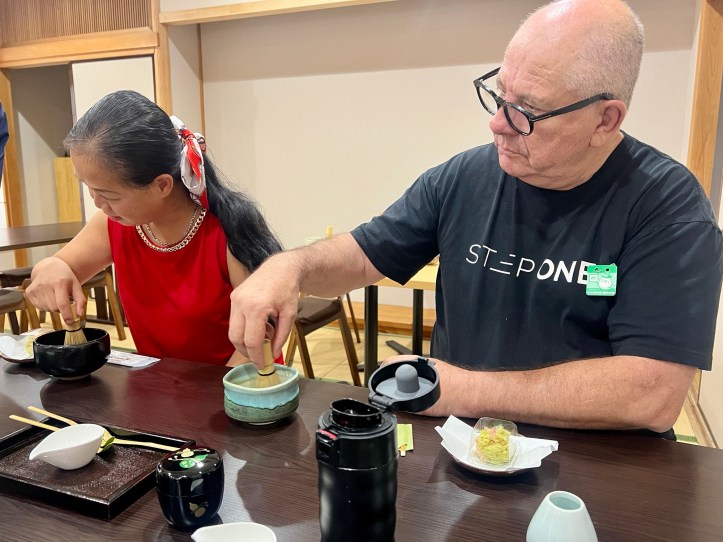
We had to grind the Matcha tea leaves and then stir them vigorously with some cold water using a mini bamboo broom before the Tea Ceremony Master (a young man of about 20 years old) added hot water to our brew. Mick was the best at this as his mixture had the smallest bubbles (apparently that was important). I have to admit that although the activity was fun, I do not like the taste of this Japanese speciality. Perhaps it is an acquired taste and I need to try some more. I bought some rice puff biscuits with Matcha powder that looked quite delicious to eat later.
Next was quite a drive across the Rainbow Bridge (a double-layered bridge with traffic driving on two levels) to the reclaimed area known as Odaiba.
“… a high-tech entertainment hub on an artificial island in Tokyo Bay. Visitors head to the beach at Seaside Park, enjoy Mt. Fuji views (not when we were there) from the Daikanransha Ferris wheel, and interact with robots at the Miraikan science museum. Malls include Aqua City and the Venice-themed VenusFort, and there are sushi bars with views along the waterfront.”
And, of course, then there was this……
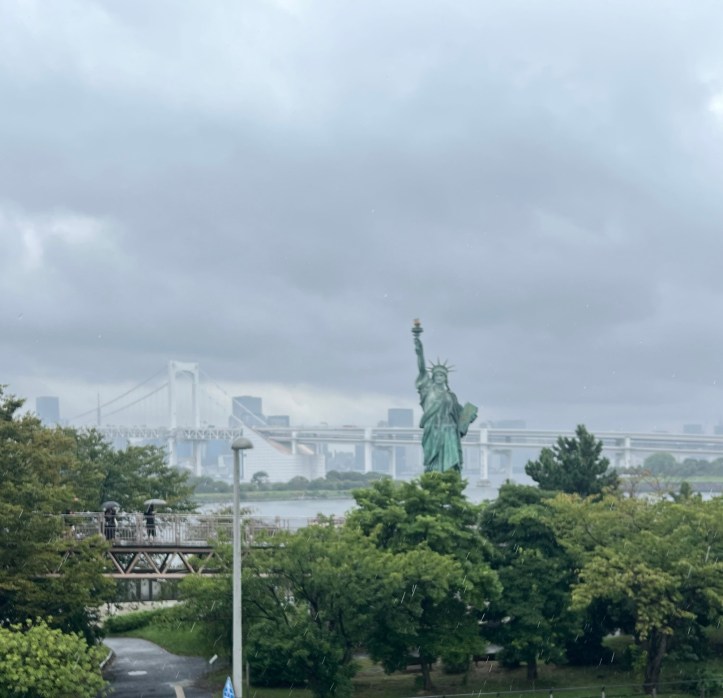
Included in our tour was an all-you-can-eat buffet lunch at the Hilton Hotel, near the Statue of Liberty. And it was…. “wow”. I think we both ate a little too much, but we were pretty sure we were the better-behaved couple on our tour in that regard. Well, that was what we told ourselves.
A cruise on Tokyo Bay was next, and it was not just a little boat.
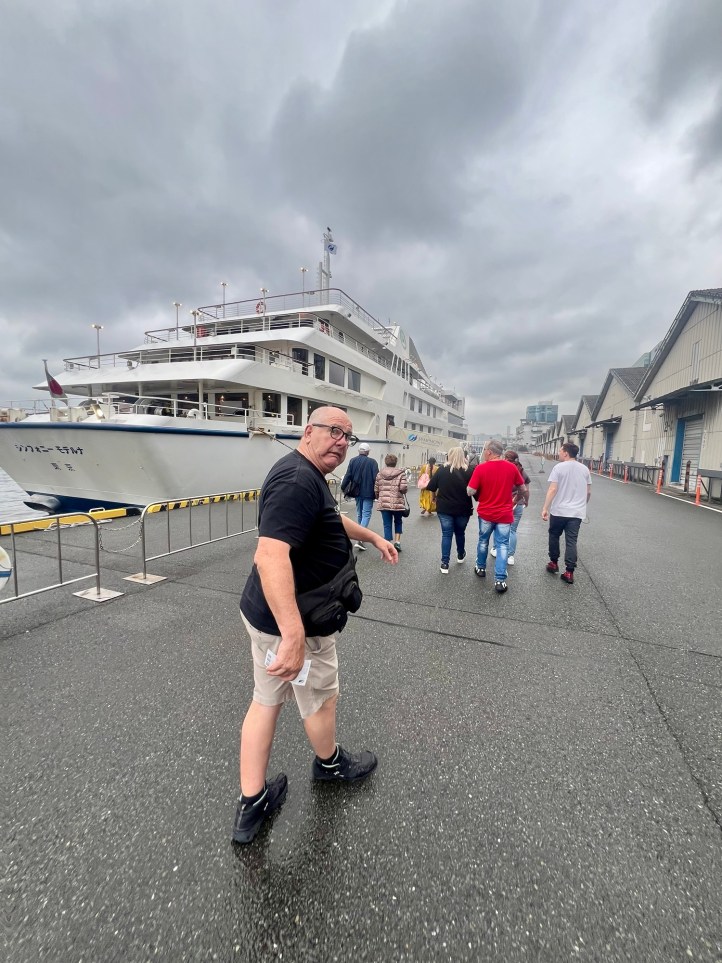
We were served tea in a salon on the cruise, but we eventually ventured onto the top deck where the views were wonderful.
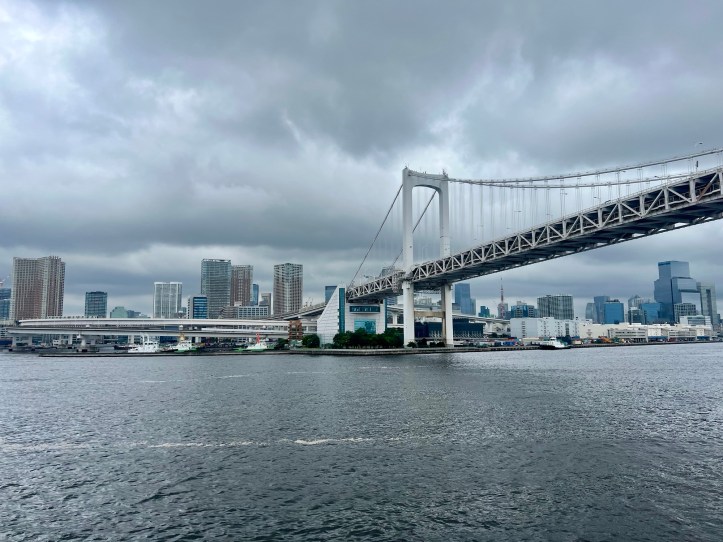
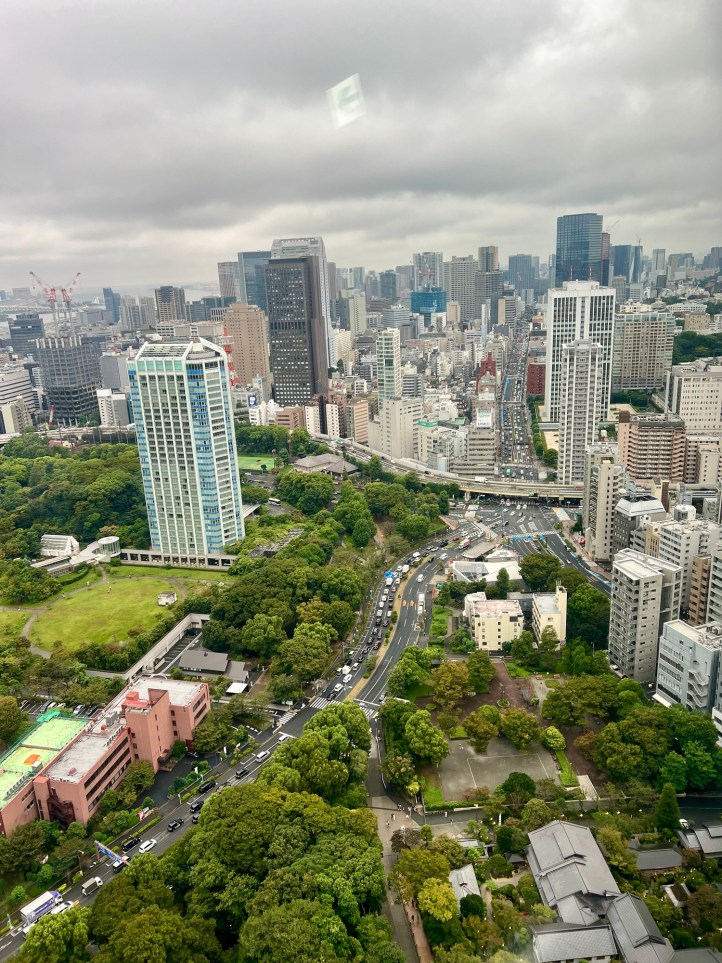
Last stop was the Tokyo Tower – which stand 333 metres high. “It is the world’s tallest, self-supported steel tower and 3 meters taller than its model, the Eiffel Tower.”
It is no longer the tallest structure in Tokyo. That honour belongs to Tokyo Skytree (634 metres tall), which we also spotted from the Buddhist Temple area. Kumiko explained that Japanese liked to be the best, hence their desire to have the tallest thingos.
The tower’s main deck at 150 meters was reached via a very, very fast elevator that states that it can hold 36 (Japanese) people. Kumiko insisted that we all squeeze in together with the lift operator. We only just fitted.
Our tour ended near Tokyo Station where Mick and I successfully bought tickets (@ 220 Yen each) and caught the Chuo Line back to to Shinjuku Station.
We were pretty whacked by the end of the day but we did find somewhere interesting for dinner.
A quieter day tomorrow where we will explore our location on foot.
 Jane and Mick's Holiday Adventures
Big day! Sounds wonderful