With a population of just under 1500, Penola is a small rural town in South Australia punching well above its weight. For instance, it was named the winner of the South Australian Agricultural Town of the Year (in 2024). And I am sure it would have had some stiff competition.
Mick and I spent a few days here while visiting our son last week and exploring some of the many wineries and cellar doors a few minutes drive from Penola.
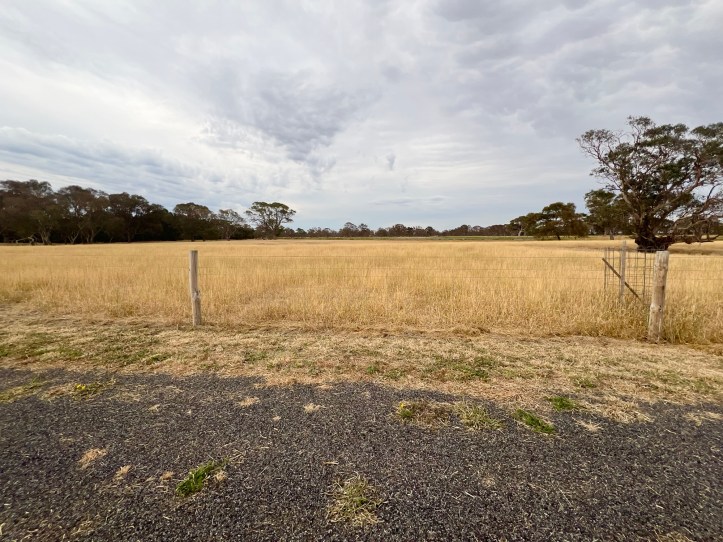
Each morning I enjoyed an early morning walk around the little streets of the town or on its outskirts, where I was very much reminded it was summer and things were drying out. But we had also noticed that the vineyards were a huge contrast to this as they were green and lush, heavy with fruit just weeks away from ripening, lined by colourful rows of rose bushes.
Penola is proud of its history and of its many notable residents. There were several statues and busts of famous people as well as information plaques lining the streets to help visitors, and residents appreciate the town’s wonderful history.
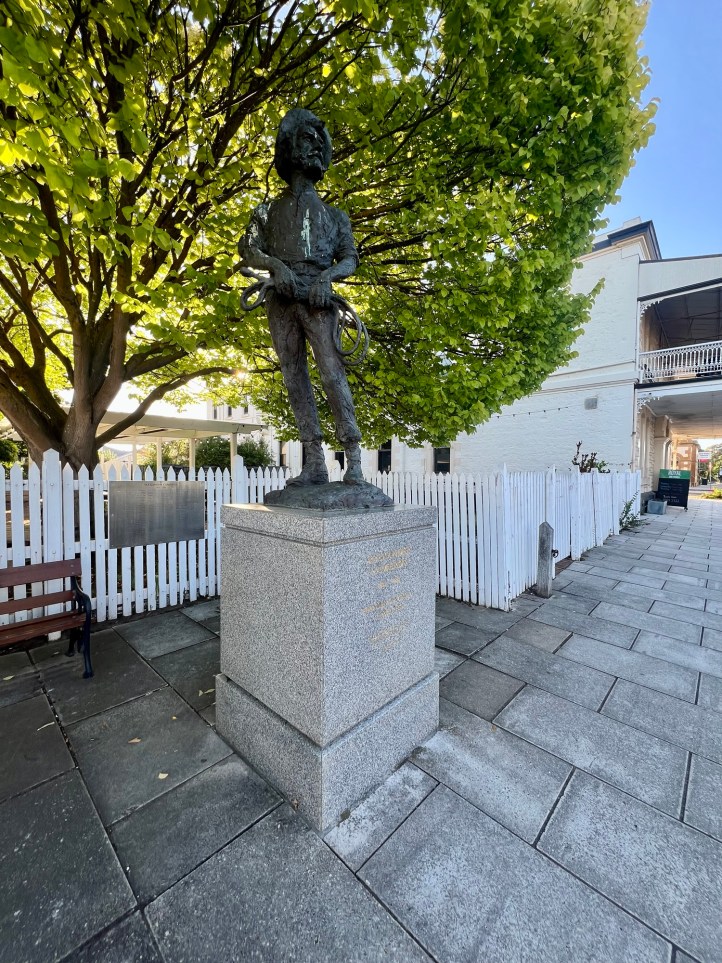
Alexander Cameron was a pioneering pastoralist in the eastern colonies of Australia, particularly in South Australia, where he was dubbed the “King of Penola”.
Of course Penola is famous for its connections to the Australian wine-making history, specifically that in Coonawarra as a result of John Riddoch having planted the first grapes in the area in the late 19th Century. He planted 140 acres and produced his first crop in 1895.
Penola also has some other famous residents, some best known for their contribution to Australian literature, in particular – poetry.
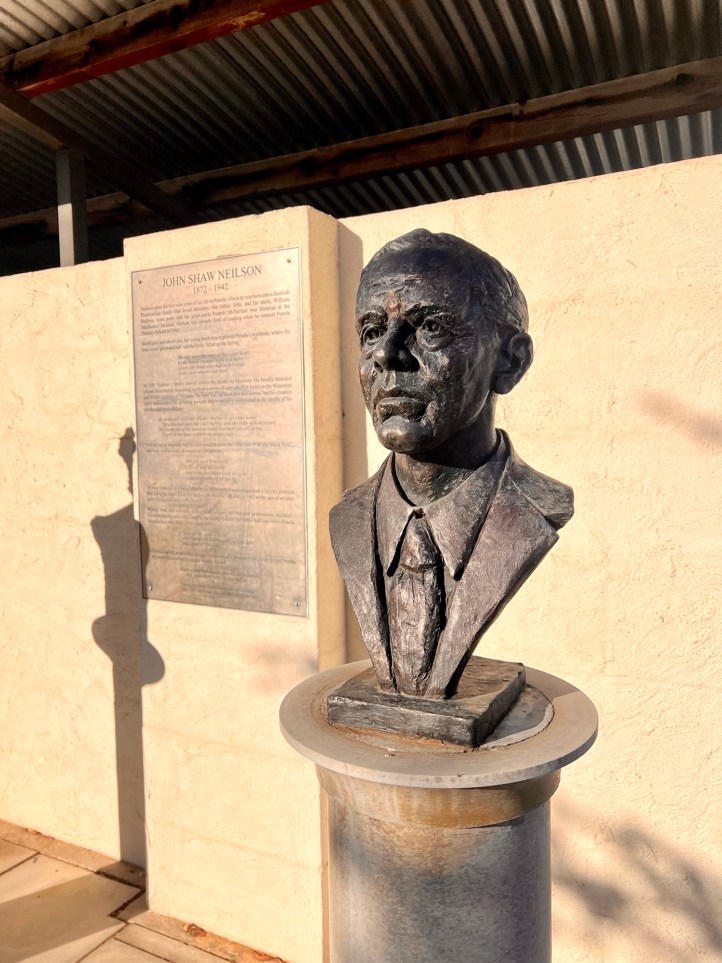
John Shaw Nelson was born in Penola in 1872 to Scottish parents. Despite being of slight build, he undertook what work he could get including some pretty tough jobs as a labourer, a fruit picker and a scrub clearer amongst other things. At a young age he discovered poetry and found he had a hidden talent for writing in spite of having had a basic education.
Neilson became known as one of Australia’s finest lyric poets, who wrote a great deal about the natural world, and the beauty in it.
He died in 1942.
Adam Lindsay Gordon was born in England in 1833, but at the age of 20 he was positioned at Penola as a mounted policeman. He was very skilful at riding horses and loved competing in steeplechases.
Lindsay had a very interesting life with a sad ending when he took his own life in 1870 aged 37.
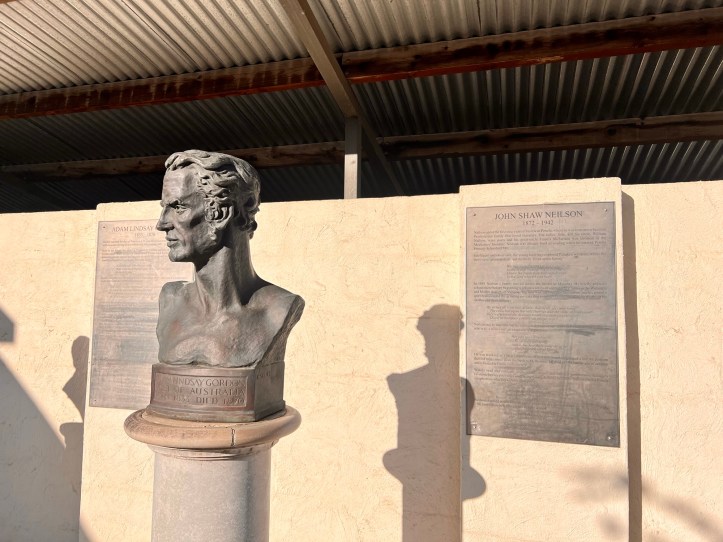
He is recognised for his contributions to Australian poetry history.
South Australia has a very different history to other Australian states. It was officially settled as a British provence, and as such attracted free settlers from Scotland, Britain and Germany, as well as other locations.
The South Australia Act, 1834 created the Province of South Australia, built according to the principles of systematic colonisation, with no convict settlers
Penola’s history clearly shows a strong link to Scotland, as many of its early residents were from there.
John Riddoch’s daughter, Mary Edith (1873 – 1938) married Robert Rymill (1869-1906) who was a pastoralist and owner of Penola Station.
Now those names were familiar as I read about them. We had visited Rymill Wines during our stay.
Their son John Riddoch Rymill was born in Penola in 1905, just 14 months before his father was killed in a car accident. John Riddoch Rymill was an Australian polar explorer, who had the rare second clasp added to his Polar Medal.
The Polar Medal is awarded to people who have made significant contributions to polar research and exploration. Additional clasps can be awarded for further service.
Very impressive.
But there is more.
Penola’s most recent, famous ex-resident, who was originally born in Melbourne to Scottish parents in 1842, is Sister Mary MacKillop. Mary is of course more widely known as Saint Mary MacKillop, and as Australia’s first saint.
There were lots of plaques with information about her around the township, and there is even a centre devoted to her – called The Mary MacKillop Interpretative Centre which you can visit to learn more about her and Father Woods, and their work in Penola.
It was here in 1866 that Mary MacKillop, an outstanding young teacher, and Julian Tenison Woods, a priest and brilliant scientist, founded the uniquely Australian Sisters of St Joseph. They provided a free Catholic education, initially for the isolated bush children of Penola.
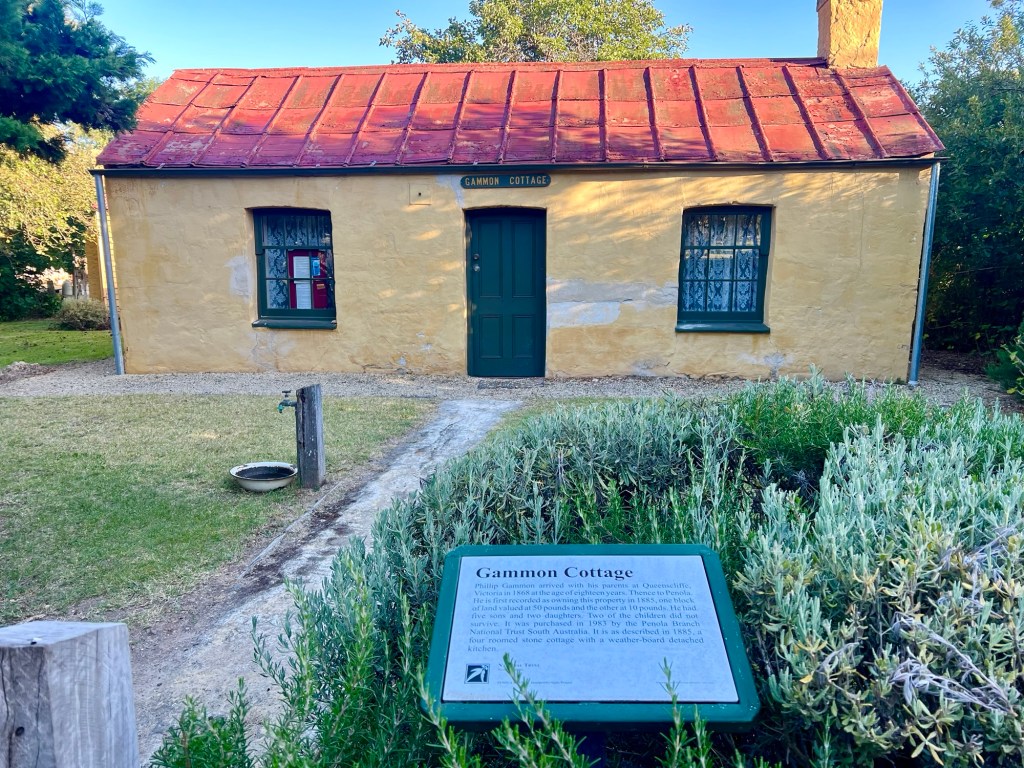
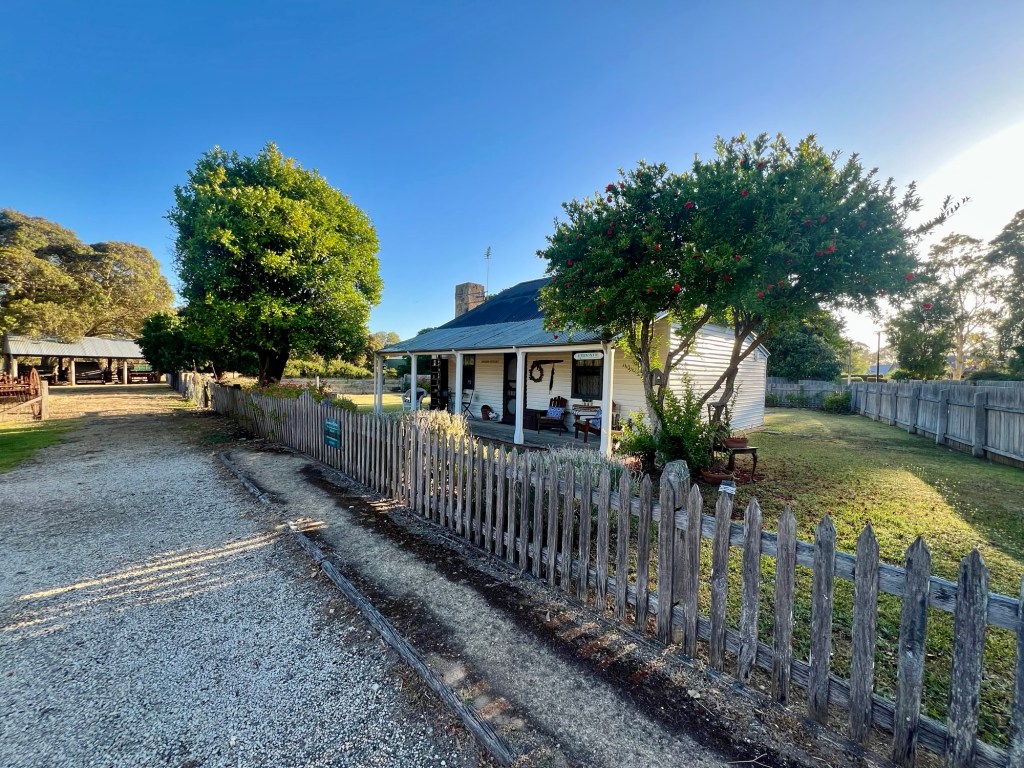
Just a few steps from the Interpretative Centre is a very cute, historic street, called Petticoat Lane. I thoroughly enjoyed my walk along here, which took quite awhile as there was so much to see and read about the small cottages and gardens.
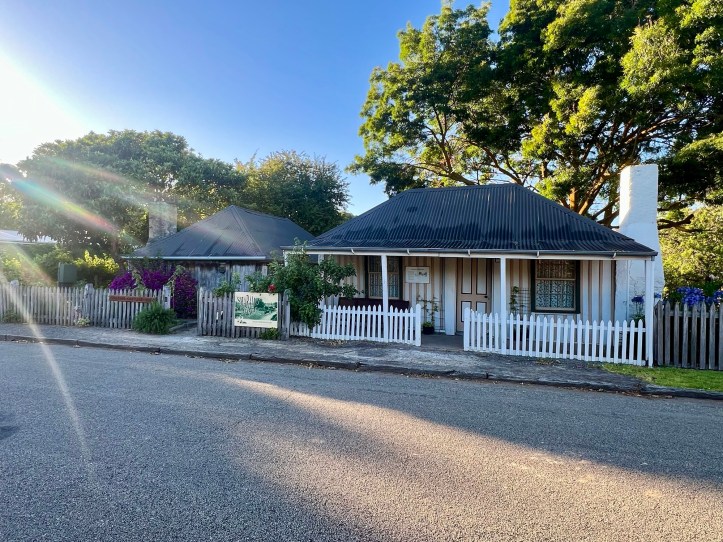
The name of the street was changed to Petticoat Lane in the 1860s because the majority of children born to people who lived in these cottages were girls.
Sharam’s House today has a community garden behind the timber shed to the left in this photos. Locals can visit and pick some fresh herbs for a small donation (20 cents), which our son did while we were there for a curry he was making us for dinner one night.
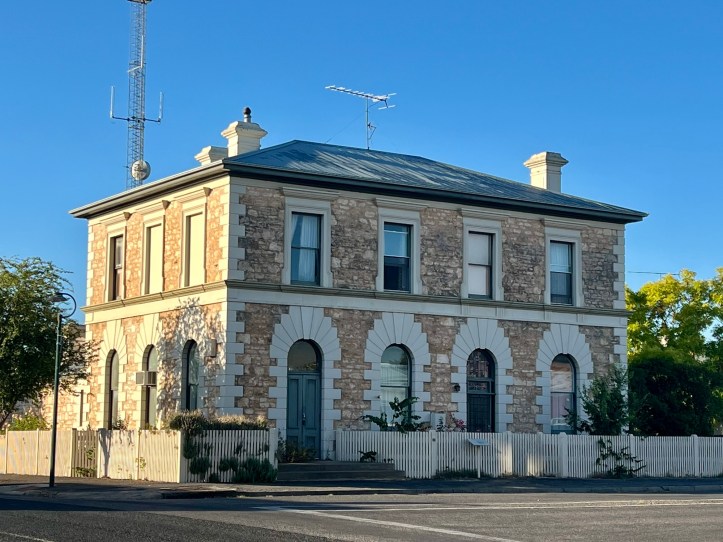
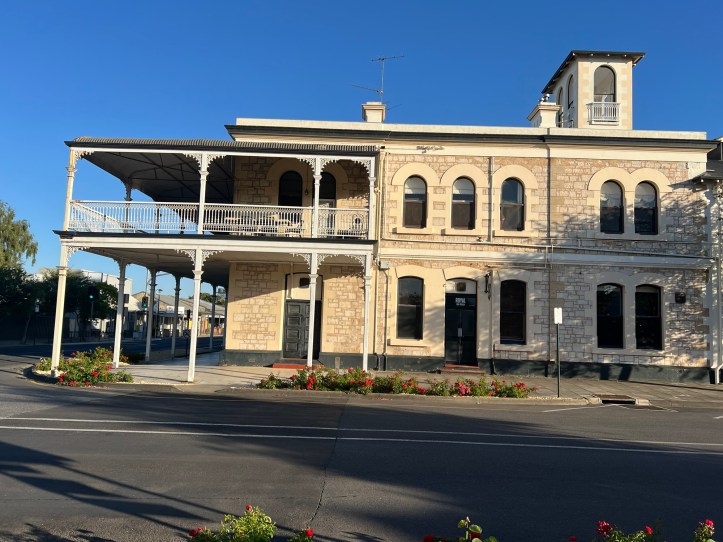
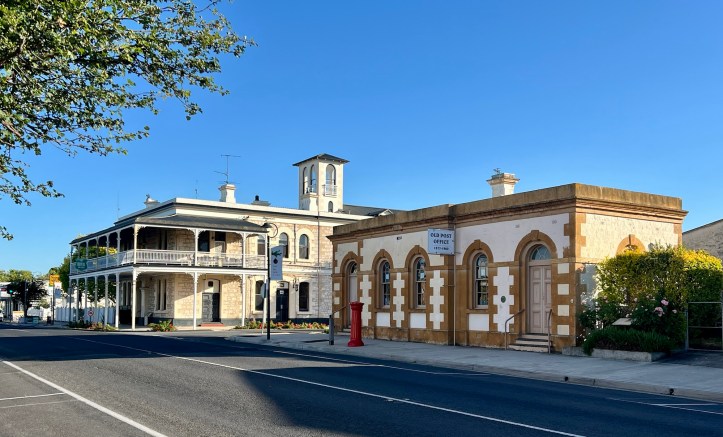
Around the main street of Penola, Church Street, there are some wonderful sandstone buildings. Many of them were once banks but are now homes to local families and are preserved in beautiful condition.
Of course there are old hotels, some still operating as the local pub.
We look forward to a return visit to Penola possibly later in the year so we can continue our research into the wines of this region.
We are heading to New Zealand in just over two weeks to taste some wines from the Central Ottago. This quick trip to Coonawarra was a good way to get ourselves in shape and focussed for the task ahead.
Cheers
 Jane and Mick's Holiday Adventures
You two are extraordinary! Next time you go and see Ed drop in to Langhorne Creek on the way and see what damage you can do at Lake Breeze and, especially, Bremerton.
Now that sounds like a challenge David! Thanks for the hints.