After a late breakfast, we met André at 10am to start our personal tour for the day.
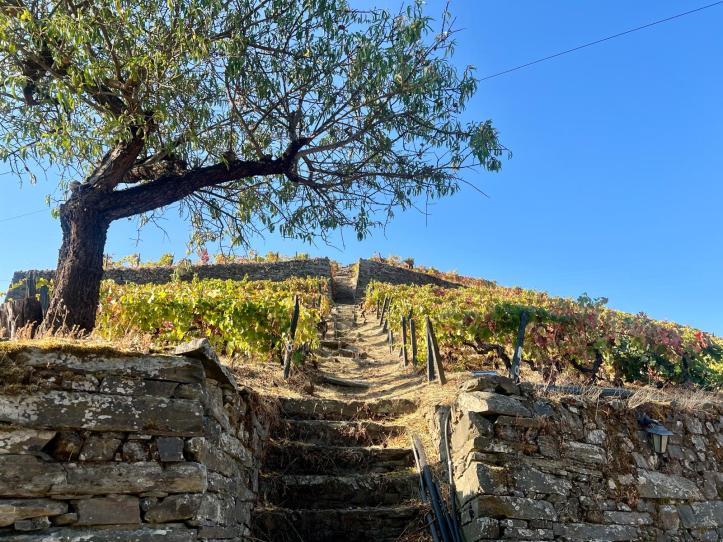
I had booked this tour without asking too many questions, including the price! But as I thought it would be our last day in Portugal where we would be able to taste the local wines, and where I did not need to drive, that we should embrace the day.
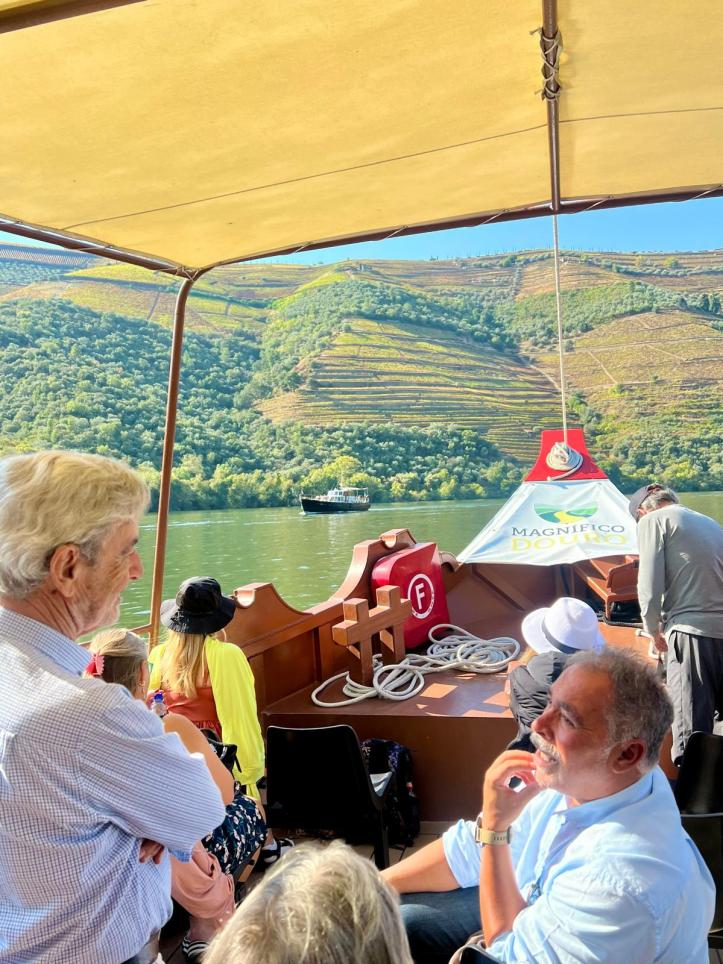
Our first stop was Pinhão for a boat tour. And we did not have the heart to tell André that we’d been on a river boat tour only last week. And I’m glad. As this time we travelled on a Rabelo boat, which travelled at a lovely gentle pace and we were able to listen to an audio as we passed significant points of interest. I actually learnt quite a lot.
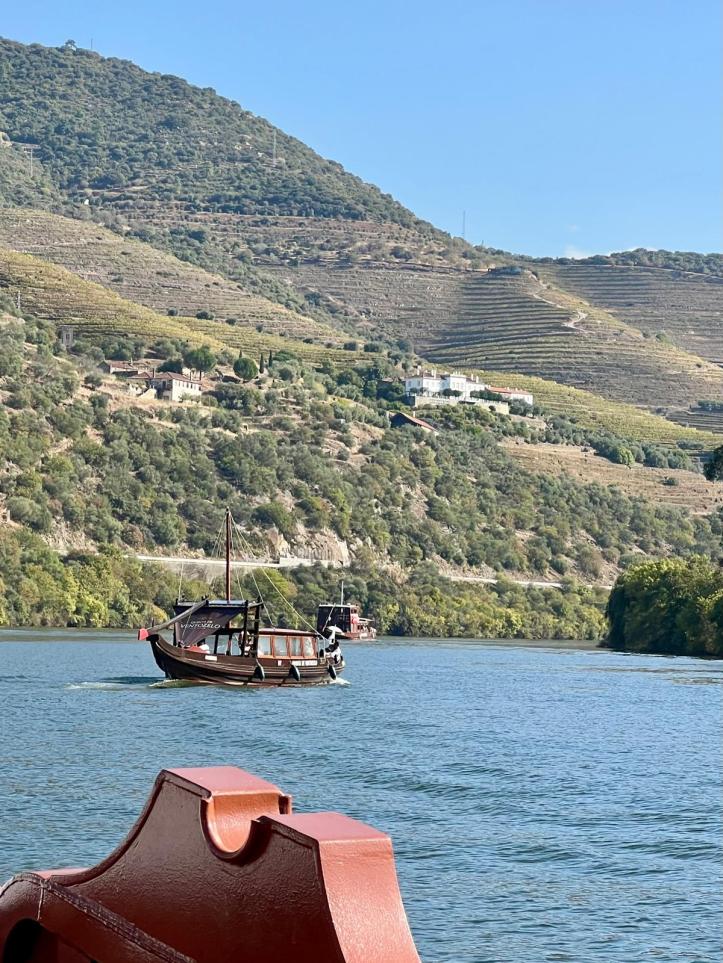
We were told that the boat would take us to a point in the valley where no buses or cars could reach, and that the only roads we would see were those private roads of different quintas.
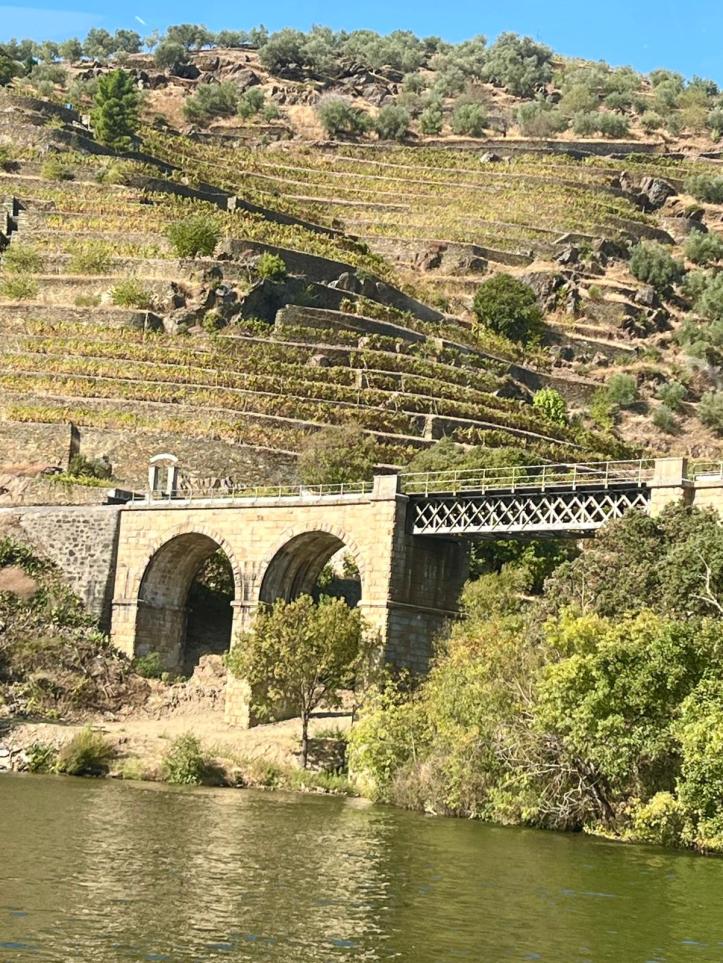
The railway line over this old bridge once travelled all the way to Spain (going towards the right of this photo). But in 1985, I’m unsure why, the connection between Spain and Portugal was closed. The Portuguese side of the railway line that was closed down has fallen into disrepair, while the Spanish side has been preserved because of its historical significance. Interesting.
A pretty amazing view of the steep slopes of the Douro Valley showing the vineyards and the terracing. Right in the middle of this photo you will notice that the vineyards sit beneath trees and forests, and apparently some rows of rosemary. We learnt later that there was a sneaky reason for this. The rules for growing grapes here include regulations around irrigation of the vines – which can only occur in the first three years of a vine’s growth and, now as the temperatures have risen, once every two weeks during the strongest heat.
BUT, irrigation of rosemary can occur all year round. So, by irrigating the rosemary it also helps the vines closest to it as the rosemary retains a lot of water in its root system.
I also heard on the audio that the few empty terraces, which we’d spotted on the roads with Suzanne, had been left un-planted after the phylloxera infestation in the 1860s. Most terraces were re-planted using American root stock which was unaffected by phylloxera, but obviously some were too difficult to re-plant.
André then took us to Croft winery for a tour and tasting, which was led by a Croft staff member.
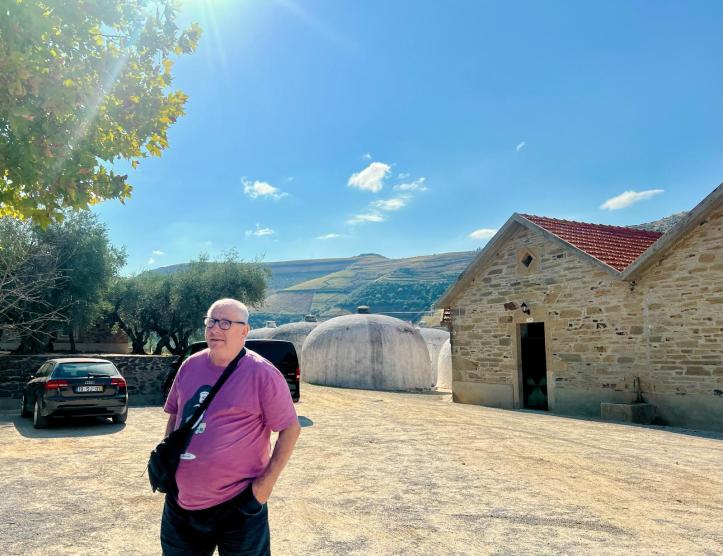
We’d seen these domes before but did not know what they were. These concrete vats used to be used in the winter to store the port for maturation, but now, even during winter the temperatures can become too high for the wines. So now they are used to store the grape spirit, also known as aguardente vínica (or for us, also known as grappa or moonshine) that is used in the making of the port, with the final maturation taking place back in Gaia (near Porto) where the cellars are located.
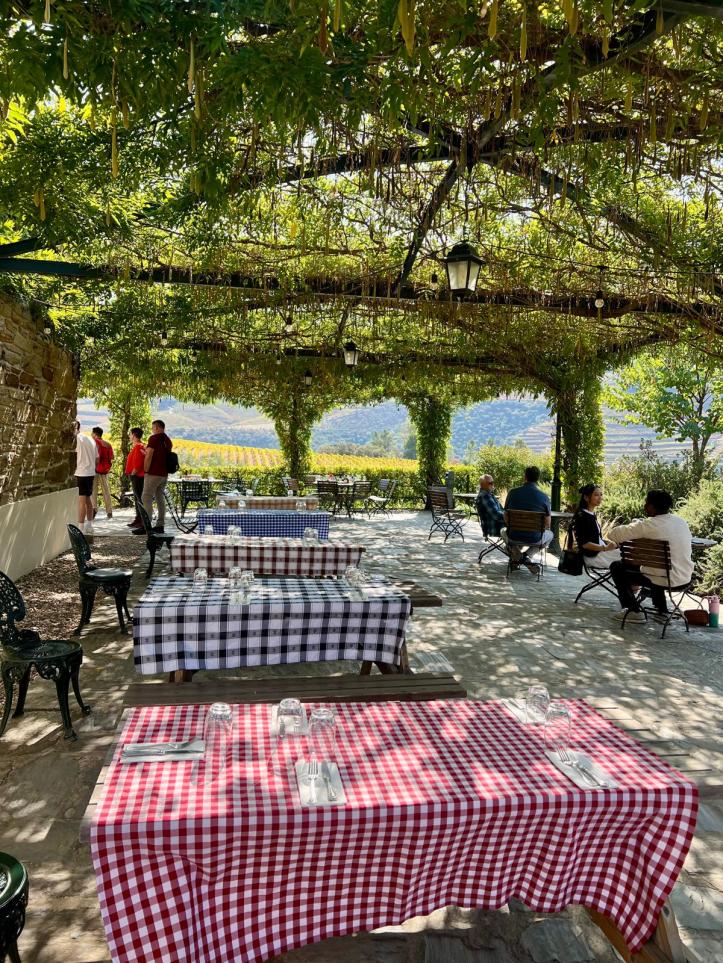
This is part of the Croft Cellar door where visitors take part in a tasting after a short tour. It was a beautiful, cool location. Sadly for us, most spaces were full for our tasting and we sat beneath a much less shady space which meant we did not linger too long – which probably wasn’t a bad thing.
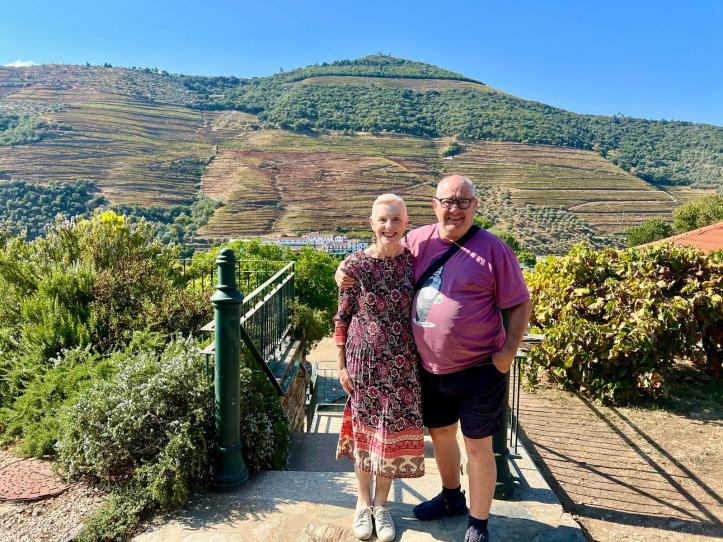
We followed our guide into the vineyards where he showed us old vines and the newer ones.
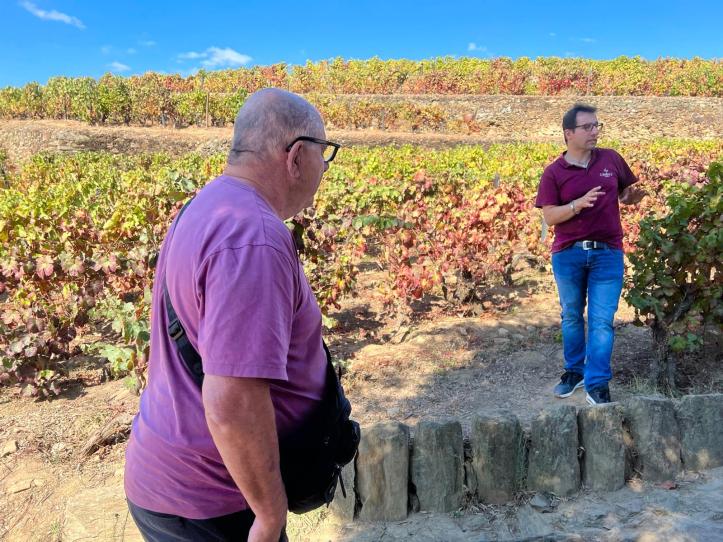
These vines here are the older ones – some of the vines were more than 100 years old and could only be harvested by hand as the rows are very close together. The grapes grown here are fewer than produced on younger vines but the flavour is more concentrated. There were several varieties of grapes planted here which explains the different colours in the leaves.
Just to Mick’s right were newer vines, planted 18 years ago where the rows were wider, the grapes were the same variety and machinery could be used to help maintain the plants. These vines produced much more fruit than the older vines opposite them.
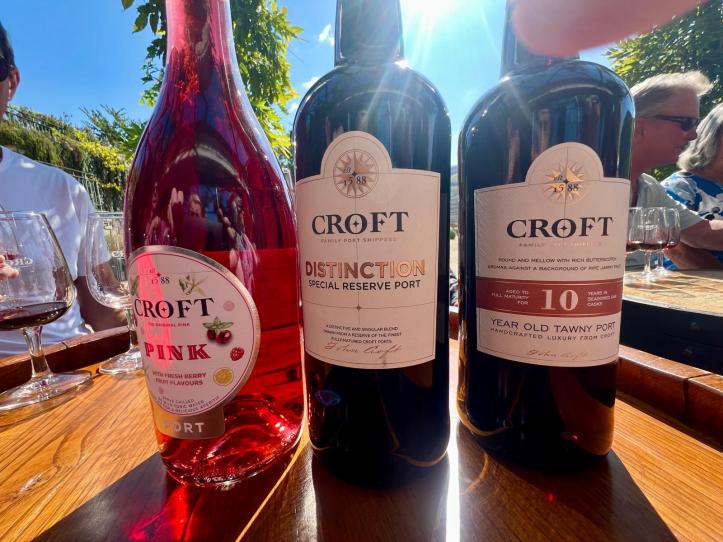
These were the wines we tried – outside in pretty much full sun – and this time both of us liked the Pink (or Rosé) Port the best. Apparently, Croft invented Pink Port in 2008 with the aim to convince younger people to drink port in cocktails.
“Its creation marked a bold departure from centuries of tradition, blending Douro red grapes with a unique vinification method that preserves freshness and delivers a delicate pink hue.”
We were then driven back to what André called ‘the farm’ – Quinta de Marrocos, for lunch and a taste of Cézar’s white port. We had a vegetable soup as a starter, served once more in the dish used by the harvest workers, where the handles were used to hold the bread.
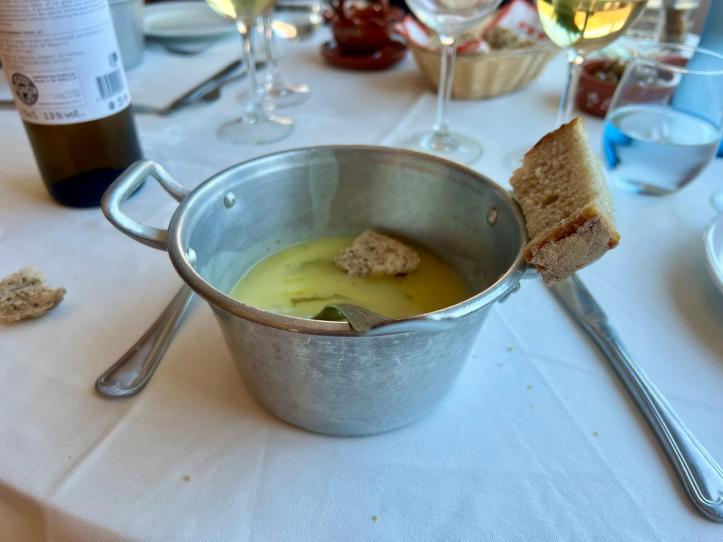
We both have enjoyed the soups, but not much else of the Portugues fare. The food seems over salted and the servings are way too large. Our choices for main course for lunch were cod fish again, but done differently, or duck and rice and cheese. It sounded quite odd, but we both chose the duck. The plate we were served our meal in was super-heated and the cheese was melted on top of mostly over-salted rice and a few small pieces of duck. We were joined for lunch by a bus tour that arrived, slightly shocked and very puffed, after walking up the driveway as well as all the stairs and stone paths. André said that most days during the tourist season they host lunch for tour groups of up to 30.
We opted out of dessert and had a short break in our room before André took us to our final stop – Vieira de Sousa.This is a smaller producer even though it has five estates spread across the Douro Valley. It is a family-run Port wine producer, where now the wine maker is a woman, and her sister is the marketing director. The staff in the cellar door are all female but the harvest is done by both men and women. We asked where the labourers for harvest came from and André explained that they come from Northern Africa, Malaysia and Brazil – with Brazilians being at an advantage because the language is so similar. These workers, if they stay in Portugal for three years working like this, are then eligible to apply for a permanent residence permit or begin the process toward Portuguese citizenship if certain conditions are met. André said quite a few workers strive for this and when they achieve it, it means they can move anywhere in the EU, which most of them do.
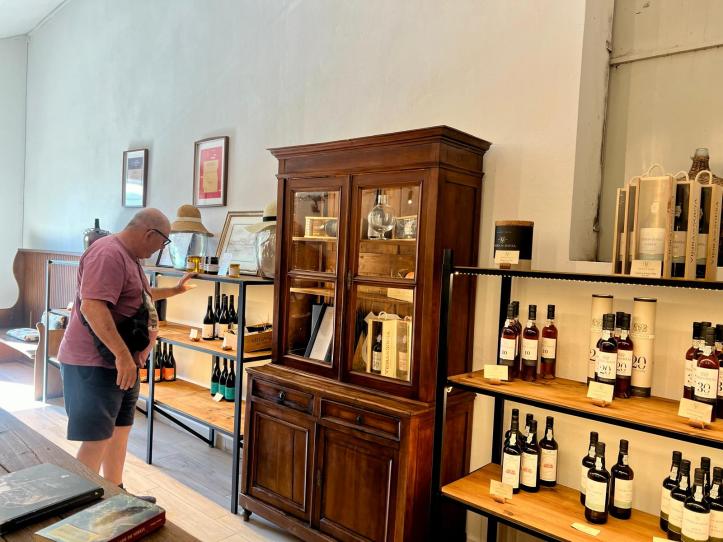
The cellar door / shop here was much smaller and today there was only one staff member – Theresa who was guiding the tastings.
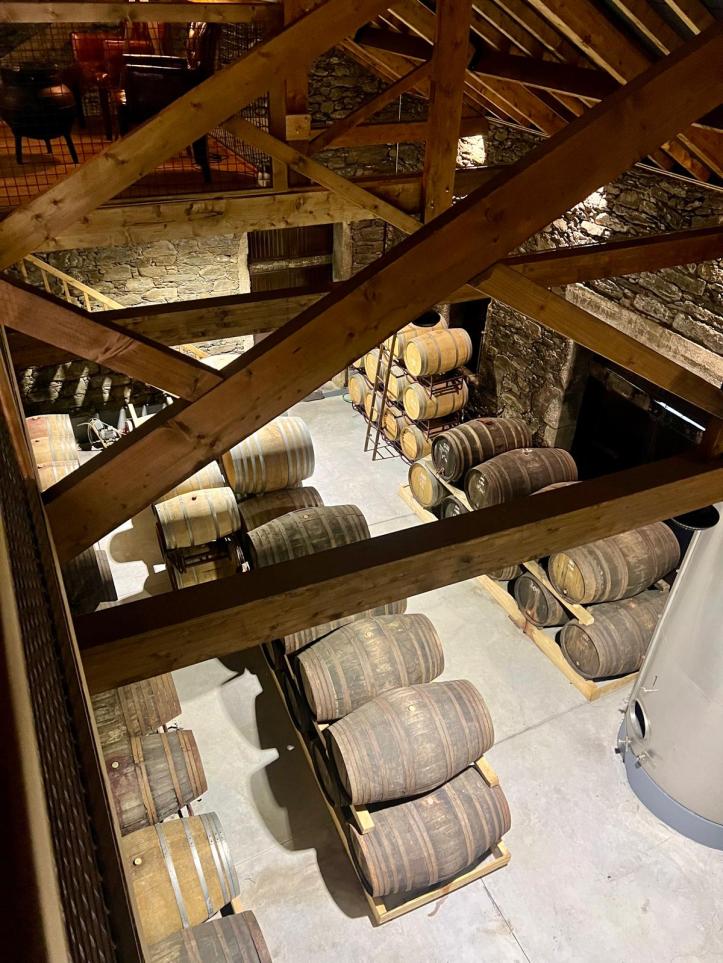
She showed us the cellar for the barrels. The ones in this photos are for the ports and were quite old, while there were also some newer French oak barrels used to make the table wines.
We sat right near the stomping ponds, called lagares. These are typically made from granite.
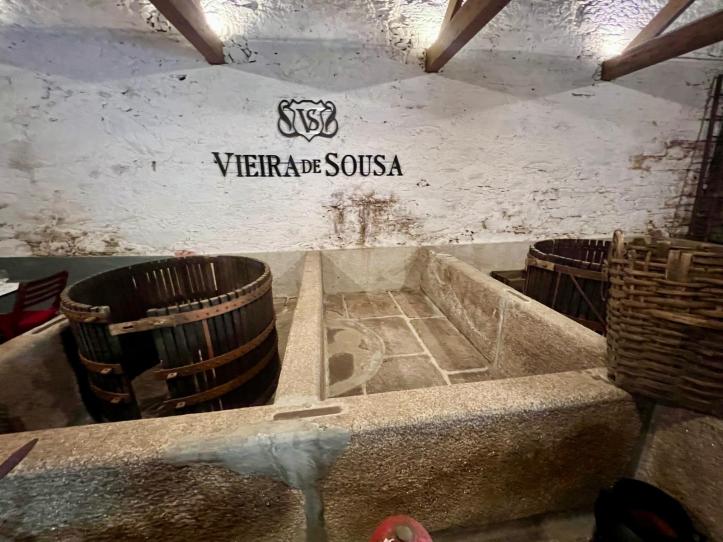
We tasted three wines here – two tables wines, a white and a red, followed by a tasting of the wine they are quite famous for – their aged white port. I liked it the best. But we left empty-handed as we are flying to Madrid tomorrow.
We chose not to have dinner again tonight, and instead rest and digest before having an early breakfast and driving to Portugal Airport to return our hire car.
We have enjoyed our time in Portugal and have learnt a lot about the wines and the history of wine making, but to be honest, we both prefer the Spanish wines and the Spanish experiences, plus the roads are not so steep!!!

